
World
Sudan conflict could prompt 800,000 people to flee, UN says

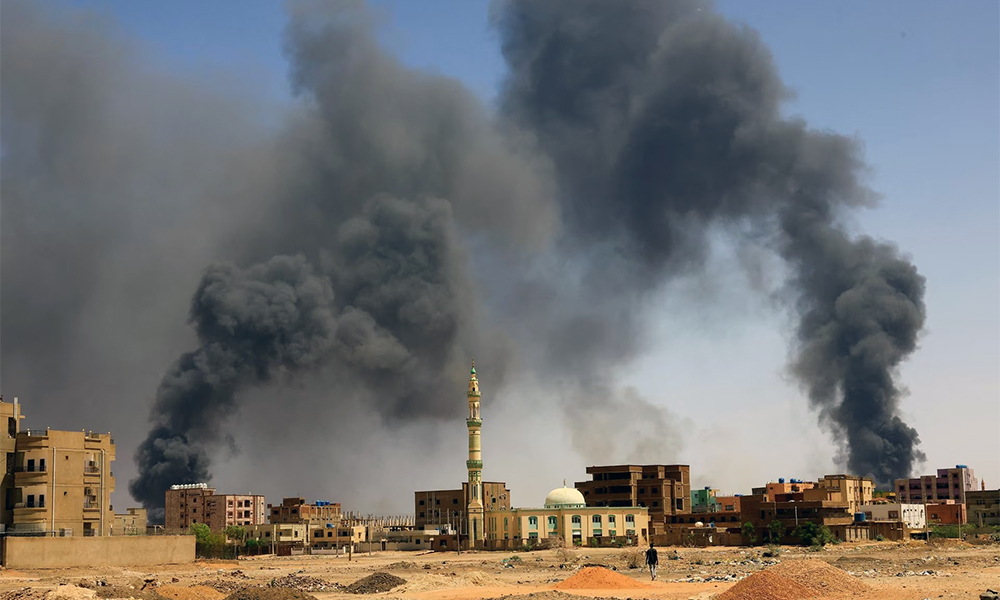
The United Nations warned on Monday that the conflict in Sudan could force 800,000 people to flee the country as battles between rival military factions persisted in the capital despite a supposed ceasefire, Reuters reported.
Hundreds of people have been killed and thousands wounded over 16 days of battles since disputes between the Sudanese army and the paramilitary Rapid Support Forces (RSF) erupted into conflict on April 15.
The crisis has unleashed a humanitarian disaster, damaged swathes of Khartoum, risked drawing in regional powers and reignited conflict in the Darfur region.
Many fear for their lives in the power struggle between the army chief and RSF head, who shared control of the government after a 2021 coup but fell out over a planned transition to civilian rule, Reuters reported.
Both sides agreed on Sunday to extend a much-violated truce by 72 hours, and the U.N. told Reuters the rival forces may hold ceasefire talks in Saudi Arabia. But air strikes and artillery rang out on Monday as smoke hung over Khartoum and neighbouring cities.
U.N. official Raouf Mazou said the body’s refugee agency was planning for an exodus of 815,000 people including 580,000 Sudanese as well as foreign refugees now living in the country. The country’s population numbers 46 million.
Some 73,000 have already left Sudan, he said.
Egypt reported 40,000 Sudanese had crossed its border, and those who made the journey said conditions were arduous. Others have gone to Chad, South Sudan and Ethiopia, or sailed across the Red Sea to Saudi Arabia on evacuation boats, read the report.
At least 528 people have been killed and 4,599 wounded, the health ministry said. The United Nations has reported a similar number of dead but believes the real toll is much higher.
Foreign governments pulled out their citizens over the past week in air, sea and land operations, though several countries ended efforts. The U.S. government said on Monday that its convoys from Khartoum to the Red Sea harbour of Port Sudan evacuated more than 700 people over the weekend.
Britain said it was exploring ways to provide humanitarian assistance to Sudan along with its international allies, the United Nations and aid organisations after evacuating nearly 2,200 people.
Meanwhile, those Sudanese who stayed behind faced hardship and danger, Reuters reported.
“I show up to work for two or three hours then I close up because it’s not safe,” said Abdelbagi, a barber in Khartoum who said he had to keep working because prices were rising.
People who ventured onto the streets on Monday were shocked by the transformation.
“We saw dead bodies. The industrial area that was all looted. We saw people carrying TVs on their backs and big sacks looted from factories,” said resident Mohamed Ezzeldin.
Power and water supplies are uncertain, there is little food or fuel, most hospitals and clinics are out of service and soaring transport costs are making it ever harder to leave, read the report.
The U.N. and other aid organisations have cut services, though the World Food Programme said it was resuming operations in more secure areas on Monday after staff were killed early in the war.
“The scale and speed of what is unfolding in Sudan is unprecedented,” said Martin Griffiths, a senior U.N. official for humanitarian and emergency relief who will visit Sudan on Tuesday.
Victoria, one of the tea sellers who used to dot Khartoum’s streets before the fighting began, said her children are struggling to understand what is happening.
“So I risk my life to try to work and if God helps me, I’ll get them some food, and if he doesn’t I’ll keep trying. But just sitting useless doesn’t help and being scared doesn’t help,” she said.
Jamila, a woman still in Khartoum with her family, is only eating one meal a day because so little food is available. RSF troops are stationed in front of their house and refuse to leave. “The sound of fighting is in our ears all day,” she said.
Both sides said on Monday they were making progress without commenting directly on the ceasefire violations, Reuters reported.
The army said it had cut RSF’s combat effectiveness by half and stopped it trying to reinforce its positions in the capital. The RSF said it still controls main locations of Khartoum and was itself beating back army reinforcements.




World
Vance says Iran must cut enrichment to end war
Vance said the US remained open to an agreement but would require concrete Iranian nuclear concessions.
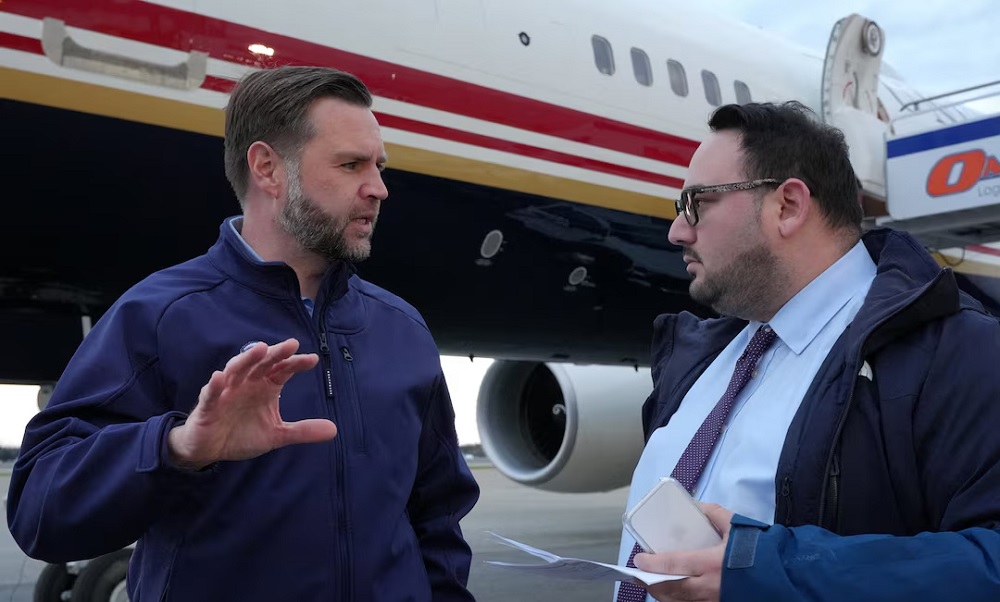
US Vice President JD Vance said in an exclusive interview with Reuters that Iran must make a “meaningful” reduction in its nuclear enrichment capacity to satisfy US demands and end the countries’ seven-month war, even as Washington was unsure how Tehran makes decisions in negotiations.
Vance, a longtime skeptic of US involvement in foreign wars, has taken a leading role in negotiating a settlement to the conflict and brokered a provisional peace agreement in June that quickly fell apart. The war has jolted global energy markets and become a political liability for President Donald Trump and fellow Republicans ahead of November midterm elections, Reuters reported.
Speaking on Monday after a campaign trip in Alaska, Vance said any agreement would require Iran to reduce its nuclear enrichment capacity, rather than offer assurances of future nuclear drawdowns.
“If you don’t want a nuclear weapon, then why do you need 60% enriched fuel? And if you want to show commitment to not building a nuclear weapon, don’t build highly enriched fuel. That’s a very basic threshold issue,” Vance said.
“I think if they want to show a commitment to not building a nuclear weapon, they would do something meaningful on their enrichment capacity.”
Iran and the US have exchanged proposals in recent weeks aimed at ending the war and reopening the Strait of Hormuz, a vital global energy shipping route. Trump rejected Tehran’s latest offer and has warned that military operations could intensify after the midterms.
Vance said the US remained open to an agreement but would require concrete Iranian nuclear concessions.
“We’re not going to trade words for actions,” Vance said.
UNCLEAR HOW IRAN MAKES DECISIONS: VANCE
Complicating matters, Vance said Washington is uncertain who makes decisions in Tehran.
Vance said the US was in talks with Iranian President Masoud Pezeshkian and Foreign Minister Abbas Araqchi. But it was unclear how much authority they wield within Iran’s power structure, he said, after joint US-Israeli strikes at the start of the war killed Supreme Leader Ayatollah Ali Khamenei.
“One of the things we picked up on is it’s not totally clear how their country makes decisions,” Vance said. Separately, Trump said on Tuesday his “biggest problem” is no one knows who is running Iran.
Iran’s Foreign Ministry spokesperson said on Sunday that US officials are well aware of who their Iranian counterparts are and how Iran’s decision-making system works.
“The problem is actually the opposite: it lies in the contradictory positions and mixed messaging from US officials,” Esmaeil Baghaei told a weekly press conference.
Vance told Reuters he has held personal conversations with field commanders to gauge battlefield conditions. He dismissed concerns over critical munitions shortages and added that while Iranian troops are periodically able to strike commercial ships in the Strait of Hormuz, they are largely unable to prevent energy exports through the waterway.
Vance declined to say if he was leading peace talks, though he is frequently cited as the White House’s top negotiator.
“We’re certainly involved,” he said. “Ultimately, the president of the United States is driving things.”
The war — and its $3 billion monthly price tag — has become a key issue on the campaign trail. Higher energy prices have put Trump and Republicans on the defensive in competitive states that will decide control of Congress.
Vance has sought to temper criticism of Trump’s handling of the conflict, telling voters they should not let that issue keep them from backing Republicans in next month’s elections.
In Alaska, Vance rallied for Republican Senator Dan Sullivan, who is locked in a tight reelection battle with Democratic challenger Mary Peltola. Trump carried Alaska by 13 percentage points in 2024, but rising everyday costs have put the state in play.
Before speaking with Reuters, Vance focused much of his speech on affordability concerns, especially around energy. Alaska’s remote locale makes consumer goods more expensive, and energy production is a key industry.
Rally attendees roared when Sullivan nearly introduced Vance as the president of the US, rather than the vice president. Vance is seen as a leading Republican contender to succeed Trump in the White House.
Vance told Reuters afterward that he had not decided whether to seek the presidency in 2028.
“I’m inherently a procrastinator,” he said. “I really haven’t thought about it much.”
World
▶️Saudi Arabia, Turkey, Pakistan activate Mecca defense pact
The three countries said the measures would be implemented under approved arrangements and in accordance with the national laws of each country.
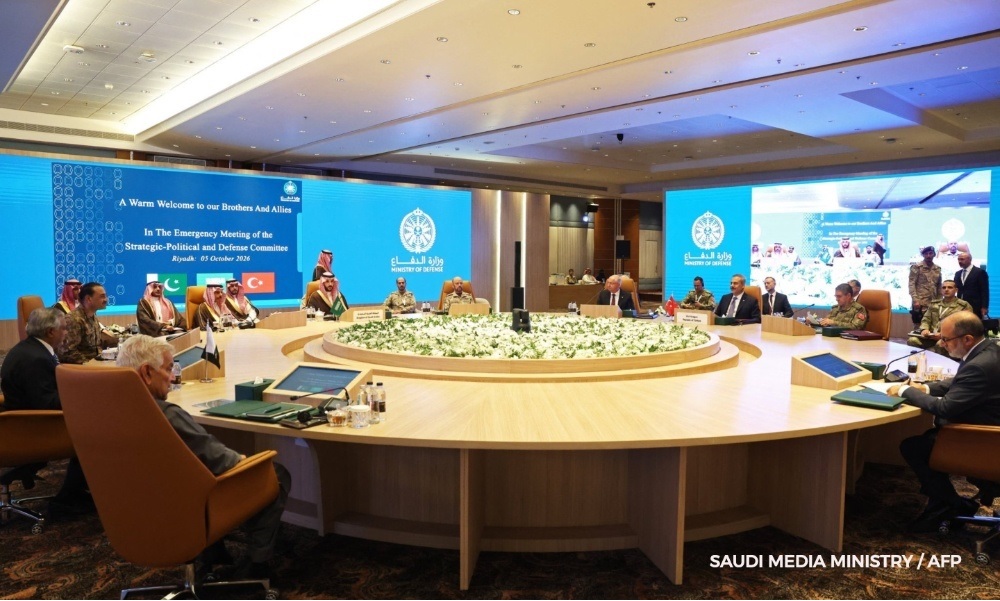
Saudi Arabia, Turkey and Pakistan have agreed to immediately implement their collective defence commitments, including the rapid deployment of agreed military forces and capabilities to Saudi Arabia.
The decision was reached on Monday during an emergency meeting of the Mecca Defence Alliance in Riyadh, according to a joint statement issued by Pakistan’s foreign ministry.
The three countries said the measures would be implemented under approved arrangements and in accordance with the national laws of each country.
Saudi Defence Minister Khalid bin Salman said the meeting reaffirmed the three countries’ “solidarity and unity” in responding to what he described as attacks against Saudi Arabia and Islamic holy sites.
The move follows a reported attack on a power distribution station in Medina. The Saudi-led coalition fighting Yemen’s Iran-aligned Houthi group said the attack targeted a facility supplying electricity to the Prophet’s Mosque, one of Islam’s holiest sites.
Saudi Arabia, Pakistan and Turkey signed the Mecca Joint Defence Agreement in August. Under the pact, an armed attack against one of the three members is considered an attack against all.
The agreement initially provided few details on the specific military commitments or defence obligations of each country.
The latest announcement marks a move from the framework of the agreement towards its practical implementation, with the three countries now agreeing to put arrangements for the deployment of military capabilities into effect.
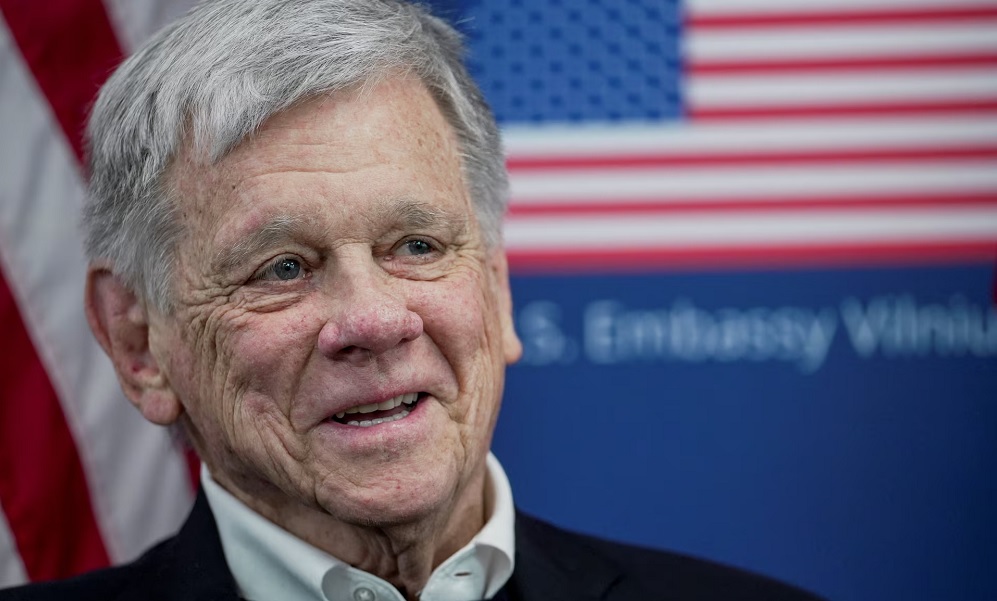
US President Donald Trump said on Sunday that lawyer and current Belarus envoy John Coale, who has been credited with the release of hundreds of prisoners, would be his special presidential envoy for hostage affairs.
Belarusian President Alexander Lukashenko pardoned 15 prisoners last month after talks with Coale, who has been talking to Minsk for more than a year, Reuters reported.
“John has already secured the return of over 65 Americans and Allied Citizens from Belarus over the last year, and negotiated the release of more than 800 political prisoners from multiple countries in Eastern Europe,” Trump wrote in a post on Truth Social.
Coale will replace Adam Boehler, who Trump said had brought back 196 hostages. Boehler, who in August helped to secure the release of a former American marine from Russia, will continue to assist in other matters as a senior adviser, Trump added.


Kohi shines as Toofan Herat beat Abu Muslim Farah 2–0

Muttaqi and Iranian representative discuss expansion of bilateral relations

Baradar opens Fifth Imam Abu Hanifa International Exhibition in Kabul

Lionel Messi bids tearful farewell to Argentina after 3-0 win over Benin

British special forces could face prosecution over alleged Afghanistan crimes

UAE firm eyes investment in Salang’s second tunnel and pharmaceutical factories

US Treasury ratchets up pressure on Iran with sweeping new aviation sanctions

AI could pose ‘existential’ risk to humanity, UN rights chief warns

EU and FAO launch €5m programme to strengthen Afghanistan’s agrifood sector

Omar Zawak, Toofan Herat secure victories in Afghanistan Champions League

Tahawol: Discussion on outcome of Moscow Format meeting

Saar: Expansion of relations between Kabul and Moscow discussed

Tahawol: Afghanistan-Iran: shared opportunities and challenges discussed

Saar: Pakistan’s hostile policy toward Afghanistan discussed

Tahawol: Doha process seeks new cooperation opportunities
-

 Sport2 days ago
Cricket Bonanza: Afghanistan set for packed international schedule
-
 Latest News4 days ago
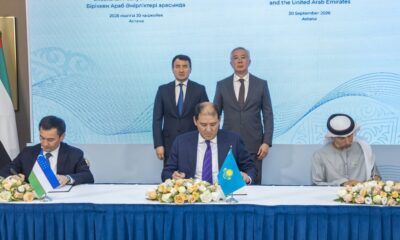
Kazakhstan, Uzbekistan and UAE sign MoU on CASA railway project via Afghanistan
-
 Regional4 days ago
Pakistan says Mecca pact members to hold emergency talks on engaging Houthis
-
 Regional3 days ago
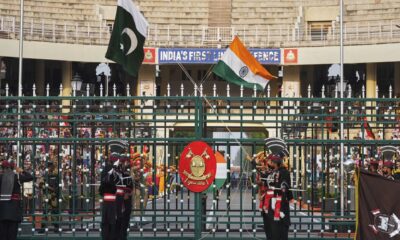
India, Pakistan summon top diplomats over border incident
-
 Sport4 days ago
Rashid Khan plans to build cricket academy and stadium in Nangarhar
-
 Latest News3 days ago
Afghanistan inaugurates 121 km Wakhan road to China border
-

 Sport3 days ago
ACL: Sorkh Poshan extend perfect run with 1-0 win over Khurasan
-
 Latest News4 days ago
Iran’s Qaani: We must strengthen the belt of defense and dignity from Afghanistan to Yemen