
Latest News
Tajik opposition group condemns Iran for abuse of Afghan migrants, calls for probe


A Tajik opposition group has slammed the Iranian government for what it claims is widespread human rights abuses against Afghan migrants and refugees, and called on the international community to launch an independent investigation into the problem.
In a statement issued this week, the Movement for Reforms and Development of Tajikistan, which is based in the Netherlands, called the situation “barbaric and inhumane,” citing allegations of systemic violence, including the destruction of migrants’ documents, extortion, beatings, and executions within Iranian detention camps.
“Women, children, the elderly, and the sick are subjected to systematic persecution, humiliation, violent deportations, mistreatment and arbitrariness by Iranian authorities,” the statement read.
“Iranian security forces confiscate property, destroy passports, and throw people across the border without food or water.”
The statement was issued during Muharram, the Islamic month of mourning, and invoked the legacy of Imam Hussein, condemning Iran’s treatment of fellow Muslims as a betrayal of Islamic values.
The movement’s statement aligns with reports from Afghan returnees, rights groups, and international agencies documenting conditions faced by undocumented Afghan migrants in Iran.
According to Iranian officials, nearly 490,000 Afghans have left Iran via the Dogharoun/Islam Qala border in the past 100 days, most of them undocumented. Iran insists these departures are voluntary, but independent reports suggest coercion and abuse have driven many across the border.
A 2025 investigation by Human Rights Watch (HRW) and Zagros Human Rights Center cited extensive evidence of torture in Iranian detention centers, including beatings, electric shocks, forced confessions, and death by medical neglect. Afghan detainees have been identified among the victims.
“Afghans in Iran are facing increasing pressure as their presence in the country is politicized and used as a scapegoat for social tensions.
“Many Afghans who fled to Iran after the Taliban (IEA) regained power in Afghanistan do not have legal residency, making them vulnerable to discrimination, exploitation, and deportation,” HRW said in a statement earlier this year.
The Movement for Reforms and Development sharply criticized what it described as Tehran’s hypocrisy, contrasting the Islamic Republic’s rhetoric about “Persian brotherhood” and “shared culture” with its actions on the ground.
“What kind of ‘civilization’ is this, where women are beaten to the point of broken bones, pregnant women are thrown out of buses, and children are left to die in the desert?
“Where is this so-called ‘brotherhood’ if destitute people who have lost everything are discarded beyond the country’s borders as if they are worthless and undeserving of even basic human dignity?” the group asked.
The group also accused the Iranian government of political manipulation, using cultural and religious ties with Afghanistan and Tajikistan to justify regional influence, while simultaneously mistreating vulnerable Afghan refugees.
“We state with absolute certainty: all of this is falsehood, hypocrisy, and political manipulation,” the group said.
The organization went on to urge Muslim-majority countries, the Organization of Islamic Cooperation (OIC), the United Nations, and independent human rights organizations to initiate an independent and impartial investigation into the crimes and mass human rights violations being committed by Iran against Afghan migrants and asylum seekers.
Iran has hosted millions of Afghan refugees for decades, but recent economic strain, tightening immigration policies, and geopolitical shifts have created a hostile environment for many Afghans.
While the Iranian government claims its repatriation programs are humane, growing accounts of violence and degradation have prompted increasing concern from human rights observers and regional activists.
Earlier this year, Iran’s envoy to the United Nations, Amir Saeid Iravani said Iran’s longstanding policy toward Afghan refugees remains rooted in “humanitarian principles,” noting that legal Afghan migrants face no restrictions and that Iran continues to issue thousands of visas daily.
He acknowledged the burden of hosting millions of Afghans and emphasized that illegal entries are dealt with under law for national-security and public-order reasons—but denied any systematic mistreatment.
However, this month has seen the uptick in deportations amid regional tensions after Iran–Israel hostilities.
This week, government spokesperson Fatemeh Mohajerani defended the large-scale removal of as many as 30,000 Afghans per day as necessary for national security.
She insisted Iran remains a “good host” but must protect its borders—denying that refugees were being targeted as spies, although acknowledging they’ve faced hardships at detention centres.







The Islamic Emirate’s Ministry of Foreign Affairs says it has summoned Pakistan’s chargé d’affaires in Kabul and handed him a formal protest over the alleged entry of armed and hostile elements across the Durand Line toward Nuristan.
The move follows an operation announced by Afghanistan’s Ministry of Defense two days earlier in Kamdesh district of Nuristan, in which it said 28 people were killed and 32 others captured.
In its statement, the Defense Ministry said several groups affiliated with Daesh and what it described as “Shar-o-Fasad” elements had crossed into Afghan territory with the support and encouragement of Pakistani militias. It claimed the groups were seeking to carry out acts of subversion and create insecurity.
The ministry also alleged that Pakistani military personnel, Pakistan-affiliated “Arbaki” forces and Daesh elements were involved in coordinating with the groups, but fled the area after Afghan forces launched their operation.
According to the Defense Ministry, some of those involved were former military personnel who served under Afghanistan’s previous government. It alleged that Pakistani intelligence agencies had taken some of them to Pakistan after promising assistance with asylum and employment abroad, before transferring them to military camps along the Durand Line for training and subsequently sending them into Afghanistan.
On Tuesday, the Ministry of Foreign Affairs said the individuals involved in the latest incident, including Daesh-affiliated elements, attempted to cross into Afghanistan with what it described as direct support and guidance from Pakistan’s military authorities. Afghan security forces prevented them from entering the country, it said.
The ministry also accused Pakistan of facilitating the recruitment, organization, training and equipping of hostile elements on its territory before directing their deployment across the Durand Line.
It said such actions, in the Islamic Emirate’s view, violate Afghanistan’s sovereignty and territorial integrity and run contrary to Islamic, international, humanitarian and good-neighborly principles.
The ministry warned that Pakistan’s military authorities would bear full responsibility for any consequences if such actions continue.
Pakistan has rejected allegations of involvement by its security and intelligence forces in the Nuristan incident, describing the claims as baseless.
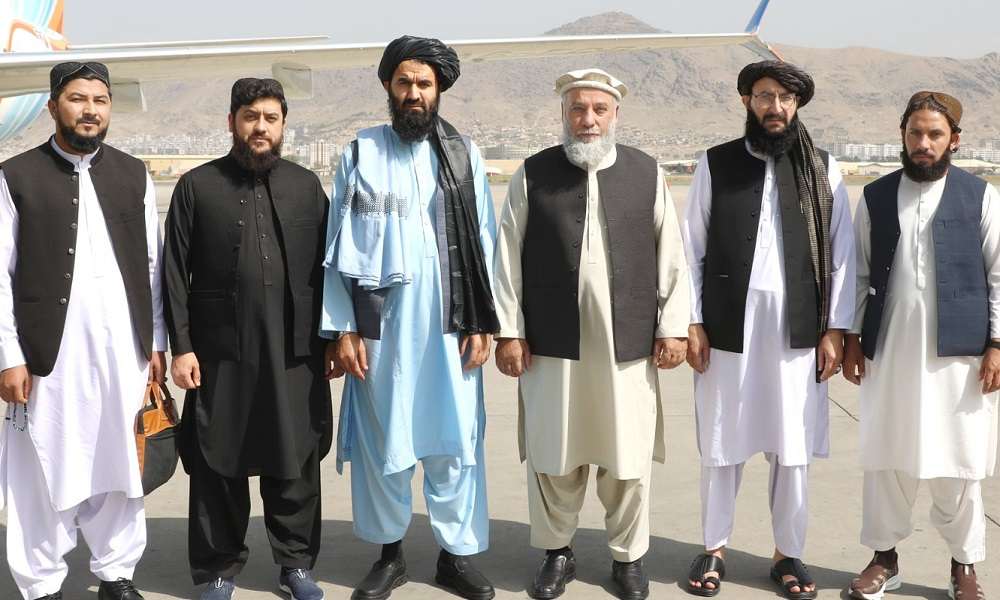
Afghanistan’s Minister of Industry and Commerce Nooruddin Azizi has traveled to Belarus at the head of a delegation, at the invitation of the Belarusian government, to strengthen economic and trade cooperation between the two countries.
The ministry said the visit includes participation in the Second Belarus International Industrial Exhibition and meetings with senior Belarusian officials.
During the visit, the minister is expected to tour the exhibition and attend a general meeting of participating countries.
He is also scheduled to meet with Belarusian ministers of foreign affairs, agriculture, and industry to discuss trade and economic relations, industrial and agricultural cooperation, investment, and new areas of bilateral cooperation.
The Ministry of Industry and Commerce said it hopes the visit will help expand trade and economic ties, boost industrial cooperation, and create more opportunities for investment between Afghanistan and Belarus.
Latest News
US Afghanistan War Commission meets Asim Munir over Pakistan’s role in conflict
The commission is examining the military, diplomatic, intelligence and foreign assistance aspects of the US engagement.
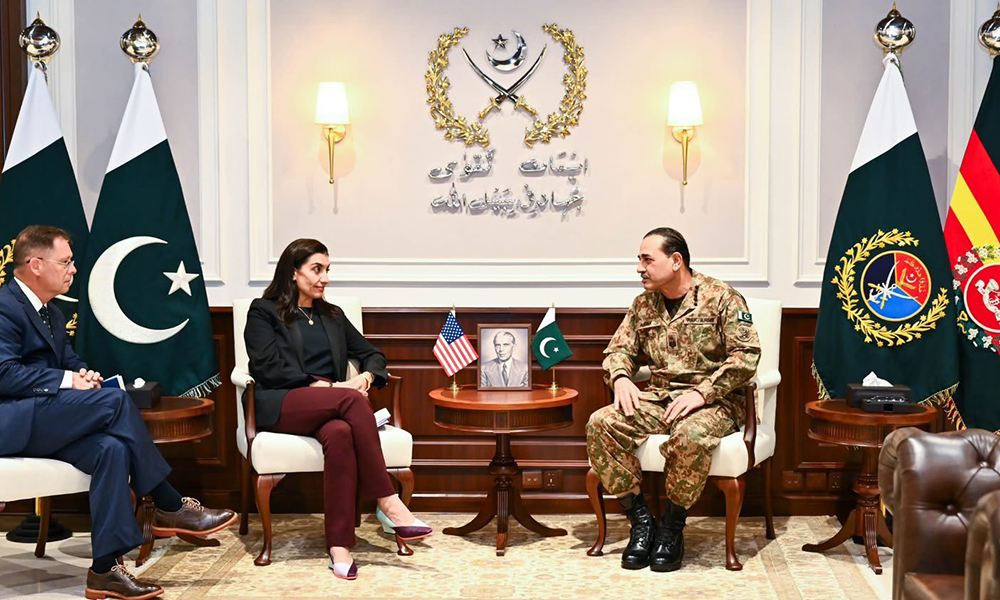
A delegation from the US Afghanistan War Commission met Pakistan’s army chief, Field Marshal Asim Munir, in Rawalpindi on Monday as the commission reviews the United States’ 20-year engagement in Afghanistan.
The delegation, led by commission co-chairs Shamila N. Chaudhary and Colin F. Jackson, met Munir at General Headquarters, according to Pakistan’s military.
Discussions covered Pakistan’s support during the Afghanistan conflict, the regional security environment and developments in Afghanistan, with a focus on issues relevant to the commission’s review.
Munir presented Pakistan’s perspective on the security dynamics that shaped the conflict and highlighted the challenges faced by the country during the prolonged war in neighbouring Afghanistan.
He also stressed the importance of incorporating the regional perspective and Pakistan’s experience when assessing the strategic, diplomatic and operational dimensions of the conflict, according to the military statement.
The delegation acknowledged Pakistan’s “longstanding role and sacrifices” during the conflict and appreciated what it described as the country’s continued contribution to regional peace and stability.
The Afghanistan War Commission was established by the US Congress in 2021 to conduct an independent review of US decisions and actions during the Afghanistan war from June 2001 to August 2021. The commission is examining the military, diplomatic, intelligence and foreign assistance aspects of the US engagement.
US forces completed their withdrawal from Afghanistan on August 30, 2021, ending nearly two decades of US military involvement in the country.
Pakistan was a key regional actor throughout the conflict, sharing a long border with Afghanistan and providing logistical and other support to US-led operations while also facing significant security challenges linked to the war.
The commission’s meeting with Munir comes as it gathers regional perspectives on the decisions and events that shaped the US engagement in Afghanistan. Its final report is expected to examine the broader strategic, diplomatic and operational lessons of the conflict.


Afghanistan Champions League: Toofan Herat and Aino Mina Kandahar draw 1-1

Tahawol: Absence of Afghanistan’s envoy at UNGA discussed

Saar: Assessment of war between Afghanistan and US discussed

Istiqlal Kabul beat Khurasan Faryab 2-0 with late goals

Islamic Emirate summons Pakistan’s chargé d’affaires over Nuristan incident

Saudi energy group signs major Afghanistan deals covering gas exploration and pipeline plans

Iranian clubs to face Gulf opponents at neutral venues in Asian Champions League Elite

Khalilzad: Afghanistan ready to attract major investment

Ariana Television Network secures exclusive rights to Afghanistan’s 2026/27 cricket series

Afghanistan drawn in Group A of AFC U17 Asian Cup qualifiers
Tahawol: Absence of Afghanistan’s envoy at UNGA discussed
Saar: Assessment of war between Afghanistan and US discussed

Saar: Afghanistan’s image at UNGA

Saar: Concerns over Pakistan’s political crisis discussed

Exclusive interview with Abdul Latif Mansoor, Minister of MRRD
-

 Sport2 days ago
Afghan bodybuilder Ali Bilal finishes runner-up at Mr Olympia for third straight year
-
 Latest News2 days ago
Afghanistan says 28 killed, 32 captured in Nuristan operation
-
 World3 days ago
Trump rejects Iranian proposal to open Hormuz and end fighting
-
 Sport4 days ago
Afghanistan to face India in Asian Games cricket quarter-final
-

 Sport4 days ago
Afghanistan Champions League: Arman FC and Aino Mina play out goalless draw
-

 Latest News3 days ago
Khalilzad questions Pakistan’s commitment to Afghan welfare
-
 World4 days ago
Iran awaits US move after WSJ report says Trump rejects peace plan
-

 Business3 days ago
Ariana Afghan Airlines increases Kabul-Delhi cargo flights