
Regional
Trump to lift Syria sanctions, signs $600 billion deal with Saudi Arabia
Trump has not scheduled a stop in Israel, raising questions about where the close ally stands in Washington’s priorities as Trump presses Israeli Prime Minister Benjamin Netanyahu to agree to a new ceasefire deal in the 19-month-old Gaza war.

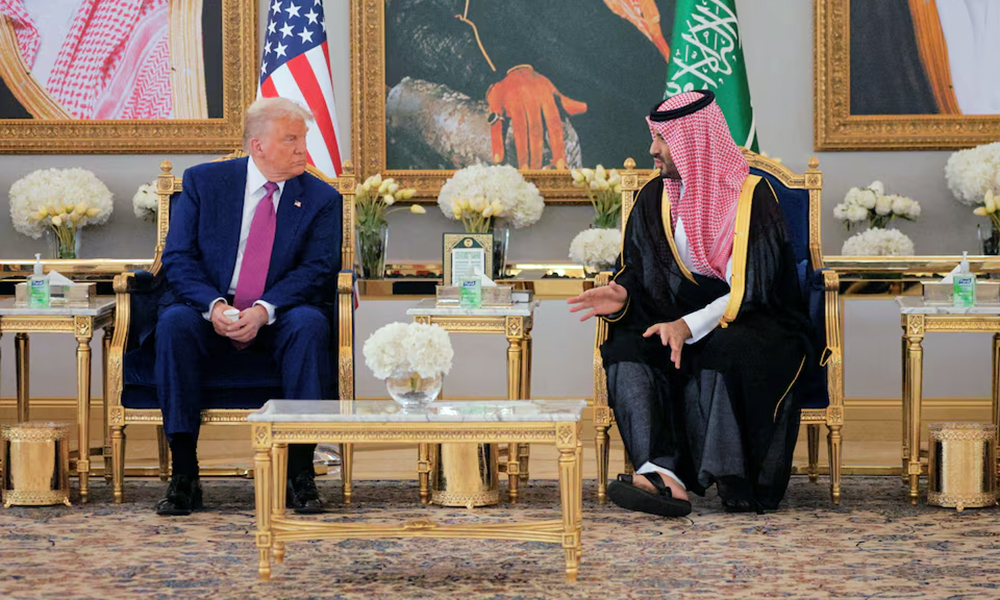
President Donald Trump kicked off his trip to the Gulf on Tuesday with a surprise announcement that the United States will lift long-standing sanctions on Syria, and a $600 billion commitment from Saudi Arabia to invest in the U.S, Reuters reported.
The U.S. agreed to sell Saudi Arabia an arms package worth nearly $142 billion, according to the White House which called it the largest “defense cooperation agreement” Washington has ever done.
The end of sanctions on Syria would be a huge boost for a country that has been shattered by more than a decade of civil war. Rebels led by current President Ahmed al-Sharaa toppled President Bashar al-Assad last December.
Speaking at an investment forum in Riyadh at the start of a deals-focused trip that also brought a flurry of diplomacy, Trump said he was acting on a request to scrap the sanctions by Saudi Arabia’s de facto ruler, Prince Mohammed bin Salman.
“Oh what I do for the crown prince,” Trump said, drawing laughs from the audience. He said the sanctions had served an important function but that it was now time for the country to move forward.
The move represents a major U.S. policy shift. The U.S. declared Syria a state sponsor of terrorism in 1979, added sanctions in 2004 and imposed further sanctions after the civil war broke out in 2011.
Syrian Foreign Minister Asaad al-Shibani said on X that the planned move marked a “new start” in Syria’s path to reconstruction. Trump has agreed to briefly greet Sharaa in Saudi Arabia on Wednesday, a White House official said.
Trump and the Saudi crown prince signed an agreement covering energy, defense, mining and other areas. Trump has sought to strengthen relations with the Saudis to improve regional ties with Israel and act as a bulwark against Iran.
The agreement covers deals with more than a dozen U.S. defense companies for areas including air and missile defense, air force and space, maritime security and communications, a White House fact sheet said.
It was not clear whether the deal included Lockheed F-35 jets, which sources say have been discussed. The Saudi prince said the total package could reach $1 trillion when further agreements are reached in the months ahead.
Saudi Arabia is one of the largest customers for U.S. arms, and the two countries have maintained strong ties for decades based on an arrangement in which the kingdom delivers oil and the superpower provides security.
But relations were strained after the 2018 murder of U.S.-based Saudi journalist Jamal Khashoggi by Saudi agents in Istanbul caused a global uproar. U.S. intelligence concluded that bin Salman approved an operation to capture or kill Khashoggi, a prominent critic, but the Saudi government has denied any involvement.
Trump did not mention the incident during his visit and called bin Salman an “incredible man.”
“I really believe we like each other a lot,” Trump said.
Trump will go on from Riyadh to Qatar on Wednesday and the United Arab Emirates on Thursday in a trip that is focused on investment rather than security matters in the Middle East, read the report.
Several U.S. business leaders attended the event, including Elon Musk, the Tesla chief who has led a government-downsizing effort for Trump in Washington; OpenAI CEO Sam Altman; BlackRock CEO Larry Fink and Blackstone CEO Stephen Schwarzman.
Trump was shown speaking with several Saudi officials, including sovereign wealth fund governor Yasir al-Rumayyan, Aramco CEO Amin Nasser and investment minister Khalid al-Falih as he viewed models for the kingdom’s flashy, multi-billion-dollar development projects.
Bin Salman has focused on diversifying the Saudi economy in a major reform program dubbed Vision 2030 that includes “Giga-projects” such as NEOM, a futuristic city the size of Belgium. Oil generated 62% of Saudi government revenue last year.
The kingdom has scaled back some of its ambitions as rising costs and falling oil prices weigh.
Trump has not scheduled a stop in Israel, raising questions about where the close ally stands in Washington’s priorities as Trump presses Israeli Prime Minister Benjamin Netanyahu to agree to a new ceasefire deal in the 19-month-old Gaza war.
Israel’s military operations against Hamas in Gaza and Hezbollah in Lebanon, and its assassinations of the two Iran-allied groups’ leaders, have at the same time given Trump more leverage by weakening Tehran and its regional allies, Reuters reported.
Trump said it was his “fervent hope” that Saudi Arabia would soon normalize relations with Israel, following other Arab states that did so during his first 2017-2021 term. “But you’ll do it in your own time,” he said.
Netanyahu’s opposition to the creation of a Palestinian state makes progress with the Saudis unlikely, sources told Reuters.
Trump on Tuesday called Iran “the most destructive force” in the Middle East and warned that the U.S. will never allow it to obtain a nuclear weapon. He said he was willing to strike a new deal with the Islamic Republic but only if its leaders changed course.
“I want to make a deal with Iran,” he said. “But if Iran’s leadership rejects this olive branch… we will have no choice but to inflict massive maximum pressure.”





Regional
Floods, landslides kill 56 in India and 14 in Nepal
In India, the Central Water Commission said 30 river-monitoring stations across seven states indicated a “severe situation”.
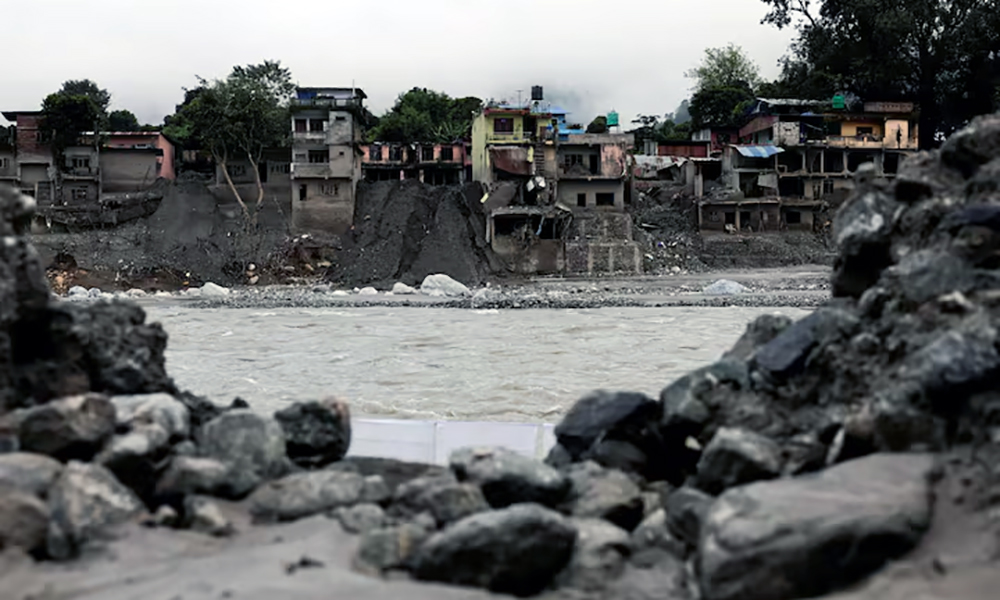
Heavy rain and storms have triggered floods and landslides that killed 56 people in India, while in Nepal, 14 have died and another 11 are missing, with authorities there warning on Sunday that more flash floods are possible, Reuters reported.
India’s northern state of Uttar Pradesh recorded 66.5 mm of rain between September 25 and the morning of September 27, compared with a normal 7.6 mm for the period, Hrishikesh Bhaskar Yashod, the state’s relief commissioner, said on Sunday.
Authorities are carrying out rescue operations in waterlogged areas and distributing relief, while officials have been told to assess crop damage and provide compensation.
In addition to the 56 deaths, 46 people have been injured and more than 1,000 houses have been damaged.
Nepali authorities warned of possible flash floods in 49 of the country’s 77 districts, with more than half facing high flood or flash-flood risks as water levels in major rivers and tributaries continued to rise.
Shanti Mahat, a spokesperson for the National Disaster Risk Reduction and Management Authority, said Rasuwa and Nuwakot, areas hit by last month’s deadly floods that killed more than 1,450 people and left thousands still missing, should remain “alert” but were not currently considered high-risk areas.
Power supply has been completely disrupted in the Manang, Mustang, Myagdi and Baglung districts, with authorities working to restore electricity, energy ministry officials said.
Flooding of the Rahuganga River damaged the structure and transmission-line towers of a 40-megawatt hydropower project, Water Resources and Energy Minister Biraj Bhakta Shrestha said.
In India, the Central Water Commission said 30 river-monitoring stations across seven states indicated a “severe situation”.
Several major rivers, including the Ganga, Gandak, Kosi, Bagmati and Narmada, were above danger levels, read the report.
Floods and landslides also disrupted telecommunications in parts of Nepal after damage to optical fibres and power supplies, Communications Minister Bikram Timilsinha said.
In a separate incident in Nepal, 10 local workers were also missing after an avalanche buried the base camp of the 7,126-metre (23,379-ft) Himlung Himal in the northern Manang district, hiking officials said.
The workers had been setting up tents for foreign climbers, who were not present when the avalanche struck.
Regional
Aimal Wali Khan calls Dera Ismail Khan attack a ‘state failure’
Khan called on the federal and Khyber Pakhtunkhwa governments to take greater responsibility for protecting citizens and addressing the deteriorating security situation in the province.
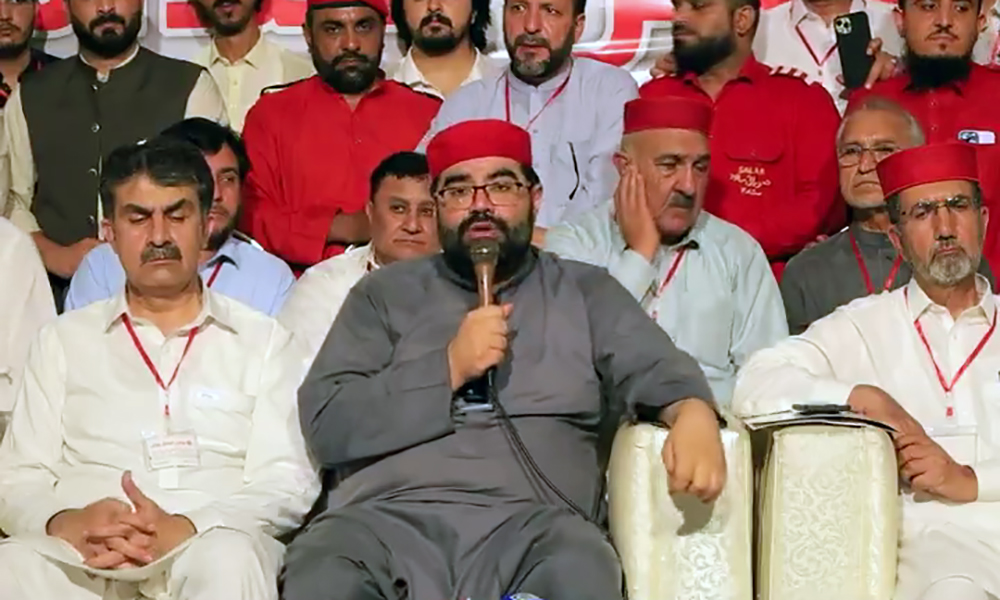
Awami National Party (ANP) President and Senator Aimal Wali Khan has condemned the suicide attack on the Aman Mela checkpoint in the Darazinda area of Pakistan’s Dera Ismail Khan district, describing it as a failure by the state to ensure the security of citizens.
According to Dawn, Khan called on the federal and Khyber Pakhtunkhwa governments to take greater responsibility for protecting citizens and addressing the deteriorating security situation in the province.
In a statement, Khan said Khyber Pakhtunkhwa is experiencing one of the darkest periods in its history. He alleged that the Pashtun population is facing systematic violence and said prolonged insecurity has left the province deeply affected by terrorism.
Khan also condemned an attack on an ambulance reportedly carrying the body of a person killed in the blast, describing it as an “inhumane act.”
The ANP leader questioned the government’s response to the worsening security situation, saying that blaming groups referred to by authorities as “Fitna al-Khawarij” and “Fitna al-Hindustan” does not absolve the state of its responsibility to protect citizens.
He urged the federal and provincial governments to stop blaming each other and instead focus on restoring peace and strengthening security across Khyber Pakhtunkhwa.
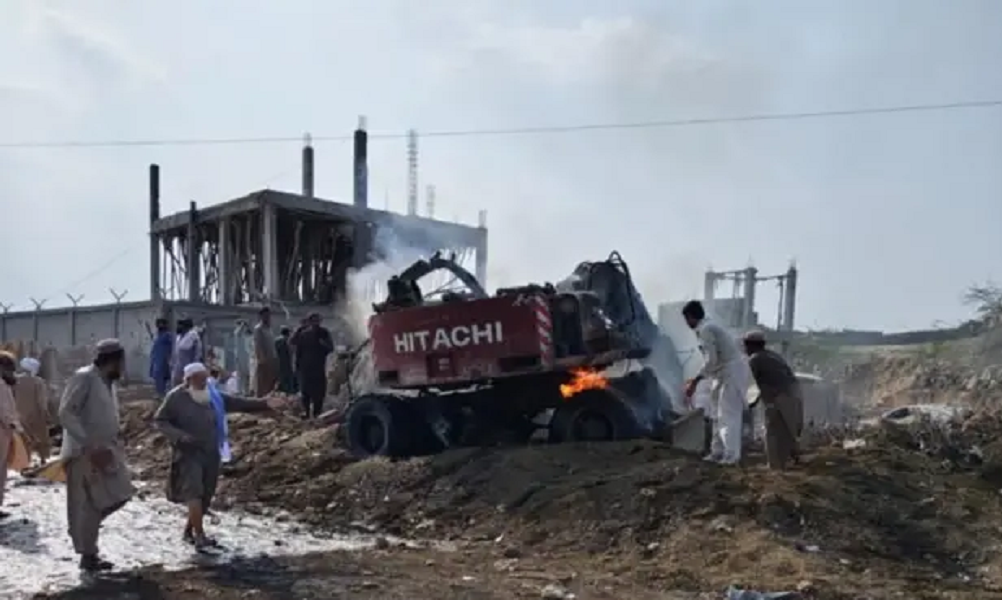
Eleven people were killed and 30 injured in a blast in Dera Ismail Khan in northwestern Pakistan on Saturday, emergency service Rescue 1122 said.
The Tehreek-e-Taliban Pakistan claimed responsibility for Saturday’s attack.
The blast occurred near Aman Mela in the Darazinda area of the district, Rescue 1122 said in a statement.
Rescue teams from the Darazinda station reached the scene and began relief operations, providing medical assistance to the wounded and taking them to hospital, the service said.
Security incidents have continued in the district this month, including attacks involving the Pakistani Taliban.


Sarsabz Yashlar edge Arman FC 1-0 in Afghanistan Champions League

Kunduz football ground to be built with FIFA funding

ACL: Sorkh Poshan Khafi maintain perfect record with 1-0 win over Ariana Khost

Health minister visits Belarus to expand medical cooperation

Afghanistan vs India Asian Games quarter-final abandoned without a toss

Saudi energy group signs major Afghanistan deals covering gas exploration and pipeline plans

Trump floats idea of renaming Atlantic or Pacific Ocean

Nepal flood rescue mission enters critical phase as thousands remain missing

Iranian clubs to face Gulf opponents at neutral venues in Asian Champions League Elite

Khalilzad: Afghanistan ready to attract major investment

Saar: Afghanistan’s image at UNGA

Saar: Concerns over Pakistan’s political crisis discussed

Exclusive interview with Abdul Latif Mansoor, Minister of MRRD

Tawsia: Overview of Afghanistan’s iron mines

Tahawol: Discussion on fresh Pakistani airstrikes on Afghanistan
-

 Regional5 days ago
Iran airlines cancel flights as US sanctions hit
-

 Sport4 days ago
Afghanistan open Asian Games cricket campaign with win over Japan
-
 World4 days ago
Trump welcomes Chinese President Xi as US-China summit gets underway
-
 World2 days ago
Trump rejects Iranian proposal to open Hormuz and end fighting
-

 Latest News1 day ago
Afghanistan says 28 killed, 32 captured in Nuristan operation
-

 Sport1 day ago
Afghan bodybuilder Ali Bilal finishes runner-up at Mr Olympia for third straight year
-
 Latest News4 days ago
Khalilzad warns Pakistan-Afghanistan tensions likely to worsen after fresh airstrikes
-
 Sport3 days ago
Afghanistan to face India in Asian Games cricket quarter-final