
World
Trump imposes tariffs, sanctions on Colombia after it refuses deportation flights
U.S. military aircraft carried out two similar flights, each with about 80 migrants, to Guatemala on Friday, Reuters reported.

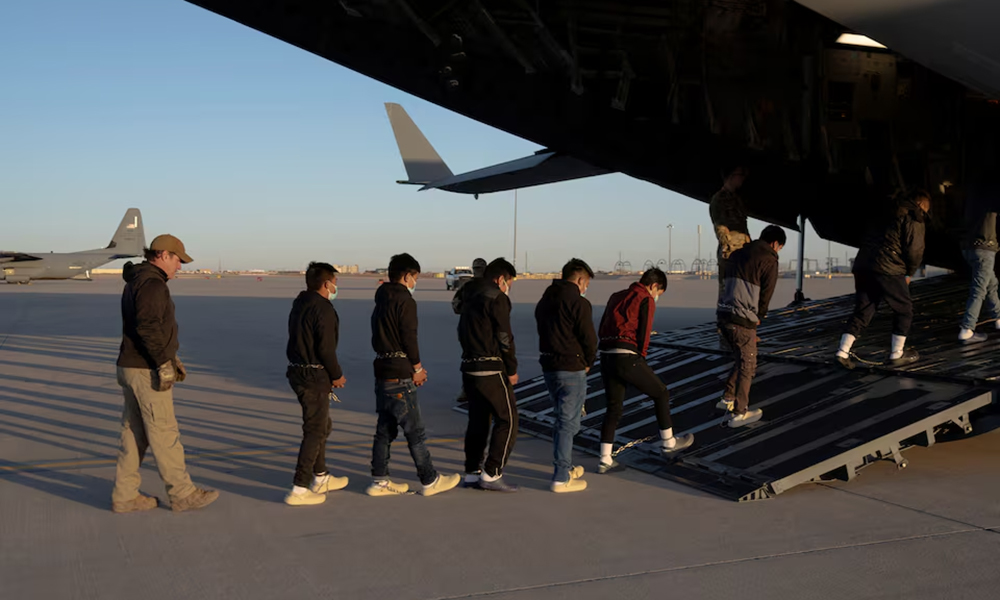
The U.S. and Colombia lurched toward a trade war on Sunday as President Donald Trump threatened tariffs and sanctions on the country to punish it for turning away military aircraft carrying migrants being deported as part of his immigration crackdown, Reuters reported.
Colombia, the third largest U.S. trading partner in Latin America, swiftly responded, with leftist President Gustavo Petro first threatening a 50% tariff on U.S. goods and later posting on X that he had directed his trade minister to increase tariffs on U.S. imports by 25%.
Colombia is the second Latin American nation to refuse U.S. military deportation flights. Trump’s punitive action demonstrated his more muscular U.S. foreign policy and his renewed willingness to force countries to bend to his will.
Trump wrote on Truth Social that Petro’s refusal to accept the flights jeopardized U.S. national security.
The retaliatory measures include imposing 25% tariffs on all Colombian goods coming into the U.S., which will go up to 50% in one week; a travel ban and visa revocations on Colombian government officials; and emergency treasury, banking and financial sanctions.
Trump said he would also direct enhanced border inspections of Colombian nationals and cargo.
“These measures are just the beginning,” he wrote. “We will not allow the Colombian Government to violate its legal obligations with regard to the acceptance and return of the Criminals they forced into the United States!”
He later posted a picture of himself on Truth Social in a pinstripe suit and a fedora in front of a sign reading FAFO, a common slang acronym for “Fuck Around and Find Out”.
America will “no longer be lied to nor taken advantage of,” U.S. Secretary of State Marco Rubio in a statement, adding that Petro had authorized these flights but then canceled his authorization when the planes were in the air.
A State Department spokesperson said the United States has suspended visa processing at the U.S. embassy in Bogota, read the report.
Trump declared illegal immigration a national emergency and imposed a sweeping crackdown since taking office last Monday. He directed the U.S. military to help with border security, issued a broad ban on asylum and took steps to restrict citizenship for children born on U.S. soil.
Colombia’s Petro condemned the practice on Sunday, suggesting it treated migrants like criminals. In a post on social media platform X, Petro said Colombia would welcome home deported migrants on civilian planes.
He also offered his presidential plane to facilitate the “dignified return” of Colombian nationals.
Petro said even though there were 15,660 Americans without legal immigration status in Colombia, he would never carry out a raid to return handcuffed Americans to the U.S.
“We are the opposite of the Nazis,” he wrote.
Mexico also refused a request last week to let a U.S. military aircraft land with migrants.
Trump did not take similar action against Mexico, the largest U.S. trading partner, but has said he is thinking about imposing 25% duties on imports from Canada and Mexico on Feb. 1 to force further action against illegal immigrants and fentanyl flowing into the U.S, Reuters reported.
A White House source said that the situation escalated quickly after Petro changed his mind about accepting the flights, with Trump taking “immediate action.”
“Absolutely. Yes. Countries have an obligation to accept repatriation flights,” the source said when asked if Trump was using Colombia to set an example. “The United States is simply sending back the criminals that Colombia sent to the United States.”
The U.S. is Colombia’s largest trading partner, largely due to a 2006 free trade agreement that generated $33.8 billion in two-way trade in 2023 and a $1.6 billion U.S. trade surplus, according to U.S. Census Bureau data.
But Colombia ranks just 23rd among U.S. trading partners, which means it may have more to lose.
Alejo Czerwonko, chief investment officer for emerging markets Americas at UBS Global Wealth Management, said Colombia relied on access to the U.S. market for about a third of its exports, or about 4% of its GDP.
“In addition, the Petro-Trump relationship has started off on the wrong foot, which could signal additional challenges ahead,” Czerwonko told Reuters.
Colombia’s top 2023 exports to the U.S. were heavy crude oil, gold, coffee, cut roses, aluminum windows and diesel fuel, Census Bureau data showed. Its top imports from the U.S. were gasoline, civilian aircraft, corn, naphthas, and soybean solids.
Petro’s comments added to the growing chorus of discontent in Latin America as Trump’s week-old administration starts mobilizing for mass deportations.
Brazil’s foreign ministry on Saturday condemned “degrading treatment” of Brazilians after migrants were handcuffed on a commercial deportation flight. Upon arrival, some passengers also reported mistreatment during the flight, according to local news reports.
The plane, which was carrying 88 Brazilian passengers, 16 U.S. security agents, and eight crew members, had been originally scheduled to arrive in Belo Horizonte in the southeastern state of Minas Gerais.
However, at an unscheduled stop due to technical problems in Manaus, capital of Amazonas, Brazilian officials ordered removal of the handcuffs, and President Luiz Inácio Lula da Silva designated a Brazilian Air Force (FAB) flight to complete their journey, the government said in a statement on Saturday.
The commercial charter flight was the second this year from the U.S. carrying undocumented migrants deported back to Brazil and the first since Trump’s inauguration, according to Brazil’s federal police.
U.S. officials did not reply to requests for comment about Brazil.
The use of U.S. military aircraft to carry out deportation flights is part of the Pentagon’s response to Trump’s national emergency declaration on immigration on Monday.
In the past, U.S. military aircraft have been used to relocate individuals from one country to another, like during the U.S. withdrawal from Afghanistan in 2021.
This has been the first time in recent memory that U.S. military aircraft were used to fly migrants out of the country, one U.S. official said.
U.S. military aircraft carried out two similar flights, each with about 80 migrants, to Guatemala on Friday, Reuters reported.

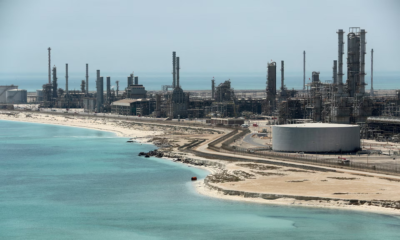





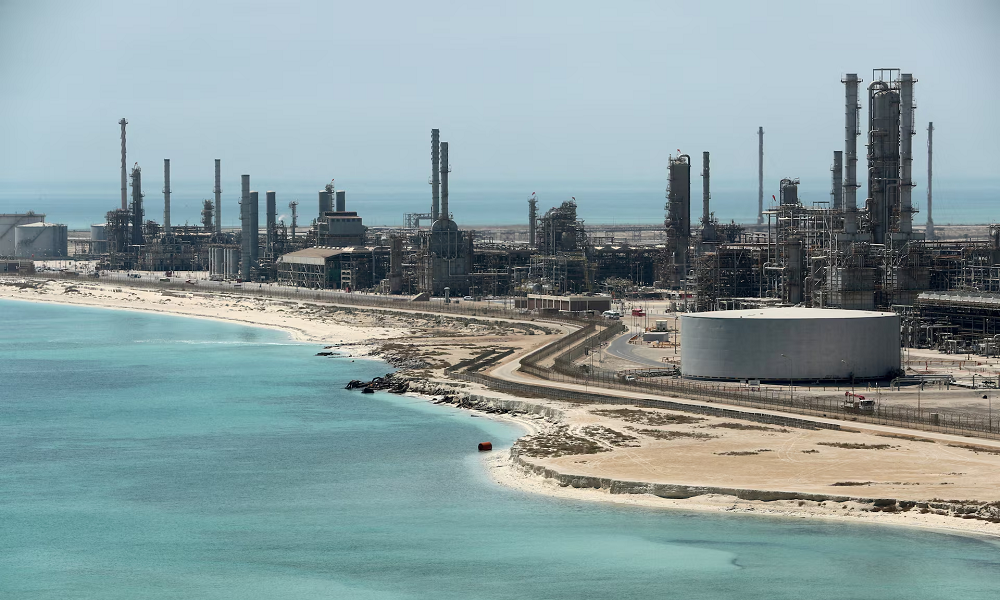
A helicopter belonging to Saudi oil giant Aramco crashed on Sunday in Ras Tanura on Saudi Arabia’s eastern coast on the Gulf, west of the Strait of Hormuz, killing 14 nationals, the state news agency reported, adding that the cause was unknown.
Aramco had resumed crude oil loadings on Friday at its Ras Tanura terminal in the Gulf after they were halted for nearly four months, Reuters reported.
“The relevant authorities have launched a full investigation to determine the cause of the crash,” the state news agency added.
Aramco did not respond immediately to an emailed request for comment.
The incident took place at 6 a.m. local time (0300 GMT), the state agency said, without providing further details.
Saudi Arabia, the world’s biggest oil exporter, has joined a rush to move cargoes after Middle East producers ramped up oil and gas output and exports ahead of an interim deal to halt the war between the United States and Iran.
World
Israel, Lebanon sign initial agreement after US-mediated talks
Israeli Prime Minister Benjamin Netanyahu said the agreement allows Israeli forces to continue to occupy southern Lebanon if Hezbollah does not disarm.
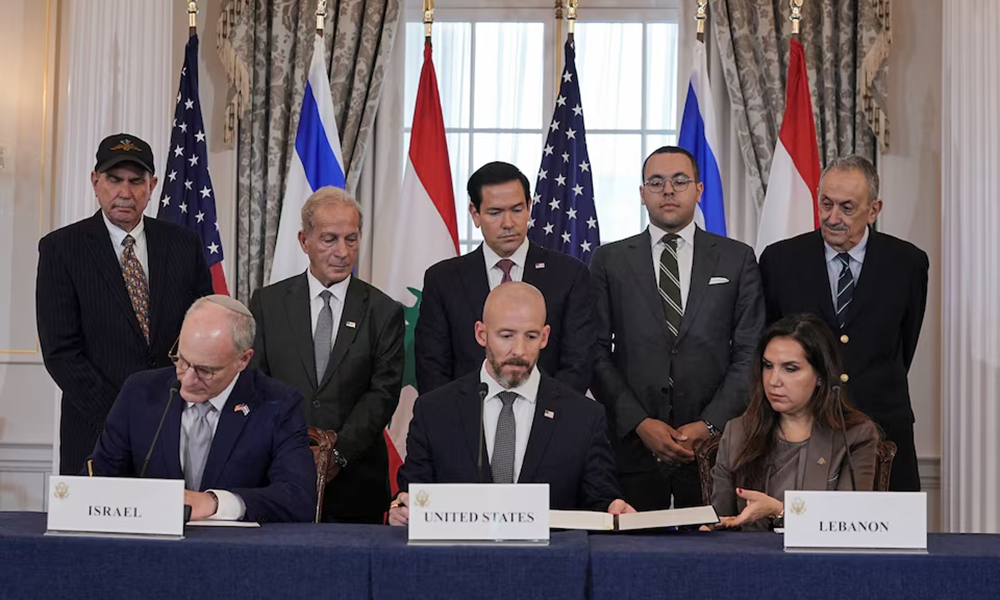
Israel and Lebanon signed a framework agreement in Washington on Friday following several days of talks to secure an end to fighting between Israel and Iran-backed Hezbollahmilitants, though both sides framed the deal as an initial step, Reuters reported.
Lebanese Ambassador Nada Moawad and her Israeli counterpart Yechiel Leiter signed the trilateral document with the U.S. at the State Department in Washington, providing few details.
Israeli Prime Minister Benjamin Netanyahu said the agreement allows Israeli forces to continue to occupy southern Lebanon if Hezbollah does not disarm.
“Today we’ve taken the first step in what will be a difficult journey, without a doubt, but an important and an essential and a necessary one,” U.S. Secretary of State Marco Rubio said before the agreement was inked.
In a later statement he said that the U.S. would facilitate the implementation of the deal through a trilateral “Military Coordination Group for Lebanon” and that Washington would commit significant resources, including an immediate $100 million in humanitarian assistance in coordination with the U.N.
Rubio added that the U.S. reaffirmed its intent to improve the capabilities of the Lebanese Armed Forces “to more effectively establish sovereignty throughout Lebanese territory” with more than $30 million in funds under existing U.S. authorities and appropriations.
The conflict between Israel and Hezbollah broke out when the armed group fired at Israel on March 2, days after the U.S. and Israel attacked Iran. The Hezbollah attacks triggered Israeli air and ground attacks that have killed more than 4,000 people in Lebanon and displaced more than a million.
Lebanon’s Moawad also called it a “first step” on the road to restoring Lebanese sovereignty.
“Iran is out, Hezbollah is out, and the road to peace between Israel and Lebanon is in,” Leiter said.
Netanyahu said in a statement that the deal would also allow the Lebanese army “to begin organizing to take control of territory,” starting with what he described as two “pilot zones” from which Israeli troops would withdraw from land they occupied during the war.
Israel describes that territory as a “security zone” or “buffer zone” where its troops can thwart Hezbollah attacks on northern Israel.
Lebanese President Joseph Aoun said the agreement should allow Lebanese to return to “fully liberated” land and rebuilt homes with “no partner” in its sovereignty.
Israel’s death toll from this round of hostilities with Hezbollah includes at least 32 soldiers and four Israeli civilians. Hezbollah does not release figures on its war dead. Reuters reported on May 4 that several thousand Hezbollah fighters had been killed in the war.
A State Department official told Reuters on Thursday that Israel had agreed to pull back from some of the territory it has occupied, something Israeli and Lebanese officials denied.
Before the talks resumed this week, Israel and Hezbollah agreed to halt fire even as Israel kept troops in southern Lebanon.
Violence has persisted since the ceasefire, with Israel saying on Friday its troops had struck and killed what the military described as seven Hezbollah members who were operating near the territory it is occupying. Reuters could not confirm this.
“To the degree that the Lebanese army performs in dismantling and disarming Hezbollah, we will proceed with additional pilot zones and the ultimate determination of an internationally recognized, secure, and agreed upon border,” Leiter told reporters after the signing.
Hezbollah lawmaker Hassan Fadlallah said Lebanese authorities would not be able to enforce the agreement unless, with U.S. support, “they go to civil war,” pro-Iranian broadcaster Al Mayadeen reported, read the report.
Hezbollah would confront any measure taken by Lebanese authorities and would hold on to its weapons even more, adding that the group’s opposition was “serious” and would not allow authorities to implement their commitments on the ground, Fadlallah said.
Israeli forces dropped leaflets over the southern Lebanese town of Mansouri on Friday ordering residents to leave, Lebanese state media reported, the first such order issued since the latest ceasefire between Israel and Hezbollah took effect.
A senior Lebanese military official said Israel had recently added Mansouri to its occupation zone. The official said Lebanese farmers had continued to enter and leave the town, but had not been living there.
An Israeli military spokesperson said the military issued what it described as a “reminder” to the civilian population that “the area is within the security zone in which (Israeli) soldiers operate. It’s a reminder not to be in the area so they won’t be harmed.”
World
Venezuela earthquake death toll rises to 188 as rescue efforts continue
According to officials, 138 aftershocks have been recorded since the twin 7.2- and 7.5-magnitude earthquakes struck late Wednesday, causing widespread destruction.
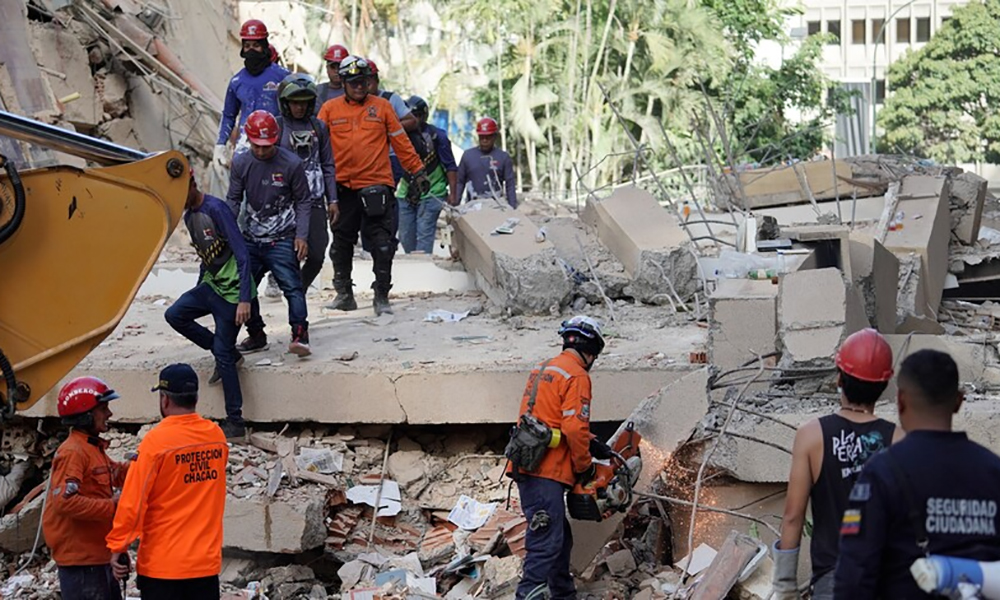
The death toll from the powerful earthquakes that struck Venezuela’s northern Caribbean coast has risen to 188, authorities confirmed on Thursday, as emergency crews continue search and rescue operations.
Jorge Rodriguez, President of Venezuela’s National Assembly, said 1,520 people have been hospitalized with injuries, while 157 people remain missing. Rescue teams are still searching for more than 200 people believed to be trapped beneath collapsed buildings.
According to officials, 138 aftershocks have been recorded since the twin 7.2- and 7.5-magnitude earthquakes struck late Wednesday, causing widespread destruction.
Rodriguez said 346 infrastructure sites sustained damage, including 250 buildings, 20 shopping centers, and eight hospitals, forcing authorities to transfer patients to other medical facilities.
The Venezuelan government has announced the establishment of a $200 million emergency reconstruction fund to support the rebuilding of damaged homes, hospitals, and other critical infrastructure.
Following the disaster, Acting President Delcy Rodriguez declared a national state of emergency, while tsunami warnings were issued across parts of the Caribbean region after the powerful earthquakes.


Tahawol: Calls for diplomacy between Kabul, Islamabad

Saar: US and Iran exchanging attacks

Saudi Aramco helicopter crash kills 14 nationals, state news agency says

Afghanistan eyes direct Basmati rice imports from India amid tensions with Pakistan

Afghan minister says ‘outsiders’ should not claim to support Afghanistan’s independence

Norway’s Viking-inspired World Cup team photo goes viral

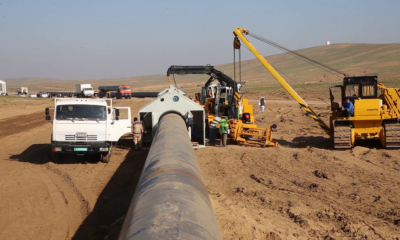
TAPI project advances in Afghanistan as 84kms of pipeline laid

Afghanistan’s trade with Central Asia records sharp growth

Afghanistan to play in Diamond Jubilee Tournament opener against Maldives

Gaikwad set to replace injured Kohli for Afghanistan ODI Series
Tahawol: Calls for diplomacy between Kabul, Islamabad
Saar: US and Iran exchanging attacks

Saar: Concerns over Afghan deportations from Europe discussed

Exclusive interview with Polleak Ok Serei, UNODC Representative for Afghanistan

Tahawol: Germany’s defense of engagement with IEA discussed
-
 Latest News2 days ago
TAPI project sees rapid progress in Afghanistan
-

 International Sports4 days ago
Knockout picture begins to take shape at FIFA World Cup 2026
-

 International Sports1 day ago
FIFA World Cup: Iran held by Egypt after controversial late goal Is disallowed
-

 Latest News4 days ago
Afghanistan’s SCO participation blocked over one member’s objection, Kabulov says
-

 International Sports3 days ago
FIFA World Cup: Messi turns 39, shows no signs of stopping
-

 Latest News5 days ago
EU allocates 20 million euros to support returnees in Afghanistan
-
 Regional5 days ago
Iran’s Pezeshkian says without missiles his country would be ‘just like Gaza’
-

 Business5 days ago
Afghanistan chamber, India’s ASSOCHAM sign MoU to enhance trade and investment cooperation