
Latest News
Trump says he will meet Putin in Budapest, touting progress in Ukraine talks

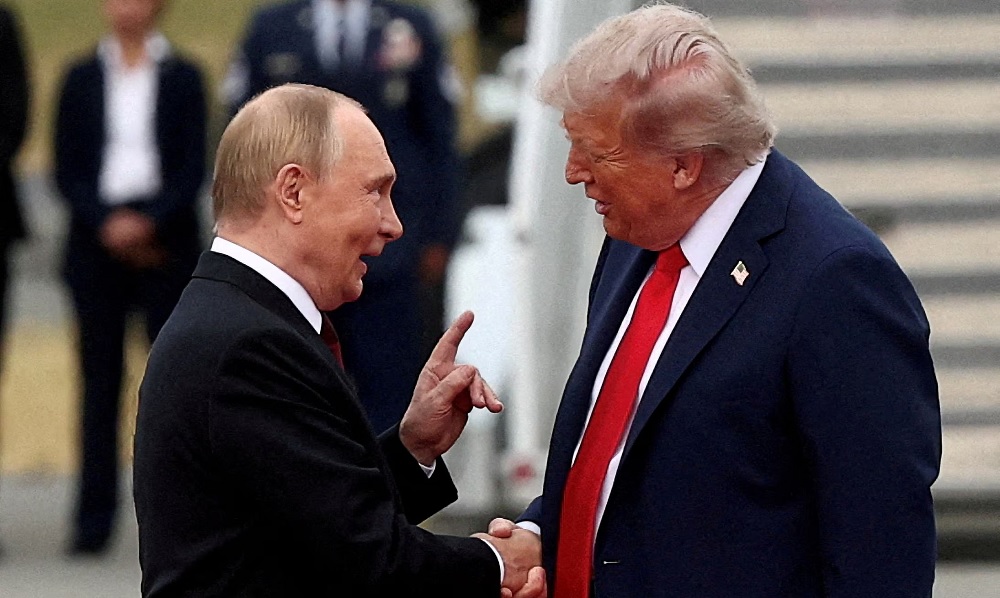
U.S. President Donald Trump and Russian President Vladimir Putin agreed on Thursday to another summit on the war in Ukraine, a surprise move that came as Moscow feared fresh U.S. military support for Kyiv.
Trump and Putin may meet within the next two weeks in Budapest, the U.S. president said, after a more than two-hour phone conversation he called productive. The Kremlin confirmed plans for the meeting, though neither side provided a date for when it would occur, Reuters reported.
“My whole life, I’ve made deals,” Trump told reporters later at the White House. “I think we’re going to have this one done, hopefully soon.”
The development came as Ukrainian President Volodymyr Zelenskiy was headed to the White House on Friday to push for more military support, including U.S.-made long-range Tomahawk missiles.
NEW UKRAINE SUPPORT IN QUESTION
The White House had seemed in recent days to be leaning toward granting Zelenskiy fresh support and increasingly frustrated with Putin.
Yet Trump’s conciliatory tone following the Russia call left in question the near-term likelihood of assistance and reignited European fears of U.S. capitulation to Moscow.
Since taking office in January, Trump has regularly threatened action against Russia, only to delay those steps after talks with Putin.
Trump sought a ceasefire ahead of an Alaska summit with Putin in August that produced none. At the time, some analysts said Putin pocketed U.S. concessions with no intent to halt fighting.
Three-way talks between Putin, Zelenskiy, and Trump, another goal sought by Washington at the time, never materialized, and there is no immediate plan for such a meeting now.
The Republican president has positioned himself as a peacemaker, brandishing diplomatic achievements including the recent Gaza ceasefire and hostage deal. He has said he thought the war in Ukraine, which began with Russia’s 2022 invasion, would have been easier to end.
“Putin is trying to derail the momentum toward greater pressure on Russia,” said Dan Fried, a former State Department official. “We’ll see what happens tomorrow, but the chances of moving toward a ceasefire by pushing Russia to get serious seem to have diminished.”
PUTIN WARNS TRUMP ABOUT SUPPLYING MISSILES
During the call, Putin told Trump that supplying long-range missiles to Ukraine would harm the peace process and damage U.S.-Russia ties, Kremlin aide Yuri Ushakov told reporters.
“What do you think he’s going to say, ‘Please sell Tomahawks?'” Trump later joked with reporters. “No, he doesn’t want,” Tomahawks given to Ukraine, Trump added, calling them a “vicious weapon.”
Zelenskiy, already in Washington, said Putin’s decision to seek talks showed he was on the defensive.
“We can already see that Moscow is rushing to resume dialogue as soon as it hears about Tomahawks,” he said on X.
The Hungarian location selected for the Trump-Putin summit has drawn attention. Putin is wanted for alleged war crimes in some jurisdictions, restricting his travel.
Ukraine’s relationship with Hungary has grown increasingly tense. Zelenskiy accused Hungarian drones of crossing into Ukraine last month, prompting Hungarian Prime Minister Viktor Orban to retort that Ukraine was not an independent sovereign state.
In contrast to most NATO and European Union leaders, Orban has maintained cordial relations with Russia while questioning the logic of Western military aid for Kyiv.
“The planned meeting between the American and Russian presidents is great news for the peace-loving people of the world,” Orban said on X. “We are ready!” He later said he had spoken by phone with Trump and that preparations for a U.S.-Russia peace summit were under way.
The Trump-Putin meeting is expected to follow talks next week between teams led by U.S. Secretary of State Marco Rubio and Russian Foreign Minister Sergei Lavrov, at a location to be determined.
In a post on Truth Social, Trump said he would brief Zelenskiy on the Russia talks in the Oval Office on Friday.
UKRAINE WANTS TO EXPAND ATTACK RANGE
Kyiv and Moscow have been escalating their war as it heads toward a four-year anniversary with massive attacks on energy infrastructure. NATO has struggled to respond to a spate of Russian air incursions.
Ukraine wants missiles that would put Moscow and other major Russian cities within its range of fire.
In its latest barrage, Russia launched more than 300 drones and 37 missiles to target infrastructure across Ukraine in overnight attacks on Thursday, Zelenskiy said. Kyiv has ramped up its own attacks on Russian targets, including an oil refinery in the Saratov region on Thursday.
In his latest warnings to Russia, Trump said on Wednesday that Indian Prime Minister Narendra Modi had agreed to stop buying Russian oil, and that the administration would push China to do the same. India has not confirmed any such commitment. The countries are among Russia’s biggest trading partners.










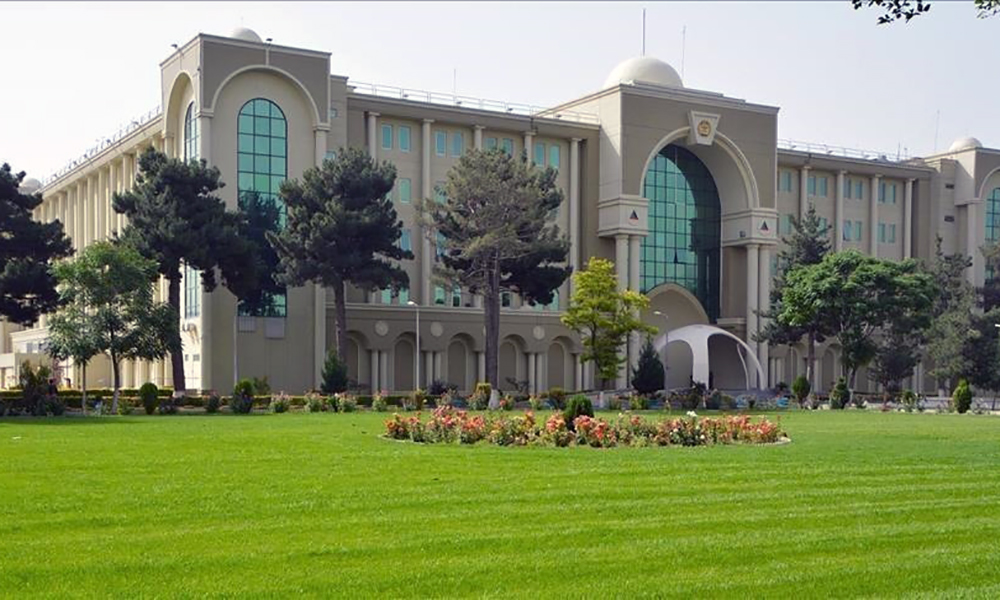
Afghanistan’s Ministry of Defense says a Pakistani military post near Spin Boldak was targeted and destroyed after Pakistani forces opened fire toward Afghanistan.
Ministry spokesperson Enayatullah Khwarazmi said in a post on X that Afghan forces suffered no casualties or damage in the clash.
Khwarazmi also rejected claims made by the Pakistani side about the incident, describing them as “propaganda.”
Latest News
Mujahid: Pakistan attacking Afghanistan to evade Mecca Pact responsibilities
He warned that the Islamic Emirate would give an “appropriate response” to what he called the Pakistani military regime’s “bullying.”
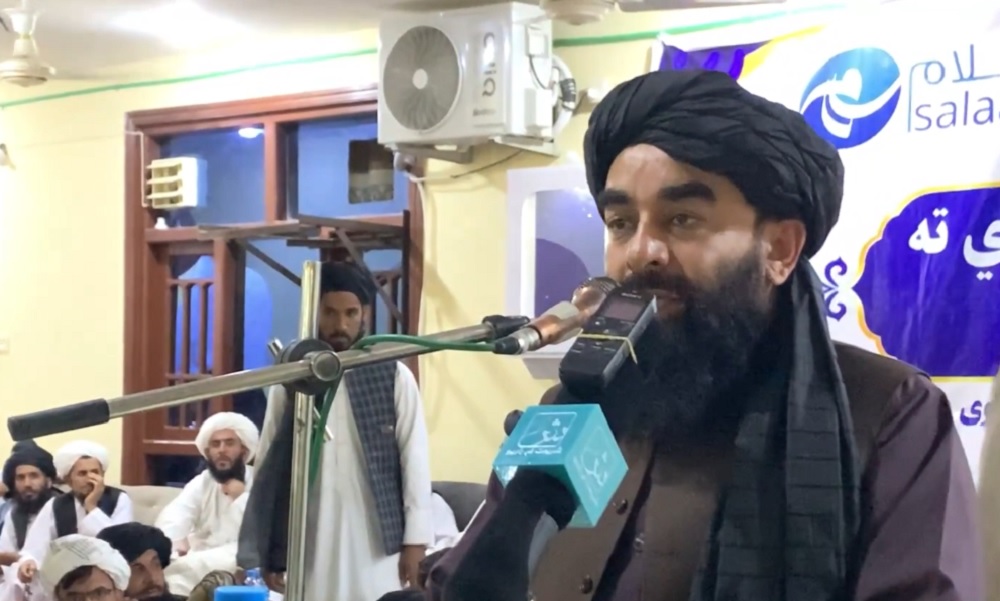
Islamic Emirate spokesperson Zabihullah Mujahid has accused Pakistan of carrying out attacks on Afghanistan to divert attention from its domestic problems and to evade responsibilities under the “Mecca Pact.”
Speaking at a religious seminary in Kandahar, Mujahid said Pakistan was facing political and economic challenges at home and was using attacks on Afghanistan to shift public attention away from protests and its internal problems.
“Pakistan, by violating the territory of its neighboring Islamic country, wants to divert attention from its failures,” he said.
Mujahid also criticized Pakistan’s political situation, claiming that political space had been restricted and that freedoms guaranteed under the country’s laws were not being allowed.
He said Pakistan’s economic problems had also increased significantly and accused the country of seeking to distract the public from those problems by engaging in conflict with Afghanistan.
Mujahid further accused Pakistan’s military leadership of putting the Pakistani people at risk through what he described as its “false position.”
He warned that the Islamic Emirate would give an “appropriate response” to what he called the Pakistani military regime’s “bullying.”
His remarks followed Pakistani airstrikes on Kandahar, Paktia and Khost provinces on Thursday, which Afghan authorities said killed four civilians.
The strikes came three days after attacks on Kunar and Paktika provinces, in which Afghan authorities said three civilians were killed.
Latest News
Kabul rejects U.S. claim that meth seized in Pakistan was of Afghan origin
Balkhi said the Islamic Emirate of Afghanistan (IEA) has imposed an absolute ban on the production, trafficking and use of all types of narcotics in Afghanistan.
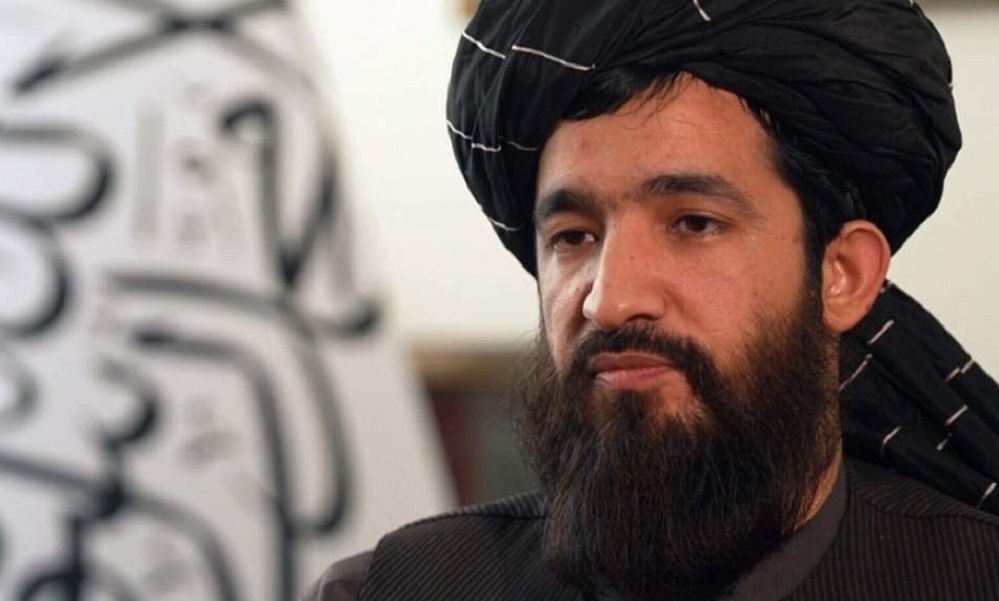
Afghanistan’s Foreign Ministry spokesperson Abdul Qahar Balkhi has rejected a U.S. claim that 463 kilograms of synthetic drugs seized in Pakistan were of Afghan origin, calling the attribution “unfounded and politically motivated.”
Balkhi said the U.S. Embassy in Islamabad should investigate the origin of the seized drugs in Pakistan rather than attributing them to Afghanistan.
“The attribution by the U.S. Embassy in Islamabad of the synthetic drugs bound for Sri Lanka and intercepted in Pakistan through joint U.S.-Pakistani efforts as ‘Afghan-origin’ is an unfounded and politically motivated allegation,” Balkhi said.
He said the Islamic Emirate of Afghanistan (IEA) has imposed an absolute ban on the production, trafficking and use of all types of narcotics in Afghanistan.
Balkhi also claimed that following the ban in Afghanistan, the cultivation, production and trafficking of narcotics have increased “on the other side of the Durand Line.”
He further argued that Afghanistan does not have the capacity to produce synthetic drugs and said crossing points along the Durand Line have been completely closed to all movement for nearly a year.
His remarks came after the U.S. Embassy in Islamabad said U.S. and Pakistani anti-narcotics authorities had seized 463 kilograms of crystal methamphetamine worth an estimated $21 million and bound for Sri Lanka.
The embassy said the operation led to multiple arrests and highlighted ongoing U.S. cooperation and training with Pakistani authorities to disrupt international drug-trafficking networks.


Exclusive interview with Abdul Latif Mansoor, Minister of MRRD

Sorkh Poshan Khafi rout Istiqlal Kabul 6-0 in ACL season six

Tawsia: Overview of Afghanistan’s iron mines

Afghanistan Champions League: Arman FC and Aino Mina play out goalless draw

Afghanistan says Pakistani military post destroyed near Spin Boldak

Saudi energy group signs major Afghanistan deals covering gas exploration and pipeline plans

ATN secures exclusive rights to broadcast T20I series in India across Afghanistan

Trump floats idea of renaming Atlantic or Pacific Ocean

US hits Egyptian bank branches with Iran sanctions as war marks six months

Nepal flood rescue mission enters critical phase as thousands remain missing
Exclusive interview with Abdul Latif Mansoor, Minister of MRRD
Tawsia: Overview of Afghanistan’s iron mines

Tahawol: Discussion on fresh Pakistani airstrikes on Afghanistan

Saar: Calls for international support for Afghanistan discussed

Tahawol: Opening of the 81st UN General Assembly Session
-

 Sport4 days ago
Afghanistan to face Japan and Nepal in Asian Games cricket group stage
-
 Regional5 days ago
Iran and US trade threats after Houthi attacks escalate regional conflict
-

 World4 days ago
CNN, MS NOW and Politico sue Trump, challenging White House ban
-
 Health4 days ago
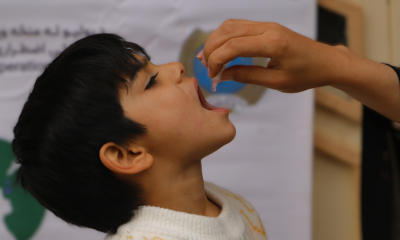
Four-day polio vaccination campaign begins across Afghanistan
-

 Latest News4 days ago
UN reiterates call for respect for international law after Kunar airstrikes
-
 Latest News4 days ago
Khalilzad condemns Pakistan airstrikes, says current strategy is not working
-

 Latest News2 days ago
Ariana Afghan Airlines ranks seventh among 45 Central Asian airlines
-

 Latest News4 days ago
Afghan Official: Pakistan’s airstrikes will not go unanswered