
Latest News
Trump’s travel ban on 12 countries goes into effect early Monday
The countries affected by the latest travel ban are Afghanistan, Myanmar, Chad, Republic of the Congo, Equatorial Guinea, Eritrea, Haiti, Iran, Libya, Somalia, Sudan and Yemen.

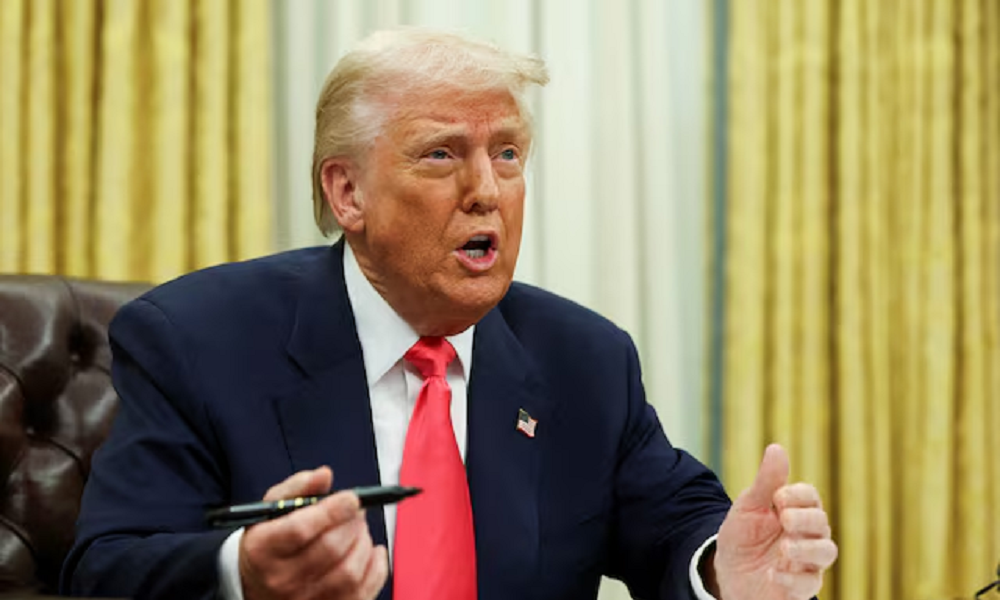
U.S. President Donald Trump’s order banning citizens of 12 countries from entering the United States goes into effect at 12:01 am ET (0401 GMT) on Monday, a move the president promulgated to protect the country from “foreign terrorists.”, Reuters reported.
The countries affected by the latest travel ban are Afghanistan, Myanmar, Chad, Republic of the Congo, Equatorial Guinea, Eritrea, Haiti, Iran, Libya, Somalia, Sudan and Yemen.
The entry of people from seven other countries – Burundi, Cuba, Laos, Sierra Leone, Togo, Turkmenistan and Venezuela – will be partially restricted.
Trump, a Republican, said the countries subject to the most severe restrictions were determined to harbor a “large-scale presence of terrorists,” fail to cooperate on visa security, have an inability to verify travelers’ identities, as well as inadequate record-keeping of criminal histories and high rates of visa overstays in the United States.
He cited last Sunday’s incident in Boulder, Colorado, in which an Egyptian national tossed a gasoline bomb into a crowd of pro-Israel demonstrators as an example of why the new curbs are needed. But Egypt is not part of the travel ban, read the report.
The travel ban forms part of Trump’s policy to restrict immigration into the United States and is reminiscent of a similar move in his first term when he barred travelers from seven Muslim-majority nations.
Officials and residents in countries whose citizens will soon be banned expressed dismay and disbelief.
Chad President Mahamat Idriss Deby Itno said he had instructed his government to stop granting visas to U.S. citizens in response to Trump’s action.
“Chad has neither planes to offer nor billions of dollars to give, but Chad has its dignity and its pride,” he said in a Facebook post, referring to countries such as Qatar, which gifted the U.S. a luxury airplane for Trump’s use and promised to invest billions of dollars in the U.S.
Afghans who worked for the U.S. or U.S.-funded projects and were hoping to resettle in the U.S. expressed fear that the travel ban would force them to return to their country, where they could face reprisal from the Islamic Emirate, Reuters reported.
Democratic U.S. lawmakers also voiced concern about the policies.
“Trump’s travel ban on citizens from over 12 countries is draconian and unconstitutional,” said U.S. Representative Ro Khanna on social media late on Thursday. “People have a right to seek asylum.”












Kazakhstan’s Foreign Minister Mukhtar Tileuberdi has called for pragmatic and coordinated international engagement with Afghanistan, saying the country’s long-term stability is closely linked to the security and sustainable development of Central Asia.
Speaking during the general debate of the 81st session of the United Nations General Assembly in New York on Friday, Tileuberdi said humanitarian assistance to Afghanistan remains essential but alone cannot break the cycle of poverty, displacement and dependency.
He said Kazakhstan supports a “pragmatic, coordinated and step-by-step” approach to international engagement with Afghanistan, with the United Nations playing a central role.
Tileuberdi also said Kazakhstan is working with the UN to operationalize the United Nations Regional Centre for the Sustainable Development Goals for Central Asia and Afghanistan in Almaty.
He said the success of the centre should be measured by the results and assistance it delivers to the region.


Abu Muslim Farah defeat Khurasan Faryab 2-0 in ACL season six

Saar: Concerns over Pakistan’s political crisis discussed

Afghanistan Champions League: Omar Zawak Herat beat Toofan Herat 1-0

Blast in Pakistan’s Dera Ismail Khan kills 11, injures 30

Ariana Afghan Airlines increases Kabul-Delhi cargo flights

Saudi energy group signs major Afghanistan deals covering gas exploration and pipeline plans

Trump floats idea of renaming Atlantic or Pacific Ocean

US hits Egyptian bank branches with Iran sanctions as war marks six months

Nepal flood rescue mission enters critical phase as thousands remain missing

Iranian clubs to face Gulf opponents at neutral venues in Asian Champions League Elite
Saar: Concerns over Pakistan’s political crisis discussed

Exclusive interview with Abdul Latif Mansoor, Minister of MRRD

Tawsia: Overview of Afghanistan’s iron mines

Tahawol: Discussion on fresh Pakistani airstrikes on Afghanistan

Saar: Calls for international support for Afghanistan discussed
-

 World5 days ago
CNN, MS NOW and Politico sue Trump, challenging White House ban
-

 Latest News3 days ago
Ariana Afghan Airlines ranks seventh among 45 Central Asian airlines
-

 Latest News5 days ago
UN reiterates call for respect for international law after Kunar airstrikes
-

 Regional4 days ago
US and Iran hold first talks since June after Trump’s ‘annihilation’ threat
-

 Latest News3 days ago
Silk Road highway in Wakhan corridor now reaches the China border
-

 Regional3 days ago
Iran airlines cancel flights as US sanctions hit
-

 Latest News5 days ago
Afghan Official: Pakistan’s airstrikes will not go unanswered
-
 Regional5 days ago
G7 foreign ministers call on Iran to stop arming Houthis