
Regional
UN inquiry accuses Israeli leaders of inciting genocide in Gaza
The findings accuse Israel of orchestrating a campaign of killings, forced displacement, aid blockages, and destruction of medical facilities,

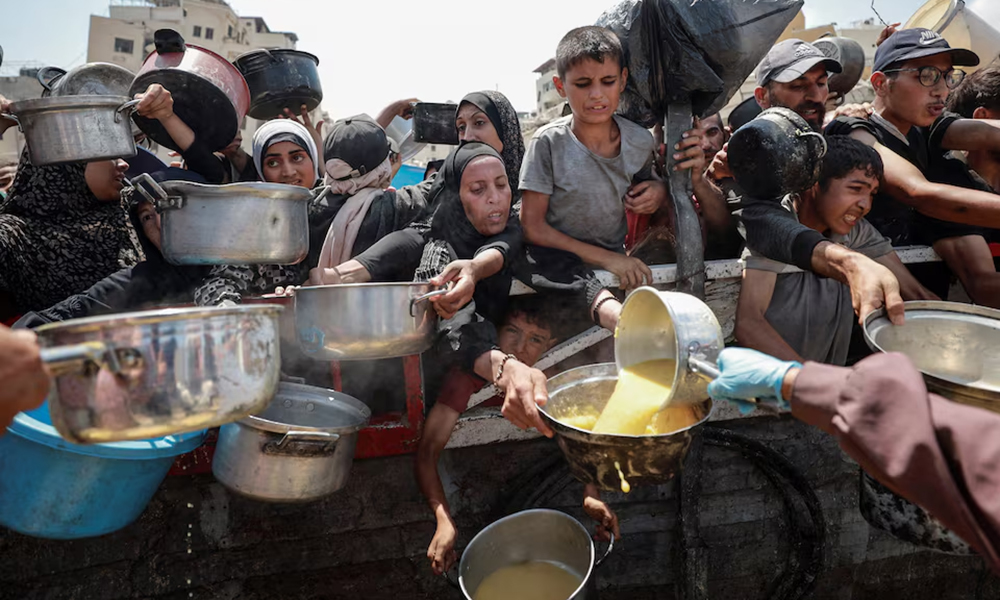
A United Nations Commission of Inquiry has concluded that Israel has committed genocide in Gaza and that senior Israeli leaders, including Prime Minister Benjamin Netanyahu, incited such acts.
The findings, released Tuesday in a 72-page report, accuse Israeli authorities of orchestrating a campaign of killings, forced displacement, aid blockages, and even the destruction of medical facilities, including a fertility clinic.
The inquiry was led by Navi Pillay, a former International Criminal Court judge who also oversaw a UN tribunal on Rwanda.
“Genocide is occurring in Gaza,” Pillay said. “The responsibility for these atrocity crimes lies with Israeli authorities at the highest echelons, who have orchestrated a genocidal campaign for almost two years now with the specific intent to destroy the Palestinian group in Gaza.”
Israel has refused to cooperate with the inquiry and dismissed its conclusions as politically motivated. Its mission in Geneva said the commission holds an inherent bias against Israel.
The report’s legal analysis is the strongest UN-backed assessment so far, though the commission operates independently and does not represent the official position of the United Nations. The UN itself has not yet formally used the term “genocide,” but pressure on the body to do so is increasing.
Israel is already fighting a genocide case at the International Court of Justice (ICJ) in The Hague, where it argues its military campaign is an act of self-defence after Hamas’s October 7, 2023 attack that killed 1,200 people and took 251 hostages, according to Israeli figures.
Since then, the war has left more than 64,000 Palestinians dead, according to Gaza’s Health Ministry, while aid monitors warn parts of the enclave are suffering famine.
The commission determined Israel had committed four of the five acts defined under the 1948 Genocide Convention: killing members of a protected group, causing serious bodily or mental harm, deliberately creating life conditions intended to bring about their destruction, and imposing measures to prevent births.
Investigators relied on victim and witness testimonies, medical reports, satellite imagery, and verified open-source evidence. They also cited statements from Netanyahu, Israeli President Isaac Herzog, and former defence minister Yoav Gallant as “direct evidence of genocidal intent.”
The report points to a letter Netanyahu sent to soldiers in November 2023, in which he compared operations in Gaza to what the inquiry described as a “holy war of total annihilation” in the Hebrew Bible.
Drawing parallels with the 1994 Rwandan genocide, Pillay said both conflicts shared patterns of dehumanisation. “When I look at the facts in the Rwandan genocide, it’s very, very similar to this. You dehumanise your victims. They’re animals, and so therefore, without conscience, you can kill them,” she said.
The ICJ previously referred to Israeli officials’ rhetoric in its 2024 emergency measures order, but did not name Netanyahu directly. Pillay said she hopes the new findings will push governments to act: “I hope, as a result of our report, that the minds of states will also be opened.”





Regional
Trump says Iran’s Kharg is being ‘blown to smithereens’, but gives no details
Attacking Kharg, which handled 90% of Iran’s oil exports before the war launched by U.S. and Israeli attacks on February 28, would severely disrupt its energy trade and put huge pressure on its economy.
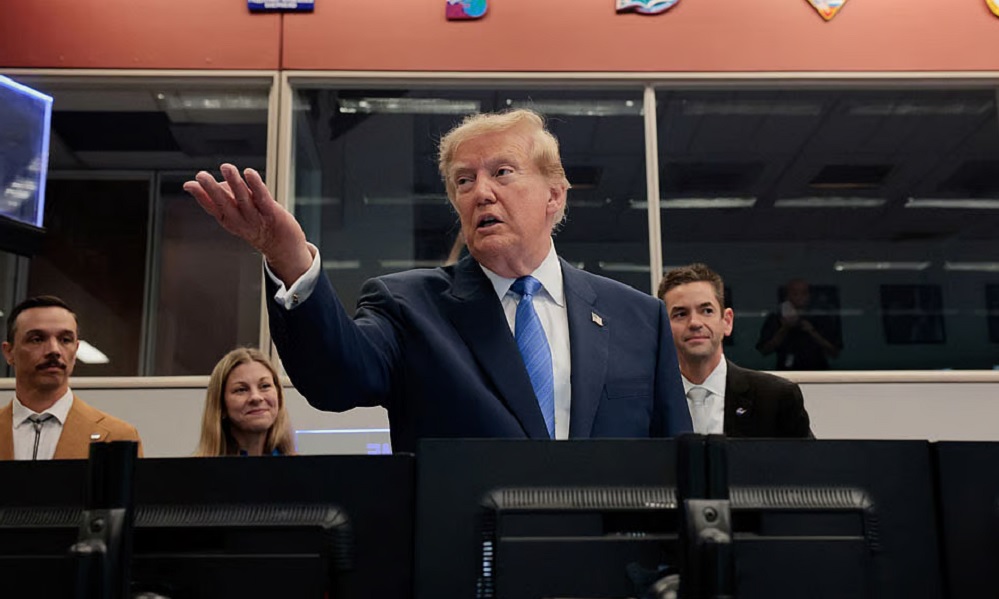
Iran’s energy hub of Kharg Island is being blown to smithereens, U.S. President Donald Trump said on Sunday in a one-line social media post accompanied by an AI-generated video clip.
There was no other evidence that the Iranian energy hub was under attack. The White House and the U.S. Defense Department did not immediately respond to Reuters requests for comment outside regular business hours, Reuters reported.
There was no immediate response to Trump’s post on Iranian media.
“Kharg Island being blown to smithereens!!! President DJT,” Trump said on social media, but gave no further details.
Reuters confirmed that an accompanying video clip showing dramatic explosions was most likely synthetically-generated, using software that detects AI-manipulated imagery.
Attacking Kharg, which handled 90% of Iran’s oil exports before the war launched by U.S. and Israeli attacks on February 28, would severely disrupt its energy trade and put huge pressure on its economy.
Iran responded to an earlier U.S. attack on rocket launchers on its island of Larak, about 660 km (410 miles) east of Kharg, with an assault on two U.S. bases in Jordan, Iranian media said.
The return to hostilities followed weeks in which the Trump administration has stepped up efforts to punish Tehran and its business partners with costly economic sanctions, shifting away from military options.
U.S. Treasury Secretary Scott Bessent told Reuters on Sunday new secondary sanctions were likely to be unveiled weekly in the effort to pressure Iran, with an initial focus on banks.
“We’re starting with the banks, and we’re telling the banks it’s not okay to have Iranian money and to aid the regime,” Bessent said in an interview.
After imposing penalties on the United Arab Emirates branches of Egypt’s Banque Misr on Friday over alleged financial links to Iran, Bessent said the next step may be cutting off an institution entirely from the dollar-based financial system.
“You’re going to see a lot more of these every week,” Bessent told Reuters, ahead of a meeting of Group of 20 finance leaders.
FIRST KNOWN MILITARY ATTACKS IN WEEKS
In describing the first known U.S. military strikes since late July, a U.S. official said forces attacked two Iranian launchers on Larak Island.
The small island in the Strait of Hormuz near the strategic port of Bandar Abbas overlooks shipping lanes at the mouth of the Gulf, giving it a key role in tension over Iran, maritime security and global energy supplies.
“Islamic Revolutionary Guard Corps forces were observed preparing to launch rockets with sea mines into the Strait of Hormuz,” the source added.
In retaliation, Iran launched ballistic missiles at Jordan, targeting two U.S. bases. Jordan’s armed forces had intercepted eight missiles that entered its airspace, state television said.
Iran’s Revolutionary Guards said the attack killed and wounded several soldiers and citizens and vowed a “response and punishment” from Tehran, according to Iranian state media.
In a statement, the U.S. Central Command said it took “limited, precise” action against minelaying forces of Iran’s Revolutionary Guards that posed an “imminent threat” in the Strait of Hormuz. It gave no details.
After the U.S. strikes, Iran attacked U.S. forces station in Jordan, a Fox News reporter said on Sunday, citing a U.S. source. Nearly all incoming missiles “have been intercepted at this point,” the reporter said on X, flagging a lack of significant impact.
Amid threats to shipping, the number of visible commodity vessels transiting the Strait of Hormuz dropped to five a day over the weekend, shipping data showed.
The actual number could be higher as some vessels have switched off automatic identification systems to evade attacks.
Last week, U.S. President Donald Trump said all mines had been detonated or removed from the international waters of the strait and Iran had been warned that any vessel placing new mines would be destroyed.
While Trump has repeatedly said the Strait of Hormuz is open, Iran’s Revolutionary Guards’ navy had called those statements “an obvious lie”, reiterating that it remained closed to ships without Iranian permission.
The waterway carried nearly a fifth of global crude oil and liquefied natural gas shipments before it was blockaded in the six-month-old Iran war.
Iran is the third largest producer in the Organization of the Petroleum Exporting Countries.
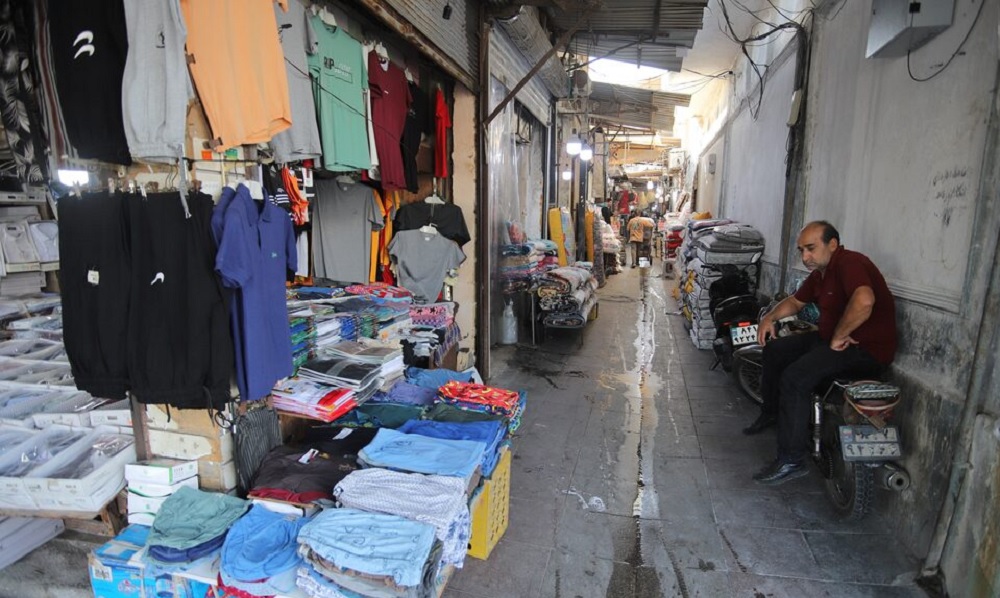
Iranian leaders are acknowledging the economic toll of war with the U.S., with the supreme leader urging the government to address the hardship and the president saying foreign trade has shrunk by a third due to the American sanctions and blockade.
Yet Tehran signalled no retreat on Saturday, vowing to withstand U.S. pressure, pursue diplomacy and maintain what it said was control over the Strait of Hormuz, the strategic waterway giving Iran leverage through its ability to disrupt global energy markets, Reuters reported.
The government said in a statement on state media that addressing economic pressures caused by sanctions and war was a central focus, including curbing inflation, managing markets, creating jobs, directing investment towards domestic production and gradually reducing dependence on the dollar.
Six months after the U.S. and Israel launched the war, negotiations are at an impasse and President Donald Trump’s administration has stepped up efforts to punish Iran financially with what it has billed as an “economic D-Day”.
SANCTIONS COMPOUND TOLL ON IRAN’S ECONOMY
Washington has warned countries to cut business ties with Iran or face secondary sanctions, though the Treasury Department stopped short of imposing penalties against major Iranian trade partners such as China and India, which could have repercussions for the U.S. and global economies.
The Treasury imposed sanctions on Egypt’s Banque Misr for doing business with Tehran, proposing a rule that would cut off the bank’s branches in the United Arab Emirates from dollar transactions.
Egypt’s central bank said it and the foreign ministry were in contact with U.S. officials concerning the matter, adding the measure was limited to Banque Misr UAE’s U.S. dollar transactions with correspondent banks only.
Banque Misr said on Saturday it was reviewing the U.S. Treasury notice, adding that its branch in the UAE continued to provide banking services to its customers.
The U.S. has also issued sanctions targeting an entity based in Hong Kong and a person linked to Iran’s Bank Melli, according to a notice on the Treasury website.
The sanctions drive compounds the toll of the war on Iran’s economy, where annual inflation hit 66% last month.
Supreme Leader Ayatollah Mojtaba Khamenei — who has not been seen publicly since he was injured in the initial February 28 attack that killed his father and former Supreme Leader, Ayatollah Ali Khamenei — called on the government to tackle the economic hardship.
“There is the need to seriously address the chain of economic and livelihood challenges, such as inflation, unemployment, management of prices and the market for goods and services,” he said, according to a written statement attributed to Khamenei.
President Masoud Pezeshkian told state media that Iranian exports and imports had slumped nearly 35% because of U.S. sanctions and a naval blockade of Iranian ports.
But he said Iran was able to sell about 90 million barrels of oil during the short-lived memorandum of understanding that the U.S. and Iran signed in June, when Washington permitted Iranian oil sales.
Later on Saturday, Pezeshkian called on state TV for a revival of the interim deal, which was signed on June 17 but quickly unravelled amid disagreements over what had been agreed, especially on the status of the Strait of Hormuz.
“We can solve our problems and gain our privileges with the memorandum of understanding,” he said of a document that had offered Iran, among other things, immediate relief from U.S. sanctions and the release of its frozen assets.
IRAN VOWS TO PURSUE DIPLOMACY AND DEFENCE
With the U.S. focused on its economic pressure campaign, others have sought to revive diplomatic efforts to end the war.
Qatari Prime Minister Sheikh Mohammed bin Abdulrahman Al Thani met with Iranian leaders in Tehran on Thursday. He said he had stressed during the meeting the importance of returning to the pre-war status of open shipping through the Strait of Hormuz.
Iranian Foreign Minister Abbas Araqchi on Friday described the talks with Al Thani as “creative”.
In Saturday’s statement, Iran said diplomacy and defence were “two complementary, coordinated and inseparable wings” for protecting the country’s national interests, security and territorial integrity. It said it would pursue both tracks in a balanced manner.
Qatar, a U.S. ally and Gulf neighbour to Iran, and Pakistan helped broker the June memorandum of understanding.
Before the war, the Strait of Hormuz carried 20% of the world’s oil and LNG. U.S. military commanders say American forces have cleared sea mines from the strait that had been laid months ago by Iran’s Islamic Revolutionary Guard Corps.
Trump has repeatedly said the strait is open, but the Revolutionary Guards’ navy said in a statement that such claims “are an obvious lie”, reiterating that the waterway remained closed to ships without Iranian permission.
Regional
Iran sets conditions for reopening Strait of Hormuz, top security official Rezaei says
Before the war began in February, the strait carried roughly one-fifth of global oil and liquefied natural gas shipments.
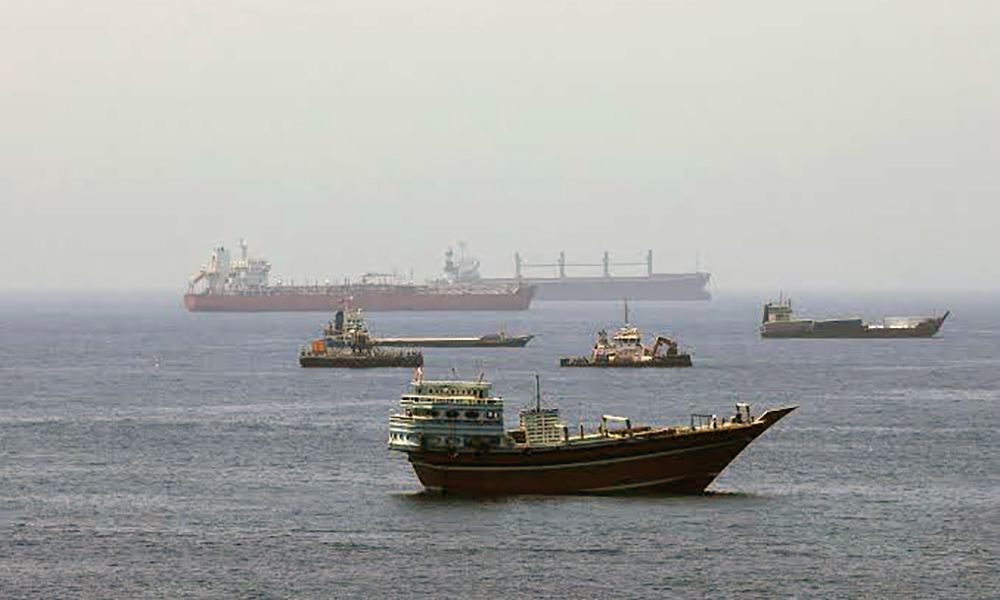
Iran is preparing a list of conditions for reopening the Strait of Hormuz after mediators asked Tehran to set them out, said Mohsen Rezaei, secretary of Iran’s Supreme National Security Council, adding that ending the regional war was among them.
Rezaei said Iran had agreed with Oman on a shipping corridor through the strait, with parts of the route in Omani waters and parts in Iranian waters. Ships would use a designated central channel if the U.S. met Iran’s conditions, he said through an interpreter in an Al Manar TV interview.
On Wednesday, a senior source said Iran and Oman were still working on details of an agreement on the waterway after Iran’s Revolutionary Guards said the two countries had agreed on how to share control of the strait and its revenues.
A Guards spokesperson said Iran would not allow the strait to reopen unless Washington lifted what Tehran describes as a blockade of Iranian ports while also paying compensation and removing sanctions.
Before the war began in February, the strait carried roughly one-fifth of global oil and liquefied natural gas shipments. Shipping through the waterway has largely stopped since then. Ceasefire agreements announced by Washington and Tehran in April and June were intended to restore maritime traffic, but did not hold.


Lionel Messi announces retirement from international football

Tahawol: Five years since the US withdrawal from Afghanistan

Saar: IEA criticizes US for continuing hostile policies

EU announces 15 million euros to strengthen livelihoods and food security in Afghanistan

IEA says US pressure preventing countries from recognizing Afghan government

AFC confirms clubs for 2026/27 competitions; draw set for August 18

Four mediators struggle to secure lasting Pakistan-Afghanistan ceasefire

Only two days to go before Afghanistan and Ireland begin ODI series

Kabul opens cardiac hospital for children

Heavy monsoon rains claim lives across India as flooding and landslides continue
Tahawol: Five years since the US withdrawal from Afghanistan
Saar: IEA criticizes US for continuing hostile policies

Tahawol: Latest on Stalled Kabul-Islamabad Talks

Saar: Afghanistan’s Relations with Regional Countries

Tahawol: Islamic Emirate seeks to normalize US ties
-
 Latest News5 days ago
Pakistan open to state-to-state dialogue with Afghanistan on terrorism
-
 Sport5 days ago
ATN secures exclusive rights to broadcast T20I series in India across Afghanistan
-

 Regional5 days ago
Qatar PM to visit Tehran to pursue mediation efforts
-
 World3 days ago
US hits Egyptian bank branches with Iran sanctions as war marks six months
-
 Latest News5 days ago
Standardized orthography for Dari and Pashto languages is essential: official
-
 Latest News5 days ago
Trump says overnight US withdrawal from Bagram left Afghanistan vulnerable to collapse
-
 Latest News4 days ago
Tajikistan to receive military equipment to strengthen Afghan border
-
 Business4 days ago
TAPI pipeline nears first gas sales in Afghanistan