
Health
UN warns maternal deaths in Afghanistan may rise after US funding pause
Afghanistan has one of the highest death rates in the world for pregnant women, with a mother dying of preventable pregnancy complications every two hours

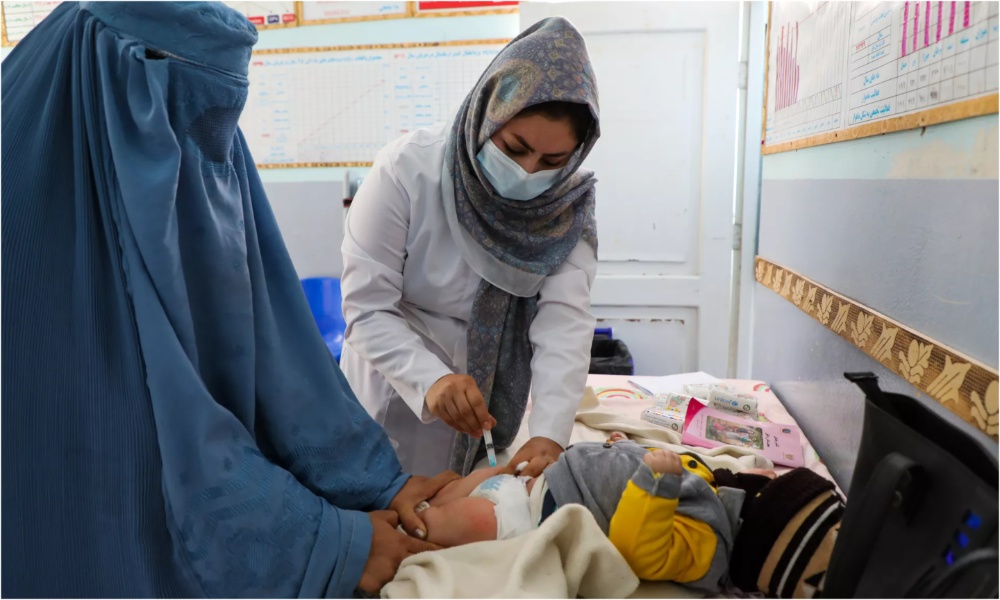
A United Nations aid official said on Tuesday that Washington’s funding pause would cut off millions of Afghans from sexual and reproductive health services, and that the continued absence of this support could cause over 1,000 maternal deaths in Afghanistan from 2025 to 2028.
US President Donald Trump last month ordered a 90-day pause in foreign development assistance, pending assessment of efficiencies and consistency with his foreign policy, setting alarm bells ringing among aid groups around the world that depend on US funding.
Trump has also restored US participation in international anti-abortion pacts, cutting off US family planning funds for foreign organisations providing or promoting abortion.
Pio Smith, regional director for Asia and the Pacific at the United Nations sexual and reproductive health agency (UNFPA), said that over nine million people in Afghanistan would lose access to services and over 1.2 million Afghan refugees living in Pakistan would also be affected due to the closure of health facilities.
Afghanistan has one of the highest death rates in the world for pregnant women, with a mother dying of preventable pregnancy complications every two hours, he said.
“What happens when our work is not funded? Women give birth alone, in unsanitary conditions…Newborns die from preventable causes,” he told a Geneva press briefing.
“These are literally the world’s most vulnerable people.”
“If I just take the example of Afghanistan, between 2025 and 2028 we estimate that the absence of US support will result in 1,200 additional maternal deaths and 109,000 additional unintended pregnancies,” he said.
Across the Asia-Pacific region, UNFPA receives about $94 million in US funding, he added.
Riva Eskinazi, director of donor relations at the International Planned Parenthood Federation meanwhile told Reuters it, too, would have to halt family planning and sexual and reproductive health services in West Africa as a result of the pause.
“We can foresee an increase in unintended pregnancies and maternal deaths. There is going to be a problem sending contraceptives to our members. It’s devastating,” she said.
IPPF, a federation of national organisations that advocates for sexual and reproductive health, calculates that it would have to forgo at least $61 million in US funding over four years in 13 countries, most of which are in Africa.






Health
Polio vaccination campaign set to roll out in five Afghan provinces amid new cases
The campaign aims to vaccinate children against polio and prevent further transmission of the highly infectious virus.
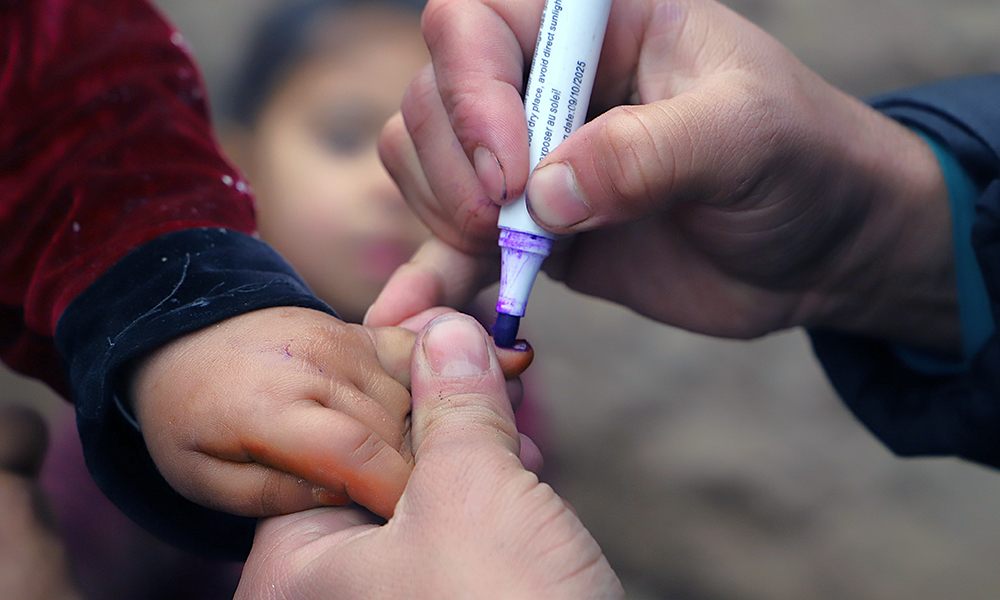
A new polio vaccination campaign will begin Monday across parts of five Afghan provinces as health authorities step up efforts to prevent the spread of the virus following reports of new cases.
Polio-Free Afghanistan said on Sunday that the campaign will cover all of Nangarhar, seven districts of Kunar, six districts of Kabul, two districts of Herat and two districts of Farah.
The campaign aims to vaccinate children against polio and prevent further transmission of the highly infectious virus.
The campaign comes after a new polio case was reported in Tirin Kot, the capital of Uruzgan province. The World Health Organization has previously reported that 15 polio cases have been confirmed in Afghanistan since the beginning of 2026.
Polio can cause permanent paralysis, particularly among young children. Health experts say repeated vaccination remains the most effective way to protect children and prevent the virus from spreading in communities where transmission continues.
Afghanistan and Pakistan remain among the last countries where wild poliovirus transmission persists. Cross-border movement between the two countries has also made vaccination and disease surveillance particularly important.
Polio-Free Afghanistan has urged families to cooperate with vaccination teams and ensure that eligible children receive the polio vaccine to help prevent further spread of the disease.
Health
Save the Children warns of rising child malnutrition amid funding cut crisis
The organisation, which has worked in Afghanistan since 1976, currently operates programmes in nine provinces and works with partners in another 11.
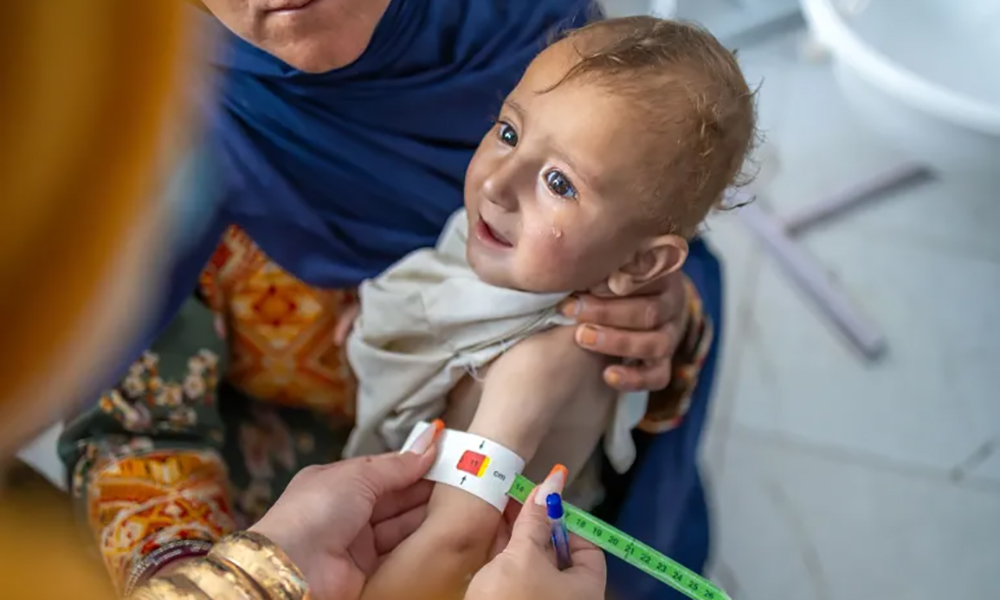
Nearly one in 10 Afghan children under five is suffering from acute malnutrition as funding cuts force the closure or suspension of hundreds of health facilities, Save the Children said in a statement this week.
The organisation said wasting worsened in two-thirds of Afghanistan’s provinces in the second quarter of 2026 compared with the same period last year. Acute malnutrition among children under five has risen by 14% over four years, affecting an estimated 3.7 million children this year.
At the same time, humanitarian funding has fallen by almost 70%, from $3.27 billion in 2022 to $1 billion in 2025. Only $438 million has been secured so far in 2026, leaving a 74% funding gap.
Save the Children said nearly 600 health facilities have closed or suspended services because of funding cuts, affecting around four million people, half of them children.
About 700,000 people, including 140,000 children under five, have lost access to primary healthcare since Save the Children-supported facilities and mobile teams were closed or scaled back because of funding shortages since early 2025.
In a remote mountainous area of northern Afghanistan, the organisation runs the only healthcare facility serving around 10,000 people. The clinic sees more than 100 patients a day, with some walking two to three hours for treatment.
Save the Children said residents who cannot afford the roughly $60 journey to the nearest city hospital would face a seven-hour walk if the clinic closes.
The organisation has kept 14 clinics operating through short-term funding but warned that their future remains uncertain.
Ashish Damle, Save the Children’s country director in Afghanistan, said worsening hunger, mass returns from Iran and Pakistan, displacement, disasters, conflict and prolonged drought were placing humanitarian resources under severe pressure.
“The world cannot look away,” Damle said, warning that poverty, water shortages, illness and declining household incomes were also increasing child labour and disrupting education.
Save the Children said Afghanistan’s population has grown by up to 12% since September 2023, while more than six million Afghans have returned from Iran and Pakistan amid tighter policies affecting Afghan nationals.
The organisation, which has worked in Afghanistan since 1976, currently operates programmes in nine provinces and works with partners in another 11.
Last year, it reached more than two million people, including nearly 5,000 children treated for severe acute malnutrition and 1.4 million people who received outpatient consultations.
Health
WHO warns aid cuts disrupting healthcare services across Afghanistan
Speaking to Ariana News, WHO Representative in Afghanistan said cuts in humanitarian assistance have placed the country’s health sector under increasing pressure.
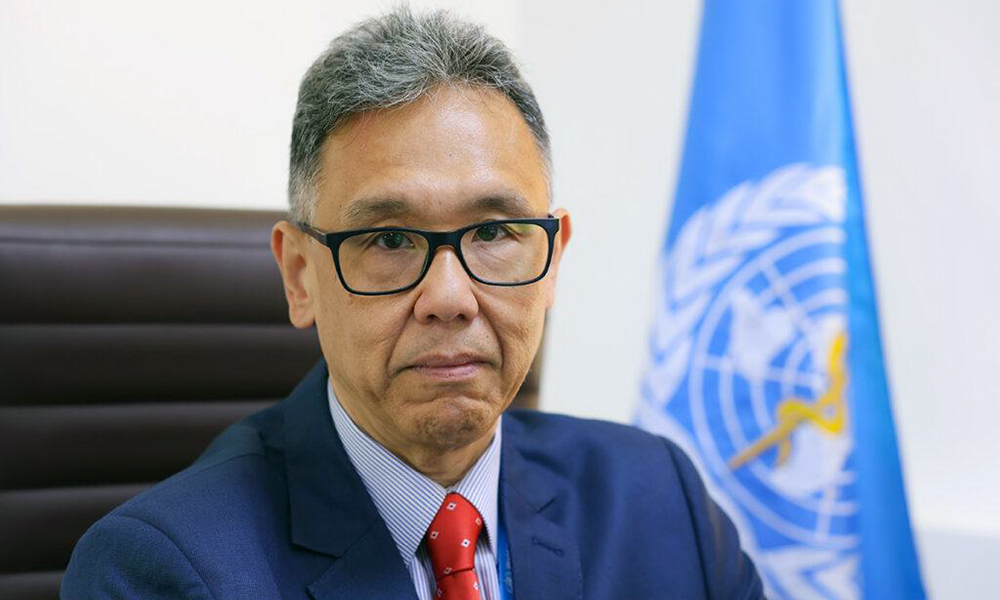
The World Health Organization (WHO) has warned that declining international humanitarian funding is disrupting healthcare services across Afghanistan, forcing some health facilities to close and limiting access to essential medical care.
Speaking to Ariana News, WHO Representative in Afghanistan Edwin Ceniza Salvador said cuts in humanitarian assistance have placed the country’s health sector under increasing pressure, with many healthcare centers struggling to remain operational.
He said the funding shortfall is largely due to the growing number of humanitarian crises around the world, which have diverted international financial resources away from Afghanistan.
Salvador stressed that while continued humanitarian support remains essential, Afghanistan must also increase domestic investment in healthcare to build a more sustainable system.
“We have unfortunately seen a decline in global humanitarian funding in recent months because new emergencies have emerged in different parts of the world,” Salvador said. “As a result, many health facilities in Afghanistan are facing difficulties, and some have been forced to close. Alongside continued humanitarian support, greater domestic investment and increased funding for the health sector are essential.”
He noted that Afghanistan continues to face the effects of years of conflict, natural disasters and drought, making humanitarian assistance a critical lifeline for millions of people.
Despite the funding challenges, Salvador said the country has made progress in key health indicators, including increased childhood vaccination coverage and a decline in maternal mortality. However, he said expanding access to healthcare will require broader cooperation across government institutions and development partners.
The WHO warning comes amid growing concern from UN agencies over shrinking humanitarian funding for Afghanistan. Aid organizations have warned that reduced international assistance, coupled with the return of millions of Afghan migrants and the increasing impact of natural disasters, could further strain the country’s already fragile healthcare system and deepen the humanitarian crisis.


Tahawol: Calls for US engagement with the Islamic Emirate discussed

Muttaqi, ICRC official discuss expansion of humanitarian cooperation

Saar: Call for dialogue to resolve issues with Afghanistan discussed

Badakhshan police say Pakistan is sheltering Islamic Emirate opponents in Chitral

Tottenham face Charlton as ATN brings live EFL Cup action to Afghan fans

Pakistan’s governance system has ‘collapsed’: Mohsin Naqvi

Afghanistan exports first stone shipment to US in $100,000 trade milestone

AFC confirms clubs for 2026/27 competitions; draw set for August 18

Only two days to go before Afghanistan and Ireland begin ODI series

Four mediators struggle to secure lasting Pakistan-Afghanistan ceasefire
Tahawol: Calls for US engagement with the Islamic Emirate discussed
Saar: Call for dialogue to resolve issues with Afghanistan discussed

Tahawol: Aisha Wahab’s emphasis on US ties with IEA

Saar: Guterres’s concern regarding global conflicts discussed

Saar: Afghanistan’s uncertain future in SCO
-
 Latest News4 days ago
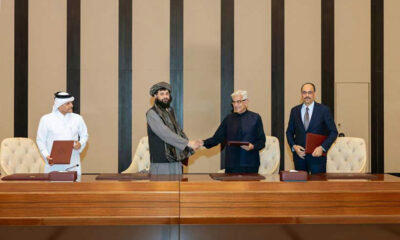
Four mediators struggle to secure lasting Pakistan-Afghanistan ceasefire
-
 Latest News5 days ago
Syria and Saudi Arabia condemn Kabul bombing, express solidarity with Afghanistan
-
 Latest News5 days ago
US judge strikes down Trump visa suspension for 75 countries, including Afghanistan
-
 Business3 days ago
Afghanistan’s trade diversification challenges Pakistan
-

 Sport5 days ago
Afghanistan-India T20I series could see major schedule change
-
 Latest News5 days ago
Achakzai urges Pakistan to end hostility towards Afghanistan
-
 Latest News4 days ago
AfghanEvac warns US court ruling does not reopen door for Afghans
-
 Latest News3 days ago
SCO summit to be held without confirmed Afghan invitation