
Regional
5 Pakistani Terrorists Killed in Southern Afghanistan

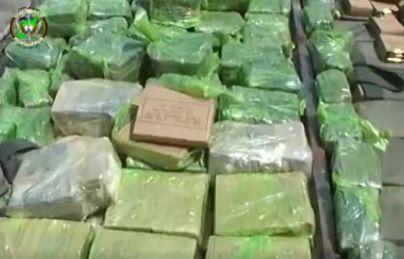
 Five Pakistani terrorists have been killed, and 2 suicide vests seized during a special military operation conducted by the intelligence operatives in Zabul province of Afghanistan on Monday.
The National Directorate of Security (NDS) – Afghanistan’s Intelligence Agency said, the operation was conducted to dismantle the Al Qaeda terrorist network cell which was operating in Zabul.
A lot of weapons and guns were also seized along with hand grenades and pistols, the statement added.
The anti-government armed militant groups have not commented regarding the report yet.
Zabul is among insecure provinces in southern Afghanistan, where armed militants are actively operating.

Regional
US-Iran talks end without breakthrough as Vance departs Pakistan
JD Vance, who led the U.S. delegation, said no agreement had been reached and placed responsibility on Tehran.
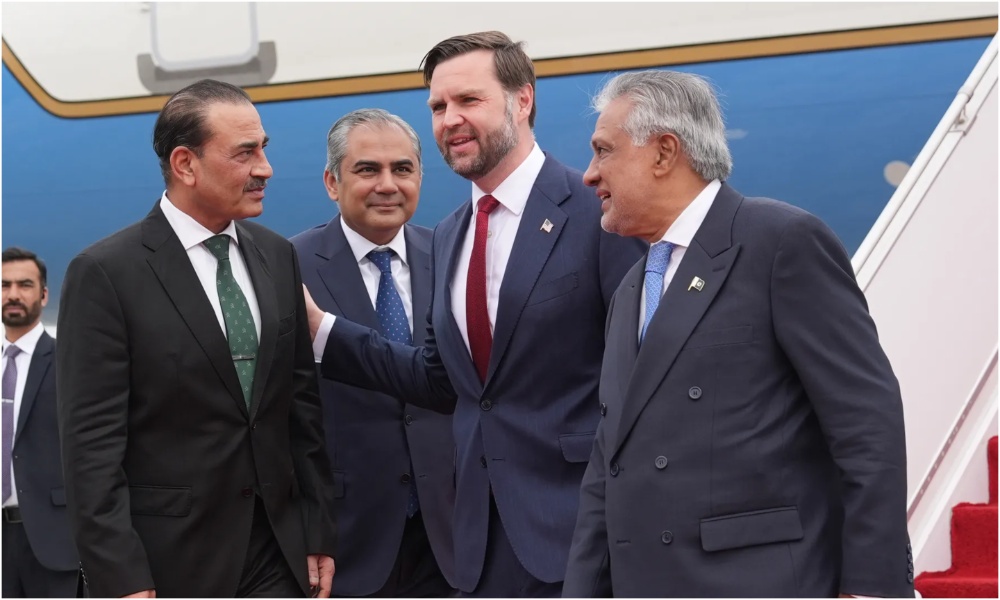
High-stakes talks between the United States and Iran aimed at ending weeks of conflict concluded without agreement in Islamabad on Sunday, raising concerns over the durability of a fragile ceasefire.
The negotiations — the first direct engagement between the two sides in more than a decade — lasted around 21 hours but failed to resolve key differences over Iran’s nuclear programme and control of the Strait of Hormuz.
JD Vance, who led the U.S. delegation, said no agreement had been reached and placed responsibility on Tehran.
“We have not reached an agreement,” Vance told reporters before leaving Pakistan, adding that Washington had made its “red lines” clear, including a firm commitment from Iran not to develop nuclear weapons or the capability to rapidly produce them.
The U.S. delegation included special envoy Steve Witkoff and Trump’s son-in-law Jared Kushner. Iran’s team included Parliamentary Speaker Mohammad Baqer Qalibaf and Foreign Minister Abbas Araqchi.
Iranian media, however, blamed what it described as “excessive” U.S. demands for the failure of the negotiations. Reports indicated that while some progress had been made, major disagreements remained over the future of Hormuz and Tehran’s nuclear activities.
A spokesperson for Iran’s foreign ministry said the talks were held in an atmosphere of deep mistrust and cautioned that a single round of negotiations was unlikely to produce a comprehensive agreement.
The discussions followed a two-week ceasefire agreed earlier in the week, aimed at de-escalating a conflict that began on February 28 with U.S. and Israeli airstrikes on Iran.
The war has since killed thousands and disrupted global energy markets, with oil shipments through Hormuz — a critical route for roughly a fifth of the world’s supply — severely affected.
Pakistan’s Foreign Minister Ishaq Dar urged both sides to maintain the ceasefire despite the lack of a deal, stressing the importance of continued diplomatic engagement.
Sources familiar with the talks said negotiations were marked by fluctuating tensions, with periods of progress followed by setbacks as both sides held firm on core demands.
Iran is seeking broader concessions, including the release of frozen assets, reparations for war damage, and greater control over the Strait of Hormuz, as well as a ceasefire in regional conflicts such as Lebanon.
The United States, meanwhile, is focused on ensuring freedom of navigation through the waterway and curbing Iran’s nuclear programme.
Despite the stalemate, there were tentative signs of movement in the Gulf, with a small number of oil tankers reportedly passing through Hormuz during the ceasefire period, although many vessels remain stranded.
U.S. President Donald Trump, who was in contact with Vance throughout the talks, struck a more ambivalent tone, suggesting that reaching a deal was not essential, while maintaining that U.S. objectives in the conflict had largely been achieved.
The outcome of the Islamabad talks leaves the situation uncertain, with diplomats warning that without further progress, the risk of renewed escalation remains high.
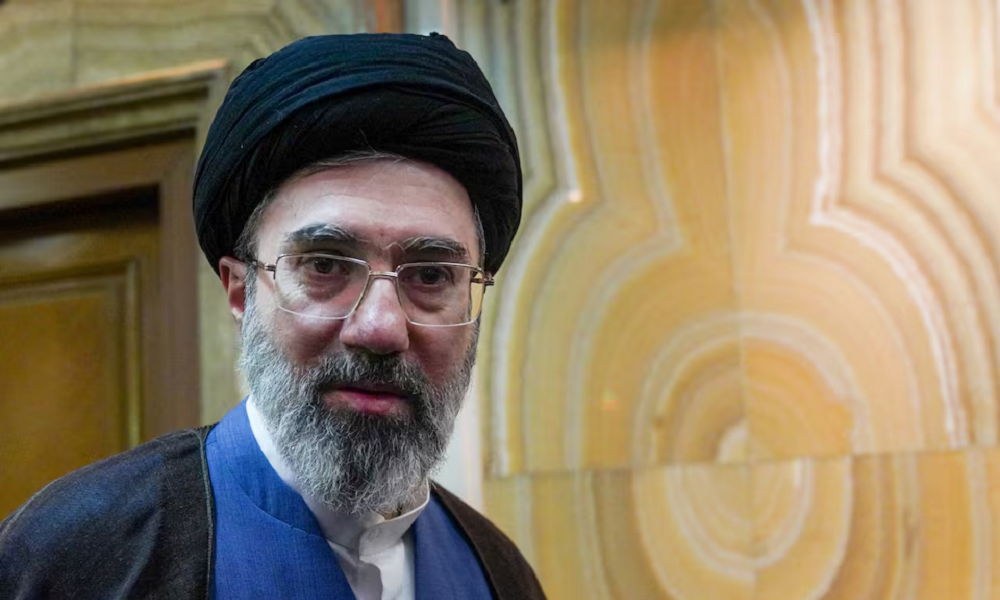
Iran’s new Supreme Leader Mojtaba Khamenei is still recovering from severe facial and leg injuries suffered in the airstrike that killed his father at the beginning of the war, three people close to his inner circle told Reuters.
Khamenei’s face was disfigured in the attack on the supreme leader’s compound in central Tehran and he suffered a significant injury to one or both legs, all three sources said.
The 56-year-old is nonetheless recovering from his wounds and remains mentally sharp, according to the people, who requested anonymity to discuss sensitive matters. He is taking part in meetings with senior officials via audio conferencing and is engaged in decision-making on major issues including the war and negotiations with Washington, two of them said.
The question of whether Khamenei’s health allows him to run state affairs comes during Iran’s moment of gravest peril for decades, with high-stakes peace talks with the United States opening in the Pakistani capital Islamabad on Saturday.
The accounts of the people close to Khamenei’s inner circle provide the most detailed description of the leader’s condition for weeks. Reuters couldn’t independently verify their descriptions.
Khamenei’s whereabouts, condition and ability to rule still largely remain a mystery to the public, with no photo, video or audio recording of him published since the air attack and his subsequent appointment as his father’s replacement on March 8.
Iran’s United Nations mission did not respond to Reuters questions about the extent of Khamenei’s injuries or the reason he has not yet appeared in any images or recordings.
Khamenei was wounded on February 28, the first day of the war launched by the U.S. and Israel, in the attack that killed his father and predecessor Ayatollah Ali Khamenei, who had ruled since 1989. Mojtaba Khamenei’s wife, brother-in-law and sister-in-law were among other members of his family killed in the strike.
There has been no official Iranian statement on the extent of Khamenei’s injuries. However, a newsreader on state television described him as a “janbaz”, a term used for those badly wounded in war, after he was named supreme leader.
The accounts of Khamenei’s injuries tally with a statement made by U.S. Secretary of Defense Pete Hegseth on March 13 when he said that Khamenei was “wounded and likely disfigured”.
A source familiar with U.S. intelligence assessments told Reuters that Khamenei was believed to have lost a leg.
The CIA declined to comment on Khamenei’s condition. The Israeli prime minister’s office didn’t respond to questions.
One of the people close to Khamenei’s circle said images of the supreme leader could be expected to be released within one or two months and that he might even appear in public then, although all three sources stressed he would only emerge when his health and the security situation allowed.
Regional
Iranian source says US has agreed to unfreeze Iranian funds held in Qatar, other countries
A senior U.S. official has rejected claims made by Iranian source regarding the release of Tehran’s frozen assets.
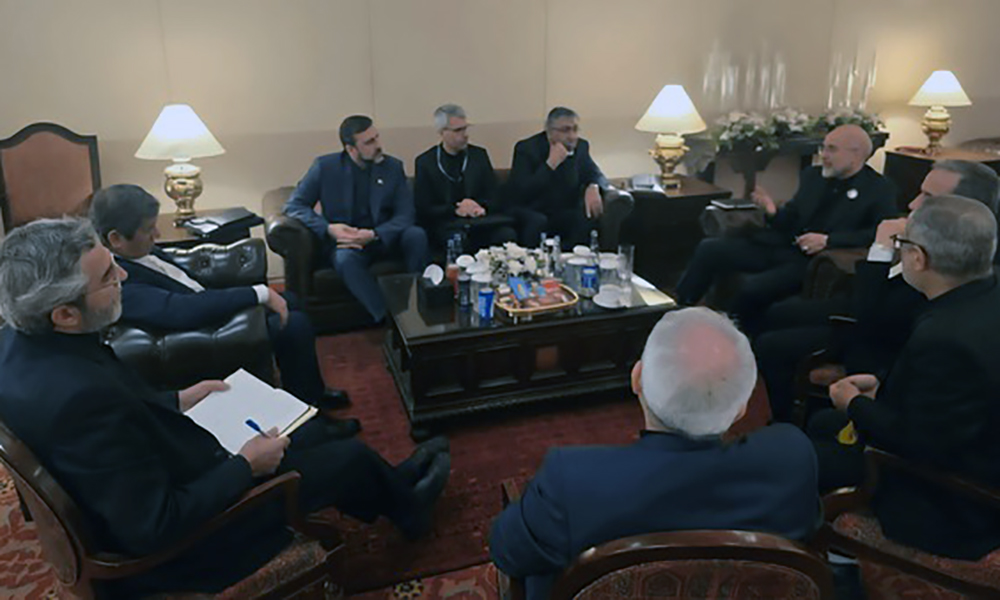
A senior Iranian source said on Saturday the U.S. had agreed to release Iranian frozen assets held in Qatar and other foreign banks, welcoming the move as a sign of “seriousness” in reaching a deal with Washington in talks in Islamabad, Reuters reported.
The source, who declined to be named due to the sensitivity of the matter, told Reuters that unfreezing the assets was “directly linked to ensuring safe passage through the Strait of Hormuz”, which is expected to be a key issue in the talks.
The senior source did not give a value for the assets that Washington had agreed to unfreeze. A second Iranian source said the United States had agreed to release $6 billion of frozen Iranian funds held by Qatar.
A senior U.S. official has rejected claims made by Iranian source regarding the release of Tehran’s frozen assets. In a statement to CBS News, the official said that the United States has not agreed to unfreeze any Iranian funds.
According to the report, talks with Iran have not yet begun, and therefore no agreements or arrangements have been discussed at this stage.
The $6 billion, originally frozen in 2018, had been due for release in 2023 as part of a U.S.-Iranian prisoner swap but the funds were again frozen by the administration of President Joe Biden following the October 7, 2023 attacks on Israel by Iran’s ally, the Palestinian militant group Hamas.
U.S. officials said at the time that Iran would not be able to access the money for the foreseeable future, stressing that Washington retained the right to completely freeze the account, read the report.
The funds stem from Iranian oil sales to South Korea and had been blocked in South Korean banks after President Donald Trump reimposed sanctions on Iran in 2018 – during his first term in the White House – and scrapped a deal between world powers and Tehran over its nuclear programme.
Under the September 2023 U.S.–Iran prisoner swap mediated by Doha, the money was transferred to Qatari bank accounts. The prisoner swap involved the release of five U.S. citizens detained in Iran in exchange for the funds’ release and the release of five Iranians held in the United States.
U.S. officials said at that time that the money was restricted to humanitarian use only, to be disbursed to approved vendors for food, medicine, medical equipment and agricultural goods shipped into Iran under U.S. Treasury oversight.


Global outrage triggered after deadly attack on civilians in Herat

ACB holds high-level meeting with new national team head coach

Afghanistan launches first nationwide polio vaccination campaign of 2026

IPL double-header delivers thrills as teams battle for momentum

US-Iran talks end without breakthrough as Vance departs Pakistan

IEA Supreme Leader issues Eid-ul-Fitr message urging unity and support for Islamic system

IEA supreme leader orders replacement of foreign terminology in official documents

14 Pakistani soldiers killed after military post falls along Durand line: MoD

Turkmenistan, Afghanistan discuss steps to speed up land acquisition for TAPI pipeline

IPL 2026 kicks off in under two weeks; Afghan players set to shine

Tahawol: Historic US-Iran talks in Pakistan discussed

Saar: Talks between Iran and US in Pakistan discussed

Tawsia: New transit route with Tatarstan, MoU with Uzbekistan discussed

Tahawol: China to host 2nd round of Kabul–Islamabad talks discussed

Saar: Fragile ceasefire in the Middle East reviewed
-
 Latest News5 days ago
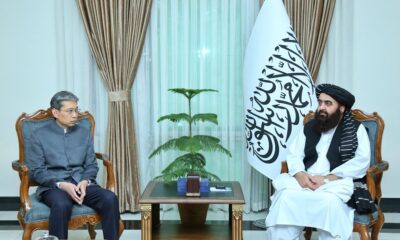
China seeking to build trust between Afghanistan and Pakistan
-
 Business2 days ago
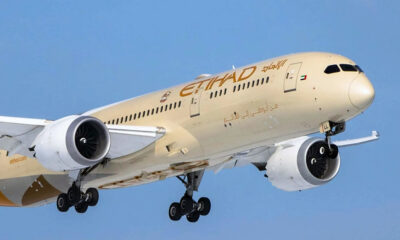
Etihad Airways to expand Kabul–Abu Dhabi flights to daily service amid surging demand
-
 Sport5 days ago
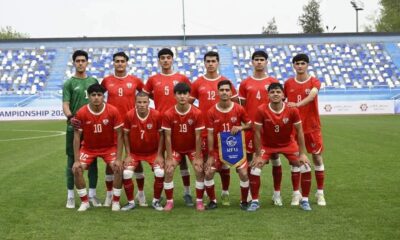
Afghanistan U-17s draw 0-0 against Turkmenistan in CAFA campaign
-
 Regional4 days ago
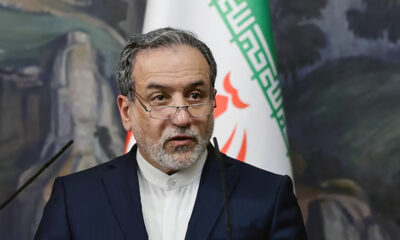
Iran agrees to temporary ceasefire as US pauses attacks
-
 Regional5 days ago
Trump says ‘a whole civilisation will die tonight’; Qatar fears regional escalation
-

 International Sports3 days ago
IPL 2026: Gujarat Titans edge Delhi Capitals in last-ball thriller
-
 Latest News4 days ago
Hundreds displaced as Afghanistan–Pakistan clashes deepen crisis
-
 Regional4 days ago
Pakistan PM holds 45-minute call with Iranian President