
Latest News
Third journalist killed in Afghanistan in one month

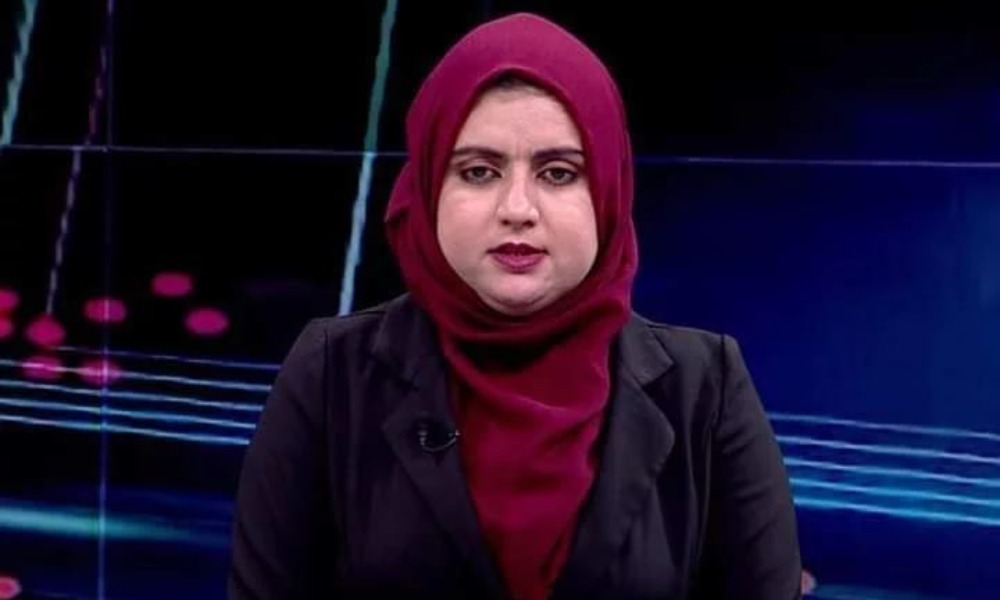
Gunmen opened fire and killed Malalai Maiwand, a radio and television journalist, in Jalalabad city early Thursday morning in what has become yet another suspected targeted attack on media workers.
Maiwand was killed shortly after 7.30am in the Nangarhar provincial capital, along with her driver, while on her way to work. She worked for provincial radio and TV station Enikass.
Reacting to the attack, Ministry of Interior spokesman Tariq Arian said in a tweet that “unfortunately, in the last decade and a half, the vast majority of journalists have been killed by the Taliban.”
Maiwand’s death on Thursday has brought the total number of journalists killed in Afghanistan since 2001 to 52, according to CPJ data.
No group has yet claimed responsibility for her death.
This latest incident comes less than a month after Radio Free Europe/Radio Liberty journalist Elyas Dayee was killed in an IED explosion in Lashkargah city in Helmand province.
The November 12 incident happened after insurgents attached a magnetic IED to Dayee’s car and came less than a week after former TOLOnews TV presenter Yama Siawash was killed in the same type of attack.
“This is part of an alarming pattern of increased threats and attacks on the media by the Taliban,” Patricia Gossman, associate Asia director for Human Rights Watch, said in a tweet after Dayee’s death.
Thursday’s attack comes just three days after NATO allies and partners in Afghanistan issued a joint statement condemning the ongoing targeted attacks and assassinations of individuals, including journalists.
This comes after almost daily killings of people who appear to have been singled out by insurgents to be assassinated.
Of the dozens of people killed in this way in the past few months are judicial officials and media representatives among others.
The signatories to the statement specifically stated that they expect that all parties to the conflict will protect the freedom and the independence of the media and civil society in Afghanistan.
“We reaffirm our commitment to champion the freedom of all the Afghan people. We call for immediate compliance with international humanitarian law and international human rights law.
“To this end, we support the Islamic Republic of Afghanistan in its efforts to investigate and prosecute those who are targeting these individuals with violence and immediately end the impunity of these killings.”












Kazakhstan’s Foreign Minister Mukhtar Tileuberdi has called for pragmatic and coordinated international engagement with Afghanistan, saying the country’s long-term stability is closely linked to the security and sustainable development of Central Asia.
Speaking during the general debate of the 81st session of the United Nations General Assembly in New York on Friday, Tileuberdi said humanitarian assistance to Afghanistan remains essential but alone cannot break the cycle of poverty, displacement and dependency.
He said Kazakhstan supports a “pragmatic, coordinated and step-by-step” approach to international engagement with Afghanistan, with the United Nations playing a central role.
Tileuberdi also said Kazakhstan is working with the UN to operationalize the United Nations Regional Centre for the Sustainable Development Goals for Central Asia and Afghanistan in Almaty.
He said the success of the centre should be measured by the results and assistance it delivers to the region.


Abu Muslim Farah defeat Khurasan Faryab 2-0 in ACL season six

Saar: Concerns over Pakistan’s political crisis discussed

Afghanistan Champions League: Omar Zawak Herat beat Toofan Herat 1-0

Blast in Pakistan’s Dera Ismail Khan kills 11, injures 30

Ariana Afghan Airlines increases Kabul-Delhi cargo flights

Saudi energy group signs major Afghanistan deals covering gas exploration and pipeline plans

Trump floats idea of renaming Atlantic or Pacific Ocean

US hits Egyptian bank branches with Iran sanctions as war marks six months

Nepal flood rescue mission enters critical phase as thousands remain missing

Iranian clubs to face Gulf opponents at neutral venues in Asian Champions League Elite
Saar: Concerns over Pakistan’s political crisis discussed

Exclusive interview with Abdul Latif Mansoor, Minister of MRRD

Tawsia: Overview of Afghanistan’s iron mines

Tahawol: Discussion on fresh Pakistani airstrikes on Afghanistan

Saar: Calls for international support for Afghanistan discussed
-

 World5 days ago
CNN, MS NOW and Politico sue Trump, challenging White House ban
-

 Latest News3 days ago
Ariana Afghan Airlines ranks seventh among 45 Central Asian airlines
-

 Latest News4 days ago
UN reiterates call for respect for international law after Kunar airstrikes
-

 Regional3 days ago
US and Iran hold first talks since June after Trump’s ‘annihilation’ threat
-

 Latest News3 days ago
Silk Road highway in Wakhan corridor now reaches the China border
-

 Latest News4 days ago
Afghan Official: Pakistan’s airstrikes will not go unanswered
-

 Sport4 days ago
Afghan boxing referee heads to China for international festival
-
 Regional5 days ago
G7 foreign ministers call on Iran to stop arming Houthis