
Latest News
1399 a bleak year for Afghans as thousands died in the conflict

Afghans will on Saturday usher in 1400, a new year in the Persian calendar while remembering 1399 as having devastated thousands of families who lost loved ones to the war.
Celebrated by an estimated 300 million people around the world, Nawruz will be bittersweet for Afghans following yet another year scarred by attacks.
Hundreds of attacks against civilians and Afghan security forces were recorded in 1399 and a political settlement to the 20-year-old conflict has so far been elusive.
According to an Ariana News tally, at least 923 targeted assassinations took place in the last 365 days, including 11 journalists/media workers, 17 civil society activists, four provincial council members, and hundreds of government employees and security force members.
In addition, Ariana News’ tally found at least 649 people were wounded in targeted attacks.
Major attacks also rocked the country and devastated families in 1399.
Just six days into 1399, a Gurdwara, or temple used by Sikhs and Hindus, was attacked by Daesh militants, leaving 25 Sikhs dead and eight more wounded.
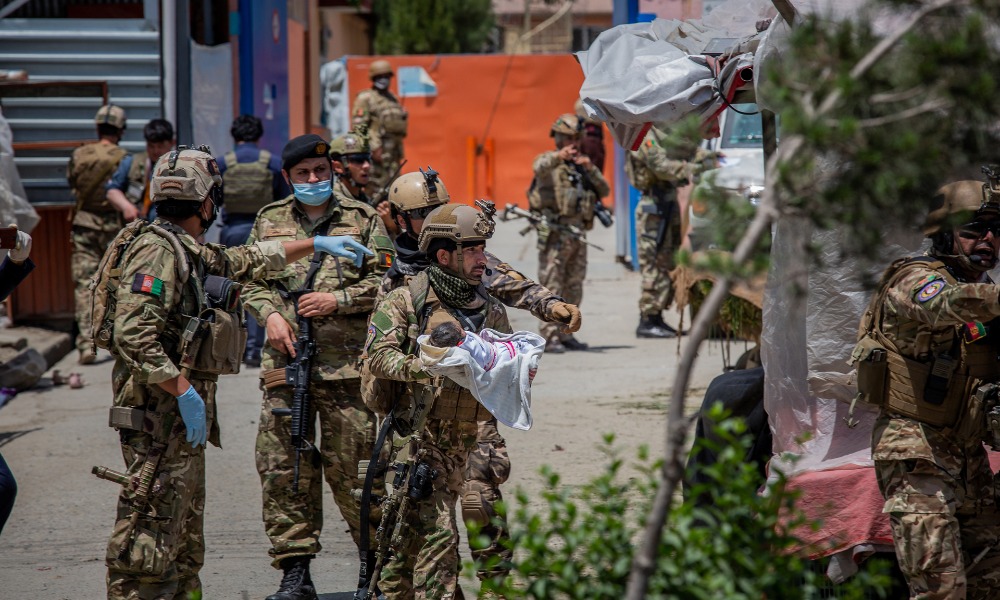
In June, Daesh militants struck again. This time attacking a maternity ward at Dasht-e-Barchi hospital. At least 24 people including women, newborn babies, and nurses were killed and 16 more were wounded in the attack.
Just an hour later, an explosion targeted a funeral ceremony in eastern Nangarhar province in which 24 people were killed and 68 others were wounded.
In October another major attack was carried out – also in Dasht-e-Barchi. But this time targeting students at an educational center. At least 24 people including a security guard and students were killed and 57 wounded. Daesh claimed responsibility for the attack.
Just days later, on November 2, Daesh militants attacked Afghanistan’s largest educational institution – Kabul University. At least 22 people were killed and 52 others injured in the attack.
In addition to these major complex attacks, insurgents also stepped up targeted attacks and assassinations against individuals or small groups of specific people – either by shooting them or placing magnetic IEDs against vehicles their targets were traveling in.
Even Afghanistan’s First Vice President Amrullah Saleh was targeted in a magnetic IED explosion. Saleh did however survive but sustained minor injuries.
Military operations
Meanwhile, the Ministry of Defense says that Afghan forces have carried out more than 20,000 operations against the Taliban and other militant groups during this solar year.
In this time, the Taliban also attempted to take control of eight provinces and 132 districts, the Afghan Army said. According to the military, eight districts were retaken from the Taliban during the operations.
However, clashes between government forces and militant groups took a heavy toll on civilians.
According to the UN and Afghanistan Human Rights Commission’s tallies, at least 2,958 civilians were killed and 5,542 more wounded in clashes and bomb blasts during the last 365 days.
The reports stated on average eight people have been killed and 15 others wounded on a daily basis this solar year.
The UN blamed the Taliban for 53 percent, the government, and foreign forces for 15 percent, Daesh for five percent, and unknown armed men for 25 percent of civilian casualties.
On the other hand, the foreign troops stationed in Afghanistan did not suffer any casualties following the signing of a peace deal between the US and the Taliban in February last year.
The Afghan forces, however, suffered extremely heavy casualties in the past solar year with more than 12,000 Afghan soldiers reportedly having been killed.
The Afghan military claimed that 18,288 Taliban insurgents were in turn killed during clashes in the past 365 days.











Kazakhstan’s Foreign Minister Mukhtar Tileuberdi has called for pragmatic and coordinated international engagement with Afghanistan, saying the country’s long-term stability is closely linked to the security and sustainable development of Central Asia.
Speaking during the general debate of the 81st session of the United Nations General Assembly in New York on Friday, Tileuberdi said humanitarian assistance to Afghanistan remains essential but alone cannot break the cycle of poverty, displacement and dependency.
He said Kazakhstan supports a “pragmatic, coordinated and step-by-step” approach to international engagement with Afghanistan, with the United Nations playing a central role.
Tileuberdi also said Kazakhstan is working with the UN to operationalize the United Nations Regional Centre for the Sustainable Development Goals for Central Asia and Afghanistan in Almaty.
He said the success of the centre should be measured by the results and assistance it delivers to the region.


Abu Muslim Farah defeat Khurasan Faryab 2-0 in ACL season six

Saar: Concerns over Pakistan’s political crisis discussed

Afghanistan Champions League: Omar Zawak Herat beat Toofan Herat 1-0

Blast in Pakistan’s Dera Ismail Khan kills 11, injures 30

Ariana Afghan Airlines increases Kabul-Delhi cargo flights

Saudi energy group signs major Afghanistan deals covering gas exploration and pipeline plans

Trump floats idea of renaming Atlantic or Pacific Ocean

US hits Egyptian bank branches with Iran sanctions as war marks six months

Nepal flood rescue mission enters critical phase as thousands remain missing

Iranian clubs to face Gulf opponents at neutral venues in Asian Champions League Elite
Saar: Concerns over Pakistan’s political crisis discussed

Exclusive interview with Abdul Latif Mansoor, Minister of MRRD

Tawsia: Overview of Afghanistan’s iron mines

Tahawol: Discussion on fresh Pakistani airstrikes on Afghanistan

Saar: Calls for international support for Afghanistan discussed
-

 World5 days ago
CNN, MS NOW and Politico sue Trump, challenging White House ban
-

 Latest News3 days ago
Ariana Afghan Airlines ranks seventh among 45 Central Asian airlines
-

 Latest News5 days ago
UN reiterates call for respect for international law after Kunar airstrikes
-

 Regional4 days ago
US and Iran hold first talks since June after Trump’s ‘annihilation’ threat
-

 Latest News3 days ago
Silk Road highway in Wakhan corridor now reaches the China border
-

 Latest News5 days ago
Afghan Official: Pakistan’s airstrikes will not go unanswered
-

 Sport4 days ago
Afghan boxing referee heads to China for international festival
-
 Regional5 days ago
G7 foreign ministers call on Iran to stop arming Houthis