
Latest News
ICRC director ‘livid’ over dire ‘man-made’ situation in Afghanistan

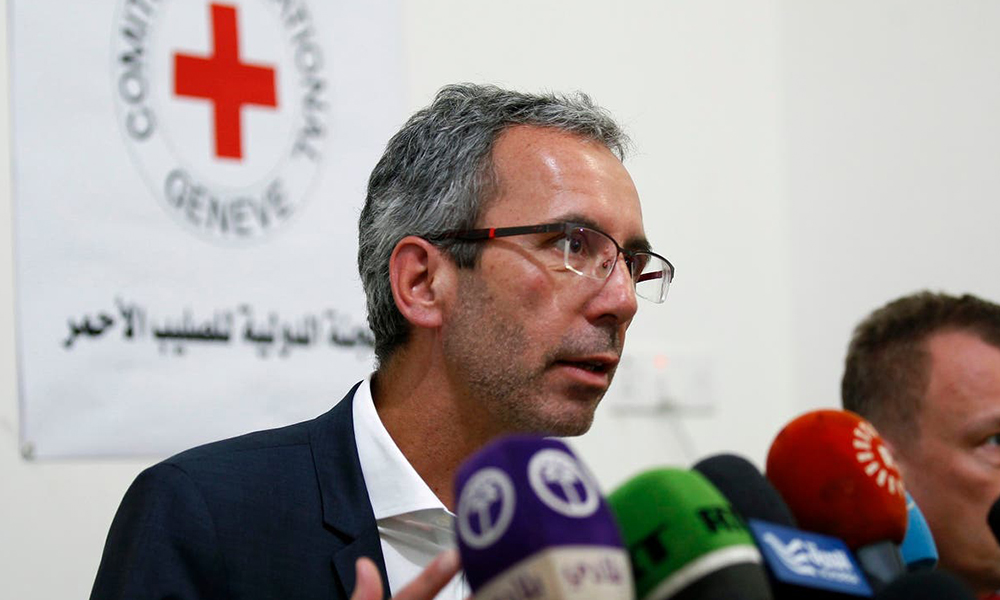
Dominik Stillhart, the director of operations for the International Committee of the Red Cross expressed his anger on Monday at the world for plunging Afghanistan into the grips of starvation on the back of economic sanctions.
In a statement released after a six-day visit to the country, Stillhart said: “I am livid. Pictures viewed from afar of bone-thin children rightly elicit gasps of horror. When you’re standing in the pediatric ward in Kandahar’s largest hospital, looking into the empty eyes of hungry children and the anguished faces of desperate parents, the situation is absolutely infuriating.”
He said “it’s so infuriating because this suffering is man-made.”
Economic sanctions meant to punish those in power in Kabul are instead freezing millions of people across Afghanistan out of the basics they need to survive, he said adding that “the international community is turning its back as the country teeters on the precipice of man-made catastrophe”.
He stated that sanctions on banking services are sending the economy into free-fall and holding up bilateral aid, and that government staff who haven’t been paid in five months walk up to two hours to work instead of taking public transport. He said they have no money to buy food; their children go hungry, get dangerously thin, and then die.
During his trip to Afghanistan, Stillhart visited the paediatric intensive care unit at Mirwais Regional Hospital in Kandahar and painted an extremely bleak picture.
He said the number of children suffering from malnutrition, pneumonia and dehydration has more than doubled from mid-August to September.
Stillhart said that on Monday, the ICRC began supporting 18 regional and provincial hospitals and the 5,100 staff who work in them to help prevent the total collapse of the public health system in Afghanistan.
He said this support, slated to last six months, includes funding for running costs and medical supplies and will ensure the continuity of nearly half a million medical consultations per month.
However, this was not enough, he stated.
“Drought, failed harvests, and the economic collapse are all driving the increase in malnutrition. Rising food costs are pushing proteins and other staples out of reach,” he said adding that as the harsh winter sets in with temperatures well below freezing, the suffering will be immense as people lack the cash to heat their homes.
Stillhart called for countries to engage with Afghanistan.
“This is the only way to prevent a total collapse of essential services like health care and education. Political considerations should not interfere with humanitarian action. A political solution must be found to avoid irreparable humanitarian consequences,” he said.
He also appealed to foreign donors that have stopped helping Afghanistan to work through entities such as the ICRC so as to stop denying Afghans life-saving assistance.
Stillhart said while everyone knows it will be a tragic winter for Afghans, the ICRC will step up its response to help meet the most urgent humanitarian needs.
But, he said, this assistance is only part of the solution. “The existing and projected needs are beyond any humanitarian organization’s capacity to deal with or solve.”
In his appeal for the international community to step up its efforts to find a solution to the crisis, he said the desperation among Afghans can be seen in the huge crowds lining up in front of banks at 5 am in the hope that they can withdraw a little bit of cash – and in
“the empty eyes of hungry children” – which he said is something one will not soon forget.
“It makes my plea to the international community even more urgent: that it rapidly finds creative solutions to save millions of Afghans from deprivation and despair. Ultimately, this is in everybody’s interest as it will help prevent Afghanistan from slipping back into conflict and violence, and help give Afghans more means to remain in their country.”












Kazakhstan’s Foreign Minister Mukhtar Tileuberdi has called for pragmatic and coordinated international engagement with Afghanistan, saying the country’s long-term stability is closely linked to the security and sustainable development of Central Asia.
Speaking during the general debate of the 81st session of the United Nations General Assembly in New York on Friday, Tileuberdi said humanitarian assistance to Afghanistan remains essential but alone cannot break the cycle of poverty, displacement and dependency.
He said Kazakhstan supports a “pragmatic, coordinated and step-by-step” approach to international engagement with Afghanistan, with the United Nations playing a central role.
Tileuberdi also said Kazakhstan is working with the UN to operationalize the United Nations Regional Centre for the Sustainable Development Goals for Central Asia and Afghanistan in Almaty.
He said the success of the centre should be measured by the results and assistance it delivers to the region.


Abu Muslim Farah defeat Khurasan Faryab 2-0 in ACL season six

Saar: Concerns over Pakistan’s political crisis discussed

Afghanistan Champions League: Omar Zawak Herat beat Toofan Herat 1-0

Blast in Pakistan’s Dera Ismail Khan kills 11, injures 30

Ariana Afghan Airlines increases Kabul-Delhi cargo flights

Saudi energy group signs major Afghanistan deals covering gas exploration and pipeline plans

Trump floats idea of renaming Atlantic or Pacific Ocean

US hits Egyptian bank branches with Iran sanctions as war marks six months

Nepal flood rescue mission enters critical phase as thousands remain missing

Iranian clubs to face Gulf opponents at neutral venues in Asian Champions League Elite
Saar: Concerns over Pakistan’s political crisis discussed

Exclusive interview with Abdul Latif Mansoor, Minister of MRRD

Tawsia: Overview of Afghanistan’s iron mines

Tahawol: Discussion on fresh Pakistani airstrikes on Afghanistan

Saar: Calls for international support for Afghanistan discussed
-

 World5 days ago
CNN, MS NOW and Politico sue Trump, challenging White House ban
-

 Latest News4 days ago
Ariana Afghan Airlines ranks seventh among 45 Central Asian airlines
-

 Latest News5 days ago
UN reiterates call for respect for international law after Kunar airstrikes
-

 Regional4 days ago
US and Iran hold first talks since June after Trump’s ‘annihilation’ threat
-

 Latest News4 days ago
Silk Road highway in Wakhan corridor now reaches the China border
-

 Regional3 days ago
Iran airlines cancel flights as US sanctions hit
-

 Latest News5 days ago
Afghan Official: Pakistan’s airstrikes will not go unanswered
-

 Sport5 days ago
Afghan boxing referee heads to China for international festival