
Latest News
WFP stops food aid to two million people in Afghanistan

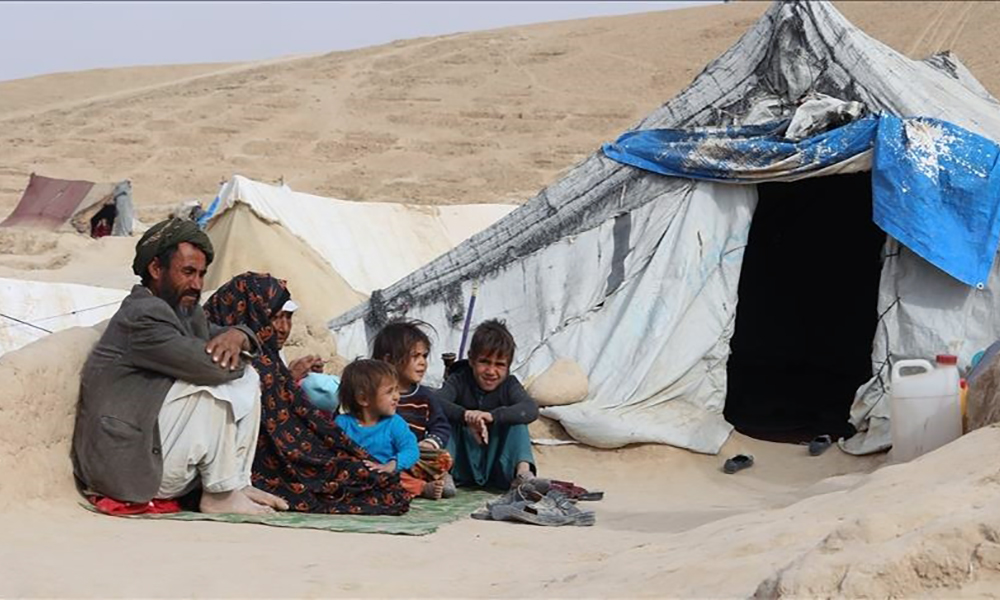
The United Nations’ World Food Programme has announced it will drop another two million people from food assistance in Afghanistan, as the country faces its third consecutive year of a devastating drought that is putting food and water out of reach, said Save the Children.
Arshad Malik, Save the Children Country Director in Afghanistan, said: “Children and their families in Afghanistan are at breaking point after years of drought and economic crisis. In a recent survey we conducted in some provinces, three-quarters of children (76.1%) said they were eating less than they were last yea r, and we found that more and more children are being pushed into unsafe situations like child labour as their families struggle to cope.
“As international governments gather in Brussels next week to discuss Afghanistan, we call on them to uphold their obligations and commitments to the people of Afghanistan.
“It is genuinely frightening to think about what further misery these cuts will inflict on children. Now is not the time to walk away. More funding is needed, not less. Without more money the aid response will be crippled, meaning more hungry, malnourished and sick children.”
Malik said time is running out for the children of Afghanistan. “The international community must act to stop more children being pushed from hunger crisis into catastrophe.”
He also said that the UK’s decision to slash aid to Afghanistan by almost 60% this year could not have come at a worse time. “Save the Children is calling on the Government to urgently increase funding for lifesaving support and resume long-term development funding to ensure children’s basic needs for health and education are met,” Malik said.




Latest News
Afghanistan’s future depends on inclusive progress and sustained international engagement: UNAMA
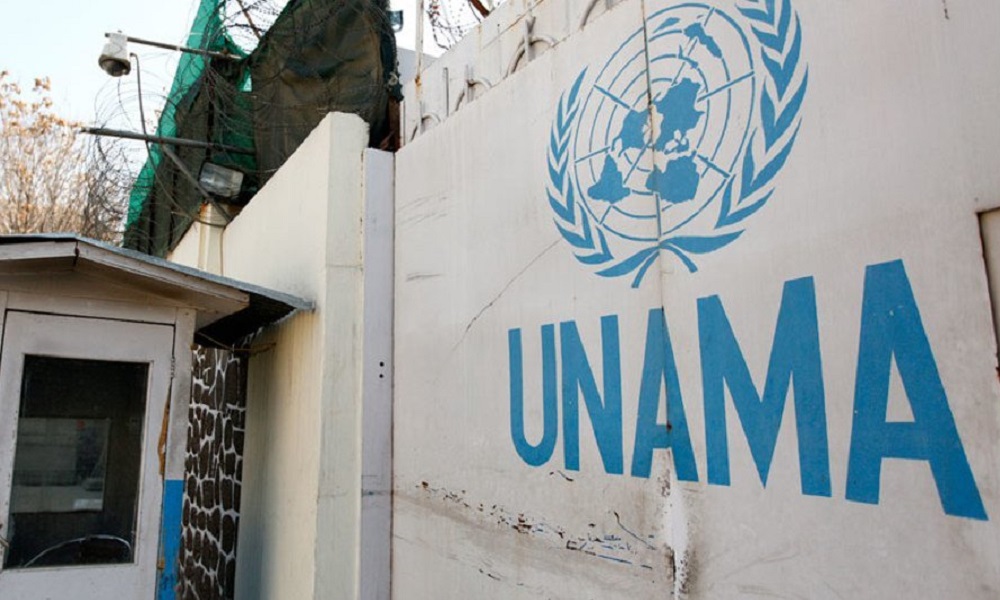
Five years after the Islamic Emirate returned to power, the United Nations Assistance Mission in Afghanistan (UNAMA) said on Thursday that improved security has brought some benefits to Afghans but warns that major challenges continue to hinder the country’s long-term stability and international reintegration.
In a statement, UNAMA said the decline in armed conflict has created greater opportunities for recovery, development and regional economic cooperation. It also pointed to the ban on opium poppy cultivation as one of the positive steps taken in recent years.
However, the UN said severe restrictions on women and girls, along with ongoing concerns over terrorism, remain major obstacles to Afghanistan’s progress toward lasting peace and closer relations with the international community.
“The last five years have shown that Afghans deeply value peace and stability after decades of war,” said Georgette Gagnon, UNAMA’s Deputy Special Representative of the Secretary-General and Officer-in-Charge.
“But sustainable peace and prosperity require more than just an absence of conflict. Afghanistan’s future depends on building a society in which the rights and potential of all Afghans are realised and institutions are responsive and accountable,” she said.
Since 2021, the United Nations has continued to engage with the de facto authorities while providing humanitarian assistance, supporting basic services and addressing political and human rights issues.
UNAMA said this engagement has helped maintain a degree of stability and provided a possible pathway for Afghanistan’s gradual reintegration into the international community, based on respect for human rights and the inclusion of all Afghans.
The UN mission called on the IEA to lift restrictions on women and girls and allow them to participate fully in education, employment and public life. It also urged greater protection of fundamental rights and freedoms and action to address international concerns over security and terrorism.
UNAMA warned that restrictions on women and girls are imposing serious social and economic costs on Afghanistan and causing both immediate and long-term harm to the population.
The restrictions have also become a major barrier to wider international engagement and investment. UNAMA said limits on civic space, freedom of expression and the work of female humanitarian and UN personnel further reduce Afghanistan’s ability to benefit from international support.
Meanwhile, terrorism-related concerns continue to complicate Afghanistan’s relations with neighbouring countries and the wider international community. Although engagement with regional countries has created some economic opportunities, the UN said broader international cooperation is needed to address risks threatening stability in Afghanistan and the region.
UNAMA urged the international community to maintain principled and practical engagement with Afghanistan and to support the aspirations of its people.
The UN mission said a comprehensive approach focused on inclusion, human rights, security and economic development would be essential for Afghanistan to achieve lasting stability and gradually reintegrate into the international community.
Latest News
UN: Two staff members detained in Afghanistan’s Herat
The Islamic Emirate of Afghanistan has not yet commented on the situation.
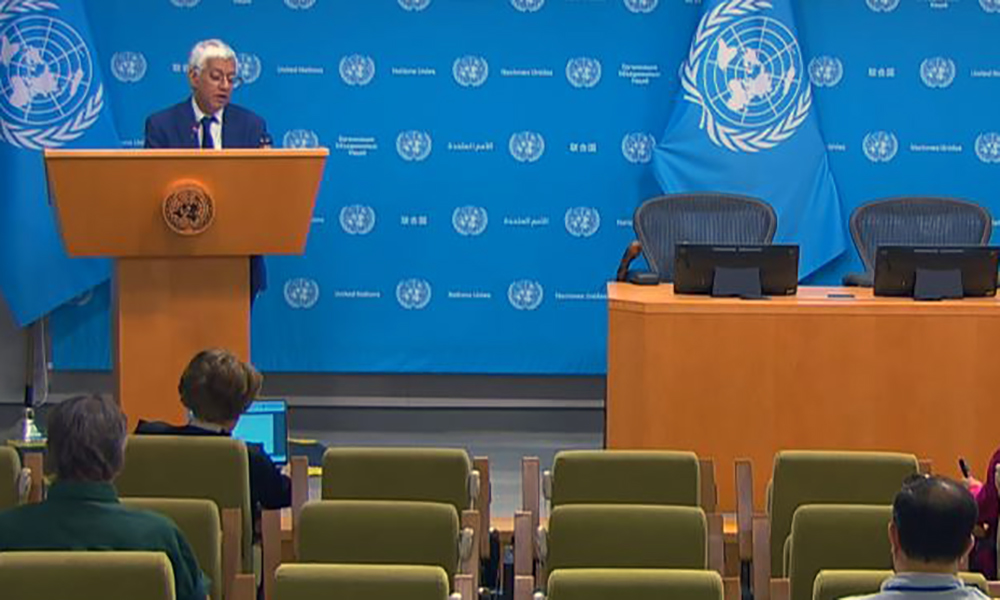
Two Afghan staff members of the United Nations Assistance Mission in Afghanistan (UNAMA) were detained by Islamic Emirate officials on Sunday, August 9, in Afghanistan’s western city of Herat, according to Farhan Haq, Deputy Spokesperson for the UN Secretary-General.
Speaking at the UN’s noon briefing, Haq said UNAMA had not been informed of the charges against the two staff members and had not been permitted to visit them.
“UNAMA has called on the de facto authorities to ensure compliance with the privileges and immunities of the United Nations and its officials,” Haq said.
He added that UNAMA operates under a clear mandate from the UN Security Council and is engaging with the de facto authorities regarding the detentions.
Haq said there was no further update on the situation at the time of the briefing and that the UN would provide updates on any developments.
The Islamic Emirate of Afghanistan has not yet commented on the situation.
Latest News
Khalilzad says Qatar’s approach to women is smarter than IEA policy
He described Qatar’s approach as “a much smarter” one than the policy adopted by the IEA leadership in Afghanistan.
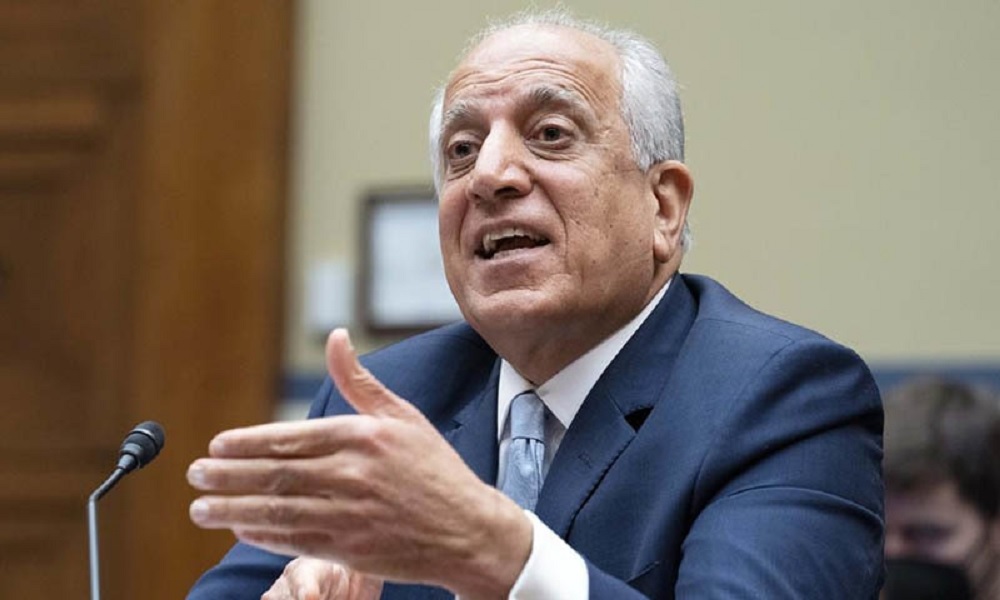
Zalmay Khalilzad, the former U.S. Special Representative for Afghanistan, has praised the role of Qatari women in the country’s development, contrasting it with the IEA’s policies toward women in Afghanistan.
“Qatari women are contributing to their country’s progress and prosperity. They are educated and hold significant positions,” Khalilzad said in a post on X.
He described Qatar’s approach as “a much smarter” one than the policy adopted by the IEA leadership in Afghanistan.
“When you have much work to do and many problems, how is it a good idea to operate at half-capacity?” Khalilzad asked.
Referring to Qatar, he said the country’s results speak for themselves, describing it as beautiful, peaceful and widely respected, while also noting its religious character.


Afghanistan’s future depends on inclusive progress and sustained international engagement: UNAMA

UN: Two staff members detained in Afghanistan’s Herat

Khalilzad says Qatar’s approach to women is smarter than IEA policy

Total darkness, then sunset as full eclipse wows spectators in Spain

Afghan envoy invites Fazlur Rehman to Kabul amid push for better Pak-Afghan ties

Pakistan’s governance system has ‘collapsed’: Mohsin Naqvi

Spain sweep FIFA World Cup player awards after historic triumph

Iran, Afghanistan and Tajikistan discuss expanding regional transit cooperation

Afghanistan temporarily eases fuel import standards to help curb rising prices

Afghan health minister, Gavi discuss expanding routine immunization

Tahawol: Afghanistan’s future in the global press discussed

Saar: The Islamic Emirate’s five-year rule discussed

Tahawol: Hamid Karzai’s call for Afghan reconciliation discussed

Saar: Preparations for IEA’s fifth anniversary discussed

Tahawol: Iran’s acknowledgment of Afghanistan’s cooperation discussed
-

 Sport4 days ago
Afghanistan secure direct qualification for 2027 Men’s ODI World Cup
-
 Latest News4 days ago
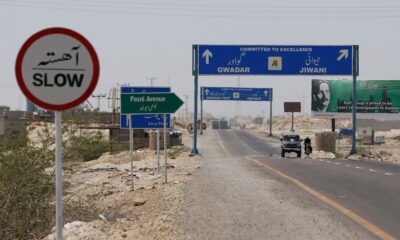
Pakistan-backed armed groups in Balochistan using former Afghan government forces: report
-
 Sport3 days ago
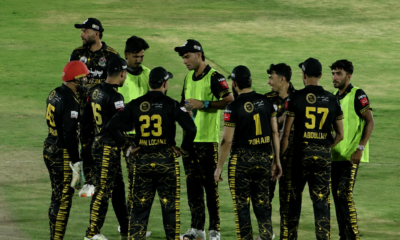
Abasin Defenders stun Kabul Zalmi in Kabul Premier League
-
 Regional4 days ago
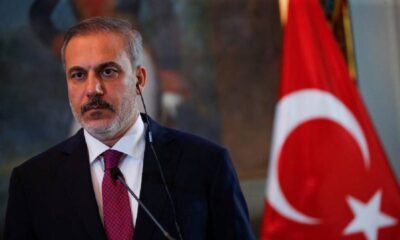
Turkey, Pakistan, Saudi Arabia defence pact technically same as NATO’s Article 5, Turkish minister says
-

 Sport3 days ago
Kabul Premier League gets underway with high-scoring opener
-
 Latest News4 days ago
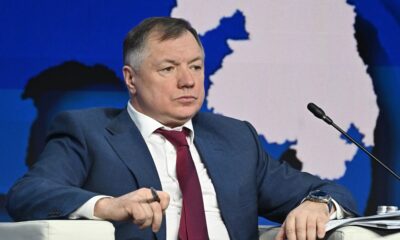
Russia eyes railway route via Afghanistan as alternative to Strait of Hormuz
-
 Latest News4 days ago
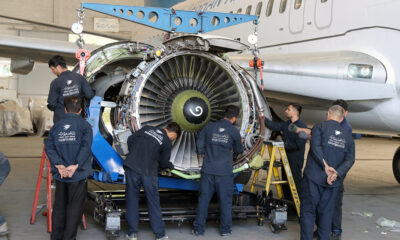
Ariana Airlines brings $2.3 million Boeing 737 engine from US to Kabul
-
 Latest News4 days ago
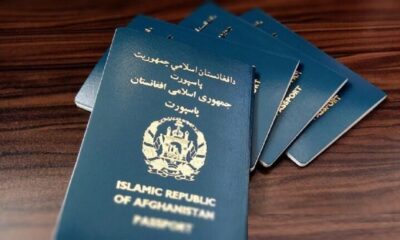
Afghanistan issues more than 650,000 passports in one year