
Latest News
Baradar discusses water rights issue with Iran’s energy minister

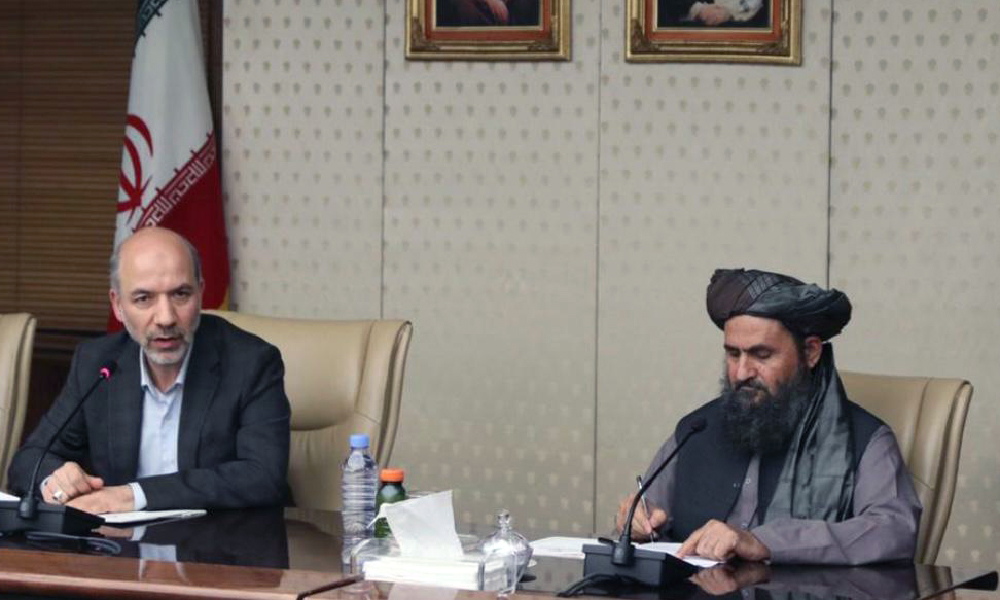
Mullah Abdul Ghani Baradar, Economic Deputy Prime Minister of the Islamic Emirate of Afghanistan (IEA), met with Iran’s Energy Minister Ali Akbar Mehrabian on Monday to discuss a number of issues including that relating to water management.
In addition to this, the two officials also discussed the need for Iran’s technical cooperation in the field of electricity production in Afghanistan, as well as investments, the use of advanced irrigation systems in agriculture, and drought relief programs for both countries. The strengthening of bilateral ties was also discussed.
Baradar said the recent droughts have had a bad effect on water resources in the region, especially in Afghanistan.He said surface and underground water levels have decreased significantly.
“In many areas, people inside the country have been forced to leave their places and some others have been forced to migrate again [due to water shortages],” Baradar said.
Baradar also said that some time ago, a technical delegation of the Islamic Republic of Iran visited the Helmand River area where they agreed that the river’s water level had dropped. According to Mullah Baradar, Afghanistan, which has enough resources to produce hydroelectric power, along with wind, solar and coal-driven power.
Iran’s Minister of Energy, Ali Akbar Mehrabian, said Iran was also struggling with drought-related problems. He did however assure Baradar of Iran’s support in providing technical cooperation in various sectors including electricity production.
This discussion followed Baradar’s earlier meeting with Iran’s Minister of Interior, Ahmad Wahidi.
The meeting commenced with the Deputy Prime Minister expressing gratitude to the Iranian government for its unwavering support and assistance to the Afghan people during challenging times.
He noted that Iran has consistently provided aid to Afghans in distress and continues to host millions of Afghan refugees.
He highlighted the importance of further cooperation between the two nations in the areas of economics and security, emphasizing that a stable and prosperous Afghanistan benefits both the region and the world.
He also made a request for handing over Afghan prisoners accused of various crimes in Iran. He reiterated the Islamic Emirate’s commitment to enhancing Afghanistan’s economic situation, enabling Afghan citizens to lead dignified lives and serve their compatriots within their homeland.
Baradar underlined the priority of combating narcotics, noting significant progress in reducing drug cultivation and trafficking in Afghanistan.
Iran’s Minister of Interior Ahmad Wahidi welcomed the Afghan delegation, highlighting the opportunity for Iran and Afghanistan to strengthen economic and commercial ties.
He emphasized Iran’s support for the transit of Afghan products through its territory to boost Afghanistan’s exports and asked the Afghan side to share their products for the purpose of marketing in Iran.
Wahidi viewed the settlement of Afghan refugees in Iran as a favorable business opportunity and suggested establishing a joint committee between both countries to address refugee issues.
He further stressed Iran’s priorities, which include border security, the establishment of common markets, anti-drug efforts, trade and transit development, and improving the quality of life in border areas.
The meeting encompassed discussions on several key initiatives, including the construction of a railway from Chabahar to Nimruz, Helmand, and Kandahar, the educational opportunities for Afghan students, Iran-China connectivity through Afghanistan, and linking Uzbekistan to the Gulf of Oman via Afghanistan and then Iran.
The Iranian delegation emphasized the importance of establishing a connection with China through Afghanistan, deeming it beneficial for both nations.
Baradar also acknowledged the significance of this initiative and pledged to expedite its implementation.












Kazakhstan’s Foreign Minister Mukhtar Tileuberdi has called for pragmatic and coordinated international engagement with Afghanistan, saying the country’s long-term stability is closely linked to the security and sustainable development of Central Asia.
Speaking during the general debate of the 81st session of the United Nations General Assembly in New York on Friday, Tileuberdi said humanitarian assistance to Afghanistan remains essential but alone cannot break the cycle of poverty, displacement and dependency.
He said Kazakhstan supports a “pragmatic, coordinated and step-by-step” approach to international engagement with Afghanistan, with the United Nations playing a central role.
Tileuberdi also said Kazakhstan is working with the UN to operationalize the United Nations Regional Centre for the Sustainable Development Goals for Central Asia and Afghanistan in Almaty.
He said the success of the centre should be measured by the results and assistance it delivers to the region.


Abu Muslim Farah defeat Khurasan Faryab 2-0 in ACL season six

Saar: Concerns over Pakistan’s political crisis discussed

Afghanistan Champions League: Omar Zawak Herat beat Toofan Herat 1-0

Blast in Pakistan’s Dera Ismail Khan kills 11, injures 30

Ariana Afghan Airlines increases Kabul-Delhi cargo flights

Saudi energy group signs major Afghanistan deals covering gas exploration and pipeline plans

Trump floats idea of renaming Atlantic or Pacific Ocean

US hits Egyptian bank branches with Iran sanctions as war marks six months

Nepal flood rescue mission enters critical phase as thousands remain missing

Iranian clubs to face Gulf opponents at neutral venues in Asian Champions League Elite
Saar: Concerns over Pakistan’s political crisis discussed

Exclusive interview with Abdul Latif Mansoor, Minister of MRRD

Tawsia: Overview of Afghanistan’s iron mines

Tahawol: Discussion on fresh Pakistani airstrikes on Afghanistan

Saar: Calls for international support for Afghanistan discussed
-

 World5 days ago
CNN, MS NOW and Politico sue Trump, challenging White House ban
-

 Latest News3 days ago
Ariana Afghan Airlines ranks seventh among 45 Central Asian airlines
-

 Latest News4 days ago
UN reiterates call for respect for international law after Kunar airstrikes
-

 Regional4 days ago
US and Iran hold first talks since June after Trump’s ‘annihilation’ threat
-

 Latest News3 days ago
Silk Road highway in Wakhan corridor now reaches the China border
-

 Latest News5 days ago
Afghan Official: Pakistan’s airstrikes will not go unanswered
-

 Sport4 days ago
Afghan boxing referee heads to China for international festival
-
 Regional5 days ago
G7 foreign ministers call on Iran to stop arming Houthis