
Business
Ships advised to keep their distance from Iran around Hormuz Strait
Iran has in the past threatened to close the critical Strait of Hormuz to traffic in retaliation for Western pressure.

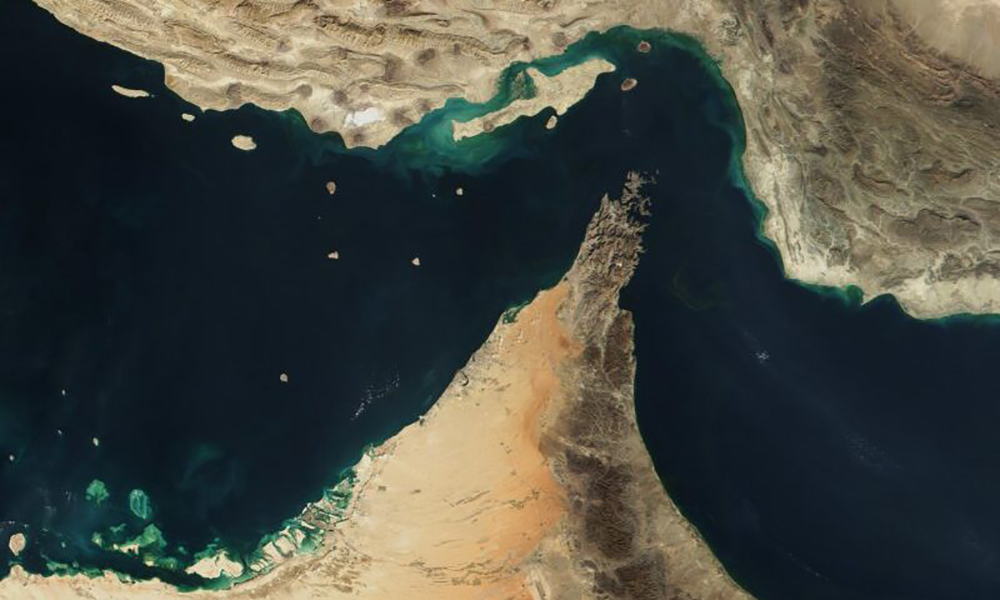
Commercial ships are sailing close to Oman and are being advised by maritime agencies to avoid Iran’s waters around the Strait of Hormuz, with the risk of the conflict between Israel and Iran escalating, shipping sources said on Wednesday.
Iran has in the past threatened to close the critical Strait of Hormuz to traffic in retaliation for Western pressure. Any closure of the strait could restrict trade and affect global oil prices.
In the latest measure, ships sailing towards Hormuz are looking to minimise risks and are sailing close to Oman’s coast for much of the journey.
The Gulf of Oman is 200 miles (320 km) wide – much of it international waters – and is bordered by Oman and Iran, as well as the United Arab Emirates and Pakistan, which have territorial waters of 12 miles.
Journeys will still need to be made through Hormuz itself, which is 21 miles (33 km) wide at its narrowest point. The two shipping lanes are just 2 miles (3 km) wide in either direction.
A larger cluster of ships was sailing closer to the Omani coast on Wednesday, while mainly Iranian-flagged vessels were sailing within Iranian waters, according to ship-tracking data on the MarineTraffic platform.
“Taking into account that during the past, there have been incidents of violations of freedom of navigation and maritime safety for merchant vessels near the shores of Iran, we strongly suggest that Greek-flagged vessels sail, if possible, away from waters of Iranian jurisdiction when in the Persian Gulf, Strait of Hormuz and Gulf of Oman,” the Greek Shipping Ministry said in a statement on Tuesday.
Iran’s Supreme Leader Ayatollah Ali Khamenei said in a statement read by a television presenter on Wednesday that his country will not accept U.S. President Donald Trump’s call for an unconditional surrender, in his first comments since Israel began bombarding Iran on Friday. Iran has responded with deadly barrages across Israel.
Electronic interference with commercial ship navigation systems has surged in recent days around the Strait of Hormuz and the wider Gulf, adding to risks for sailors hauling oil cargoes.
Average earnings for the supertankers that carry a maximum of 2 million barrels of oil have surged in recent days to over $50,000 a day from over $20,000 a week ago, according to analysts.
“The regional threat level remains significant as strikes continue from both Iran and Israel,” the multinational, U.S.-led Combined Maritime Forces JMIC Information Center said in an advisory, adding that the maritime threat level is elevated.
QatarEnergy has instructed tankers to remain outside the Strait of Hormuz and to enter the Gulf only the day before loading, amid military strikes between nearby Iran and Israel, two sources familiar with the matter told Reuters on Tuesday.








Business
Afghanistan raises import tariffs on several goods to support domestic industry
Under the new rates, the customs tariff on bottles has increased from 12% to 16%, while the tariff on construction paint has risen from 16% to 30%.
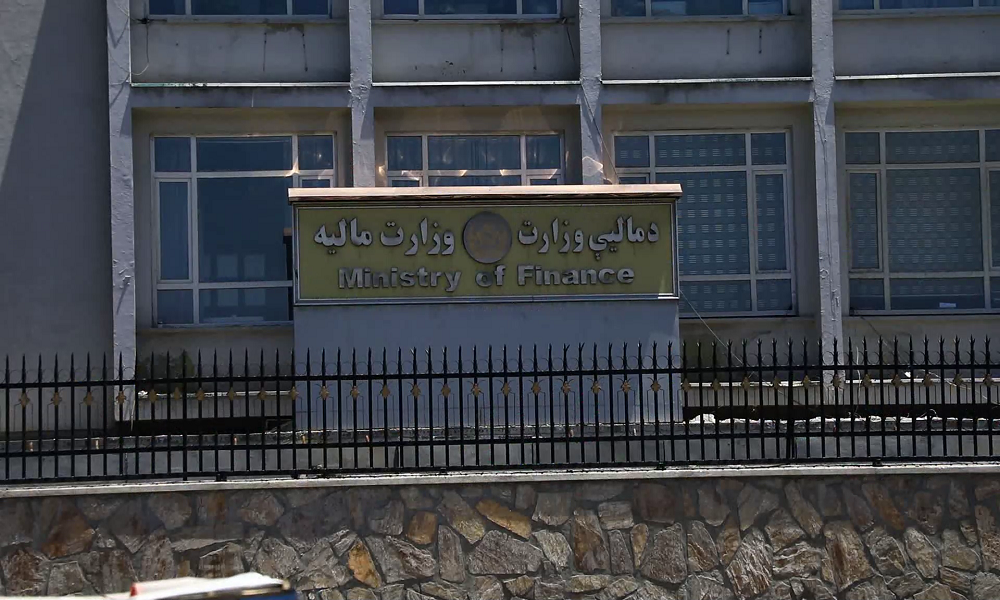
Afghanistan’s Ministry of Finance says it has increased customs tariffs on several imported goods as part of measures aimed at supporting domestic production and industrial growth.
The ministry said the Tariff Committee approved the changes during its third meeting of the 1405 solar year.
Under the new rates, the customs tariff on bottles has increased from 12% to 16%, while the tariff on construction paint has risen from 16% to 30%.
Tariffs on leather footwear and plaster have each increased from 50% to 80%, while the rate on sanitary diapers has risen from 20% to 25%.
At the same time, the tariff on heart springs has been reduced from 8% to 3.5%.
The Ministry of Finance said customs tariffs on cement, iron pipes, refrigerators and raw materials used in carpet production are also under review.
According to the ministry, the tariff adjustments are intended to protect domestic industries, strengthen local production and create conditions for further growth in trade.
Business
Afghanistan-Kazakhstan trade reaches $581 million in six months
The latest discussions come as Kabul and Astana work on a bilateral economic cooperation roadmap, with the two countries aiming to increase annual trade to $3 billion.
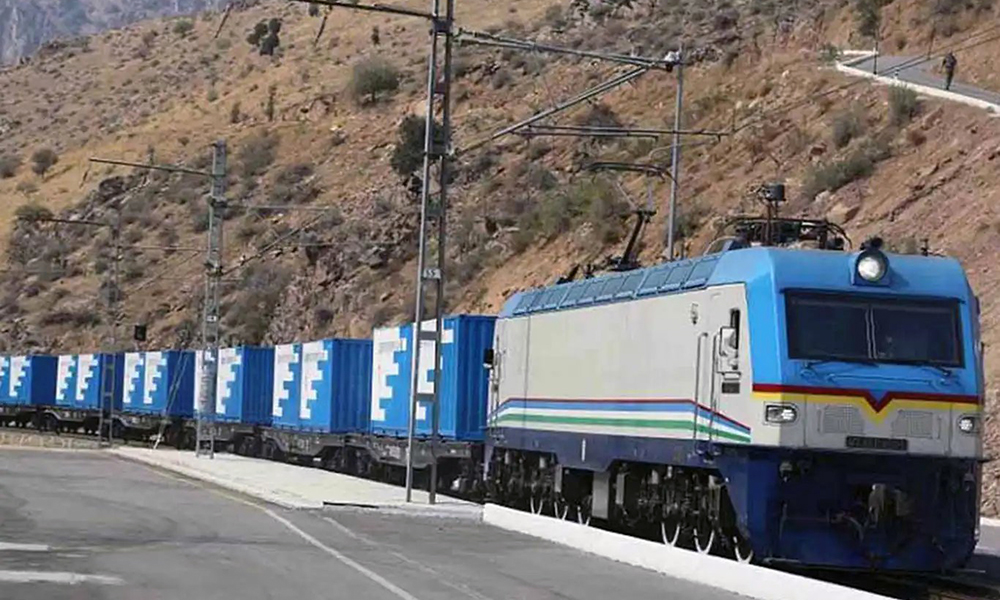
Trade between Afghanistan and Kazakhstan reached $581 million in the past six months, officials in Afghanistan’s western Herat province said.
The figure was discussed during a meeting between Herat Governor Noor Ahmad Islam Jar and a Kazakh delegation led by Yerkin Tukumov, Kazakhstan’s special representative for Afghanistan.
Tukumov stressed the need to expand transit capacity and remove customs barriers to facilitate increased trade between the two countries. He also invited Afghan officials to attend a joint economic meeting scheduled to take place in Kazakhstan.
Islam Jar highlighted Herat’s strategic location and security, describing the province as having significant potential to serve as a hub for investment and regional trade.
Afghanistan and Kazakhstan have previously discussed expanding trade in agricultural products, including Afghan agricultural exports in exchange for flour imports from Kazakhstan.
The two sides have also reached understandings on cooperation over the Torghundi-Herat railway project, which is intended to strengthen transport and trade links.
The latest discussions come as Kabul and Astana work on a bilateral economic cooperation roadmap, with the two countries aiming to increase annual trade to $3 billion.
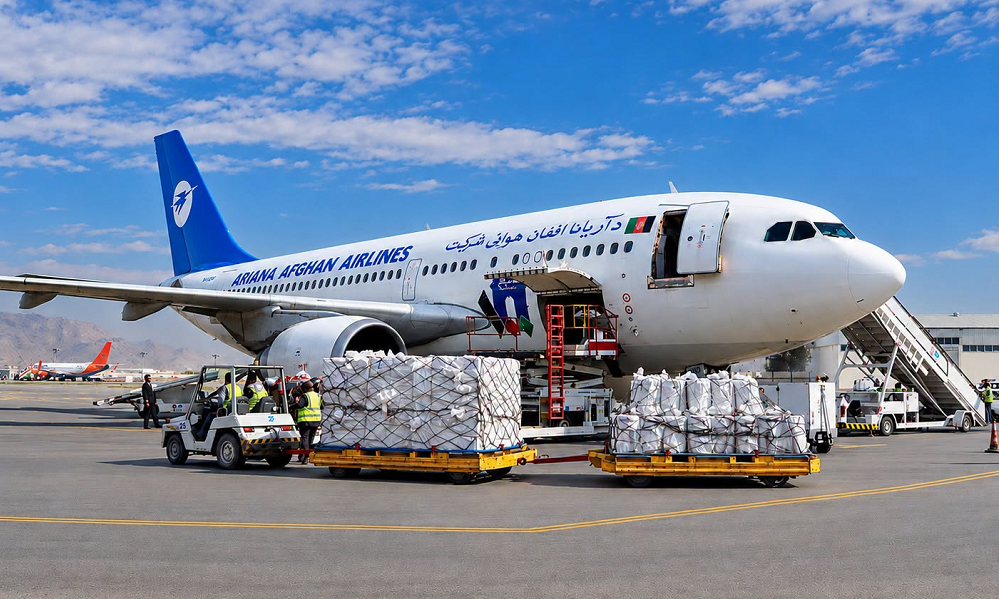
Ariana Afghan Airlines has increased cargo flights between Kabul and Delhi to facilitate the transportation of commercial goods and support Afghan traders.
In a statement issued Saturday, the airline said it will now operate two scheduled cargo flights daily on the Kabul-Delhi route, up from one flight per day previously.
The airline said Afghan traders and commercial companies can use the daily cargo services to transport their goods quickly, safely and reliably between Afghanistan and India.
Ariana Afghan Airlines said it is working to further expand and improve its air cargo services to support trade, meet the needs of Afghan traders and facilitate Afghanistan’s exports and imports.


Sarsabz Yashlar edge Arman FC 1-0 in Afghanistan Champions League

Kunduz football ground to be built with FIFA funding

ACL: Sorkh Poshan Khafi maintain perfect record with 1-0 win over Ariana Khost

Health minister visits Belarus to expand medical cooperation

Afghanistan vs India Asian Games quarter-final abandoned without a toss

Saudi energy group signs major Afghanistan deals covering gas exploration and pipeline plans

Trump floats idea of renaming Atlantic or Pacific Ocean

Nepal flood rescue mission enters critical phase as thousands remain missing

Iranian clubs to face Gulf opponents at neutral venues in Asian Champions League Elite

Khalilzad: Afghanistan ready to attract major investment

Saar: Afghanistan’s image at UNGA

Saar: Concerns over Pakistan’s political crisis discussed

Exclusive interview with Abdul Latif Mansoor, Minister of MRRD

Tawsia: Overview of Afghanistan’s iron mines

Tahawol: Discussion on fresh Pakistani airstrikes on Afghanistan
-

 Regional5 days ago
Iran airlines cancel flights as US sanctions hit
-

 Sport4 days ago
Afghanistan open Asian Games cricket campaign with win over Japan
-
 World4 days ago
Trump welcomes Chinese President Xi as US-China summit gets underway
-

 World2 days ago
Trump rejects Iranian proposal to open Hormuz and end fighting
-

 Latest News1 day ago
Afghanistan says 28 killed, 32 captured in Nuristan operation
-

 Sport1 day ago
Afghan bodybuilder Ali Bilal finishes runner-up at Mr Olympia for third straight year
-
 Latest News4 days ago
Khalilzad warns Pakistan-Afghanistan tensions likely to worsen after fresh airstrikes
-

 Sport3 days ago
Afghanistan to face India in Asian Games cricket quarter-final