
Regional
US has Gaza peace plan and hopes for breakthrough soon, says envoy

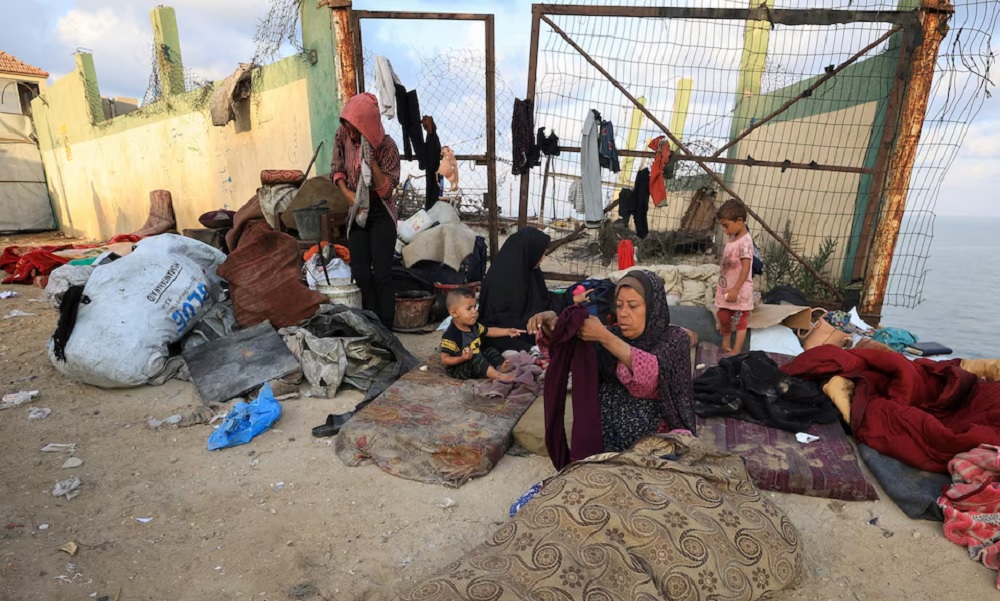
The United States shared a 21-point Middle East peace plan at this week’s U.N. meetings and is hopeful for a breakthrough on Gaza in the coming days, its envoy to the region said on Wednesday.
U.S. President Donald Trump presented proposals to leaders from several Muslim-majority countries – including Saudi Arabia, Qatar and Egypt – during a meeting held on the sidelines of the annual General Assembly on Monday, U.S. special envoy Steve Witkoff said, Reuters reported.
“I think it addresses Israeli concerns and, as well, the concerns of all the neighbors in the region,” he said on Wednesday.
“We’re hopeful, and I might say even confident that in the coming days we’ll be able to announce some sort of breakthrough,” he added.
Israel has drawn global condemnation over its war in Gaza, which is nearing the two-year mark with no ceasefire in sight. The conflict has caused major destruction and killed more than 65,000 Palestinians, according to local health authorities.
A global hunger monitor says part of the territory is suffering from famine.
The current war began when Hamas stormed into Israel on October 7, 2023, killing some 1,200 people and taking 251 hostages, according to Israeli tallies. About 48 hostages, 20 of whom are believed to be alive, are still being held.
The White House remains a staunch ally of Israeli Prime Minister Benjamin Netanyahu, who is scheduled to address the General Assembly in New York on Friday during a U.S. trip that also includes a meeting with Trump.
Both leaders have condemned the recognition of a Palestinian state by Western powers such as France and Britain over the last few days.
Israel has meanwhile pressed on with its military campaign on Gaza City, despite repeated calls for it to pull back.
Hamas’ armed wing told the Israeli military that an expansion of its operation in Gaza City would put Israeli hostages at risk, while Israel’s military called on Gazan residents to “rise up and break away from Hamas” to end the war.
In parallel to Trump’s plan, several European powers and Arab states have also been working on an initiative for what happens after the war in Gaza ends, including creating a stabilization force made up of European and Muslim countries.
They met on Tuesday after Trump had held his meeting.
European diplomats hope that their work and a declaration endorsed by the General Assembly to support the deployment of a temporary international stabilization mission can converge with U.S. plans.
MANY REMAIN IN GAZA CITY AMID SECURITY CONCERNS
But as diplomatic efforts continue to falter, hundreds of thousands of Palestinians have left Gaza City in the northern part of the territory, while others have hesitated because of security risks and widespread hunger.
“We moved to the western area near the beach, but many families didn’t have the time. Tanks took them by surprise,” said Thaer, a 35-year-old father of one from Tel Al-Hawa, a suburb of Gaza City.
Israeli forces began closing in on the city of more than a million in August, with Israel saying it aimed to destroy the last stronghold of Hamas militants.
Israeli airstrikes killed at least 50 people across Gaza on Wednesday, medics said, most of them in Gaza City when a strike hit a shelter for displaced families near a market. Two more died in a nearby house, they said.
The Israeli military said the strike had targeted two Hamas militants and that its forces tried to reduce harm to civilians.
Video obtained by Reuters showed people sifting through the rubble.
“We were sleeping in God’s care. There was nothing – they did not inform us, or not even give us a sign. It was a surprise,” said Sami Hajjaj. “There are children and women, around 200 people maybe, six to seven families — this square is full of families.”
In Tel Al-Hawa, tanks entered populated areas trapping people in their homes, while more tanks were stationed close to Al-Quds Hospital, witnesses said.
The Palestinian Red Crescent Society said an oxygen station had been damaged.
Tanks have also advanced closer to Gaza’s largest hospital, Al Shifa, witnesses and Hamas media said. The Israeli military said the group’s militants had opened fire from within the hospital compound, which Hamas denied.
“We fear these lies may be a prelude to another raid on the hospital,” said Ismail Al-Thawabta, the director of the Hamas-run Gaza government media office, in reference to several previous raids by Israeli forces.
Israel’s military released grainy aerial footage, which appeared to show gunfire coming from two windows. The military did not immediately respond to Reuters queries about how it established it was Hamas militants who had opened fire and at whom.
A Hamas security official said “criminal gangs” had opened fire at the hospital from outside the complex.
Reuters was unable to independently verify the conflicting accounts.
Separately, Israeli troops killed one Palestinian in a raid in Anza village outside Jenin and an Israeli settler shot another in al-Mughayyir village northeast of Ramallah over the past 24 hours, the Palestinian Health Ministry said.
Violence in the West Bank has intensified during the Gaza war, as Israel has stepped up raids across the territory. The Israeli military had no immediate comment on the incidents.
In southern Gaza, at least 13 people were killed in Nuseirat and near Rafah, medics said. There was no immediate comment from the Israeli military, which says its attacks are aimed at ending Hamas rule of the enclave.






Regional
US officials met Iran-backed Houthis in Oman over the weekend
The Trump administration designated the Houthis a “foreign terrorist organization” in March 2025 criminalising support for the group. But Washington has negotiated with them since, reaching a ceasefire in May last year after bombing the group for two months to halt a campaign of attacks on Red Sea shipping.
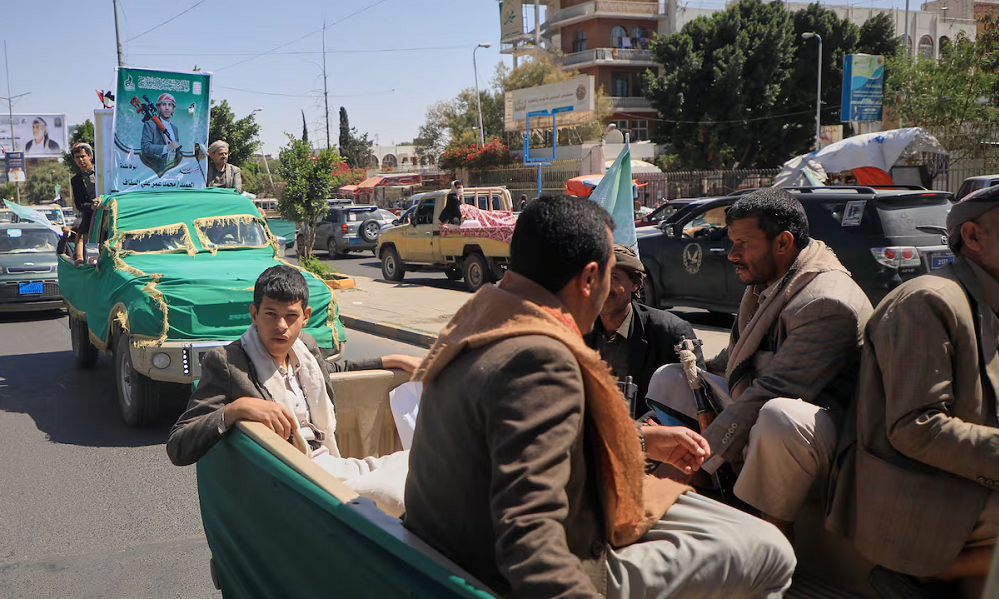
US officials met representatives of Yemen’s Houthis in Oman over the weekend, Reuters reported citing five sources familiar with the matter, days after the Iran-backed militia seized a strategic stretch of the Red Sea coast in a sweeping offensive that routed Saudi-backed forces.
The meeting, which has not been made public, was held at the US Embassy in Muscat, three of the sources said on the condition of anonymity. Two sources said that Oman’s government, a longtime regional mediator, helped organise the meeting.
The Trump administration designated the Houthis a “foreign terrorist organization” in March 2025 criminalising support for the group. But Washington has negotiated with them since, reaching a ceasefire in May last year after bombing the group for two months to halt a campaign of attacks on Red Sea shipping.
President Donald Trump said on Saturday the Houthis had phoned his administration asking the United States to keep out of the Yemen war. Vice President JD Vance said on Monday the US was in direct contact with the group, without giving details.
In the meeting, which one source said took place on Sunday, the Houthis told US officials they had no intention of attacking American vessels and that they were committed to the 2025 ceasefire with the US, two sources said.
One of the sources, a Yemeni, said the militia group also said they would not attack Israeli ships or any commercial vessels, except those belonging to Saudi Arabia.
According to two of the sources, the US side was represented by embassy personnel.
One of those sources said the Houthi delegation included a senior official based in Muscat who is under US sanctions, Mohammad Abdulsalam. Another source confirmed Abdulsalam’s presence along with that of another senior Houthi official, Abdelmalik al-Ajiri.
Responding to questions, a State Department spokesperson said: “We have no comment on this specific reported meeting.”
The spokesperson also said safeguarding freedom of navigation in the Red Sea and preventing the export of terrorism from the Middle East were core US interests.
Oman’s embassy in the US and senior Houthi official Abdulsalam did not respond to requests for comment.
The Houthis last week seized effective control of Yemen’s entire Red Sea coastline, including the historic port of Mocha, and Perim Island in the Bab el-Mandeb, or “Gate of Tears” strait, at the sea’s mouth.
The Houthis, who seized Yemen’s capital in 2014, have fought against a Saudi-led coalition for more than a decade. The war had quietened under a ceasefire in recent years, but fighting resumed in July when the Houthis declared a blockade on Saudi shipping in the Red Sea in response to a Saudi blockade of Yemeni ports.
Saudi Arabia’s de facto ruler Crown Prince Mohammed bin Salman called Trump last week seeking US military support amid the dramatic Houthi advances. Reuters has reported that Washington told Riyadh it would not get directly involved.
Regional
Saudi Arabia calls alleged Mecca attack a ‘red line’ as Houthis deny involvement
Saudi Arabia’s recently announced defense cooperation with Turkey and Pakistan has not been activated in response to the reported incident.

Saudi Arabia has accused Yemen’s Iran-backed Houthi movement of attempting to launch a drone attack toward Mecca, declaring the holy city a “red line,” while the Houthis have denied carrying out the attack.
Saudi authorities said the drone was intercepted and destroyed before it entered the airspace over Mecca, Islam’s holiest city. The Houthis denied launching drones toward the city.
The reported incident has drawn condemnation from several countries and the Organization of Islamic Cooperation (OIC), which said any attempt to target the holy sites violates their sanctity.
Saudi-led coalition spokesperson Col. Turki al-Maliki said the incident was the second alleged Houthi attempt to target Mecca, following a ballistic missile launch toward the city in 2017.
The development comes as Saudi Arabia faces renewed security pressures linked to the wider regional conflict. The Houthis have also carried out attacks against Saudi infrastructure and shipping in the Red Sea, according to the report.
Turkey and Pakistan say no Saudi request for military support
Saudi Arabia’s recently announced defense cooperation with Turkey and Pakistan has not been activated in response to the reported incident.
Officials from Turkey and Pakistan told The Associated Press that Riyadh had not requested military assistance. A Turkish official said efforts to establish the alliance’s operational framework still need to be completed.
Pakistan’s Prime Minister Shehbaz Sharif condemned the reported attack and said Pakistan and Saudi Arabia stand “shoulder to shoulder.”
Houthis claim they shot down Saudi fighter jet
The Houthis later claimed they had shot down an F-15 fighter jet operated by the Saudi-led coalition over Yemen’s central Marib province.
Houthi military spokesperson Brig. Gen. Yahya Saree provided no details on when the incident allegedly occurred. The Associated Press said it could not independently verify the claim.
U.S. officials have indicated that Washington does not currently intend to become directly involved in the conflict. President Donald Trump said the Houthis had indicated they did not want to fight the United States, while Vice President J.D. Vance said Washington remained in contact with both Saudi Arabia and the Houthis.
Meanwhile, Iranian Foreign Minister Abbas Araghchi was visiting China, with discussions expected to include the regional conflict and shipping through the Strait of Hormuz.
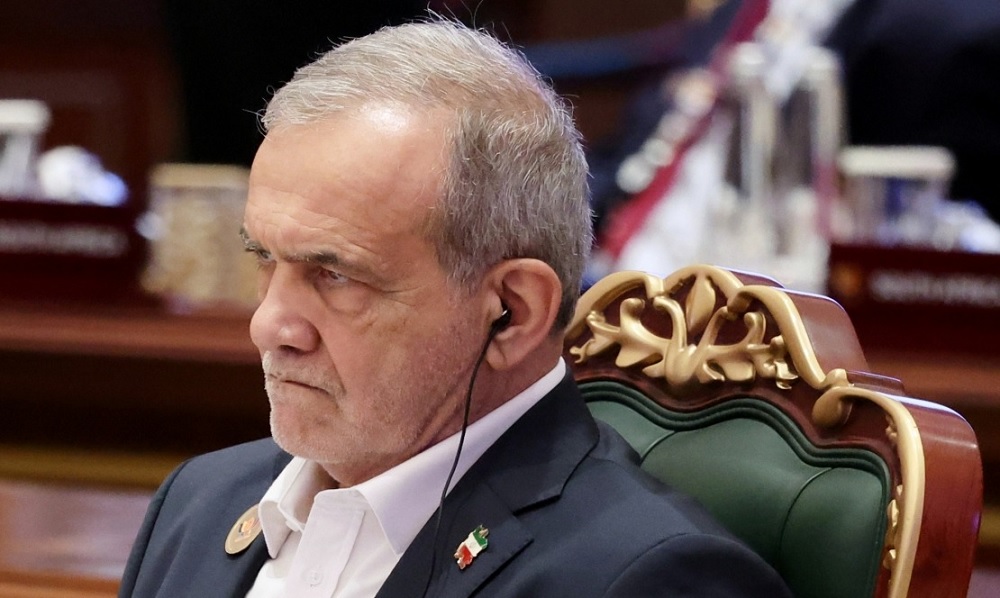
Arab states in the Gulf called off a meeting with Iran planned for Monday, while Yemen’s Houthis launched a new attack on Saudi Arabia after fighting that has extended the Middle East war to another theatre and further jeopardised global oil supplies.
The Iran-aligned Houthis in Yemen said they fired dozens of missiles and drones on Monday at a Saudi military airbase in Khamis Mushait, near the border, hitting aircraft hangars, radar systems, runways and ammunition depots. They described the attack as retaliation for hundreds of Saudi airstrikes on Yemen in recent days, Reuters reported.
Saudi authorities announced brief emergency alerts there and in three other southern cities which have previously come under Houthi fire.
The Houthis launched a lightning advance last week in Yemen, culminating in the seizure of an island in the mouth of the Red Sea on Friday. A separate attack that day, which Riyadh blamed on Iran-backed fighters in Iraq, knocked out Saudi Arabia’s east-west pipeline, the main route for Middle East oil bypassing the blockaded Strait of Hormuz.
OIL PRICES JUMP
Crude oil prices rose more than 3% on Monday, when the market reopened after the weekend, while the politically sensitive average retail price of diesel in the United States hit a new all-time high above $6.23 a gallon.
Traders say the closure of the Saudi pipeline could cut off as much as 4% of global oil supply unless it is reopened within days. Images from space show sections of the pipeline damaged by blazes. Riyadh has not given a firm estimate for how long it will be shut.
Oman had been due to host a meeting on Monday with Iran and Gulf states to discuss negotiations aimed at reopening Hormuz, the world’s most important oil shipping lane, largely closed since the U.S. and Israel attacked Iran at the end of February.
But Oman’s Foreign Minister Sayyid Badr Albusaidi announced overnight that the meeting had been postponed “in the interests of consensus”. Iran said the postponement was at the request of Saudi Arabia.
Meanwhile, Iran issued a list of 77 ships it said had violated its protocols for operating in the Strait of Hormuz. Any ship on the list would face “restrictions on future passages, including fines, detention, or confiscation”, and other ships that assisted them by accepting transfers of cargo would be added to the list.
EXPANSION OF WAR TO YEMEN POSES DILEMMA FOR TRUMP
The upsurge of fighting in Yemen poses a dilemma for Washington, which is under pressure to aid its Saudi allies but anxious not to expand the costly war to a new theatre.
Saudi Arabia has led an Arab coalition battling the Houthis for more than a decade, after the mountain fighters captured Yemen’s capital in 2014. The war there had largely been quiet under a ceasefire for the past few years, but fighting has now resumed, with the Houthis driving back forces from a Saudi-backed government based in the south.
Thousands of Yemenis have fled inland from the coast to escape fighting as the Houthis swept into cities including the historic Red Sea port of Mocha last week.
Aisha Muhammad, an elderly woman burning twigs to heat a kettle in government-held territory near Taiz, told Reuters she had left behind two daughters and three sons who had been unable to escape.
“They can’t even go out to the market to get food and drinking water. They are being blocked and shot at, so they are trapped inside their homes,” she said. “They cannot reach us, and we cannot return to them. This is a trial from God.”
On Friday the Houthis captured Perim Island, inside the Bab el-Mandeb, the “Gate of Tears” strait, at the mouth of the Red Sea.
U.S. President Donald Trump is under pressure to end the war to relieve the global energy shortage and lower prices that are hurting the fortunes of his Republican Party ahead of mid-term elections in November.
Three sources have told Reuters that Washington has so far rebuffed pleas from Saudi Arabia’s Crown Prince Mohammed bin Salman to intervene in Yemen. Trump confirmed over the weekend that he had spoken to the prince, and said the Houthis had also phoned asking Washington to keep out of the dispute.
The United States bombed the Houthis in 2025 for two months, but Trump called off that campaign after reaching a ceasefire with the group, which he said had promised not to attack ships in the Red Sea.
Trump, who attended a golf tournament at one of his resorts in Ireland, said he expected the Iran war to end shortly after the elections in November, after which the price of oil would “drop like a rock”.


Five years out of school: Amnesty raises alarm over Afghan girls’ education

Afghanistan condemns alleged drone attack on Mecca

Quetta commissioner calls for stronger coordination on Afghan refugee repatriation

US sentences Afghan man to 20 year in case linked to 2021 Kabul airport bombing

Top Qatari official meets Afghan interior minister in Kabul

Four mediators struggle to secure lasting Pakistan-Afghanistan ceasefire

Afghanistan’s trade diversification challenges Pakistan

Syria and Saudi Arabia condemn Kabul bombing, express solidarity with Afghanistan

Saudi energy group signs major Afghanistan deals covering gas exploration and pipeline plans

Afghanistan-India T20I series could see major schedule change

Tahawol: Afghanistan’s readiness for US relations discussed

Saar: UN Security Council meeting on Afghanistan discussed

Tahawol: Afghanistan at the center of UN discussions

Saar: Afghanistan’s relations with regional countries discussed

Tahawol: Houthis’ return to regional power dynamics
-

 Sport4 days ago
Zadran calls on Afghan fans to rally behind team against India
-
 Latest News4 days ago
Khalilzad warns US risks losing influence in Afghanistan to China and Russia
-
 Business4 days ago
EU and FAO launch €5m programme to strengthen Afghanistan’s agrifood sector
-
 World4 days ago
Houthi advance in Yemen puts U.S. in a new bind
-

 Regional4 days ago
Iran and UAE back joint BRICS statement urging restraint in war
-

 Sport4 days ago
India beat Afghanistan by seven wickets in first T20I
-
 Latest News5 days ago
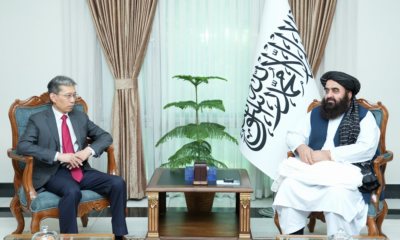
Chinese ambassador, Muttaqi discuss expanding bilateral relations
-

 Latest News3 days ago
Helmand governor, UNAMA discuss province’s key challenges