
Business
Trade body urges urgent government action to restore exports to Afghanistan
In a letter to the Ministry of Commerce and the Federal Board of Revenue’s Directorate General of Transit Trade, Makda reported that thousands of containers carrying bilateral, transit and Central Asian Republic (CARs) cargo remain stuck across Pakistan.

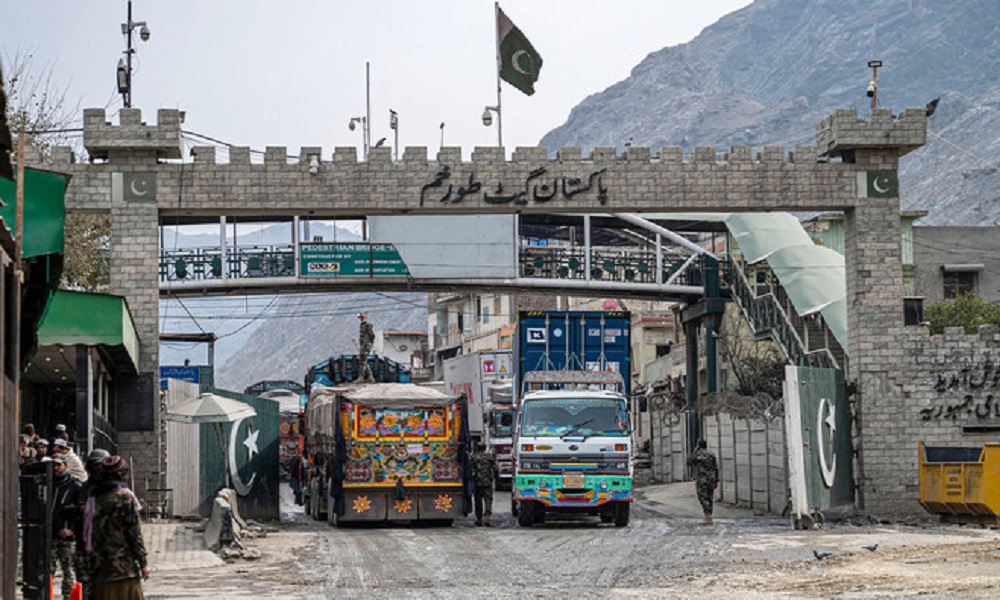
The Pakistan-Afghanistan Joint Chamber of Commerce and Industry (PAJCCI) has urged the government to immediately intervene as prolonged land port closures have halted exports to Afghanistan and triggered a deepening trade crisis.
PAJCCI President Junaid Makda warned that the shutdown of major crossings has disrupted supply chains, caused widespread unemployment among transporters and labourers, and left hundreds of commercial vehicles stranded at Torkham, Chaman, Ghulam Khan and other points. The paralysis, he said, is inflicting heavy financial damage on both sides of the crossings.
In a letter to the Ministry of Commerce and the Federal Board of Revenue’s Directorate General of Transit Trade, Makda reported that thousands of containers carrying bilateral, transit and Central Asian Republic (CARs) cargo remain stuck across Pakistan, including shipments destined for Afghanistan, Uzbekistan and other regional markets.
He noted that traders, transporters and clearing agents are facing daily port demurrage and shipping line detention charges of $150–200 per container, pushing many to the brink of financial collapse.
Makda stressed that Pakistan–Afghanistan bilateral and transit trade has the potential to exceed $5 billion annually. However, repeated disruptions and the current port closures have pushed trade volumes below $1 billion, raising concerns over revenue losses and long-term economic stability.
“While PAJCCI fully supports Pakistan’s national security imperatives, it is distressing to see the severe economic hardship faced by those whose livelihoods depend on this trade,” he said.
He added that PAJCCI’s chapters in Pakistan and Kabul are coordinating closely and prepared to assist in resolving the crisis.
PAJCCI has urged authorities to prioritize the movement of Afghan commercial cargo, reopen all trade gates with Afghanistan, introduce a relief mechanism for affected businesses, and grant a full waiver of demurrage and detention charges under the exceptional circumstances.






Business
Afghanistan invites Iranian investors to expand economic cooperation
Discussions focused on expanding private-sector cooperation, increasing joint investment, and boosting bilateral trade between the two countries.
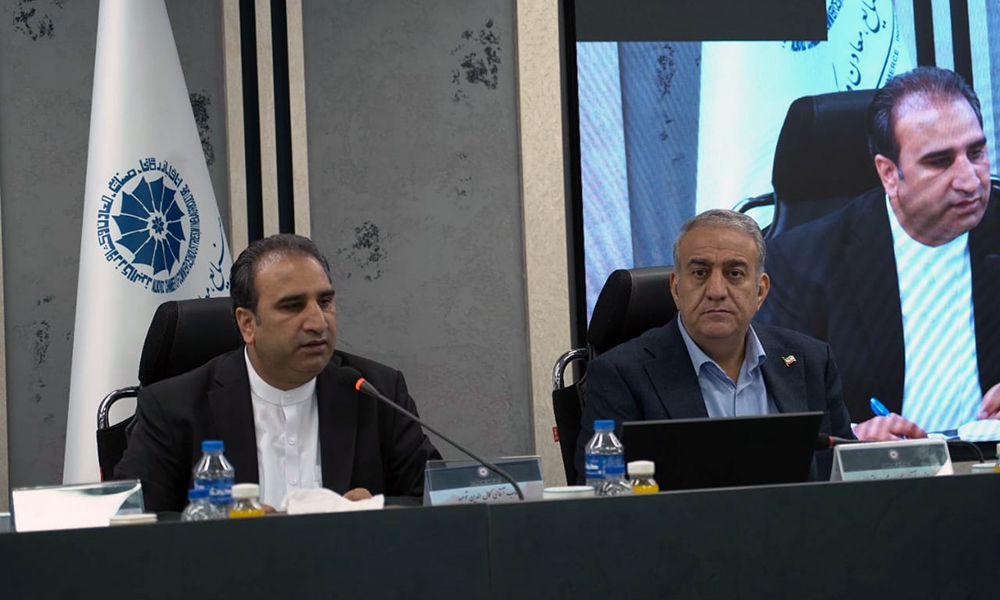
Afghanistan has invited Iranian investors to explore business opportunities and participate in joint economic projects as the country seeks to strengthen investment and trade ties with its western neighbor.
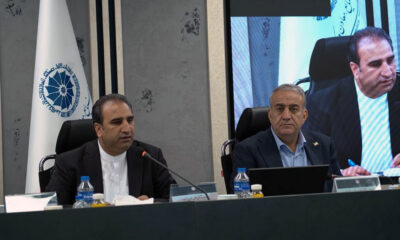
Kamaluddin Tawhidi, head of the Afghanistan-Iran Joint Chamber of Commerce, made the appeal during a visit to Iran, where he attended the “Economic Cooperation Opportunities with Afghanistan” conference in Alborz Province, according to Iran’s state broadcaster.
Speaking at the event, Tawhidi highlighted Afghanistan’s investment potential and encouraged Iranian businesses to take advantage of opportunities across a range of economic sectors.
Discussions focused on expanding private-sector cooperation, increasing joint investment, and boosting bilateral trade between the two countries.
Tawhidi said stronger economic partnerships could create new business opportunities and support broader regional economic growth.
The meeting comes as Afghanistan continues efforts to attract foreign investment and deepen economic cooperation with neighboring countries.
Business
Afghanistan exports first stone shipment to US in $100,000 trade milestone
The export was coordinated through the Herat Chamber of Industries before being shipped to the U.S.
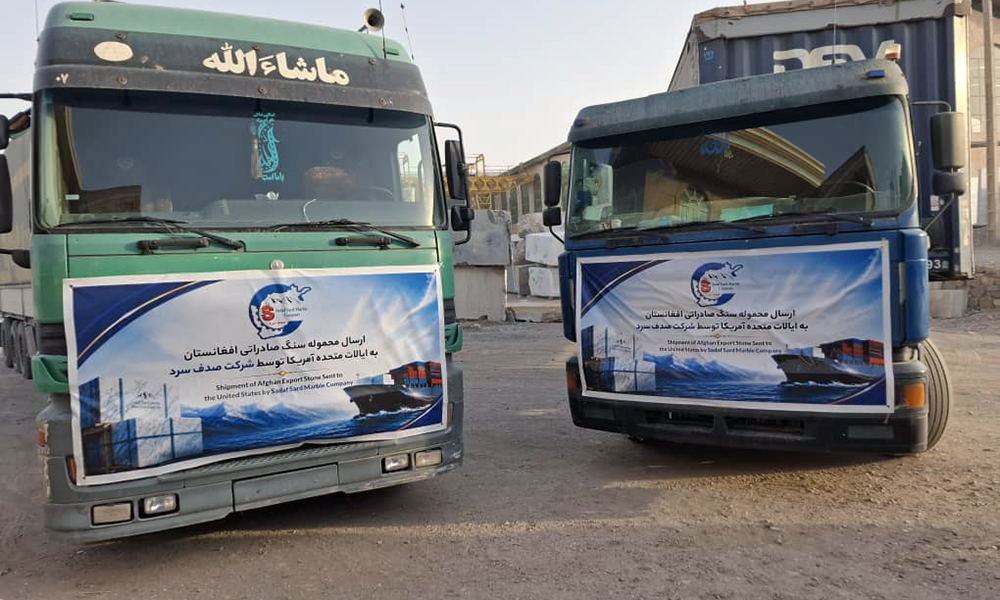
Afghanistan has exported its first shipment of natural stone to the United States, marking a significant milestone in the country’s efforts to expand mineral exports and strengthen its foothold in international markets.
The shipment, valued at $100,000, was sent by a private Afghan company and consists of black stone extracted from the Zindajan mine in the western province of Herat.
The export was coordinated through the Herat Chamber of Industries before being shipped to the U.S.
Industry officials said the export underscores the growing potential of Afghanistan’s mining sector, which is home to vast untapped reserves of minerals and natural stone. They expressed hope that increased access to international markets would encourage investment, boost production, and create new employment opportunities.
Herat, one of Afghanistan’s principal commercial and industrial centres, has long played a key role in the country’s trade due to its strategic location and abundance of natural resources. Officials believe expanding exports of locally sourced minerals could help diversify Afghanistan’s economy and strengthen the private sector.
The shipment forms part of broader efforts to increase Afghanistan’s exports and promote the country’s mining and industrial products in global markets.
Authorities have repeatedly identified the mining sector as a key driver of long-term economic growth, with natural stone among the products expected to attract greater international demand.
Business
Economic Commission approves expansion of Sher Khan port to boost regional trade
The commission also approved extending the port’s operating hours in coordination with Tajikistan to facilitate the movement of a greater number of commercial vehicles and improve cross-border trade.
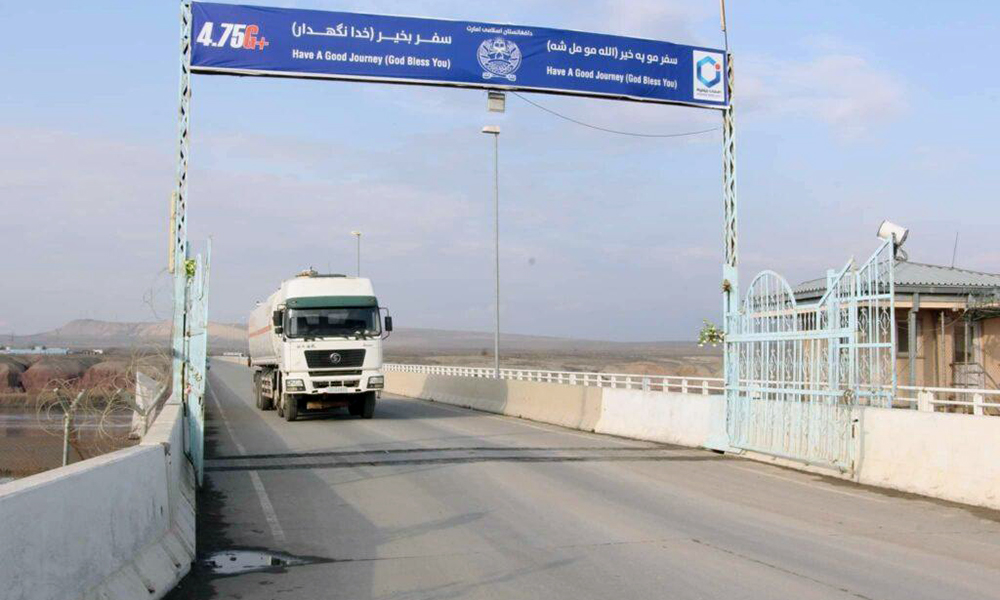
Afghanistan’s Economic Commission has approved a series of measures to expand the capacity of Sher Khan Port in an effort to strengthen trade with Tajikistan, Kyrgyzstan, and China.
The commission, chaired by Deputy Prime Minister for Economic Affairs Mullah Abdul Ghani Baradar, met on Tuesday to review proposals submitted by the Ministry of Transport and Civil Aviation aimed at increasing regional trade through the northern border crossing.
According to the approved plan, the Ministries of Finance, Interior, and other relevant institutions will develop new infrastructure at Sher Khan Port and expand existing facilities to accommodate growing trade volumes.
The commission also approved extending the port’s operating hours in coordination with Tajikistan to facilitate the movement of a greater number of commercial vehicles and improve cross-border trade.
In addition, the Ministry of Finance was instructed to allocate funding for the construction of a logistics center at Sher Khan Port. The facility will provide customs services, warehousing, cargo handling, and freight-loading operations to streamline trade activities.
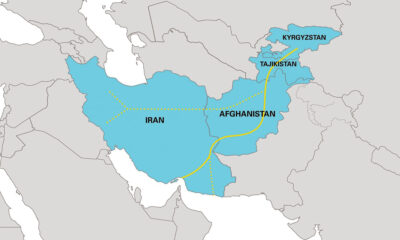
The meeting also directed the Ministry of Public Works to construct the necessary railway infrastructure inside Afghanistan to activate the ECO railway corridor, a regional transport initiative linking Iran, Afghanistan, Tajikistan, and Kyrgyzstan under the framework of the Economic Cooperation Organization (ECO).
Separately, the commission decided that several state-owned entities will transfer their scrap iron to the National Development Company, which will process the material into standard steel reinforcing bars (rebar) for use in major government infrastructure projects.
The commission also endorsed 37 national standards and 12 testing methods proposed by the National Standards and Quality Authority. The standards cover agricultural products, food items, pharmaceuticals, construction materials, telecommunications and electrical equipment, chemicals, plastics, medical equipment, and several other sectors. Officials said the standards were developed in line with Afghanistan’s current needs and international benchmarks.
The meeting concluded with the presentation of follow-up reports on a number of ongoing issues, and relevant institutions were given the necessary directives. All decisions adopted during the session have been forwarded to the Office of the Supreme Leader for final approval.


Final touches being made to Ayubi Cricket Stadium ahead of Kabul Premier League

Status of US-Iran talks uncertain as ship struck in Hormuz

US court rules in favor of Afghan families seeking travel documents

UNSC presidency to highlight consequences of IEA’s return to power

Pakistan, China envoys discuss Afghanistan, pledge closer counterterrorism cooperation

Pakistan’s governance system has ‘collapsed’: Mohsin Naqvi

India offers 1,000 online scholarships for Afghan students for 2026-27 academic year

Cricket world pays tribute to Afghanistan fast bowler Shapoor Zadran

Turkey spent over $120 million to prepare airport for Qatar-donated U.S. presidential aircraft

Thousands pay final respects as Afghan cricketer Shapoor Zadran buried in Kabul

Tahawol: Worsening security crisis in Khyber Pakhtunkhwa

Saar: Trump’s claim over Iran talks

Tahawol: US cancelling strikes on Iran

Saar: Strained relations between Kabul and Islamabad

Saar: Trade shifts from Pakistan to Central Asia and Iran discussed
-
 Latest News4 days ago
Pakistan’s governance system has ‘collapsed’: Mohsin Naqvi
-

 Sport5 days ago
Qosh Tepa crowned champions of inaugural Afghanistan Wrestling Premier League
-

 Latest News4 days ago
World Bank: Afghanistan’s economic growth too weak to improve living standards
-
 Latest News3 days ago
Uzbek president calls for Central Asia-Afghanistan development space
-

 World3 days ago
US to make visa bond program permanent for people from dozens of countries
-
 Business5 days ago
Afghanistan invites Iranian investors to expand economic cooperation
-
 World4 days ago
Spain says migrant surge into Ceuta has eased as thousands return to Morocco
-
 Latest News4 days ago
Israel and US consider Iran land blockade