
Business
ADB approves $110 million grant to boost power supply to Afghanistan

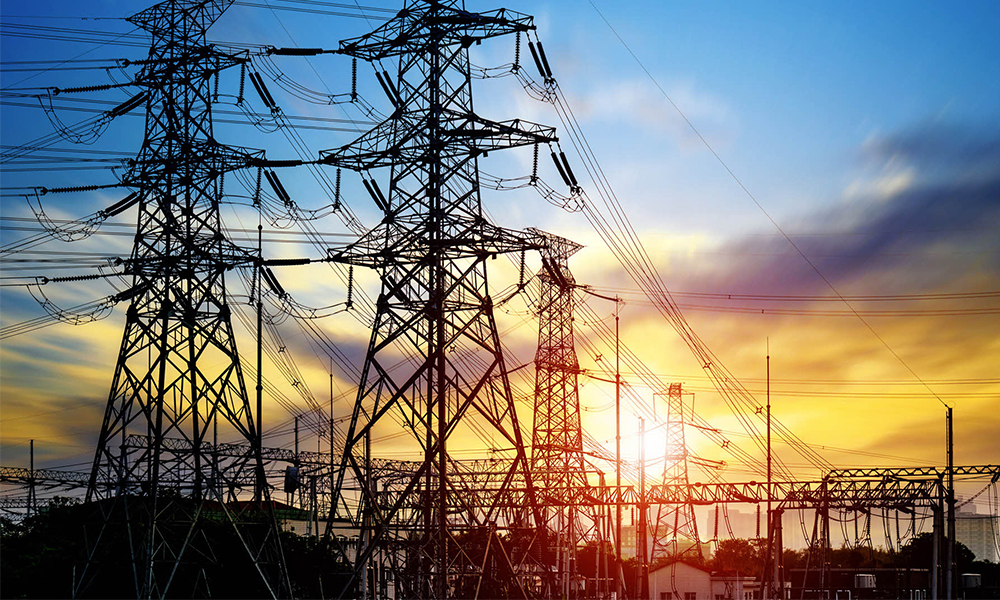
The Asian Development Bank (ADB) on Wednesday approved a $110 million grant to boost power supply and strengthen Afghanistan’s energy sector by improving its sustainability and promoting cross-border trade in energy.
“The project will help address Afghanistan’s chronic power shortage by immediately doubling the volume of power imports and ensuring long-term cost-competitive electricity supply,” read a statement issued by ADB.
Once complete, the project will provide improved access to customers and facilitate 500,000 new connections to households, commercial entities, and industrial customers.
“Demand for electricity is growing rapidly in Afghanistan and is essential for the country’s economic growth,” said ADB Energy Specialist Nana Gurgenidze.
“The project will help provide reliable and affordable electricity to households and businesses by strengthening the grid and increasing power import capacity by 900 megawatts, with year-round firm energy imports of 3,000 gigawatt-hours.”
Afghanistan relies on energy imports from neighboring countries to meet its domestic demand and despite significant progress since 2002, only about 34 percent of the population has access to grid-connected electricity.
According to the ADB, the project will finance the construction of 201km of a 500-kilovolt overhead transmission line from the Surkhan substation in Uzbekistan to the Khwaja-Alwan substation in Afghanistan – a key interconnection node to receive power from Tajikistan, Turkmenistan, and Uzbekistan.
It will also fund the expansion of a line bay, including associated equipment, at the Khwaja-Alwan substation and the project will allow Uzbek power into the Afghan grid under a 10-year power purchase and sales agreement signed in August 2020 by the Afghanistan and Uzbekistan governments.
In addition, staff, including female engineers at the national power utility Da Afghanistan Breshna Sherkat (DABS), will be trained to manage cross-border power transfer and parallel operations, including emergency operation systems with CAPS, read the statement.









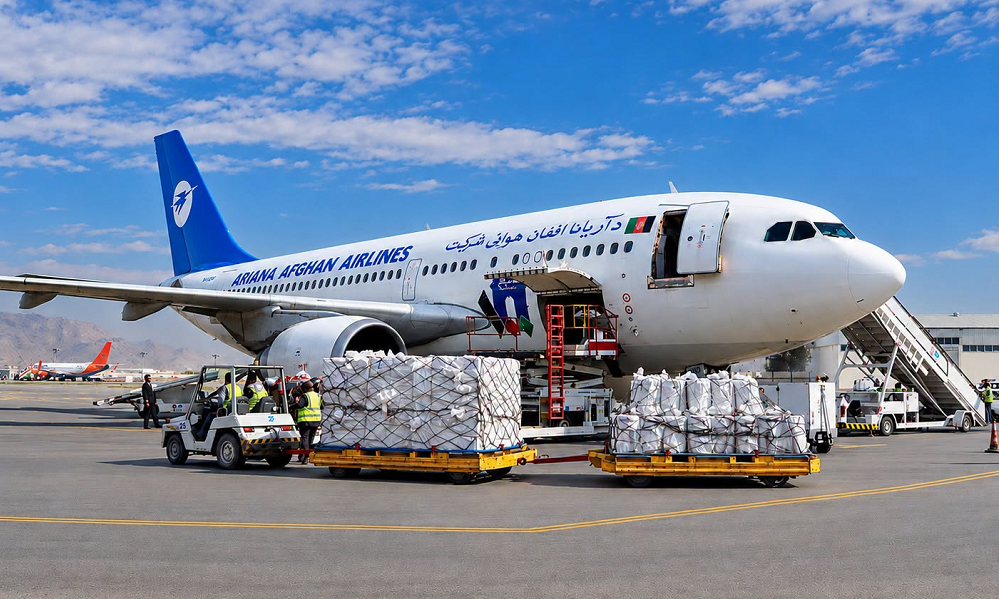
Ariana Afghan Airlines has increased cargo flights between Kabul and Delhi to facilitate the transportation of commercial goods and support Afghan traders.
In a statement issued Saturday, the airline said it will now operate two scheduled cargo flights daily on the Kabul-Delhi route, up from one flight per day previously.
The airline said Afghan traders and commercial companies can use the daily cargo services to transport their goods quickly, safely and reliably between Afghanistan and India.
Ariana Afghan Airlines said it is working to further expand and improve its air cargo services to support trade, meet the needs of Afghan traders and facilitate Afghanistan’s exports and imports.
Business
Afghanistan, Turkmenistan agree to establish joint road transport commission
The sides also agreed to establish a joint commission to address road transport issues and improve coordination.

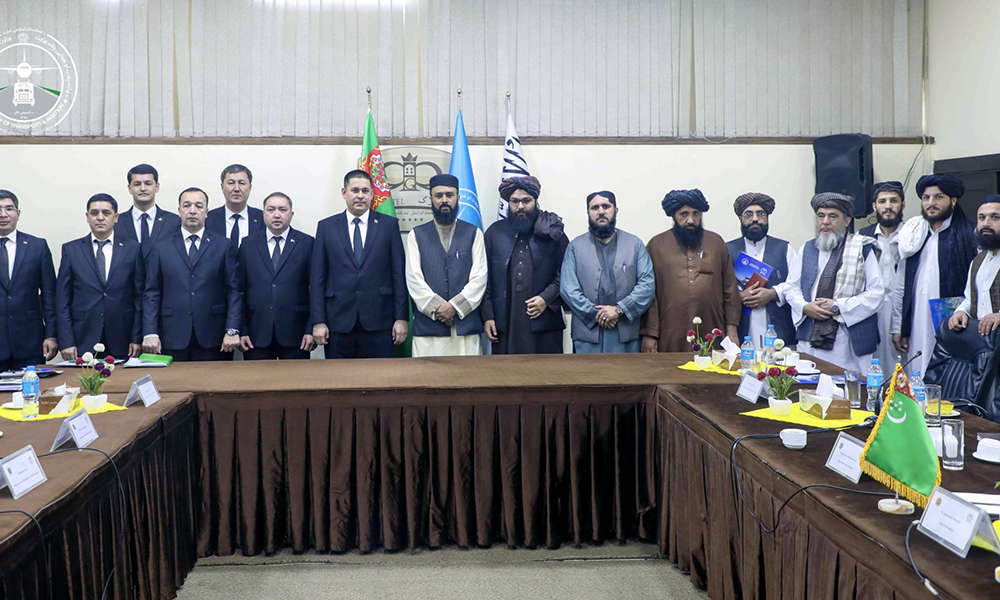
Afghanistan and Turkmenistan have agreed to establish a joint commission on road transport and facilitate transit between the two countries following two days of talks in Herat.
Afghanistan’s Ministry of Transport and Civil Aviation said the meeting brought together technical delegations from both countries to strengthen bilateral transport and transit cooperation.
The talks focused on easing visa procedures for Afghan and Turkmen drivers and traders, operationalising the Lapis Lazuli transit corridor and increasing the movement of transit vehicles between the two countries.
The sides also agreed to establish a joint commission to address road transport issues and improve coordination.
Representatives from Afghanistan’s ministries of foreign affairs, industry and commerce and the railway authority attended the talks, alongside the Ministry of Transport and Civil Aviation. Railway links, bilateral trade and wider transit cooperation were also discussed, with private-sector representatives expected to participate in future discussions.
The agreement comes as Turkmenistan works to strengthen its role as a regional transport and logistics hub, using its road, rail and Caspian Sea infrastructure to connect Central Asia with markets to the west and south.
A key part of that network is the International Seaport of Turkmenbashi, which links Turkmenistan with Azerbaijan and onward routes towards the South Caucasus and Europe.
Turkmenistan’s transport infrastructure also forms part of the wider Middle Corridor, or Trans-Caspian International Transport Route, connecting China and Central Asia with Azerbaijan, Georgia and Türkiye before reaching European markets.
For Afghanistan, the Lapis Lazuli Corridor is particularly important. It connects Afghanistan through Turkmenistan and across the Caspian Sea to Azerbaijan, Georgia and Türkiye, providing a potential route towards European markets.
Rail links such as the Herat-Torghundi line could further connect Afghanistan’s markets with Turkmenistan’s wider transport network.
The latest agreement puts road transport and transit facilitation at the centre of efforts by the two neighbours to expand trade and strengthen regional connectivity.
Business
TAPI gas deliveries to Afghanistan and Pakistan expected to begin in 2027
Turkmenistan regards TAPI as a key project for diversifying its gas exports and strengthening regional economic cooperation.
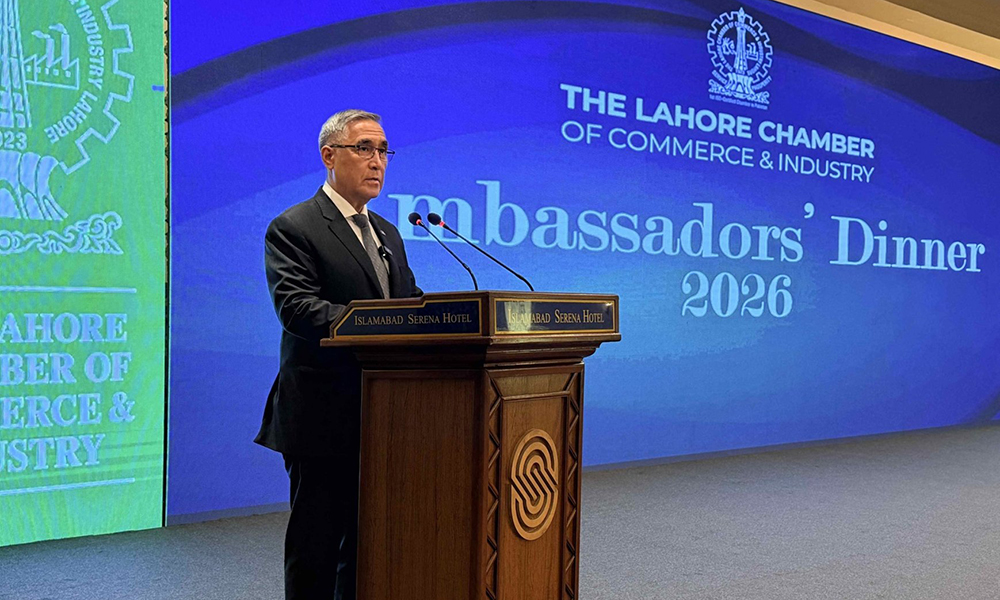
Turkmenistan expects natural gas supplies to Afghanistan and Pakistan through the Turkmenistan-Afghanistan-Pakistan-India (TAPI) pipeline to begin in 2027, according to the Turkmen Embassy in Islamabad.
Turkmen Ambassador Atajan Movlamov said construction of the strategically important Serhetabat-Herat section of the pipeline is expected to be completed by the end of this year.
Movlamov made the remarks during an Ambassadors’ Dinner hosted by the Lahore Chamber of Commerce and Industry in Islamabad.
He said the implementation of TAPI and other regional energy projects could strengthen Pakistan’s energy security while creating new opportunities for industrial development and economic growth.
The planned 1,800-kilometre pipeline is designed to transport up to 33 billion cubic metres of natural gas annually from Turkmenistan’s giant Galkynysh gas field through Afghanistan to Pakistan and India.
Turkmenistan regards TAPI as a key project for diversifying its gas exports and strengthening regional economic cooperation.
The Galkynysh field, which is the main resource base for TAPI, is among the world’s largest gas fields, with estimated reserves of more than 27 trillion cubic metres.
The project has faced years of delays, but recent construction and developments in the regional energy sector have renewed attention to TAPI as a potential link between Central Asian gas resources and South Asian energy markets.


Abu Muslim Farah defeat Khurasan Faryab 2-0 in ACL season six

Saar: Concerns over Pakistan’s political crisis discussed

Afghanistan Champions League: Omar Zawak Herat beat Toofan Herat 1-0

Blast in Pakistan’s Dera Ismail Khan kills 11, injures 30

Ariana Afghan Airlines increases Kabul-Delhi cargo flights

Saudi energy group signs major Afghanistan deals covering gas exploration and pipeline plans

Trump floats idea of renaming Atlantic or Pacific Ocean

US hits Egyptian bank branches with Iran sanctions as war marks six months

Nepal flood rescue mission enters critical phase as thousands remain missing

Iranian clubs to face Gulf opponents at neutral venues in Asian Champions League Elite
Saar: Concerns over Pakistan’s political crisis discussed

Exclusive interview with Abdul Latif Mansoor, Minister of MRRD

Tawsia: Overview of Afghanistan’s iron mines

Tahawol: Discussion on fresh Pakistani airstrikes on Afghanistan

Saar: Calls for international support for Afghanistan discussed
-

 World5 days ago
CNN, MS NOW and Politico sue Trump, challenging White House ban
-

 Latest News3 days ago
Ariana Afghan Airlines ranks seventh among 45 Central Asian airlines
-

 Latest News4 days ago
UN reiterates call for respect for international law after Kunar airstrikes
-

 Regional3 days ago
US and Iran hold first talks since June after Trump’s ‘annihilation’ threat
-

 Latest News3 days ago
Silk Road highway in Wakhan corridor now reaches the China border
-

 Latest News5 days ago
Afghan Official: Pakistan’s airstrikes will not go unanswered
-

 Sport4 days ago
Afghan boxing referee heads to China for international festival
-
 Regional5 days ago
G7 foreign ministers call on Iran to stop arming Houthis