
Latest News
Afghan forces’ casualties high in 2016: US general

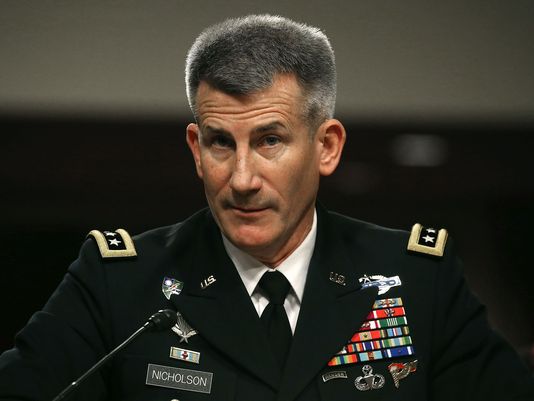
 Afghan security forces are suffering rising levels of battlefield casualties this year and some of the Taliban’s finances have been disrupted after a U.S. airstrike killed their leader, top US commander in Afghanistan has said.
Reuters has quoted U.S. Army General and the commander of NATO-led Resolute Support Mission, John Nicholson telling a small group of reporters that the rising casualties were largely the result of Taliban attacks on fixed Afghan positions.
“This year, we’re seeing more tactical success (by the Afghans) on the battlefield but more casualties as well,” Nicholson quoted by Reuters saying this late on Saturday.
“It’s when they’re in a defensive posture, such as in checkpoints being overrun, is where the majority of the casualties are occurring,” he added.
According to the figures in 2015 more than 5,000 Afghan forces were killed and over 14,000 were wounded in the fight against the insurgents.
Nicolson said Akhtar Mansour, the supreme leader of Taliban who was killed in US drone strike, had tight control of Taliban finances.
“So what we’re seeing are some indications that some of the finances of the organization have been disrupted,” he said.
U.S. commander also added that Mansour’s successor, Mullah Haibatullah Akhundzada, is not a unifying figure within the Taliban ranks and the group were struggling after the killing of Mansour.
Despite the previouse plan last week U.S. president Barak Obama announced that he plans to keep 8,400 US troops until the end of his term.
U.S. allies also renewed their commitments on Saturday to support the Afghan security forces till 2020.

The UAE has expressed its solidarity with Afghanistan following a truck overturning accident in eastern Laghman province that left dozens of people dead and injured.
In a statement, the Ministry of Foreign Affairs conveyed its sincere condolences and sympathy to the families of the victims, as well as to the government and people of Afghanistan.
The ministry reaffirmed the UAE’s support for Afghanistan during this difficult time and expressed its wishes for a swift recovery for those injured in the incident.
At least 22 people were killed and 36 others were injured after a truck carrying Afghans returning from Pakistan overturned on a highway linking Kabul with Jalalabad on Saturday.
Latest News
Defense minister: Russia military-technical cooperation deal aims to strengthen Afghanistan’s defense capabilities
“The practical work on this agreement will begin in the coming days, and discussions will focus on how to implement it effectively,” he said.
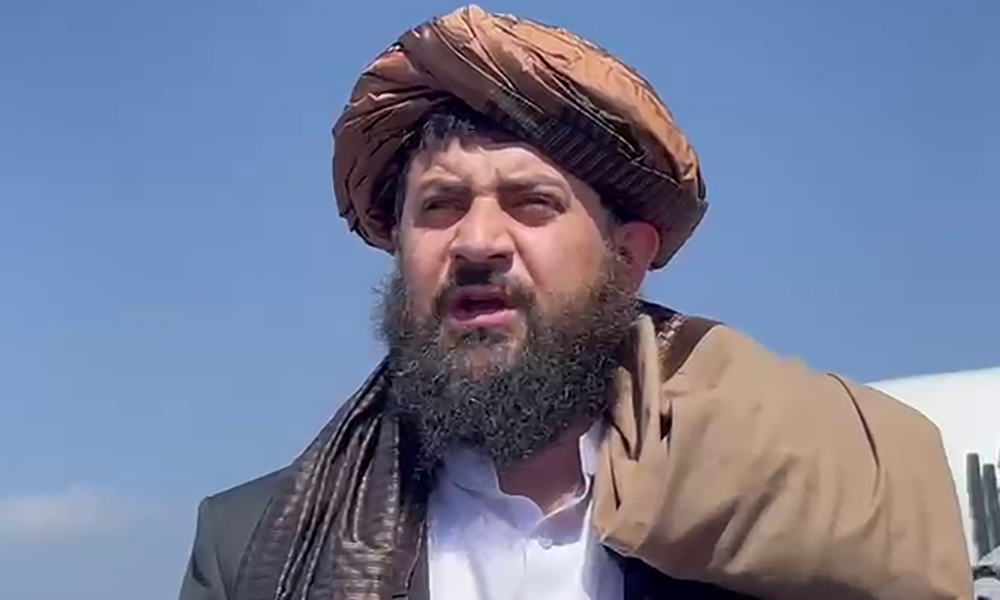
Mohammad Yaqoob Mujahid, Afghanistan’s Defense Minister, returned to Kabul on Saturday after attending an international security conference hosted by Russia, announcing that practical steps to implement a newly signed military-technical cooperation agreement between Kabul and Moscow will begin in the coming days.
Speaking upon his arrival at Kabul International Airport, Mujahid said the Afghan delegation participated in the Moscow conference at Russia’s official invitation. He noted that only a limited number of countries were given the opportunity to address the gathering, with Afghanistan among those represented.
Commenting on the agreement signed with Russia, Mujahid stressed that the document is a military-technical cooperation agreement rather than a defense or security pact.
“The practical work on this agreement will begin in the coming days, and discussions will focus on how to implement it effectively,” he said.
According to the defense minister, the agreement is intended to enhance Afghanistan’s ability to maintain, repair and improve military equipment, much of which was originally manufactured in Russia. He noted that Russian-made aircraft, helicopters and other military assets remain in service and require continued technical support.
Mujahid emphasized that Afghanistan’s policy is based on neutrality and non-aggression, adding that any progress in the military sector is aimed at strengthening national defense and contributing to regional stability.
He also noted that Afghanistan possesses military equipment from other countries, including the United States and Brazil, and said Kabul could consider similar technical cooperation agreements with those countries if mutual interest exists.
The defense minister reiterated that Afghanistan’s national interests remain the primary consideration in all international agreements and that no deal would be concluded at the expense of the country’s sovereignty or interests.
Addressing concerns raised by some countries regarding the agreement with Moscow, Mujahid said Afghanistan poses no threat to any nation and that military development should not be viewed as a source of concern.
Referring to Pakistan, he said Islamabad may have reservations about the agreement, adding that Afghanistan is working to strengthen its defensive capabilities.
“Several months ago, Pakistan could carry out airstrikes in parts of Afghanistan with considerable confidence. We are working to ensure that no one will have such confidence in the future,” Mujahid stated.
He concluded by saying that Afghanistan requires stronger defense capabilities and that discussions on future defense systems, security cooperation, and military development will continue as the country seeks to enhance its ability to protect its territory and sovereignty.
Latest News
Afghanistan war crimes claims review dismissed, UK inquiry hears
Britain’s Ministry of Defence has denied wrongdoing by the military as an institution but has faced criticism over attempts to limit the release of evidence presented to the inquiry.
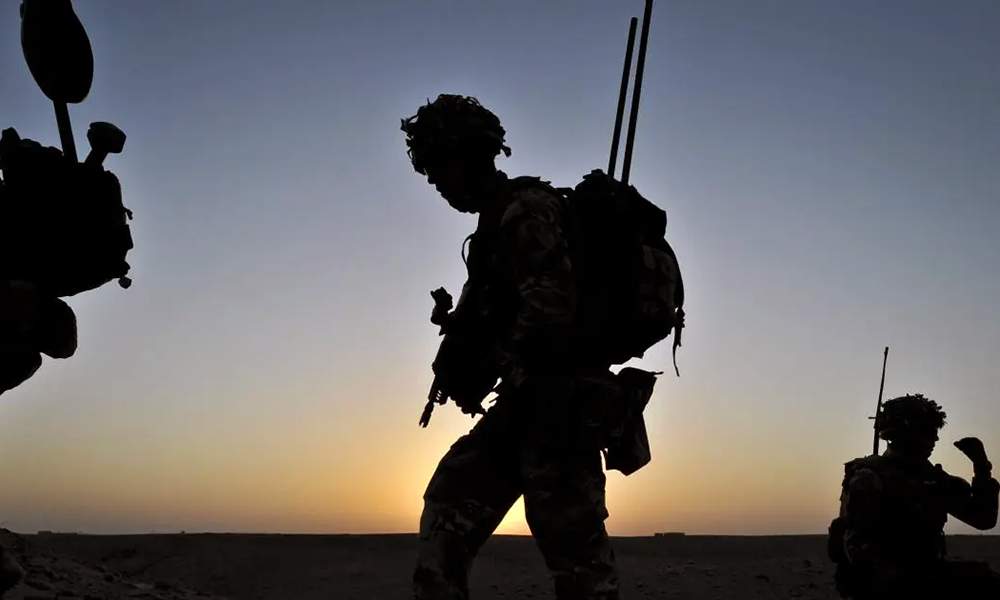
A judge-led inquiry into alleged war crimes committed by British special forces in Afghanistan has heard that an initial internal review of the allegations was dismissed within a single day, according to newly declassified documents.
The documents, released on Friday as part of the ongoing public inquiry, suggest senior British special forces officers failed to properly investigate repeated reports that members of the Special Air Service (SAS) had unlawfully killed unarmed Afghans during operations in the country.
The inquiry is examining allegations surrounding the deaths of 80 people during SAS counter-terrorism raids in Afghanistan between 2010 and 2013. It was established in 2023 following years of legal challenges and media investigations that uncovered claims of unlawful killings, the planting of weapons on civilians and the destruction of potentially incriminating evidence.
Among the latest evidence is testimony from a former senior officer, identified only by the cipher N2252, who served as chief of staff to the director of British special forces in 2010 and 2011.
According to the released documents, N2252 raised concerns after receiving reports that the number of people killed during some SAS operations exceeded the number of weapons recovered at the scenes.
The inquiry has previously heard that following a February 2011 raid in Afghanistan in which eight people, including a 15-year-old boy named Mohammad Taher, were killed, the officer alerted a senior military legal adviser to what he described as yet another case of “more bodies than weapons.”
In another operation, known as Objective Tyburn, internal correspondence reportedly noted that four individuals had been classified as enemy fighters killed in action while only two weapons were recovered.
The newly released material also suggests that senior special forces officers were reluctant to refer the growing allegations to military police investigators, with concerns repeatedly dismissed as unverified rumours despite mounting reports from within the military.
The inquiry was launched after a senior British special forces officer came forward with allegations that members of an SAS unit had committed war crimes in Afghanistan. The whistleblower reportedly told investigators that a “cancer had infected” part of the regiment and alleged that prisoners had been unlawfully killed during operations.
The inquiry, led by Lord Justice Charles Haddon-Cave, continues to examine evidence in both public and closed sessions. While many documents have been released, large portions remain redacted due to national security concerns and the protection of the identities of special forces personnel and witnesses.
Britain’s Ministry of Defence has denied wrongdoing by the military as an institution but has faced criticism over attempts to limit the release of evidence presented to the inquiry.
The investigation remains ongoing, with further hearings expected in the coming months.


Tahawol: US, Iran considering deal to end war

Saar: IEA seeking to ensure regional stability

UAE expresses solidarity with Afghanistan after deadly truck crash

Defense minister: Russia military-technical cooperation deal aims to strengthen Afghanistan’s defense capabilities

Afghanistan war crimes claims review dismissed, UK inquiry hears

New Afghanistan-China transport corridor launched via Turkmenistan

Afghanistan signs $46 million deal to develop standard laboratory complexes

Germany to launch online visa system for Afghan study and work applicants in Pakistan

Large blast near Beit Shemesh part of pre-planned test: Israeli defense firm

Trump returns from China with stability but little progress
Tahawol: US, Iran considering deal to end war
Saar: IEA seeking to ensure regional stability

Tawsia: Afghanistan’s weekly economic roundup reviewed

Tahawol: Kabul Pursuing Constructive Regional Diplomacy

Saar: Afghanistan, Russia sign military cooperation agreement
-
 Sport4 days ago
Afghanistan announce squad for India series
-
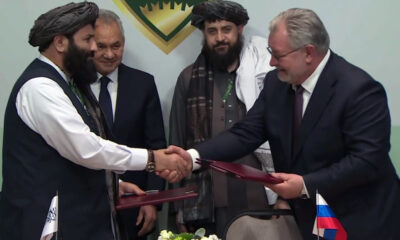
 Latest News3 days ago
Afghanistan, Russia sign military cooperation agreement
-
 Latest News4 days ago
‘We will never bow our heads before infidels,’ says IEA Supreme Leader
-
 Business3 days ago
Afghanistan expands oil production as investment in Amu Darya fields grows
-
 Latest News3 days ago
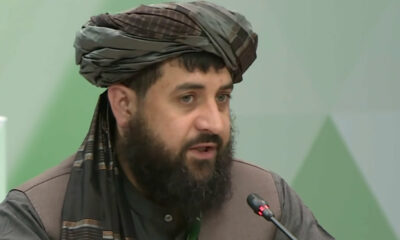
Mujahid calls for stronger Afghanistan-Russia relations during Moscow meeting
-
 Latest News5 days ago
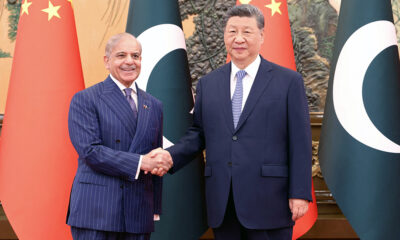
China and Pakistan deepen Afghanistan cooperation after Beijing talks
-
 Latest News2 days ago
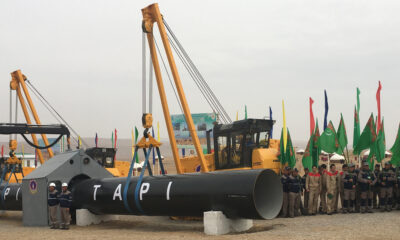
Work on TAPI project in Afghanistan ongoing and accelerating: Mujahid
-
 Latest News2 days ago
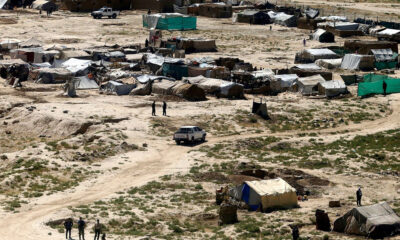
Afghanistan calls for global cooperation on climate change as country faces rising environmental risks