
Business
Major pharma firms eye investment in Afghanistan

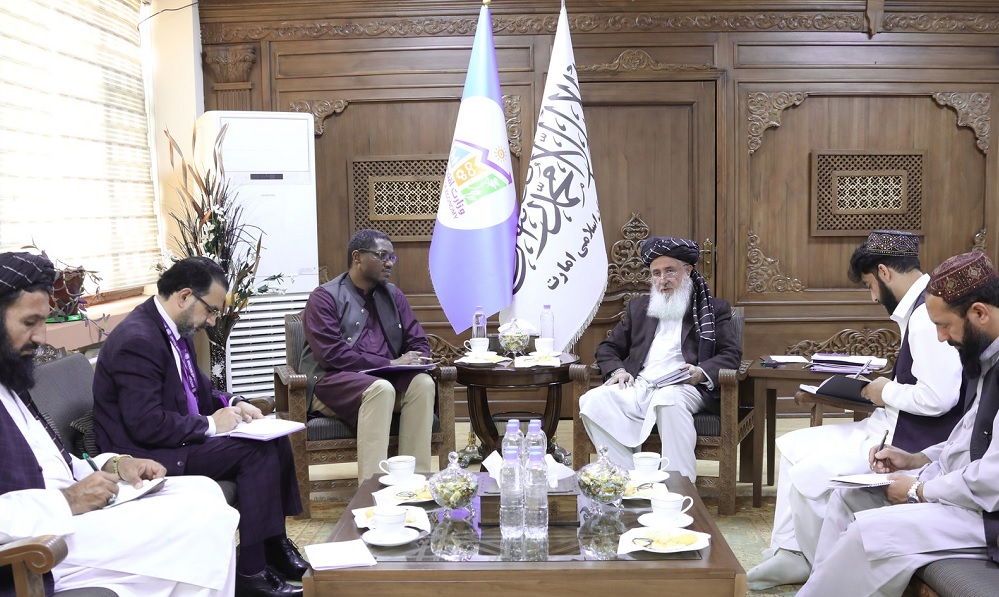
Several major international pharmaceutical companies could invest in medicine production in Afghanistan as part of growing cooperation between UN agencies and Afghan authorities, who hope to strengthen the country’s healthcare system.
The development was highlighted during a meeting between Afghanistan’s Minister of Economy, Din Mohammad Hanif, and UNICEF Representative Tajudeen Oyewale, where discussions focused heavily on improving healthcare access and expanding pharmaceutical capacity.
UNICEF officials indicated that several global drug manufacturers are preparing to coordinate with Afghanistan’s Ministry of Public Health on establishing or supporting local medicine production.
The aim is to improve the availability of essential medicines for humanitarian operations while also strengthening supply in domestic markets.
The proposed investments are expected to reduce Afghanistan’s reliance on imported pharmaceuticals and improve access to essential treatments, particularly in areas affected by economic hardship and ongoing humanitarian needs.
Alongside the pharmaceutical plans, UNICEF reaffirmed its continued commitment to humanitarian assistance in Afghanistan, including programmes addressing food insecurity, climate-related pressures, and support for returning migrants.
According to figures discussed in the meeting, $520 million has been requested from international donors to support returnees. Of this, $100 million is allocated for emergency assistance, while $420 million is intended for longer-term resettlement and reintegration support.
Afghan authorities welcomed the prospect of expanded pharmaceutical investment, with Din Mohammad Hanif stressing the importance of development cooperation, job creation, and increased international engagement to support economic stability.
Officials said strengthening the pharmaceutical sector could become a key pillar in Afghanistan’s broader efforts to improve healthcare resilience and move toward greater self-sufficiency in essential medical supplies.



Business
Afghanistan, Tajikistan seek stronger trade and investment ties
The two sides discussed increasing trade exchanges, establishing direct links between traders and investors, and organizing joint economic programs.
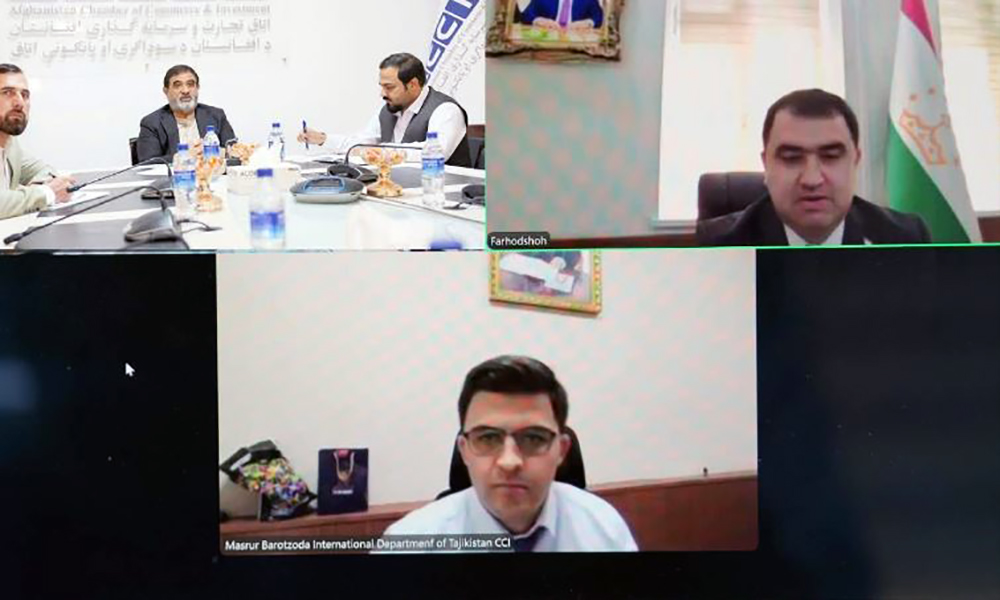
The heads of the chambers of commerce and industry of Afghanistan and Tajikistan have agreed to strengthen bilateral trade, promote investment and expand cooperation between the private sectors of the two countries.
Sayed Karim Hashemi, head of the Afghanistan Chamber of Commerce and Investment (ACCI), held an online meeting with Farhad Shah Rahman Alizoda, head of the Chamber of Commerce and Industry of Tajikistan, to discuss ways to expand economic ties.
The two sides discussed increasing trade exchanges, establishing direct links between traders and investors, and organizing joint economic programs.
Hashemi invited Tajik traders and investors to participate in the fifth Imam Abu Hanifa International Exhibition in Kabul.
Alizoda, meanwhile, invited an Afghan business delegation to attend a major trade and industrial exhibition in Dushanbe.
The two sides also stressed the importance of exchanging business delegations and developing long-term cooperation between the private sectors of Afghanistan and Tajikistan.
Business
Kazakhstan grain shipments to Afghanistan rise over 4-fold
Of the total, 7.2 million tons were transported for export, while 2.1 million tons were supplied to the domestic market.
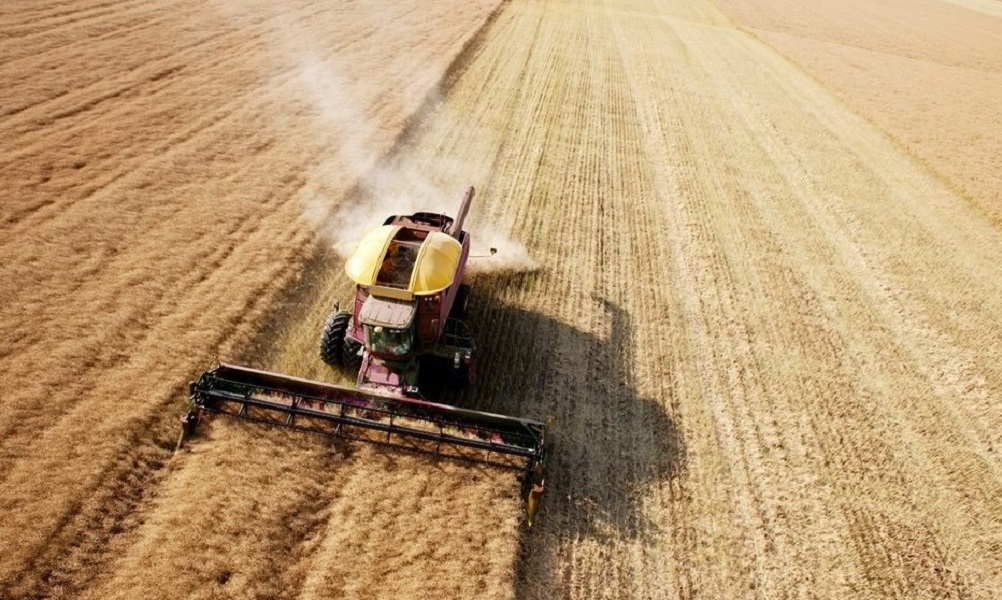
Grain shipments from Kazakhstan to Afghanistan increased 4.4 times in the first eight months of the year, reaching 655,000 tons, according to Kazakhstan’s Transport Vice Minister Zhanibek Taizhanov.
Speaking at a government meeting, Taizhanov said Kazakhstan transported 9.3 million tons of grain by rail during the period, a 13% increase compared with the same period in 2025.
Of the total, 7.2 million tons were transported for export, while 2.1 million tons were supplied to the domestic market.
Taizhanov said grain shipments to Central Asia increased by 37%, while shipments to China rose by 34%. Grain exports through Russian ports also increased by 9%.
Meanwhile, combined fodder exports rose by 38% to 2.6 million tons.
Earlier, Kazakhstan’s Vice Minister of Agriculture Azat Sultanov said the country plans to commission 15 additional vegetable storage facilities by the end of 2026, with a combined capacity of 129,000 tons.
Business
Russia accuses West of double standards over deportation of Afghans
She said the process of removing Afghan refugees who were once considered partners by Western countries had accelerated.
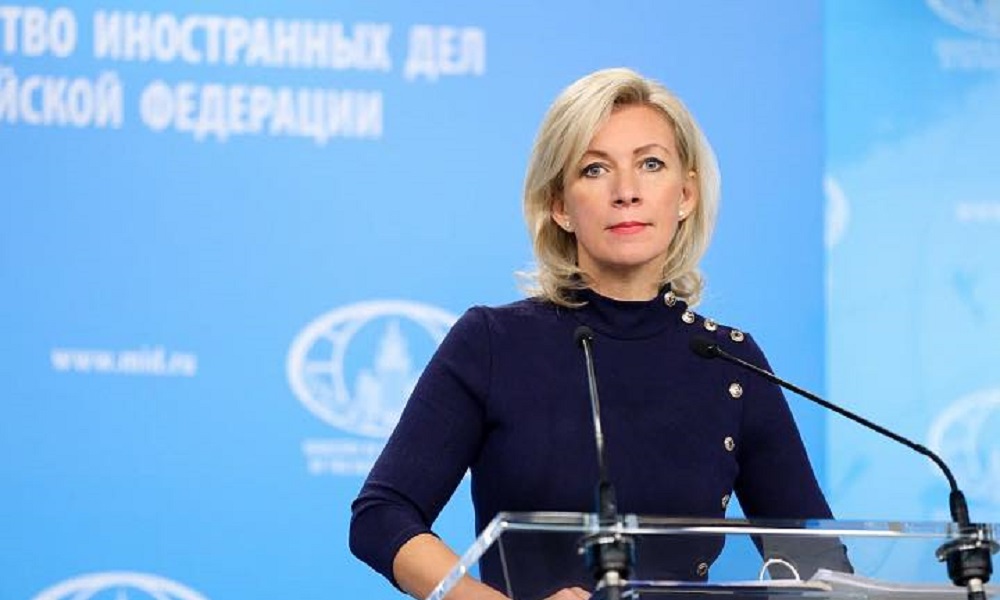
Russia has criticized Western countries over their policies toward Afghans who left the country following the withdrawal of foreign forces in August 2021, accusing them of tightening asylum rules while increasing deportations.
Maria Zakharova, spokesperson for Russia’s Foreign Ministry, made the remarks in response to questions about the policies of the United States, Britain and Germany toward Afghan nationals.
Zakharova said Western countries had tightened rules on issuing documents and granting asylum after facing difficulties in accommodating Afghans, while simultaneously stepping up deportations.
She said the policy particularly affected former officials and military personnel of the previous Afghan government, who could face forced returns to Afghanistan.
Zakharova also referred to reports that some European Union countries had allowed diplomats of the Islamic Emirate of Afghanistan (IEA) to issue documents for Afghan nationals subject to readmission.
She said the process of removing Afghan refugees who were once considered partners by Western countries had accelerated.
Zakharova also raised concerns about the planned closure of Qatar’s Al-Sailiya camp, where more than 1,000 Afghans who worked with US forces are reportedly housed at a former US military base.
She said the United States had been unwilling to accept some of its former Afghan partners and was instead negotiating their resettlement in African countries.
Zakharova accused Western governments of adopting an inconsistent approach by criticizing IEA officials over alleged human rights violations while at the same time deporting Afghan nationals to Afghanistan.
Her comments come amid continuing debate in Western countries over the status of Afghan asylum seekers, former government officials and people who worked with foreign forces following the 2021 withdrawal.


Abu Muslim Farah beat Omar Zawak Herat 4-0 in Afghanistan Champions League

ACB launches nationwide fast-bowling talent hunt

US extends Qatar camp stay for more than 1,000 Afghans

DHS review finds errors in 40% of Biden-era Afghan asylum files

Sindh court allows Afghan medical students to resume classes

Saudi energy group signs major Afghanistan deals covering gas exploration and pipeline plans

Iranian clubs to face Gulf opponents at neutral venues in Asian Champions League Elite

Khalilzad: Afghanistan ready to attract major investment

Ariana Television Network secures exclusive rights to Afghanistan’s 2026/27 cricket series

Pakistan, Saudi Arabia and Türkiye strengthen new Mecca Defence Alliance

Tahawol: Absence of Afghanistan’s envoy at UNGA discussed

Saar: Assessment of war between Afghanistan and US discussed

Saar: Afghanistan’s image at UNGA

Saar: Concerns over Pakistan’s political crisis discussed

Exclusive interview with Abdul Latif Mansoor, Minister of MRRD
-

 Sport3 days ago
Afghan bodybuilder Ali Bilal finishes runner-up at Mr Olympia for third straight year
-

 Latest News3 days ago
Afghanistan says 28 killed, 32 captured in Nuristan operation
-
 World4 days ago
Trump rejects Iranian proposal to open Hormuz and end fighting
-

 Sport4 days ago
Afghanistan to face India in Asian Games cricket quarter-final
-

 Sport4 days ago
Afghanistan Champions League: Omar Zawak Herat beat Toofan Herat 1-0
-
 World4 days ago
Iran awaits US move after WSJ report says Trump rejects peace plan
-

 Latest News4 days ago
Khalilzad questions Pakistan’s commitment to Afghan welfare
-
 Latest News3 days ago
UNDP, UN Women launch financing initiative for Afghan women entrepreneurs