
Latest News
Afghan-Iranian officials move to strengthen relations and tighten border controls

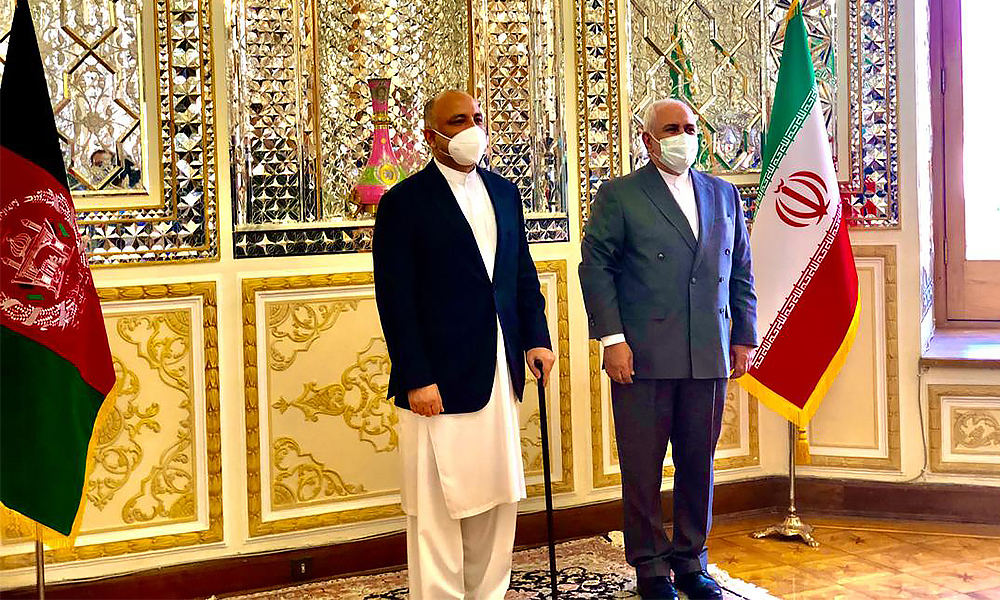
Afghanistan’s acting minister of foreign affairs Mohammed Haneef Atmar, and his Iranian counterpart Mohammad Javad Zarif have agreed to take all necessary measures to prevent illegal border crossings and human trafficking by stepping up controls over the shared boundary.
This decision was announced late Monday night in a joint statement issued by the two officials as Atmar wrapped up a two-day official visit to Afghanistan’s neighboring country.
According to the statement, the security-frontier committee and the committee on the legalization of residence of nationals of the two countries on each other’s soil were assigned to adopt the necessary measures to ensure the security of the common border in order to prevent illegal travel, human trafficking, and smuggling.
“In this regard, the two sides highlighted the need for the Afghan security forces to be present in the border outposts emptied in Afghanistan, and for the Islamic Republic of Iran to facilitate issuing visas,” read the statement.
ﺑﯿﺎنیه ﻣﺸﺘﺮک وزرای اﻣﻮر ﺧﺎرجه ﺟﻤﮭﻮری اﺳﻼﻣﯽ اﻓﻐﺎﻧﺴﺘﺎن و ﺟﻤﮭﻮری اﺳﻼﻣﯽ اﯾﺮانhttps://t.co/vdQBJsllYl pic.twitter.com/GIcIjYkmYP
— MFA Afghanistan 🇦🇫 (@mfa_afghanistan) June 22, 2020
Both sides also stressed the “need for the border guards of the two countries to monitor and control the common borders strictly and effectively, and undertook to prevent illegal border-crossing, human trafficking, and smuggling of drugs and any other items into the territory of each other.”
An agreement was also reached regarding mutual cooperation in observing international health regulations at the border crossings.
Numerous meetings were held during the two-day visit where a wide range of issues was discussed, including the expansion of relations between the two countries in various fields within the framework of eight working committees.
This includes committees on comprehensive documentation, legalization of residence of nationals, border cooperation, labor, water, cultural cooperation, energy, and health issues.
The two sides stated that in order to institutionalize and organize sound bilateral relations, Afghanistan and Iran would proceed with negotiations to finalize a comprehensive document on strategic cooperation and have this document finalized and ready to be signed within three months.
Iran also stated that it welcomed the peace process efforts and expressed readiness to help facilitate intra-Afghan negotiations. They also stated they would be willing to host such negotiations.
Both sides emphasized the need to reduce violence in Afghanistan “with the purpose of building trust and creating a positive atmosphere in order to launch the intra-Afghan negotiations as soon as possible, achieve a lasting ceasefire, and establish sustainable peace.”
“Considering the significance of regional and international consensus on the establishment of peace and security in Afghanistan, the two sides stressed the need to strengthen the regional and international cooperation and consultations and activate the capacities available in the region with the purpose of facilitating the negotiations and supporting the Islamic Republic of Afghanistan’s establishment,” read the statement.
Both countries agreed that there was also a need to carry out joint programs in promoting common areas including that of the heritage of language, religion, and culture, as well as educational cooperation.
Detailed discussions were also held on recent incidents that resulted in human fatalities.
This comes after tension heightened early last month after reports emerged that Iranian border guards had allegedly beaten and thrown about 50 Afghan migrants into the Harirud river.
Iran has refuted these claims and said the incident, which resulted in the death of some migrants, happened on the Afghanistan side of the river.
The statement, however, indicated that Iran had informed the Afghan side of progress around ongoing investigations, and both sides agreed to adopt measures to prevent any recurrence of such an incident.
Discussions on boosting economic ties were also held and the two sides agreed on a number of cooperation initiatives in the transport and transportation sectors. Chabahar Port was highlighted as being the “driving engine of trade-transit cooperation in the region.”
Both sides agreed there was a need to provide welfare facilities at border crossings and that joint action was needed as a matter of urgency to “repair the infrastructure and the asphalt road for motor vehicles at the Dogharoun border crossing.”
Meanwhile, on Tuesday, Iran’s Foreign Ministry Director-General for West-Asia Seyed Rasoul Mousavi hailed Atmar’s visit.
“As an expert, I would like to say the visit of FM Atmar to Tehran was a very important and comprehensive one,” Mousavi Tweeted on Tuesday.
“Negotiations & agreements were reached in all areas. The joint statement of the visit is cold water on the fire of the ill-wishers of Iran & Afghanistan relations,” he added.
Iran has over the past 40 years hosted millions of Afghan refugees. According to Iran, it currently hosts about 1.5 million Afghan refugees who are living in the country illegally, in addition to about 800,000 documented






Latest News
UN expert calls for accountability after Pakistani airstrikes kill civilians in Afghanistan
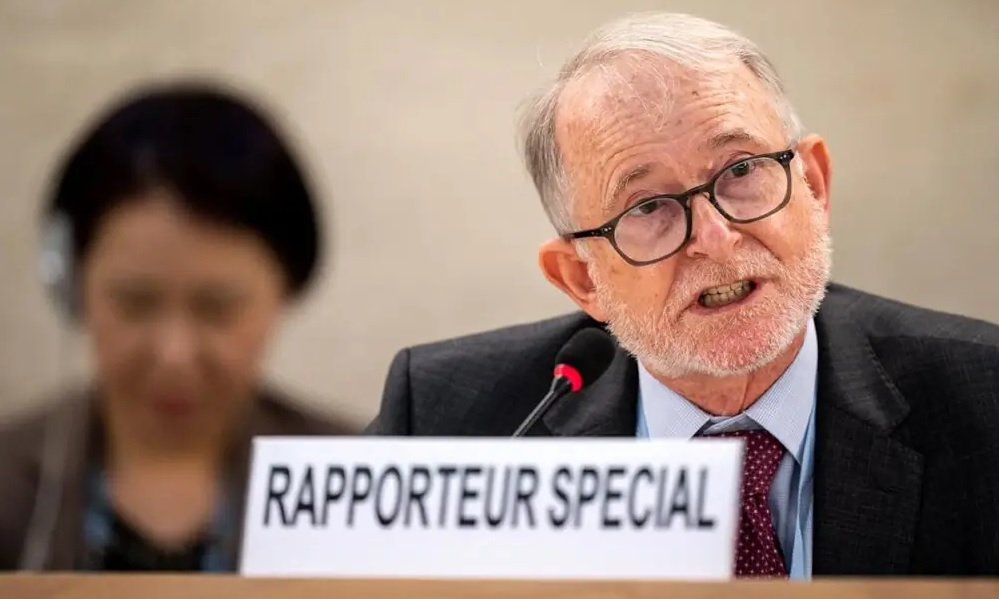
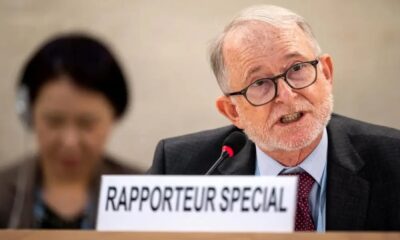
UN Special Rapporteur on the situation of human rights in Afghanistan Richard Bennett has called for accountability following Pakistani airstrikes in Afghanistan’s Kunar and Helmand provinces that killed multiple civilians.
“Accountability is paramount after another air strike that has killed civilians, most of them children,” Bennett said in a post on X.
He questioned whether the incident resulted from “incompetence, negligence or worse,” adding that there was no justification for what he described as “irreparable harm” to civilians.
Bennett said the reported incident appeared to violate international human rights and humanitarian law.
The United Nations Assistance Mission in Afghanistan (UNAMA) said it had confirmed that at least 10 civilians were killed and nine others injured in the airstrikes carried out on Thursday.
Latest News
Four members of one family killed in Helmand in Pakistan airstrike
The family, originally from Ghazni province, reportedly operated a small restaurant in the area.
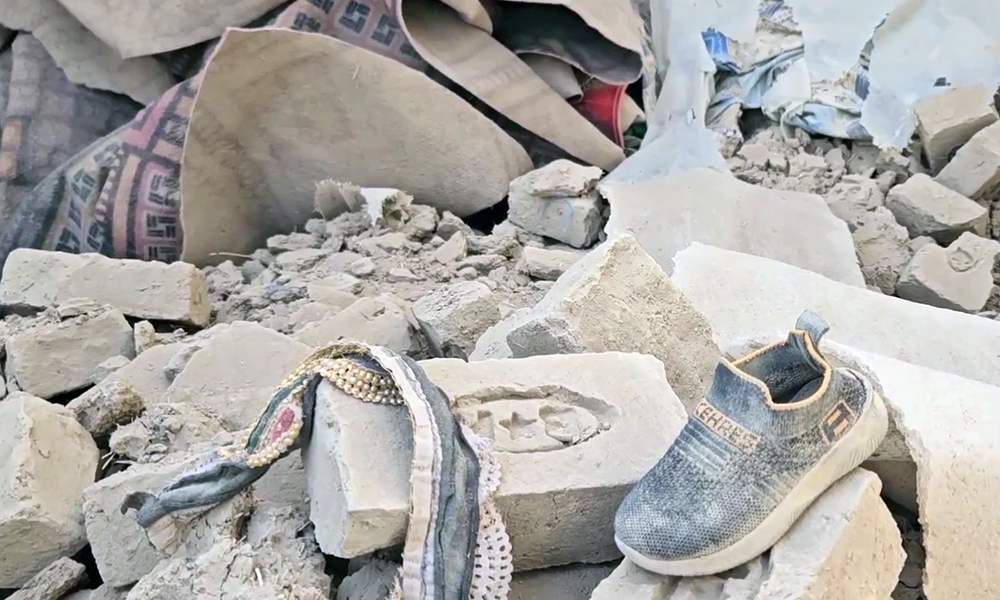
Four members of a family were killed and seven others wounded in an airstrike in Safar area of Garmser district in southern Afghanistan’s Helmand province, according to local reports.
The family, originally from Ghazni province, reportedly operated a small restaurant in the area.
The bodies of those killed and the wounded were transported by helicopter to Ghazni province for burial and medical treatment, according to the reports.
Latest News
UNAMA acting chief visits Islam Qala border to assess support for returnees
UN launched a $529 million response plan aimed at assisting around 2.7 million Afghans expected to return from Iran and Pakistan between April and December 2026.
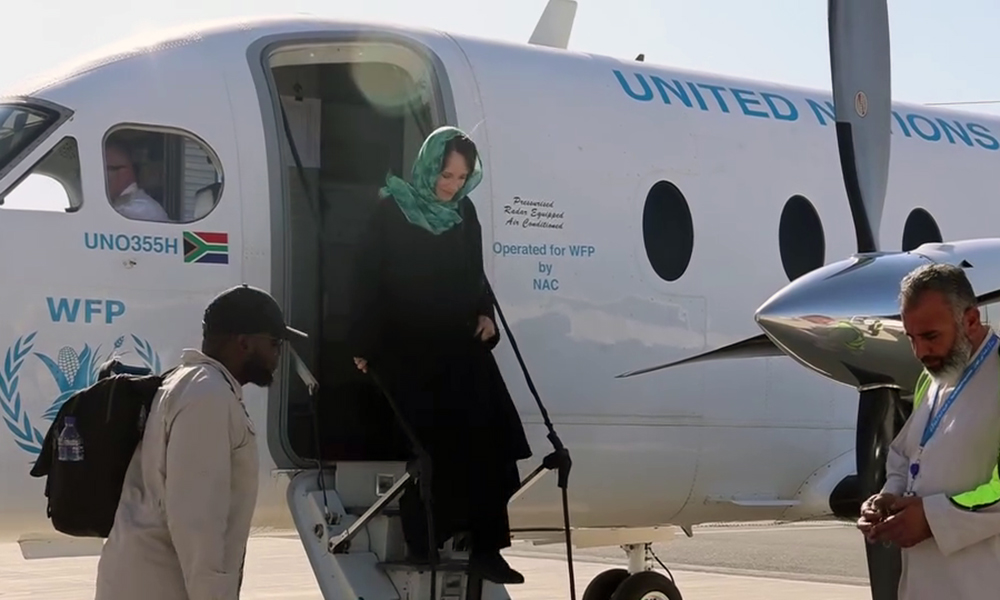
Georgette Gagnon, UNAMA’s acting head, visited western Afghanistan, including the Islam Qala border crossing, to see firsthand UN efforts to support millions of Afghans returning from neighboring Iran and Pakistan.
Earlier this year, the UN launched a $529 million response plan aimed at assisting around 2.7 million Afghans expected to return from Iran and Pakistan between April and December 2026.


Afghanistan to face Pakistan, India and Australia at 2027 Cricket World Cup

Saudi-led coalition says Houthis attacked power station for Prophet’s Mosque in Medina

UN expert calls for accountability after Pakistani airstrikes kill civilians in Afghanistan

Tahawol: Pakistan’s airstrikes on civilians in Afghanistan discussed

Arman FC crush Toofan Herat 4-0 in ACL clash

Saudi energy group signs major Afghanistan deals covering gas exploration and pipeline plans

Iranian clubs to face Gulf opponents at neutral venues in Asian Champions League Elite

Khalilzad: Afghanistan ready to attract major investment

El Niño likely to intensify, may become strongest ever recorded, WMO says

Khyber Chamber demands reopening of Torkham crossing
Tahawol: Pakistan’s airstrikes on civilians in Afghanistan discussed

Tahawol: Improvement in Afghanistan-China relations discussed

Saar: Expanding ties with regional and global countries discussed

Tahawol: Absence of Afghanistan’s envoy at UNGA discussed

Saar: Assessment of war between Afghanistan and US discussed
-
 Latest News5 days ago
Afghanistan says 28 killed, 32 captured in Nuristan operation
-

 Sport5 days ago
Afghan bodybuilder Ali Bilal finishes runner-up at Mr Olympia for third straight year
-

 Sport4 days ago
Afghanistan vs India Asian Games quarter-final abandoned without a toss
-
 Latest News5 days ago
UNDP, UN Women launch financing initiative for Afghan women entrepreneurs
-
 Latest News5 days ago
Germany reports 488 Afghans for possible deportation, 267 have no criminal convictions
-
 Regional4 days ago
Floods, landslides kill 56 in India and 14 in Nepal
-

 World4 days ago
Trump says men arrested at UK air base used by US planned ‘big damage’
-
 Regional3 days ago
US, Iran separately talk with mediators in latest bid to end war