
Latest News
Afghan Talks With Taliban Reflect a Changed Nation

 By Mujib Mashal
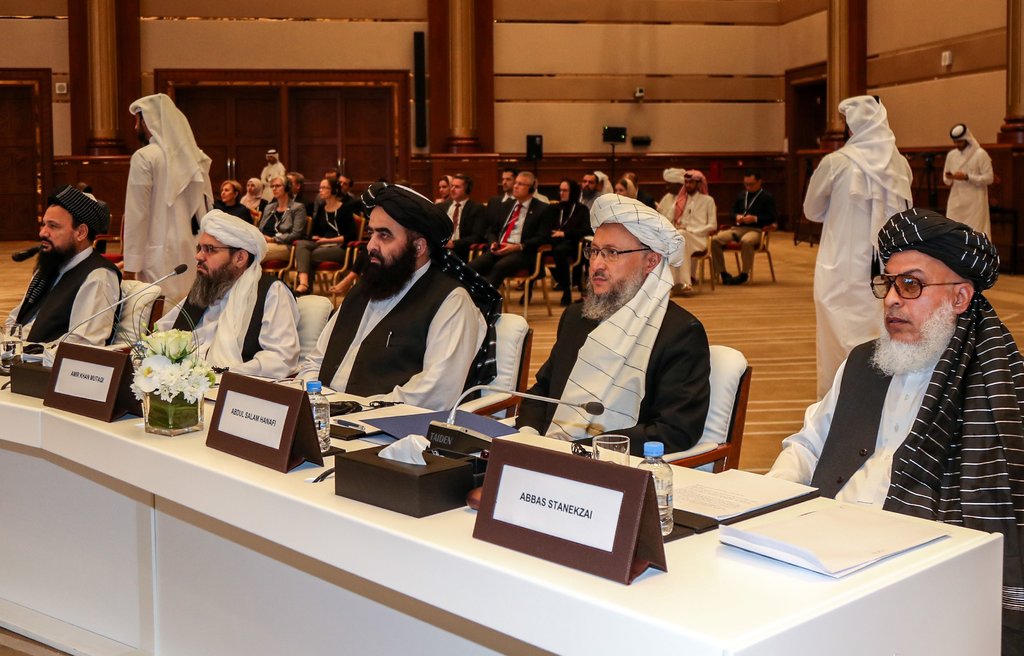
DOHA, Qatar — When the Taliban met Sunday for the first time with Afghan officials, the delegates they faced formed a moving tableau of a new Afghanistan that has taken shape since the movement was toppled 18 years ago.
Bloodshed and progress in those years have gone hand in hand, and many of the representatives at the table — from each side — came with stories of personal loss and grievance. The dialogue in Qatar, which continues on Monday, is the first in which Afghan government officials have participated and aims to break the ice for direct negotiations on Afghanistan’s political future after an expected United States military withdrawal.
“It is important to give all sides the opportunity to see how things have changed over the past 18 years,” said Sultan Barakat, the director of the Doha institute that organized the event with a German foundation. “Eighteen years is not a short time, but war tends to trap people into imperceptions.”
Among the Afghan participants are current and former senior officials who lost family members to suicide bombings, and a media executive who saw a bus full of his employees go up in flames.
When in power, the Taliban did not allow women to work or go to school. But in the main session on Sunday, at meals and during tea breaks, senior Taliban officials mingled respectfully with female delegates, like the first female governor, leading a province that had endured a gruesome Taliban massacre in 2001, and a doctor who represents the Sikh minority as a senator.
And if they happened to hear a baby crying, it was the deputy national security adviser’s 2-month-old boy. As she took her seat across from the Taliban, her husband, also a young senior official, came along to lull the child to sleep on the margins of the sessions.
When social media mistakenly included the baby’s name on a list of conference participants, maybe it was only fitting: Of all the attendees, his future stakes might be the highest.
News of another round of Afghan carnage — and children caught in an attack — came as the delegates filed into the ballroom in the sprawling Sheraton resort in Doha. The Taliban claimed responsibility for a huge truck bombing in Ghazni city on Sunday that killed eight security officers and four civilians. About 170 others were wounded, including 50 schoolchildren, the United Nations said.
On the Taliban side of talks in Qatar, several of the delegates spent more than a decade detained at the American prison in Guantánamo Bay, Cuba. Their deputy leader in charge of the peace efforts, Mullah Abdul Ghani Baradar, who did not attend Sunday, endured nearly 10 years of Pakistani imprisonment that damaged his health.
The militants have stories of relatives and friends lost to raids and bombings by American and Afghan forces. And they believe so staunchly in their fight against what they see as a foreign occupation that even the son of their latest supreme leader, Mawlawi Haibatullah Akhundzada, is believed to have carried out a suicide bombing.
While the Afghan side largely sees the Taliban as a proxy force under the influence of neighboring Pakistan, the Taliban see the Afghan government as a puppet of the United States.
To bridge the two visions of reality is a fundamental but immense task. And while long overdue, the peace process — considered key to the withdrawal of the remaining 14,000 American troops — suddenly seems to be moving quickly.
Most of Sunday’s sessions took place behind closed doors. But at the end of the day participants described the atmosphere as respectful, even if the exchanges at times grew tense.
Members of the Afghan delegation said they had seen more assurances from the Taliban that they would respect women’s right to work and to get educated. Taliban officials engaged in discussions on issues, rather than reading from prepared statements as they did at previous conferences.
Nader Nadery, the chairman of the Afghan civil service commission, brought up the morning’s deadly attack in Ghazni. While he mentioned his own torture under the Taliban, he also acknowledged the suffering of the Taliban officials across from him during their years of detention.
“I have the courage to forgive, as I know your members have suffered, too,” Mr. Nadery said he told the gathering.
Mullah Abdul Salam Hanafi, a member of the Taliban delegation, accused the Afghan side of being selective when speaking of civilian casualties. He said Afghan officials and media played down the civilian toll caused in rural areas by Afghan and American operations.
“The pain from all sides, whether it is the night raids or the bombings, that is why we are here,” Suhail Shaheen, a member of the Taliban delegation, said in an interview. “All sides have pain. The end of that pain is in ending the occupation.”
Abdul Matin Bek, an Afghan cabinet member attending the talks, knows that pain firsthand. His father, a member of Parliament, was killed in the suicide bombing of a funeral in 2011.
Mr. Bek said his travels around the country had shown that Afghans demand an end to the war. He hoped the current dialogue would lead to direct negotiations to achieve that.
“It is not easy for me to sit across from people who have killed my father,” he said. “But we have to end this.”

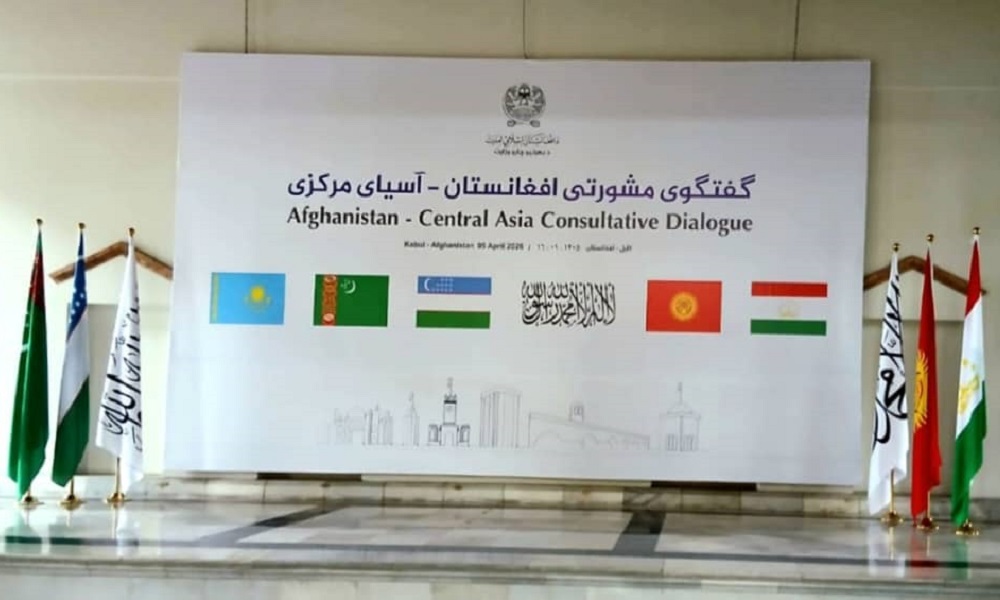
At the initiative of the Ministry of Foreign Affairs of the Islamic Emirate of Afghanistan, the “Afghanistan–Central Asia Consultative Dialogue” will be held in Kabul tomorrow (Sunday).
The meeting will be chaired by Amir Khan Muttaqi, Minister of Foreign Affairs, and attended by senior representatives from Afghanistan and Central Asian countries.
The discussions will cover political, economic, and security issues, as well as the development of regional cooperation, trade, and transit.
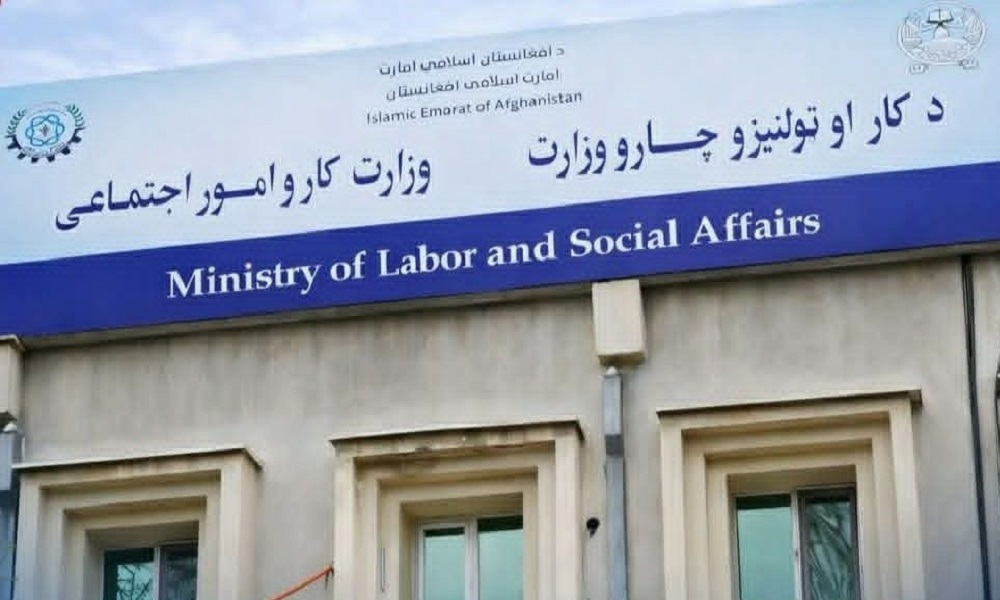
The Directorate of Child Protection at the Ministry of Labor and Social Affairs announced on Saturday that in the solar year 1404, through the implementation of extensive support programs and the handling of thousands of protective cases, it has achieved significant accomplishments in securing rights, raising awareness, and improving the situation of children across Afghanistan.
According to the directorate, the registered cases have been organized into 23 different categories, allowing for targeted and specialized handling of each type of case. In the area of awareness-raising, extensive programs have also been implemented to improve the general knowledge of children and their families, resulting in 404,207 children and family members being informed about child rights, explosive hazards, environmental protection, and other important topics.
To strengthen local structures and accelerate case management, the Directorate of Child Protection, within the framework of its 1404 work plan, established 20 new committees at the district level in provincial centers. These committees play a key role in coordinating between government offices, rapidly identifying cases, and providing support services. Currently, child protection committees are active in 204 districts and regularly review and resolve children’s issues.
Latest News
Severe rainfall and natural disasters cause heavy casualties across Afghanistan
At least 61 people have been confirmed dead, with 116 others injured. Four individuals remain unaccounted for as search and rescue operations are underway.
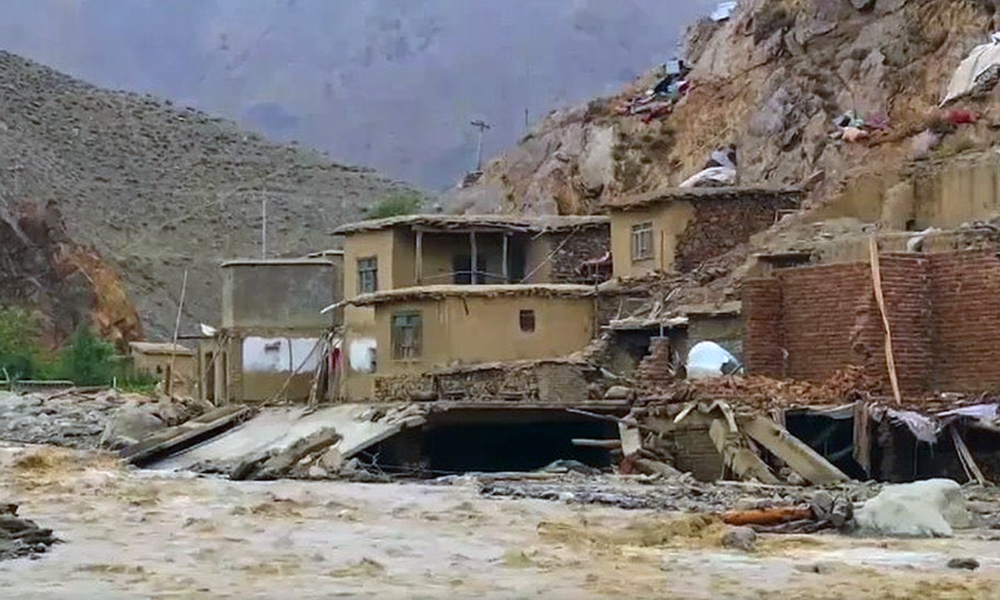
The Spokesperson for the Islamic Emirate of Afghanistan, Zabihullah Mujahid, has confirmed widespread devastation across the country following a series of natural disasters and heavy rainfall. The toll continues to rise as authorities assess the damage.
At least 61 people have been confirmed dead, with 116 others injured. Four individuals remain unaccounted for as search and rescue operations are underway. The disaster has also led to the destruction of 2,448 homes, leaving thousands displaced, while 26,841 acres of agricultural land have been severely damaged. In addition, the storm claimed the lives of 1,045 livestock animals, further exacerbating the already dire situation for rural communities.
In a statement, Mujahid emphasized the ongoing relief efforts. The Islamic Emirate is mobilizing all available resources to assist the hardest-hit regions and ensure the swift recovery of affected communities. The focus remains on providing immediate aid, including shelter, medical supplies, and food, while also beginning the long-term process of reconstruction and recovery.
Authorities have urged citizens in vulnerable areas to remain vigilant as more rain is forecast, adding to the urgency of the ongoing relief operations.


Kabul to host ‘Afghanistan–Central Asia Consultative Dialogue’ tomorrow

Tahawol: Continuation of Middle East crisis discussed

Saar: Ongoing Kabul-Islamabad talks in China discussed

Around 15,000 cases of vulnerable Afghan children addressed over past year

Severe rainfall and natural disasters cause heavy casualties across Afghanistan

Prominent Muslim scholar issues fatwa calling for Afghanistan-Pakistan ceasefire

IEA Supreme Leader issues Eid-ul-Fitr message urging unity and support for Islamic system

14 Pakistani soldiers killed after military post falls along Durand line: MoD

Afghanistan steps in to replace Iran in supplying fruits and vegetables to Russia

Afghan airstrikes target Pakistani military sites in retaliation for air attacks
Tahawol: Continuation of Middle East crisis discussed
Saar: Ongoing Kabul-Islamabad talks in China discussed

Tawsia: This week’s key economic developments in Afghanistan discussed

Tahawol: Start of talks between Kabul-Islamabad in China discussed

Saar: Ongoing US and Israeli attacks on Iran discussed
-
 Latest News3 days ago
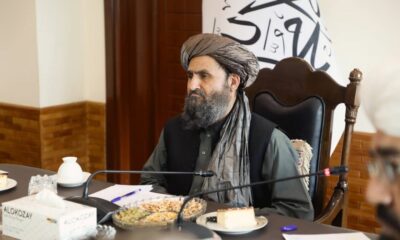
Baradar approves 17 projects worth over one billion AFN
-
 Business5 days ago
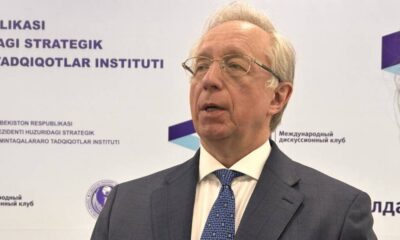
Russia backs Uzbekistan–Afghanistan trade hub, praises regional economic cooperation
-

 Sport5 days ago
ATN secures broadcast rights for inaugural Afghanistan Wrestling Premier League
-

 Sport4 days ago
ATN to broadcast second season of Ariana Snooker Championship
-
 Regional5 days ago
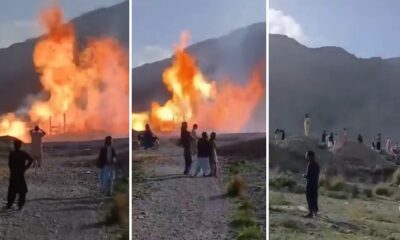
Gas pipeline blown up in southern Pakistan, says official
-

 Sport5 days ago
Rajasthan Royals outclass Chennai Super Kings as IPL action continues
-
 Latest News5 days ago
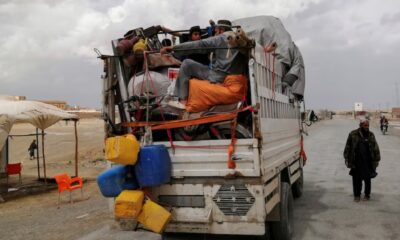
Islamic Relief Worldwide urges Afghanistan–Pakistan de-escalation, calls for aid to displaced
-

 Latest News4 days ago
Afghan delegation heads to China for talks with Pakistan