
Latest News
Afghanistan in the shadow of the US Presidential Election

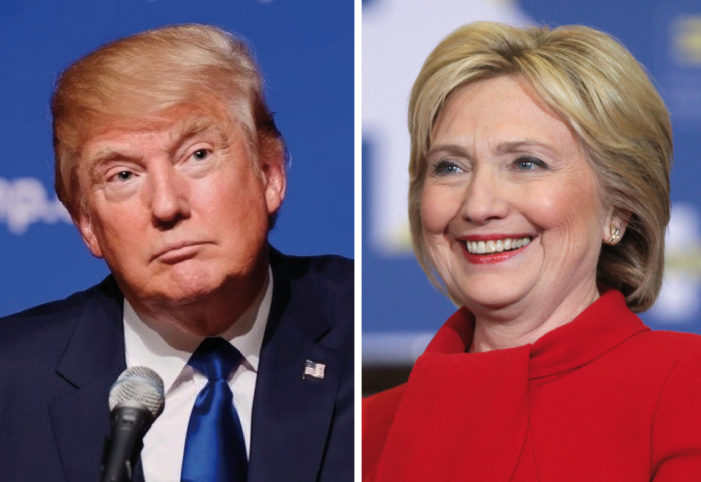
The first US presidential debate took place at Hofstra University, Hempstead, NY September 26, 2016 and the next two major debates are scheduled to take place on 9th and 19th of October, 2016 with first one at Washington University in St. Louis, St. Louis, MO and the last one at University of Nevada, Las Vegas, Las Vegas, NV. Meanwhile there will be only one vice presidential debate between Mike Pence from the republican and Tim Kaine from the democrat party which will be held at Longwood University, Farmville, VA.
By Timor Nawabi
Washington D.C. October 2, 2016
As US is entering in to its sixteenth year of its longest war in Afghanistan with no ending point in sight; the two leading US presidential candidates did not show any big interest during their first historic presidential debate to talk about their longest military war in Afghanistan and their future plans for the betterment of the situation in that region.
Meanwhile the leaders of the National Unity Government of Afghanistan are preparing to leave for another important conference to Brussels. The Brussels conference happens right after the Warsaw Summit in July 2016 during which the world leaders reaffirmed their mutual commitment to ensure long-term security and stability in Afghanistan. On the other side the National Unity Government of Afghanistan signed a historic peace accord with Hezb-i-Islami; a deal that the NUG hopes will lead to peace and prosperity in the country and more agreements with other fighters in the future.
The US Green and Libertarian Parties
Apart from the US Democratic and Republican parties there are two other major parties in US that both the media and the people have rarely talked about them and are not hearing from them so often. These parties are “The Green Party” led by an American physician, activist and politician Jill Ellen Stein and the “Libertarian Party” chaired by American businessman, author and politician Gary Earl Johnson. These two candidates have also expressed their unwillingness in fight against terrorism in Afghanistan.
The Green Party nominee Jill Stein has always been against the war in Afghanistan and in Jan 2012 she had considered the Afghan and Iraq war illegal. In Dec 2011 she had said that US does not need to be in Afghanistan because there’s no military solution to that war and prior to that on Sep 2010 she called the Afghan and Iraq war a military misadventure and had asked the Obama administration to end the war. Very recently on May 2016 she had said that war on terror has cost $6T and a million lives.
The Libertarian nominee Gary Earl does not seem to be so happy with the wars in Iraq and Afghanistan too and in May 2011 he had asked to eliminate ineffective interventions in Iraq and Afghanistan. On the same month he’d also said that there’s no need to have an afghan timetable; US needs to start its withdrawal tomorrow and finish it in a few months. Back in May 2011 he was quoted that the afghan war was initially warranted but not for 10 years. Then on August 2011 he considered Afghanistan, Iraq, Iran and Libya as a no military threat zone for the US but interestingly; in Aug 2012 he’d said that the afghan nation-building project will fail and US needs to withdraw its forces from there immediately.
Afghanistan from the viewpoints of Clinton and Trump
Speaking of the two leading US presidential nominees; during the first presidential debate it was expected that the two candidates may have something in their pockets about Afghanistan and their longest involvement in a battle after the Vietnam War but only the Democratic Party nominee Hillary Clinton did briefly touch on the NATO’s commitment towards US in fight against terrorism in Afghanistan something which she praised but again no specific word on Afghanistan and their long term commitment towards the ANDSF ( Afghan National Defense Security Forces) and GIRoA. The national unity government and its people still expect both candidates; no matter how they interpret the war in Afghanistan with considering the current presence of ISIS in most part of the country specially in eastern Afghanistan where we also share the border with Pakistan in Torkham area; to talk about it during their upcoming debate on 9th of October in state of Missouri.
Hilary Clinton was one of those democrat candidates who always tried to support the war against terrorism in Afghanistan whereas she was the one who voted YES back in Oct 2003 on $86 billion bill for military operations in Iraq and Afghanistan and then in Jan 2008 she said that she would have never diverted attention from Afghanistan and in Jun 2012 Clinton-Gates combo won push for Afghan surge. She also expressed her support from the afghan women back in Jan 2013 by saying that the Afghan women are better off, but we must prevent reversal.
But when you go to Clinton’s website and scroll down in to the “national security” section you would only see one sentence which says “our commitment to Afghanistan’s democracy and security.” When she gave a major foreign policy speech about four months ago, she didn’t mention Afghanistan at all. Other things she’s said recently don’t seem to be so helpful or at some point give hope to the people of Afghanistan. “If we’ve learned anything from 15 years of war in Iraq and Afghanistan, it’s that local people and nations have to secure their own communities. We can help them, and we should, but we cannot substitute for them. But we can and should support local and regional ground forces in carrying out this mission” she said last November at the Council on Foreign Relations which can be translated as that afghans need to stand on their own feet and US cannot continue supporting them for the rest of their lives.
On the other hand the well-known Republican nominee Donald Trump had no interest to talk about not only Afghanistan but also about NATO as US’s strongest ally in fight against terrorism in the region, he had even asked that NATO has to be obsoleted. He mentioned that during a major show he was asked that what he thought of NATO and his response was that NATO and its 28 member countries aren’t paying their fair share while at the same time he was urging that NATO has to pay US for defending it and more importantly according to Trump NATO has to be obsoleted because they are not focusing on terror. This republican nominee had nothing to say about the fight against terror in Afghanistan and the price that both the American taxpayers and Afghan people have paid during the past 16 years but back in Oct 2015 he had considered Afghanistan war a mess and interestingly he had urged that US troops need to stay there and then on Nov 2015 he said that it’s a blunder to announce the withdrawal timetable from Afghanistan.
It is worth mentioning that back in 2013 he tweeted, “Let’s get out of Afghanistan. Our troops are being killed by the Afghanis we train and we waste billions there. Nonsense! Rebuild the USA.” During the primary campaign he said going to Afghanistan in the first place was a mistake, and then denied having said it at all. “I never said it. Afghanistan is a different kettle. Afghanistan is next to Pakistan, it’s an entry in. You have to be careful with the nuclear. It’s all about the nuclear weapons. By the way, without the nukes, it’s a whole different ballgame,” he said in October 2015. “Do I love anything about it? No. I think it’s important, number one, that we keep a presence there and ideally a presence of pretty much what they’re talking about — 5,000 soldiers.” So such antithesis statements of Trump gives us an idea that again the National Unity Government should not rely more on Trump as they did on former president George Bush and currently on president Obama because Donald Trump is totally a different personality and sees things completely the other way around. Let’s hope for the best!
The Cost of US war in Afghanistan
Afghanistan is a country where the cost of war has been unexpectedly as high that no one could ever predict it when the US military operation first started in 2001. $714.8 billion has been allocated for the war in Afghanistan since 2001, including $35.1 billion in fiscal year 2015. At the same time $6.2 billion has been allocated to fight the Islamic State (also known as ISIS or ISIL), including $5.4 billion in fiscal year 2015.
 This number does not end here because US war in Iraq has been an expensive war for the US military where they spent $817.8 billion since 2003 including an estimated $1 billion in fiscal year 2015.
The US war against terrorism in Afghanistan did not only cost money but more importantly it took lives of thousands of innocent civilians, soldiers from every nation that were involved in that war and contributed to peace and stability in that region and the Afghan National Defense Security Forces have paid the highest price in this war than any other nation that were involved in fight against terrorism in Afghanistan.
According to Resolute Support Commander General Nicholson more than 900 Afghan security forces had been killed in month of July only. On 28 July, 2016 Gen. John Nicholson had said that the number of Afghan Security Forces killed so far this year (2016) is about 20 percent higher than during the same period last year. In all of 2015, there were 20,000 casualties among Afghan Security Forces, he added.
Alongside the afghan causalities 3520 American/Coalition forces have been killed since 2001 of which 2384 of them are Americans, 455 of them are Brits and another 681 from different nations.
During the war in Afghanistan (2001–2014), over 26,000 civilian deaths due to war-related violence have been documented; 29,900 civilians have been wounded. Over 91,000 Afghans, including civilians, soldiers and militants, are recorded to have been killed in the conflict, and the numbers who have died through indirect causes related to the war may include an additional 360,000 people.
The total civilian casualty figure recorded by the UN between 1 January 2009 and 30 June 2016 has risen to 63,934, including 22,941 deaths and 40,993 injured.
According to UNAMA report This year’s casualties include 1,509 children (388 dead and 1,121 injured) – a figure the UN Human Rights Chief described as “alarming and shameful,” particularly as it represents the highest numbers of children killed or wounded in a six-month period since counting began in 2009.
There are 9,800 U.S. troops in Afghanistan. In July, after assessing the country’s deteriorating security conditions, President Barack Obama announced that 8,400 U.S. troops would remain into 2017, a far larger number than the small contingent of counter-terrorism forces that was originally set to remain post-2016.
Brussels Conference on Afghanistan (4-5 October)
As President Ghani and CEO Abdullah are making their preparations to leave for the Brussels’ conference; more than 70 countries and 20 international organizations have showed up their readiness to participate in one of the most vital meetings that the afghan delegation can take huge advantage of it and can mark it another stepping stone towards peace, stability and long lasting financial development in the country.
On October 4-5 the European Union and the Afghan government will co-host the conference where the international community will provide a platform for the government of Afghanistan to set out its vision and track record on reform and root out corruption within their administration. For the international community that played a vital role in financing and supporting the afghan government during the past years, it will be another opportunity to signal sustained political and financial support to Afghan peace, state-building and development in different areas.
The conference is expected to focus on three levels that are very important for the afghan government to present itself in a way so that the international community gets more interested on a sustained political and financial support to the afghan government.
The first topic that they’re going to touch on would be the joint international and Afghan efforts to increase the effectiveness of sustained international support and funding, on the basis of a new Afghan national development framework where the second topic would shed more light on reform efforts, including economic reform, rule of law, improved public finance management and anti-corruption which is one of things that the afghan government has always failed to cope with and has repeatedly been criticized by the international community during the past 16 years of its administration after the collapse of the Taliban regime in 2001.
The final issue that they’ll focus on would be the regional efforts to support a political process towards peace and cross-border economic cooperation which again the afghan government needs to focus more on and it’s considered vital for the economic development in the country.
National Unity Government’s Peace Accord with Hezb-i-Islami
The Brussels conference comes in a time where few days ago president Ghani finally formalized a peace treaty with Hezb-i-Islami led by Gulbuddin Hekmatyar after months of negotiations with the party’s representatives in Afghanistan. President Ghani and Hekmatyar signed the agreement via a video link and live broadcast by the state TV into the presidential palace where the majority of other Jehadi leaders from different parties had participated as well.
If we go back to 1990s the history of such agreements has already repeated itself. following the ouster of Afghan President Dr. Najibullah in 1992, Hekmatyar and other warlords began a civil war in Afghanistan, which led to the deaths of around 50,000 civilians in Kabul alone. In the meantime, Hekmatyar was promoted to becoming Prime Minister of Afghanistan from June 1993 to June 1994 and again briefly from Sep 1996 to August 1997 but he fled again and started fighting against former Mujahidin government led by president Rabbani. In May 2013 at least 16 people lost lives in a suicide attack in Shah Shaheed area of Kabul which was later claimed by Hizb-e-Islami under the leadership of Mr. Hekmatyar. As we see none of these agreements and temporary positions within the Afghan government for Mr. Hekmatyar has worked out but it is being said that the last agreement is the first peace treaty the Afghan government has completed since the war with the Taliban began in 2001 and hope it lasts longer than before.
Please open the link below to read about NATO’s mission and its presence in Afghanistan from 2001-2016:
http://www.nato.int/cps/en/natohq/topics_8189.htm
 About the author: Mohammad Timor Nawabi is the former Senior Media Analyst and Public Diplomacy Adviser to NATO Ambassador in Afghanistan. He has served with NATO in different capacities from Aug-2004 to July-2016. He can be reached on Twitter at @TemorN and Facebook https://www.facebook.
View expressed in this article are of the author’s own and do not necessarily reflect Ariana News editorial policy.

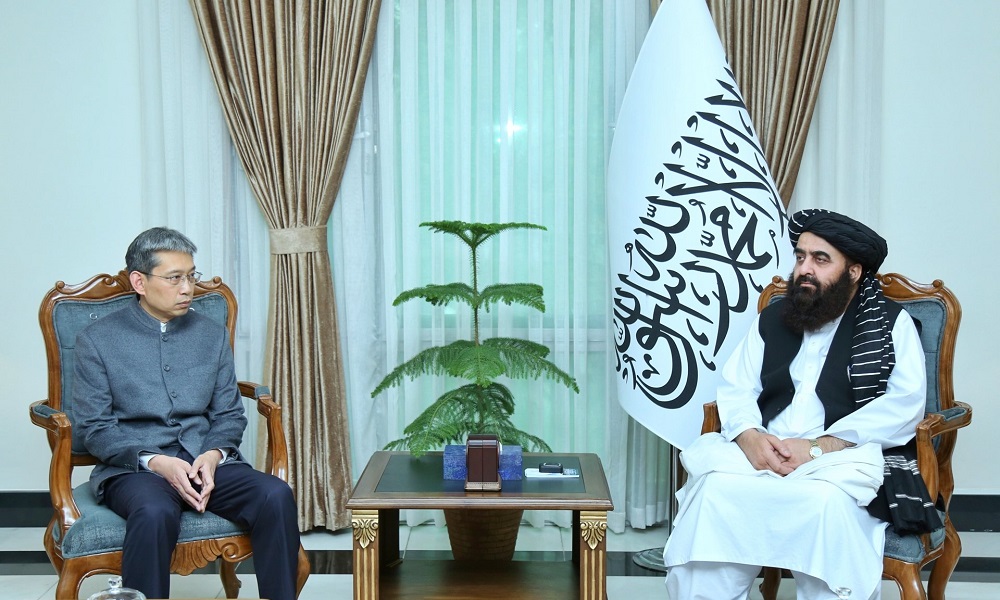
Zhao Xing, China’s ambassador to Kabul, told Amir Khan Muttaqi, Afghanistan’s foreign minister, that his country is working to create an atmosphere of trust between Afghanistan and Pakistan and has initiated talks with neutrality and cooperation.
According to a statement from the Ministry of Foreign Affairs of the Islamic Emirate, the meeting focused on bilateral cooperation, regional developments, and the ongoing dialogue process between Afghanistan and Pakistan, which took place in the city of Urumqi, China.
During the meeting, Zhao added that he hopes, given an understanding of the regional geopolitical situation, that the process of confidence-building, goodwill, and tension-free relations between Afghanistan and Pakistan will continue.
Muttaqi, while positively assessing the bilateral relations and existing cooperation between the two countries, expressed gratitude to his Chinese counterpart and their team for facilitating and hosting the Urumqi talks, as well as to Saudi Arabia, Turkey, Qatar, and the United Arab Emirates for their mediating efforts.
Muttaqi stated that so far there have been good discussions between Kabul and Islamabad and expressed hope that minor differences in interpretation do not hinder the progress of the negotiations.
The foreign minister emphasized that the Islamic Emirate of Afghanistan’s stance regarding tensions has been defensive, considering the protection of its territory a legitimate right, and remains committed to continued understanding and dialogue based on mutual respect and comprehension.
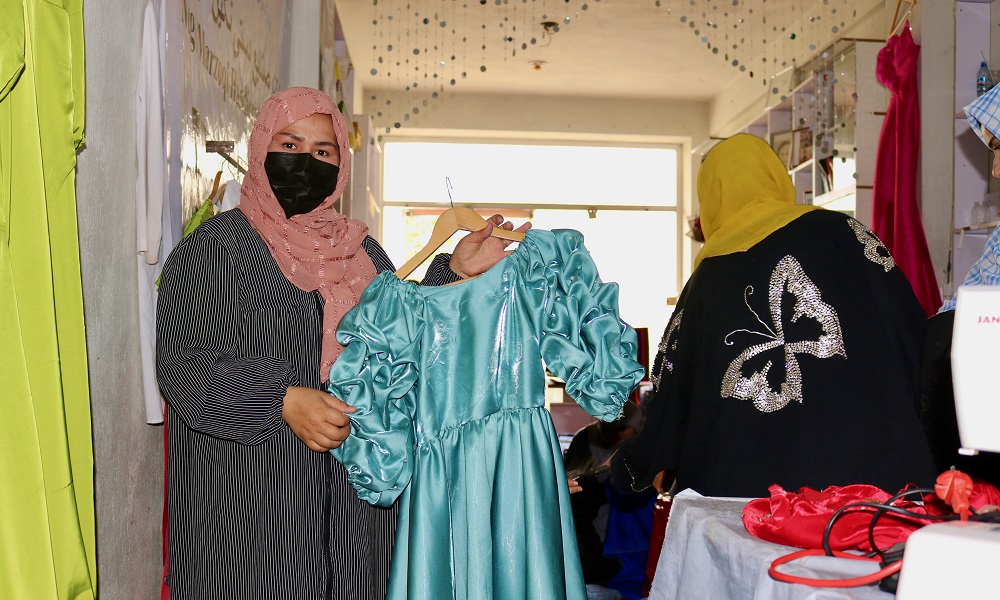
The Government of Japan, in partnership with the United Nations Development Programme, has launched a new $2.35 million initiative aimed at supporting vulnerable communities in Afghanistan facing economic hardship, climate shocks, and the aftermath of the country’s collapsing poppy economy.
The project, titled “Resilient Income Solutions Empowering Alternative Livelihoods (RISE)”, will run from March 2026 to March 2027 and target some of the country’s most affected regions, including Balkh Province and Nimroz province.
Funded by the Japan, the initiative seeks to help vulnerable Afghans, particularly women and women-led households, transition to sustainable sources of income.
The program will invest in productive infrastructure such as irrigation systems, water management facilities, and market-supporting assets, while also strengthening local value chains and supporting women-led businesses.
The project comes at a critical time, as Afghanistan faces overlapping challenges, including food insecurity, large-scale returnee movements, and limited economic opportunities. By promoting alternative livelihoods, the initiative aims to reduce reliance on illicit economies and help stabilize high-risk communities.
Japanese Ambassador to Afghanistan, Kenichi Masamoto, reaffirmed Japan’s commitment to the country’s recovery. “This project will build upon our previous support to continue providing much-needed sustainable livelihood opportunities, especially for women and vulnerable communities,” he said.
Meanwhile, Stephen Rodriques, Resident Representative of UNDP in Afghanistan, highlighted the urgency of such efforts. He described the initiative as part of a long-standing partnership between Japan and UNDP, adding that it “offers hope to vulnerable communities most affected by ongoing economic, social, and environmental crises.”
In addition to infrastructure and economic support, the RISE project will promote social cohesion by bringing together host communities and returnees through shared economic activities.
The initiative builds on UNDP’s earlier programs under the Area-Based Approach to Development Emergency Initiatives (ABADEI) and aligns with broader UN strategies for Afghanistan, with a focus on inclusive recovery and long-term stability.
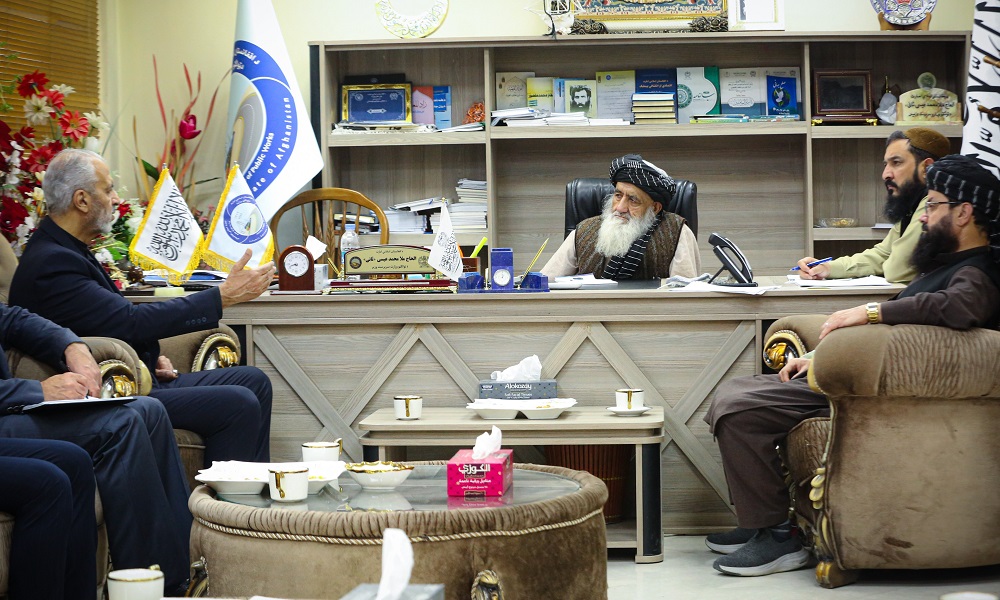
Mullah Mohammad Isa Sani, the Islamic Emirate’s Minister of Public Works, met Tuesday with Alireza Bikdeli, Iran’s ambassador in Kabul, to discuss the expansion of economic and trade relations between Afghanistan and Iran.
The talks also covered railway construction projects, increasing transport along the Khaf–Herat railway, and the comprehensive development of trade transit facilities between the two countries.
Mohammad Ashraf Haqshenas, spokesperson for the Ministry of Public Works, said that during the meeting both sides emphasized joint cooperation between Afghanistan and Iran and discussed projects related to the repair, reconstruction, and modernization of railways, roads, and bridges.
According to Haqshenas, the meeting also stressed further strengthening economic ties between Afghanistan and Iran, increasing trade exchanges, and continuing close and sustainable cooperation in infrastructure projects.


Tahawol: Ongoing negotiations between Kabul-Islamabad discussed

Saar: Afghanistan in spotlight of SCO discussed

China seeking to build trust between Afghanistan and Pakistan

Trump says ‘a whole civilisation will die tonight’; Qatar fears regional escalation

Afghanistan U-17s draw 0-0 against Turkmenistan in CAFA campaign

IEA Supreme Leader issues Eid-ul-Fitr message urging unity and support for Islamic system

14 Pakistani soldiers killed after military post falls along Durand line: MoD

Afghan airstrikes target Pakistani military sites in retaliation for air attacks

IEA supreme leader orders replacement of foreign terminology in official documents

Turkmenistan, Afghanistan discuss steps to speed up land acquisition for TAPI pipeline
Tahawol: Ongoing negotiations between Kabul-Islamabad discussed
Saar: Afghanistan in spotlight of SCO discussed

Tahawol: Continuation of Middle East crisis discussed

Saar: Ongoing Kabul-Islamabad talks in China discussed

Tawsia: This week’s key economic developments in Afghanistan discussed
-
 Latest News2 days ago
IEA supreme leader orders replacement of foreign terminology in official documents
-
 Latest News2 days ago
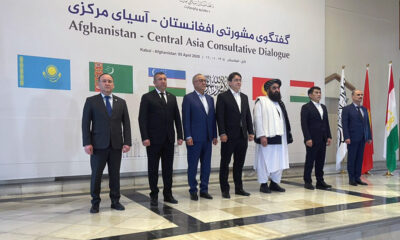
Afghanistan hosts inaugural Afghanistan–Central Asia Consultative Dialogue to strengthen regional cooperation
-
 Business4 days ago
Tripartite agreement to launch new Russia–Turkmenistan–Afghanistan transit corridor
-
 Latest News4 days ago
China says Afghanistan–Pakistan peace talks show progress
-

 Business3 days ago
Kazakhstan eyes rare metals mining projects in Afghanistan and Rwanda
-
 Regional4 days ago
Iran claims it shot down US F-35 jet
-
 Regional5 days ago
Kuwait’s Mina al-Ahmadi oil refinery hit by drones, fires break out
-
 World4 days ago
US Army chief of staff fired by Hegseth, sources say