
Latest News
Afghanistan, Pakistan agree to temporary ceasefire amid escalating border clashes

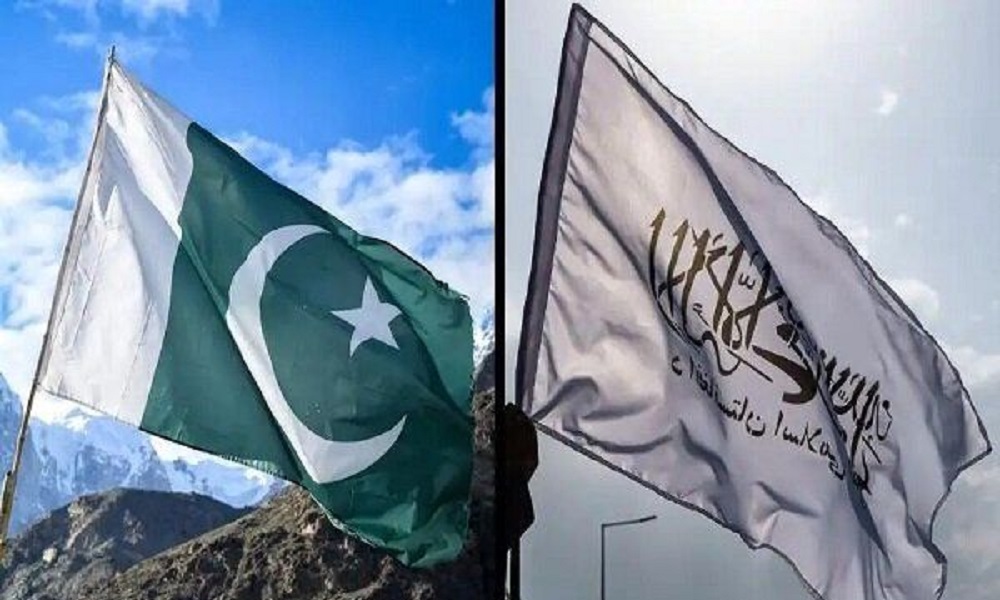
A temporary ceasefire between Afghanistan and Pakistan is set to take effect this on Wednesday evening following days of deadly cross-border clashes.
Zabihullah Mujahid, spokesman for the Islamic Emirate of Afghanistan, confirmed that the ceasefire would begin after 5:30 pm local time, following a request from the Pakistani government.
Mujahid said IEA forces have been instructed to observe the ceasefire “as long as no aggression is initiated by the other side.”
The announcement comes after a sharp escalation in violence along the Afghanistan-Pakistan border, with recent Pakistani airstrikes reported in Afghanistan’s southern Kandahar province. In response, IEA forces reportedly targeted Pakistani military outposts, prompting the closure of key border crossings and raising fears of a broader conflict.
Pakistan’s Foreign Ministry also confirmed the agreement, stating that a “48-hour ceasefire” would begin at 6 pm Pakistan time. The ministry added that both countries would use the temporary truce to engage in dialogue aimed at de-escalating the situation.
“Pakistan has always emphasized peaceful resolution of issues through dialogue,” the ministry said in a statement. “We hope this temporary measure will lead to more durable arrangements to prevent future hostilities.”
The recent hostilities are rooted in longstanding tensions over militancy in the region. Islamabad accuses the IEA government of harboring members of the Tehreek-e-Taliban Pakistan (TTP), a militant group responsible for numerous attacks inside Pakistan. The IEA denies these allegations and claims it does not allow Afghan soil to be used against other countries.
Analysts warn that the ceasefire remains fragile, especially given the lack of trust and the conditional nature of both sides’ commitments. Mujahid emphasized that the IEA would continue to observe the ceasefire only if Pakistan refrains from initiating further attacks.
The truce follows weeks of rising cross-border tensions that have disrupted trade, displaced civilians, and drawn concern from regional and international observers. Key crossings such as Torkham have been closed during the conflict, dealing a blow to Afghanistan’s already struggling economy.
It remains unclear whether this ceasefire will hold beyond the initial 48-hour period or lead to substantive diplomatic engagement. However, the agreement marks a temporary pause in what had become one of the most dangerous flare-ups between the two neighbors in recent years.





Latest News
Pakistani shelling hits Kunar districts despite ‘pause in hostility’ over Eid
The incident comes amid a series of recent exchanges between Pakistan and Afghanistan, which have heightened security concerns in regions along the disputed Durand Line.
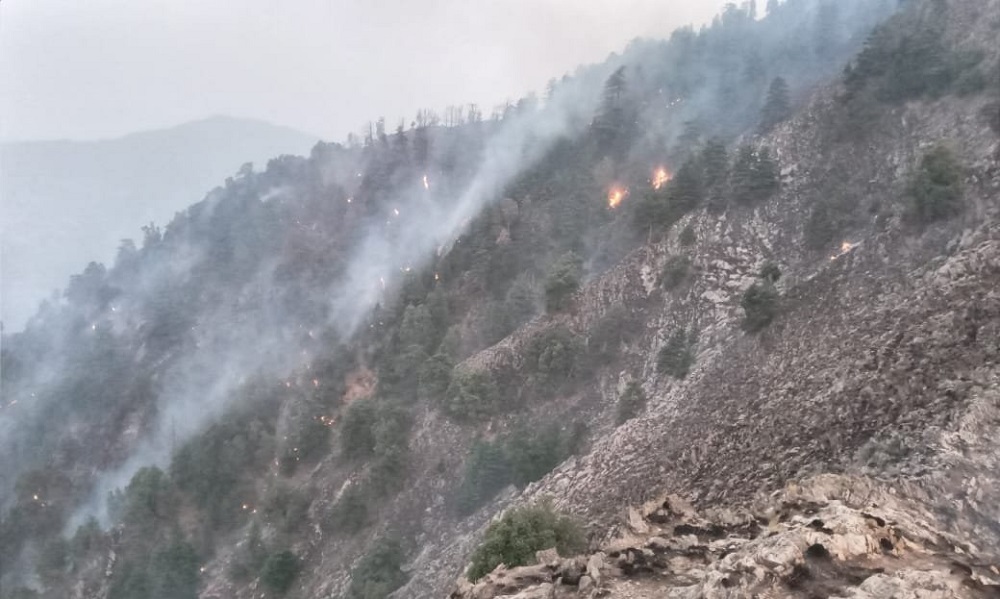
Pakistani military forces fired more than 70 artillery shells into eastern Afghanistan’s Kunar province, local officials said, in the latest incident underscoring rising cross Durand Line tensions.
Zia-ur-Rahman Spin Ghar, head of information at Kunar’s Department of Information and Culture, said 35 shells struck areas including Dokalam, Barikot and Tsongalai in Narai district. A further 37 shells were reported in parts of Manogai district.
No casualties have been reported so far, according to local authorities. However, Spin Ghar warned Thursday morning that shelling in Narai was ongoing, with some rounds reportedly landing near civilians returning to their homes.
Residents have been urged to remain alert and seek shelter in safer areas as officials continue to monitor the situation.
The incident comes amid a series of recent exchanges between Pakistan and Afghanistan, which have heightened security concerns in regions along the disputed Durand Line.
Afghan officials have repeatedly accused Pakistan of targeting civilian areas, while Islamabad has previously said its operations are aimed at militant groups operating near the border.
The shelling also coincided with Eid al-Fitr, one of the most significant holidays in the Islamic calendar. In Kandahar, the Islamic Emirate’s supreme leader, Sheikh Hibatullah Akhundzada, led Eid prayers attended by thousands.
In his sermon, Akhundzada stressed the importance of justice and accountability, calling on officials to act with integrity and warning against misconduct. He also reiterated themes of national sovereignty, expressing opposition to foreign influence and emphasizing Afghanistan’s independence.
The shelling coincided with Eid al-Fitr, during which both sides had announced a temporary pause in hostilities.
The Islamic Emirate of Afghanistan said on Wednesday it would halt its “Rad al-Zulm” defensive operations for the holiday at the request of mediating countries including Saudi Arabia, Qatar and Turkey.
In a statement, spokesperson Zabihullah Mujahid said the pause reflected goodwill toward mediation efforts, while stressing that Afghan forces would “respond bravely” to any aggression threatening national security, territorial integrity, or civilian lives.
Pakistan also confirmed a temporary suspension of its military operations for Eid, with Information Minister Ataullah Tarar stating the move was made at the request of the same regional mediators.
Qatar welcomed the truce, describing it as a constructive step toward de-escalation and expressing hope it could lead to a more lasting agreement to protect civilians and stabilize the region.
Latest News
Qatar welcomes temporary Eid truce between Afghanistan and Pakistan
The Ministry of Foreign Affairs of Qatar said the temporary truce is a constructive gesture that could help de-escalate the situation and promote calm along the border.

Qatar has welcomed the announcement of a temporary ceasefire between Afghanistan and Pakistan on the occasion of Eid al-Fitr, describing the move as a positive step toward easing tensions between the two neighbors.
In a statement issued on March 18 in Doha, the Ministry of Foreign Affairs of Qatar said the temporary truce is a constructive gesture that could help de-escalate the situation and promote calm along the border.
The ministry expressed hope that the short-term ceasefire would pave the way for a sustainable and lasting agreement that protects civilian lives and contributes to long-term security and stability in the region.
Qatar also commended both sides for responding to calls by Qatar, Saudi Arabia, and Turkey to implement the Eid truce, emphasizing that dialogue and peaceful solutions remain the best approach for resolving disputes.
The Qatari Foreign Ministry further reiterated Doha’s commitment to continuing diplomatic efforts, in coordination with regional and international partners, to support de-escalation and strengthen peace and stability in the region.
The spokesman for the Islamic Emirate of Afghanistan announced Wednesday that the security and defense forces of the Islamic Emirate are announcing a temporary halt to the “Rad-ul Zulm” defense operations on the occasion of Eid al-Fitr and at the request of Saudi Arabia, Turkey, and Qatar.
Zabihullah Mujahid wrote in X: “While appreciating the goodwill of friendly and mediating countries, the Islamic Emirate notes that maintaining the national security of Afghanistan, the privacy and safety of Afghans’ lives is its national and religious duty, and will respond courageously to any aggression if threatened.”
This is while Attaullah Tarar, Pakistan’s Minister of Information and Broadcasting, has also announced that the country has temporarily halted its attacks on Afghanistan on the occasion of Eid al-Fitr at the request of Saudi Arabia, Qatar, and Turkey.
Latest News
Peshawar High Court grants bail to 68 detained Afghan nationals, including minors
The presence of children in custody was also a key factor, with the court’s decision reflecting humanitarian considerations alongside legal arguments.
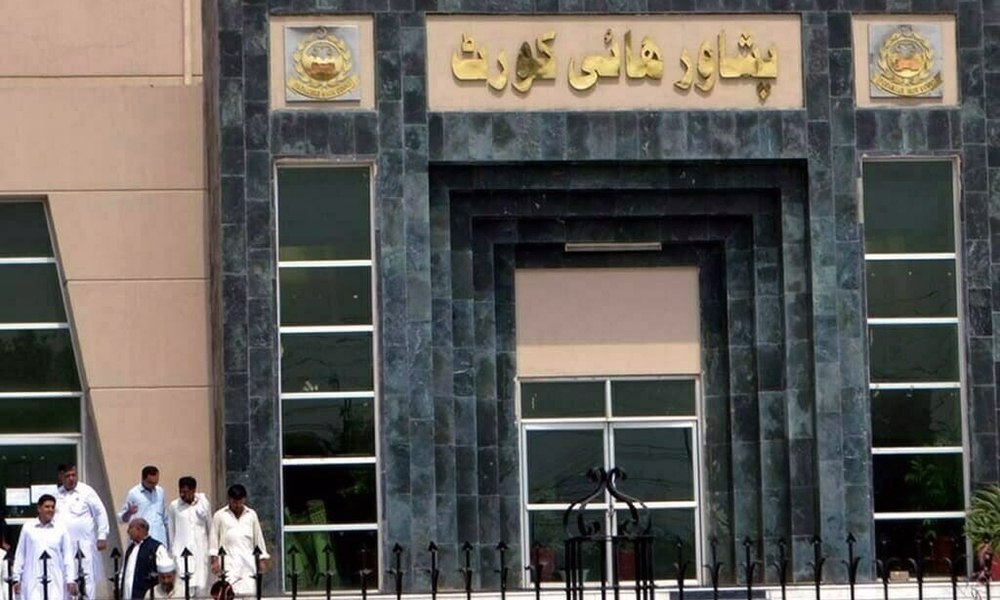
The Peshawar High Court has granted bail to 68 Afghan nationals, including children under 18 and holders of Pakistan Origin Cards (POCs), ordering their release from detention.
The group had petitioned the court for relief after being held by authorities. In its ruling, the court approved bail for all applicants, with the inclusion of minors and documented individuals drawing particular attention to the case.
Among those released were Afghan nationals holding Pakistan Origin Cards—documents issued to people of Pakistani origin living abroad or those with established ties to the country. Their detention raised questions about the treatment and legal status of individuals with recognised documentation.
The presence of children in custody was also a key factor, with the court’s decision reflecting humanitarian considerations alongside legal arguments.
Pakistan hosts a large population of Afghan nationals, many of whom have lived in the country for decades. Their legal status has remained a complex and often contested issue, particularly amid recent crackdowns and repatriation efforts.
The ruling is expected to influence similar cases, especially those involving documented Afghan nationals and minors, as courts continue to weigh legal and humanitarian concerns.


Pakistani shelling hits Kunar districts despite ‘pause in hostility’ over Eid

US weighs troop deployment as Iran war enters new phase

Qatar welcomes temporary Eid truce between Afghanistan and Pakistan

Peshawar High Court grants bail to 68 detained Afghan nationals, including minors

Tahawol: Global reactions to Pakistan’s recent attacks discussed

Pakistani military jet downed in Afghanistan’s Jalalabad, pilot captured alive

Afghan Air Force conducts airstrikes in Islamabad, other cities

IEA releases three Pakistani soldiers to mark Ramadan

Afghanistan’s Chief of Armed Forces underscores readiness and equipment for national defense

Afghanistan welcomes investment and technology partnerships with India
Tahawol: Global reactions to Pakistan’s recent attacks discussed

Saar: Consequences of Pakistani airstrikes on Afghans discussed

Tahawol: Pakistan’s new attacks on Kabul hospital discussed

Saar: Pakistani military’s airstrike on Kabul hospital discussed

Tahawol: China’s efforts for Afghanistan-Pakistan talks
-
 Latest News3 days ago
IEA Supreme Leader issues Eid-ul-Fitr message urging unity and support for Islamic system
-
 Latest News5 days ago
14 Pakistani soldiers killed after military post falls along Durand line: MoD
-
 Latest News4 days ago
Regional criticism grows amid Pakistan strikes inside Afghanistan
-
 Latest News4 days ago
Afghan airstrike targets a military camp in South Waziristan
-

 Business3 days ago
Turkmenistan, Afghanistan discuss steps to speed up land acquisition for TAPI pipeline
-

 Sport4 days ago
IPL 2026 kicks off in under two weeks; Afghan players set to shine
-

 Business4 days ago
Afghanistan expands exports through Lapis Lazuli Corridor
-

 Latest News5 days ago
India condemns Pakistani airstrikes on Afghanistan