
Regional
Trump threatens to strike Iran’s Kharg Island oil network if shipping lanes remain blocked
Trump told reporters on Friday the U.S. Navy will “soon” start escorting tankers through the waterway.

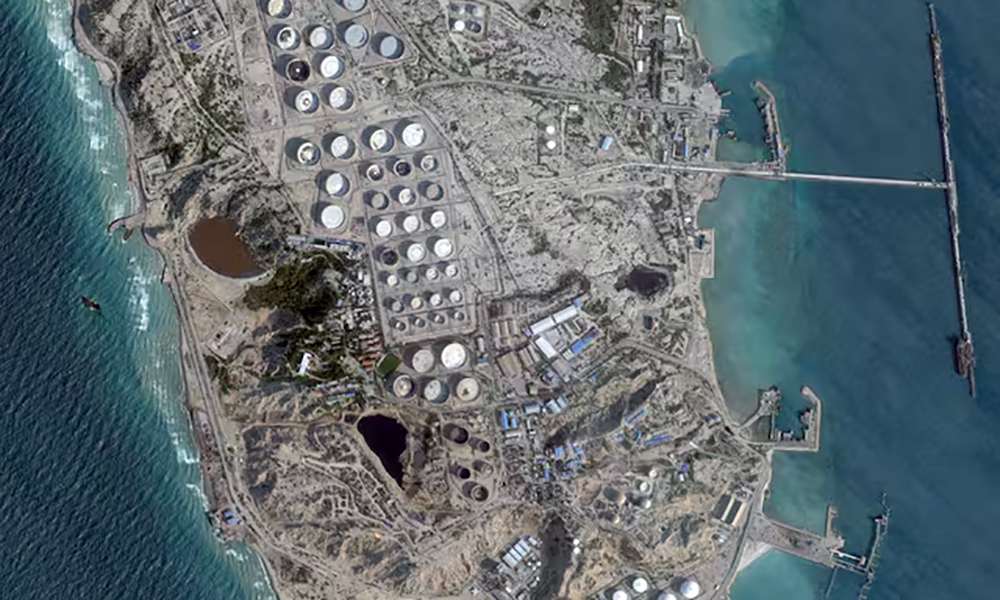
U.S. President Donald Trump threatened to order strikes on the petroleum infrastructure of Iran’s Kharg Island oil hub unless Tehran stopped attacking vessels in the vital Strait of Hormuz, a warning that could further roil markets already coping with a historic disruption in supply, Reuters reported.
Trump paired his ultimatum with a social media post saying the United States had “totally obliterated” military targets on the island, the export terminal for 90% of Iran’s oil shipments, which lies about 300 miles (483 km) northwest of the strait.
U.S. strikes did not target Kharg’s oil infrastructure, but “should Iran, or anyone else, do anything to interfere with the Free and Safe Passage of Ships through the Strait of Hormuz, I will immediately reconsider this decision,” Trump wrote.
Iran had no ability to defend against U.S. attacks, the president added. “Iran’s Military, and all others involved with this Terrorist Regime, would be wise to lay down their arms, and save what’s left of their country, which isn’t much!” he posted on Truth Social.
Iran’s armed forces responded on Saturday by saying any strike on their country’s oil and energy infrastructure would lead to strikes on facilities owned by oil companies cooperating with the United States in the region, Iranian media reported.
Iran’s semi-official Fars news agency reported, citing sources, that more than 15 explosions were heard on Kharg Island during the U.S. attacks. The sources said the attacks targeted air defenses, a naval base, and airport facilities, but caused no damage to oil infrastructure.
Markets were watching for any sign that U.S. strikes had damaged the island’s intricate network of pipelines, terminals and storage tanks. Even minor disruptions could further tighten global supply, adding pressure to an already volatile market.
In other strikes across the region, Iran’s Revolutionary Guard said early Saturday that it had carried out additional attacks on Israel with Lebanon’s Hezbollah militia, Iran’s Tasnim news agency reported.
On Friday, the Israeli military said its air force had struck more than 200 targets in western and central Iran over the past day, including ballistic missile launchers, air-defence systems and weapons production sites.
U.S. forces have suffered casualties. The U.S. military on Friday confirmed that all six crew members aboard a refuelling aircraft that crashed in western Iraq were dead, read the report.
Five U.S. Air Force tankers at a base in Saudi Arabia had been damaged by an Iranian missile strike and were being repaired, reported The Wall Street Journal, citing U.S. officials.
Oil prices have swung sharply on Trump’s changing comments about the likely duration of the war, which began on February 28 with massive U.S. and Israeli bombardments of Iran and quickly spread into a regional conflict with broad consequences for worldwide energy and stock markets.
Lebanon became an escalating flashpoint in the war with Israel’s military and Hezbollah forces exchanging strikes in and around Beirut.
In addition to Iran’s missile and aerial drone attacks on Israel and Gulf state allies of the U.S., Iran’s Islamic Revolutionary Guard Corps has sought to disrupt shipping through the Strait of Hormuz, a conduit for 20% of the world’s fossil energy supplies.
Trump told reporters on Friday the U.S. Navy will “soon” start escorting tankers through the waterway.
Although he has previously said the war would last only weeks, Trump on Friday declined to publicly project an end date for the conflict.
“I can’t tell you that,” he said to reporters. “I mean, I have my own idea, but what good does it do? It’ll be as long as it’s necessary.”
Iran continued to export crude oil while other producers in the Gulf halted their shipments for fear of Iranian attacks.
Multiple very large crude oil tankers were loading at Kharg on Wednesday, according to satellite imagery reviewed by TankerTrackers.com. Iran exported between 1.1 million barrels per day and 1.5 million bpd from February 28 to Wednesday.
Bob McNally, president of Rapidan Energy Group, said Trump’s comments on Friday “will focus the market’s mind on pathways that this energy disruption, already history’s largest, could expand and last longer.”
Some energy industry observers expressed doubts that Kharg’s oil facilities would stay intact.
“Bombing Kharg Island but not the oil infrastructure is like going to McDonald’s and getting a hamburger with no meat,” said Josh Young, chief investment officer at Bison Interests. “What’s the point?”
Iran’s new supreme leader, Mojtaba Khamenei, in his first public comments on Thursday, vowed to keep the Strait of Hormuz shut and urged neighbouring countries to close U.S. bases on their territory or risk being attacked themselves.
European powers are trying to work out how to defend their interests, and France has been consulting with European, Asian and Gulf Arab states over the past week with a view to putting together a plan for warships eventually to escort tankers through the strait, French officials said.
After nearly two weeks of war, 2,000 people have been killed, most in Iran, but many in Lebanon and a growing number in the Gulf, which has for the first time in decades of Middle East conflicts found itself on the front line.
Several million people have been displaced from their homes. As Israeli warplanes pounded Beirut’s suburbs with air strikes, Lebanon’s interior minister said authorities were unable to accommodate the hundreds of thousands of people who have sought refuge in the capital.




Regional
US officials met Iran-backed Houthis in Oman over the weekend
The Trump administration designated the Houthis a “foreign terrorist organization” in March 2025 criminalising support for the group. But Washington has negotiated with them since, reaching a ceasefire in May last year after bombing the group for two months to halt a campaign of attacks on Red Sea shipping.
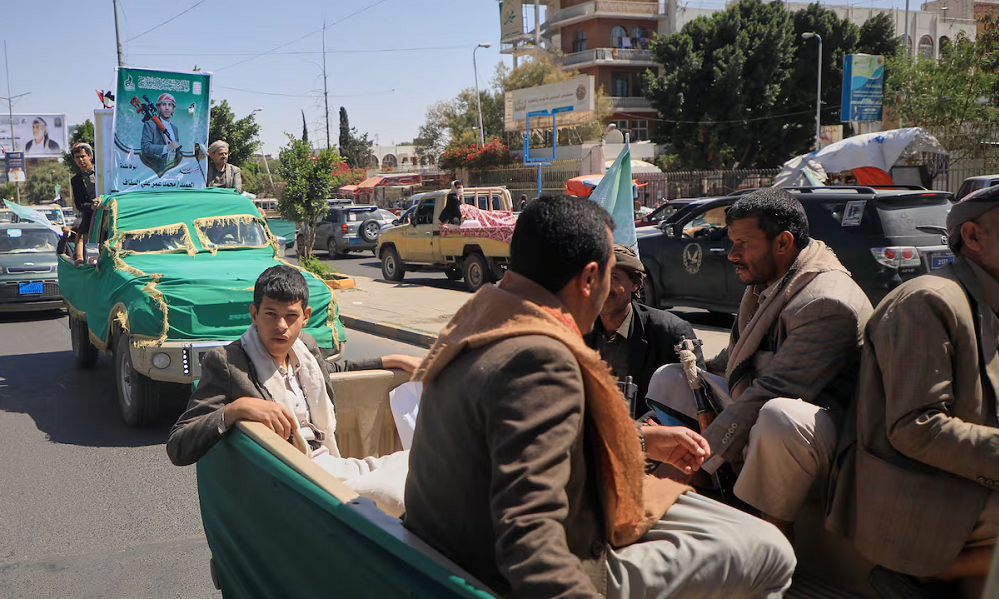
US officials met representatives of Yemen’s Houthis in Oman over the weekend, Reuters reported citing five sources familiar with the matter, days after the Iran-backed militia seized a strategic stretch of the Red Sea coast in a sweeping offensive that routed Saudi-backed forces.
The meeting, which has not been made public, was held at the US Embassy in Muscat, three of the sources said on the condition of anonymity. Two sources said that Oman’s government, a longtime regional mediator, helped organise the meeting.
The Trump administration designated the Houthis a “foreign terrorist organization” in March 2025 criminalising support for the group. But Washington has negotiated with them since, reaching a ceasefire in May last year after bombing the group for two months to halt a campaign of attacks on Red Sea shipping.
President Donald Trump said on Saturday the Houthis had phoned his administration asking the United States to keep out of the Yemen war. Vice President JD Vance said on Monday the US was in direct contact with the group, without giving details.
In the meeting, which one source said took place on Sunday, the Houthis told US officials they had no intention of attacking American vessels and that they were committed to the 2025 ceasefire with the US, two sources said.
One of the sources, a Yemeni, said the militia group also said they would not attack Israeli ships or any commercial vessels, except those belonging to Saudi Arabia.
According to two of the sources, the US side was represented by embassy personnel.
One of those sources said the Houthi delegation included a senior official based in Muscat who is under US sanctions, Mohammad Abdulsalam. Another source confirmed Abdulsalam’s presence along with that of another senior Houthi official, Abdelmalik al-Ajiri.
Responding to questions, a State Department spokesperson said: “We have no comment on this specific reported meeting.”
The spokesperson also said safeguarding freedom of navigation in the Red Sea and preventing the export of terrorism from the Middle East were core US interests.
Oman’s embassy in the US and senior Houthi official Abdulsalam did not respond to requests for comment.
The Houthis last week seized effective control of Yemen’s entire Red Sea coastline, including the historic port of Mocha, and Perim Island in the Bab el-Mandeb, or “Gate of Tears” strait, at the sea’s mouth.
The Houthis, who seized Yemen’s capital in 2014, have fought against a Saudi-led coalition for more than a decade. The war had quietened under a ceasefire in recent years, but fighting resumed in July when the Houthis declared a blockade on Saudi shipping in the Red Sea in response to a Saudi blockade of Yemeni ports.
Saudi Arabia’s de facto ruler Crown Prince Mohammed bin Salman called Trump last week seeking US military support amid the dramatic Houthi advances. Reuters has reported that Washington told Riyadh it would not get directly involved.
Regional
Saudi Arabia calls alleged Mecca attack a ‘red line’ as Houthis deny involvement
Saudi Arabia’s recently announced defense cooperation with Turkey and Pakistan has not been activated in response to the reported incident.
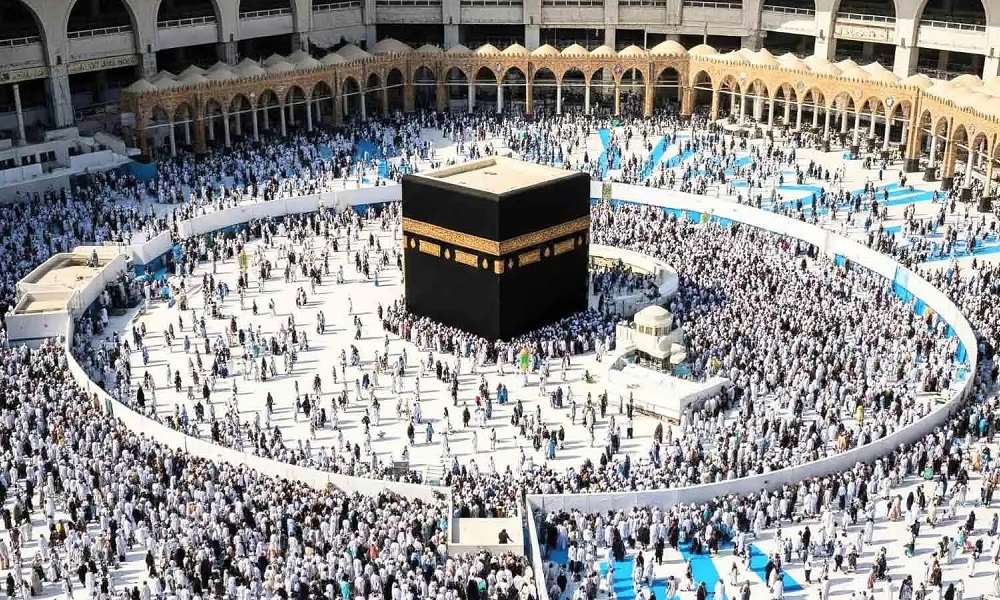
Saudi Arabia has accused Yemen’s Iran-backed Houthi movement of attempting to launch a drone attack toward Mecca, declaring the holy city a “red line,” while the Houthis have denied carrying out the attack.
Saudi authorities said the drone was intercepted and destroyed before it entered the airspace over Mecca, Islam’s holiest city. The Houthis denied launching drones toward the city.
The reported incident has drawn condemnation from several countries and the Organization of Islamic Cooperation (OIC), which said any attempt to target the holy sites violates their sanctity.
Saudi-led coalition spokesperson Col. Turki al-Maliki said the incident was the second alleged Houthi attempt to target Mecca, following a ballistic missile launch toward the city in 2017.
The development comes as Saudi Arabia faces renewed security pressures linked to the wider regional conflict. The Houthis have also carried out attacks against Saudi infrastructure and shipping in the Red Sea, according to the report.
Turkey and Pakistan say no Saudi request for military support
Saudi Arabia’s recently announced defense cooperation with Turkey and Pakistan has not been activated in response to the reported incident.
Officials from Turkey and Pakistan told The Associated Press that Riyadh had not requested military assistance. A Turkish official said efforts to establish the alliance’s operational framework still need to be completed.
Pakistan’s Prime Minister Shehbaz Sharif condemned the reported attack and said Pakistan and Saudi Arabia stand “shoulder to shoulder.”
Houthis claim they shot down Saudi fighter jet
The Houthis later claimed they had shot down an F-15 fighter jet operated by the Saudi-led coalition over Yemen’s central Marib province.
Houthi military spokesperson Brig. Gen. Yahya Saree provided no details on when the incident allegedly occurred. The Associated Press said it could not independently verify the claim.
U.S. officials have indicated that Washington does not currently intend to become directly involved in the conflict. President Donald Trump said the Houthis had indicated they did not want to fight the United States, while Vice President J.D. Vance said Washington remained in contact with both Saudi Arabia and the Houthis.
Meanwhile, Iranian Foreign Minister Abbas Araghchi was visiting China, with discussions expected to include the regional conflict and shipping through the Strait of Hormuz.
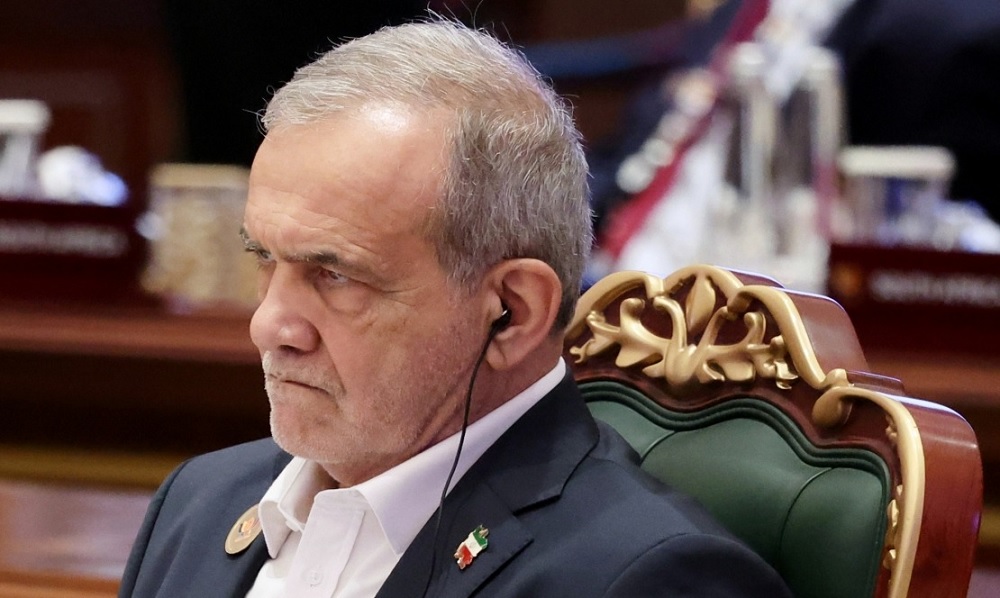
Arab states in the Gulf called off a meeting with Iran planned for Monday, while Yemen’s Houthis launched a new attack on Saudi Arabia after fighting that has extended the Middle East war to another theatre and further jeopardised global oil supplies.
The Iran-aligned Houthis in Yemen said they fired dozens of missiles and drones on Monday at a Saudi military airbase in Khamis Mushait, near the border, hitting aircraft hangars, radar systems, runways and ammunition depots. They described the attack as retaliation for hundreds of Saudi airstrikes on Yemen in recent days, Reuters reported.
Saudi authorities announced brief emergency alerts there and in three other southern cities which have previously come under Houthi fire.
The Houthis launched a lightning advance last week in Yemen, culminating in the seizure of an island in the mouth of the Red Sea on Friday. A separate attack that day, which Riyadh blamed on Iran-backed fighters in Iraq, knocked out Saudi Arabia’s east-west pipeline, the main route for Middle East oil bypassing the blockaded Strait of Hormuz.
OIL PRICES JUMP
Crude oil prices rose more than 3% on Monday, when the market reopened after the weekend, while the politically sensitive average retail price of diesel in the United States hit a new all-time high above $6.23 a gallon.
Traders say the closure of the Saudi pipeline could cut off as much as 4% of global oil supply unless it is reopened within days. Images from space show sections of the pipeline damaged by blazes. Riyadh has not given a firm estimate for how long it will be shut.
Oman had been due to host a meeting on Monday with Iran and Gulf states to discuss negotiations aimed at reopening Hormuz, the world’s most important oil shipping lane, largely closed since the U.S. and Israel attacked Iran at the end of February.
But Oman’s Foreign Minister Sayyid Badr Albusaidi announced overnight that the meeting had been postponed “in the interests of consensus”. Iran said the postponement was at the request of Saudi Arabia.
Meanwhile, Iran issued a list of 77 ships it said had violated its protocols for operating in the Strait of Hormuz. Any ship on the list would face “restrictions on future passages, including fines, detention, or confiscation”, and other ships that assisted them by accepting transfers of cargo would be added to the list.
EXPANSION OF WAR TO YEMEN POSES DILEMMA FOR TRUMP
The upsurge of fighting in Yemen poses a dilemma for Washington, which is under pressure to aid its Saudi allies but anxious not to expand the costly war to a new theatre.
Saudi Arabia has led an Arab coalition battling the Houthis for more than a decade, after the mountain fighters captured Yemen’s capital in 2014. The war there had largely been quiet under a ceasefire for the past few years, but fighting has now resumed, with the Houthis driving back forces from a Saudi-backed government based in the south.
Thousands of Yemenis have fled inland from the coast to escape fighting as the Houthis swept into cities including the historic Red Sea port of Mocha last week.
Aisha Muhammad, an elderly woman burning twigs to heat a kettle in government-held territory near Taiz, told Reuters she had left behind two daughters and three sons who had been unable to escape.
“They can’t even go out to the market to get food and drinking water. They are being blocked and shot at, so they are trapped inside their homes,” she said. “They cannot reach us, and we cannot return to them. This is a trial from God.”
On Friday the Houthis captured Perim Island, inside the Bab el-Mandeb, the “Gate of Tears” strait, at the mouth of the Red Sea.
U.S. President Donald Trump is under pressure to end the war to relieve the global energy shortage and lower prices that are hurting the fortunes of his Republican Party ahead of mid-term elections in November.
Three sources have told Reuters that Washington has so far rebuffed pleas from Saudi Arabia’s Crown Prince Mohammed bin Salman to intervene in Yemen. Trump confirmed over the weekend that he had spoken to the prince, and said the Houthis had also phoned asking Washington to keep out of the dispute.
The United States bombed the Houthis in 2025 for two months, but Trump called off that campaign after reaching a ceasefire with the group, which he said had promised not to attack ships in the Red Sea.
Trump, who attended a golf tournament at one of his resorts in Ireland, said he expected the Iran war to end shortly after the elections in November, after which the price of oil would “drop like a rock”.


Five years out of school: Amnesty raises alarm over Afghan girls’ education

Afghanistan condemns alleged drone attack on Mecca

Quetta commissioner calls for stronger coordination on Afghan refugee repatriation

US sentences Afghan man to 20 year in case linked to 2021 Kabul airport bombing

Top Qatari official meets Afghan interior minister in Kabul

Four mediators struggle to secure lasting Pakistan-Afghanistan ceasefire

Afghanistan’s trade diversification challenges Pakistan

Syria and Saudi Arabia condemn Kabul bombing, express solidarity with Afghanistan

Saudi energy group signs major Afghanistan deals covering gas exploration and pipeline plans

Afghanistan-India T20I series could see major schedule change

Tahawol: Afghanistan’s readiness for US relations discussed

Saar: UN Security Council meeting on Afghanistan discussed

Tahawol: Afghanistan at the center of UN discussions

Saar: Afghanistan’s relations with regional countries discussed

Tahawol: Houthis’ return to regional power dynamics
-

 Sport4 days ago
Zadran calls on Afghan fans to rally behind team against India
-
 Latest News4 days ago
Khalilzad warns US risks losing influence in Afghanistan to China and Russia
-
 Business4 days ago
EU and FAO launch €5m programme to strengthen Afghanistan’s agrifood sector
-
 World4 days ago
Houthi advance in Yemen puts U.S. in a new bind
-
 Regional4 days ago
Iran and UAE back joint BRICS statement urging restraint in war
-

 Sport4 days ago
India beat Afghanistan by seven wickets in first T20I
-
 Latest News5 days ago
Chinese ambassador, Muttaqi discuss expanding bilateral relations
-
 Latest News3 days ago
Helmand governor, UNAMA discuss province’s key challenges