
Latest News
Afghanistan responsible for Peace Talks from now on: Ghani

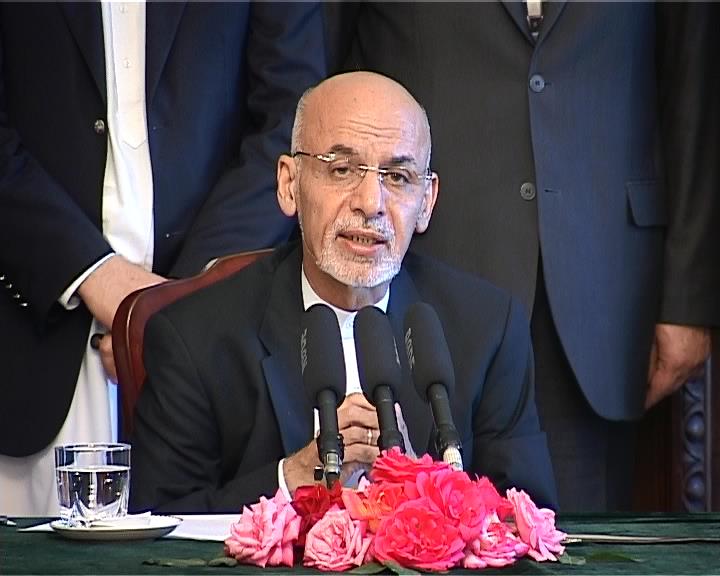
![GHANI _10-08-2015 PASHTO - SOT.avi_snapshot_01.32_[2015.08.10_19.06.38]](https://ariananews.af/wp-content/uploads/2015/08/GHANI-_10-08-2015-PASHTO-SOT.avi_snapshot_01.32_2015.08.10_19.06.38.jpg)
President Ashraf Ghani says on Monday that Afghanistan itself is responsible for the Initiative face-to-face Peace Talks between Afghan government officials and the Taliban representatives after this.
“We do not want Paksitan to bring Taliban to the negotiation table, after this we are responsible for peace talks,” Ghani said.
The first official peace talks between the Afghan Taliban and the government in Kabul concluded with an agreement to meet again after the month of Ramazan.
Pakistan hosted the first round of meeting in a tentative step towards ending more than 13 years of war in neighboring Afghanistan, where the Taliban have been trying to re-establish their regime, which was toppled by a US-led military invasion in 2001.
Ghani warned Pakistan to destroy all terrorist havens and offices in its country; otherwise Afghan government will take a new position against it.
With pointing to the recent suicide attack in Shah Shahid area of Kabul city, President called on Pakistan to identify the main perpetrators of the incident.
Most observers agree that only a political settlement can significantly reduce the violence, but previously, Ghani severely criticized at home for his attempts to enlist the help of Pakistan to bring the Taliban to the peace table.
Pakistan has been suspected of collaborating with some terrorists for years.
Afghanistan witnessed tragic events in recent days in which dozens of innocent people were victimized. Although the terrorists attacked government and foreign targets but unfortunately in action, it were the ordinary innocent people who paid the price for such tragic terrorist attacks.
The recent bloody attacks in the country, particularly in Kabul are really hesitating and deliberating from divers aspects.
Efforts to roll back the Taliban could receive a powerful boost from a thaw in relations with neighboring Pakistan. But now Ghani called on Pakistan to prove that Afghanistan enemy is the enemy of Pakistan.
Earlier, Both Ghani and Pakistan’s Prime Minister Nawaz Sharif have insisted there would no longer be distinctions made between good and bad insurgents, a tacit reference to what analysts describe as a longtime Pakistani policy of battling its own insurgents while turning a blind eye to the Afghan Taliban.
At the same time, President Ashraf Ghani stressed that Afghanistan would have no mercy for those whose hands are stained with the blood of people especially civilians.
Afghan-Pakistani relations have improved in recent months following years of tensions but in speech not in action, during which each had accused the other of supporting militants operating along their porous border.

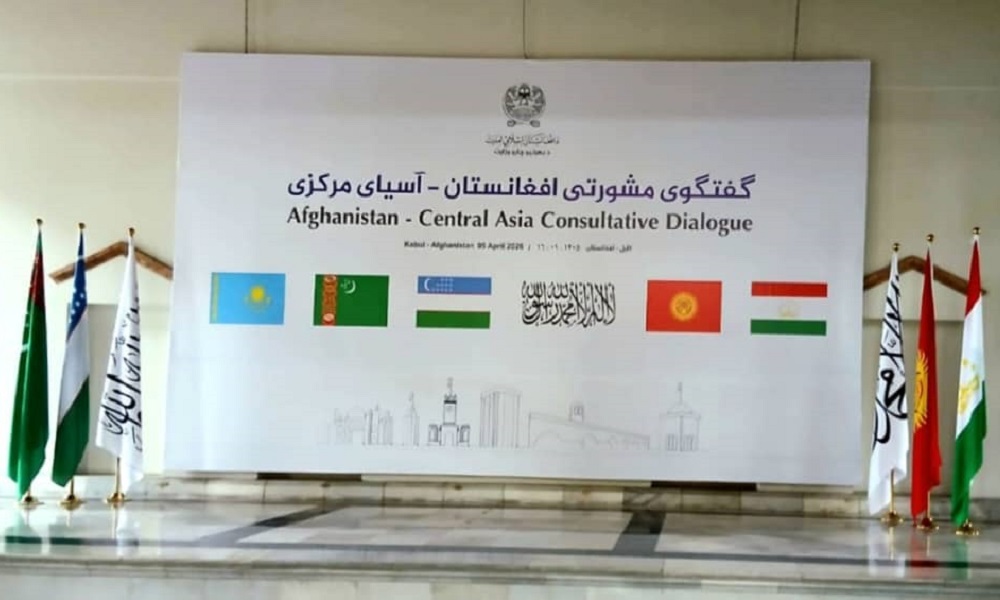
At the initiative of the Ministry of Foreign Affairs of the Islamic Emirate of Afghanistan, the “Afghanistan–Central Asia Consultative Dialogue” will be held in Kabul tomorrow (Sunday).
The meeting will be chaired by Amir Khan Muttaqi, Minister of Foreign Affairs, and attended by senior representatives from Afghanistan and Central Asian countries.
The discussions will cover political, economic, and security issues, as well as the development of regional cooperation, trade, and transit.
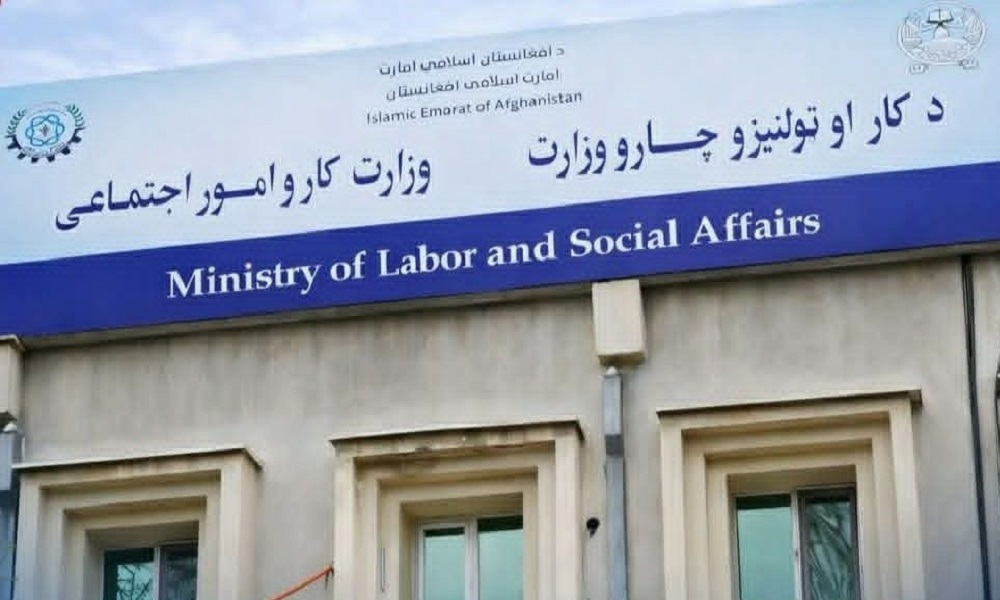
The Directorate of Child Protection at the Ministry of Labor and Social Affairs announced on Saturday that in the solar year 1404, through the implementation of extensive support programs and the handling of thousands of protective cases, it has achieved significant accomplishments in securing rights, raising awareness, and improving the situation of children across Afghanistan.
According to the directorate, the registered cases have been organized into 23 different categories, allowing for targeted and specialized handling of each type of case. In the area of awareness-raising, extensive programs have also been implemented to improve the general knowledge of children and their families, resulting in 404,207 children and family members being informed about child rights, explosive hazards, environmental protection, and other important topics.
To strengthen local structures and accelerate case management, the Directorate of Child Protection, within the framework of its 1404 work plan, established 20 new committees at the district level in provincial centers. These committees play a key role in coordinating between government offices, rapidly identifying cases, and providing support services. Currently, child protection committees are active in 204 districts and regularly review and resolve children’s issues.
Latest News
Severe rainfall and natural disasters cause heavy casualties across Afghanistan
At least 61 people have been confirmed dead, with 116 others injured. Four individuals remain unaccounted for as search and rescue operations are underway.
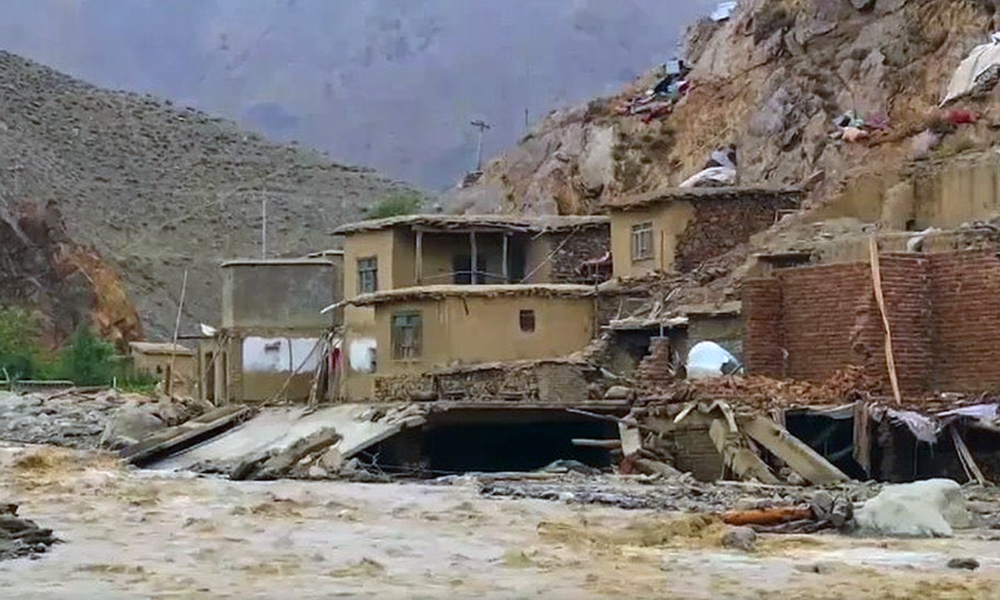
The Spokesperson for the Islamic Emirate of Afghanistan, Zabihullah Mujahid, has confirmed widespread devastation across the country following a series of natural disasters and heavy rainfall. The toll continues to rise as authorities assess the damage.
At least 61 people have been confirmed dead, with 116 others injured. Four individuals remain unaccounted for as search and rescue operations are underway. The disaster has also led to the destruction of 2,448 homes, leaving thousands displaced, while 26,841 acres of agricultural land have been severely damaged. In addition, the storm claimed the lives of 1,045 livestock animals, further exacerbating the already dire situation for rural communities.
In a statement, Mujahid emphasized the ongoing relief efforts. The Islamic Emirate is mobilizing all available resources to assist the hardest-hit regions and ensure the swift recovery of affected communities. The focus remains on providing immediate aid, including shelter, medical supplies, and food, while also beginning the long-term process of reconstruction and recovery.
Authorities have urged citizens in vulnerable areas to remain vigilant as more rain is forecast, adding to the urgency of the ongoing relief operations.


Kabul to host ‘Afghanistan–Central Asia Consultative Dialogue’ tomorrow

Tahawol: Continuation of Middle East crisis discussed

Saar: Ongoing Kabul-Islamabad talks in China discussed

Around 15,000 cases of vulnerable Afghan children addressed over past year

Severe rainfall and natural disasters cause heavy casualties across Afghanistan

Prominent Muslim scholar issues fatwa calling for Afghanistan-Pakistan ceasefire

IEA Supreme Leader issues Eid-ul-Fitr message urging unity and support for Islamic system

14 Pakistani soldiers killed after military post falls along Durand line: MoD

Afghanistan steps in to replace Iran in supplying fruits and vegetables to Russia

Afghan airstrikes target Pakistani military sites in retaliation for air attacks
Tahawol: Continuation of Middle East crisis discussed
Saar: Ongoing Kabul-Islamabad talks in China discussed

Tawsia: This week’s key economic developments in Afghanistan discussed

Tahawol: Start of talks between Kabul-Islamabad in China discussed

Saar: Ongoing US and Israeli attacks on Iran discussed
-
 Latest News4 days ago
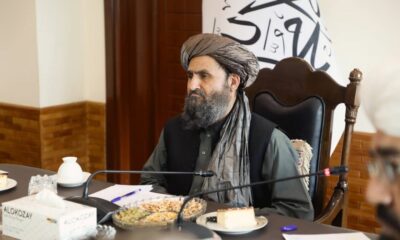
Baradar approves 17 projects worth over one billion AFN
-
 Business5 days ago
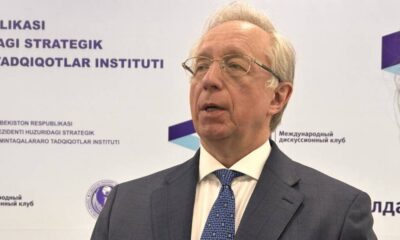
Russia backs Uzbekistan–Afghanistan trade hub, praises regional economic cooperation
-
 Sport5 days ago
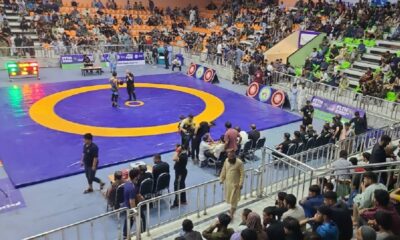
ATN secures broadcast rights for inaugural Afghanistan Wrestling Premier League
-

 Sport4 days ago
ATN to broadcast second season of Ariana Snooker Championship
-

 Sport5 days ago
Rajasthan Royals outclass Chennai Super Kings as IPL action continues
-
 Latest News5 days ago
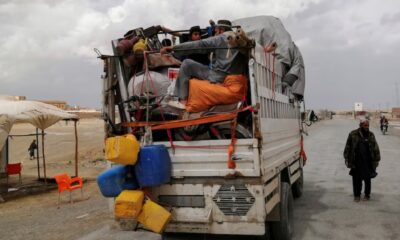
Islamic Relief Worldwide urges Afghanistan–Pakistan de-escalation, calls for aid to displaced
-

 Latest News4 days ago
Afghan delegation heads to China for talks with Pakistan
-

 Latest News5 days ago
Trump tells allies to ‘get your own oil’ from Strait Of Hormuz or buy from US