
Climate Change
Afghanistan’s environment chief heads to Russia for global congress


Matiulhaq Khalis, Director General of the National Environmental Protection Agency, has left for Russia at the official invitation of the Russian Federation to participate in Nevsky International Ecological Congress.
According to a statement issued by the agency, the congress will be held on May 22 and 23 in the city of Saint Petersburg, Russia, with the participation of representatives from around 40 countries.
The purpose of this congress is to expand global dialogue on environmental issues and climate change, to develop joint solutions, strengthen cooperation strategies, and promote responsible action in order to establish a balance between human society, natural resources, and economic development.
Khalis will present information to participants regarding the environmental situation, climate challenges, and existing problems in Afghanistan.
He will also raise Afghanistan’s concerns and challenges related to prolonged drought, water scarcity, deforestation, degradation of natural resources, soil and air pollution, and threats posed by climate change, the statement read.




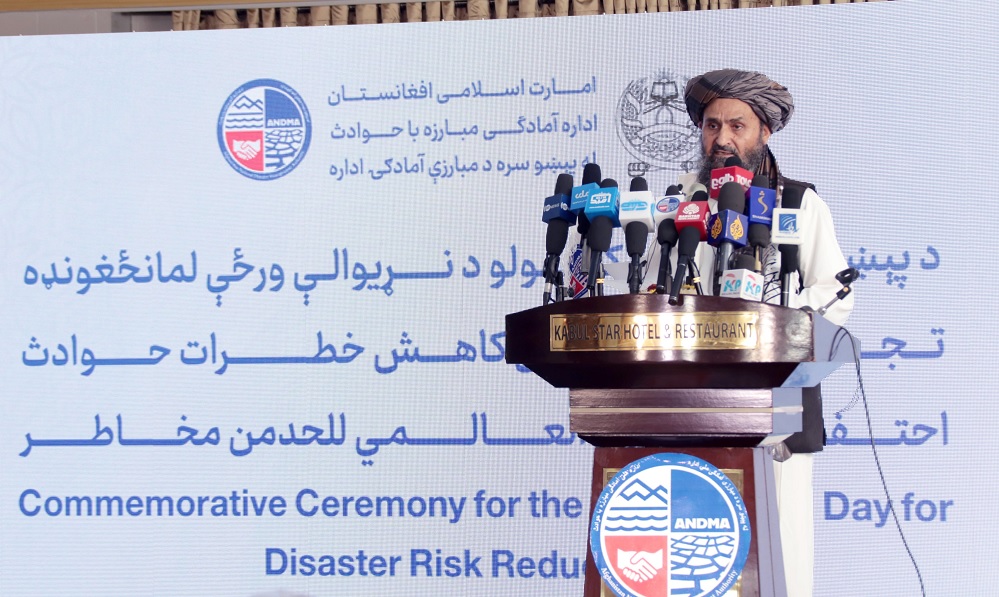
Mullah Abdul Ghani Baradar, Deputy Prime Minister for Economic Affairs, has called for Afghanistan to have fair access to international financial and technical assistance to combat climate change and reduce losses caused by natural disasters.
Speaking at a ceremony marking the International Day for Disaster Risk Reduction, Baradar said Afghanistan continues to suffer from the effects of climate change despite having no significant role in greenhouse gas emissions or global climate degradation.
He added that Afghanistan suffered severe social and economic losses last year due to earthquakes, seasonal floods and droughts. These disasters caused casualties and extensive financial losses, as well as damage to public infrastructure.
Emphasizing the need for climate justice, Baradar said: “It is inconsistent with the principles of global climate justice that we have no role in creating the problem, yet must bear its severe consequences and pay the price for the destruction caused by others.”
He urged the international community, the United Nations and climate-related organizations not to allow political considerations to interfere with efforts to combat climate change.
Baradar said climate change affects everyone and that protecting the global climate is a shared responsibility of all countries, without exception.
He stressed that fair access to international financial and technical assistance to reduce losses caused by natural disasters and climate change is Afghanistan’s right.
The Deputy Prime Minister for Economic Affairs also called on the international community to provide practical assistance by supplying modern meteorological equipment, early warning systems, advanced rescue equipment and support to strengthen Afghanistan’s technical capacity.
He further said the Islamic Emirate had made significant efforts to construct buildings that meet standards for resilience against natural disasters, build standard retaining walls to control water flows, and protect and restore forests. He added that these efforts would continue.
Climate Change
Afghanistan on climate front line as Kabul faces groundwater warning
Participants also highlighted growing pressure on already limited water and other community resources following the return of large numbers of Afghan migrants.
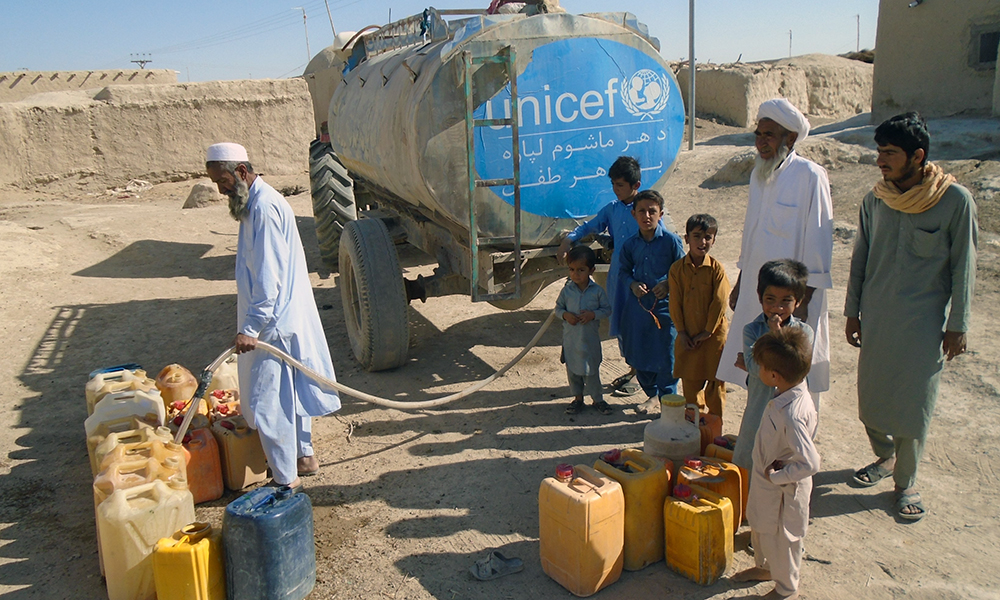
Afghanistan is among the countries most vulnerable to climate change despite contributing less than 0.1 percent of global greenhouse gas emissions, UN officials and experts said at a meeting on the sidelines of the United Nations General Assembly in New York.
The meeting, titled “Afghanistan on the Front Line of Climate and Migration Pressures,” brought together UN representatives, experts and Afghan activists to discuss the country’s worsening water crisis, drought, floods, displacement and the impact of climate change.
Selwin Hart, Adviser to the UN Secretary-General on Climate Action, said Afghanistan faces severe climate vulnerability, environmental degradation, economic fragility and limited institutional capacity.
“Afghanistan accounts for less than 0.1 percent of global greenhouse gas emissions, but faces severe climate vulnerability, environmental degradation, economic fragility and limited institutional capacity,” Hart said.
He said drought had severely affected Afghan communities for four consecutive years between 2021 and 2024, while flash floods this spring affected more than 73,000 people.
Participants also highlighted growing pressure on already limited water and other community resources following the return of large numbers of Afghan migrants.
Najibullah Sadid, a water resources and climate change expert, warned that Kabul could become the first capital in the world to face severe groundwater shortages by 2030.
Kabul’s groundwater resources have been declining amid growing demand, with the city’s population estimated at around seven million. Experts have warned that continued overuse and reduced water availability could put the capital under severe water stress in the coming years.
Switzerland’s representative to the United Nations said his country supports Afghanistan’s efforts to address climate change and water security and is working through various channels to strengthen capacity in these areas.
He said Switzerland supports initiatives including the UN Regional Centre for Preventive Diplomacy in Central Asia and the Global Network of Women in Water Diplomacy, as well as the network’s activities in Central Asia and Afghanistan.
Participants called for Afghanistan’s climate crisis to be addressed through greater international cooperation and responsibility. They also urged improved access for Afghanistan and local institutions to financial resources for climate adaptation and compensation for climate-related losses.
Climate Change
El Niño likely to intensify, may become strongest ever recorded, WMO says
A very strong El Niño can significantly shift rainfall and temperature patterns worldwide, and fuel extreme weather, like typhoons.
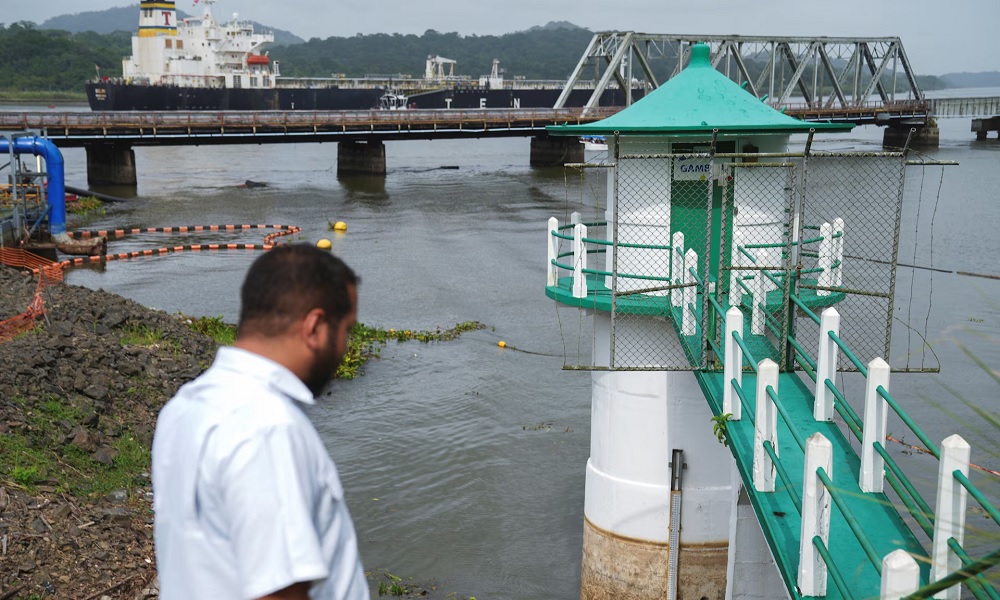
The El Niño weather phenomenon is set to intensify further into 2027 and could be the strongest ever, raising risks of extreme weather into next year, the World Meteorological Organization said on Thursday.
“If this trajectory continues, it may be stronger than anything since our monitoring began. So literally off the charts we have used for the past four decades,” WMO Secretary-General Celeste Saulo told a Geneva press conference, Reuters reported.
The U.N. weather agency said its forecasts showed a near 100% likelihood that El Niño will persist through February 2027, fuelled by exceptionally warm Pacific Ocean temperatures. This is the first time it has expressed such a degree of certainty, the WMO said.
A very strong El Niño can significantly shift rainfall and temperature patterns worldwide, and fuel extreme weather, like typhoons.
“El Niño is being supersized before our eyes. The science leaves no room for doubt: The planet is in uncharted waters, and those waters are heating up,” said United Nations Secretary-General Antonio Guterres.
El Niño is a periodic warming of sea surface temperatures in the eastern Pacific caused by weakening trade winds. It occurs naturally every two to seven years and tends to last up to 12 months, causing intense rains and droughts across Latin America.
This year’s phenomenon has already had an impact on soft commodities in tropical areas, causing a severe food crisis across Central America’s Dry Corridor.
It is set to peak towards the end of this year, the WMO said in a statement. But its effects will continue into 2027 and are set to leave higher global temperatures next year in its wake, Saulo said.
Saulo said the WMO was stepping up preparedness and early warning efforts in preparation.
“WMO is committed to working closely with partners across the United Nations and humanitarian system to provide the climate intelligence and insights needed to support disaster management and climate-sensitive sectors like agriculture, health, energy and water resources,” she said.


Tahawol: Kyrgyzstan’s rejection of Afghan refugees discussed

Saar: Central Asia’s trade alternative to Pakistan discussed

ARCS, UK envoy discuss humanitarian needs of vulnerable Afghans

FM Muttaqi says IEA values ties with India under its balanced foreign policy

Afghanistan and UK stress expanding bilateral cooperation

Cricket Bonanza: Afghanistan set for packed international schedule

UN warns of mounting humanitarian and human rights pressures in Afghanistan

Afghanistan says 28 killed, 32 captured in Nuristan operation

CNN, MS NOW and Politico sue Trump, challenging White House ban

Silk Road highway in Wakhan corridor now reaches the China border
Tahawol: Kyrgyzstan’s rejection of Afghan refugees discussed
Saar: Central Asia’s trade alternative to Pakistan discussed

Tahawol: Warnings over worsening insecurity in Pakistan discussed

Saar: Concerns over potential return of US military bases to Afghanistan discussed

Tahawol: Kabul’s criticism of Islamabad’s policy toward Afghanistan
-
 Latest News5 days ago
Pakistan issues new directives for Afghan medical students and doctors
-

 Latest News4 days ago
Iranian lawmaker praises Afghanistan’s support, accuses Pakistan of ‘hypocrisy’
-
 Regional4 days ago
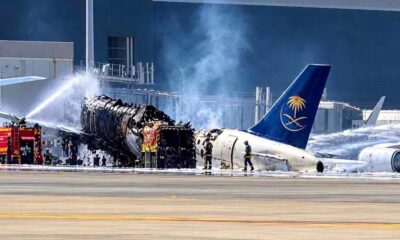
Houthis warn airlines to avoid Saudi airports after deadly Riyadh attack
-
 Business4 days ago
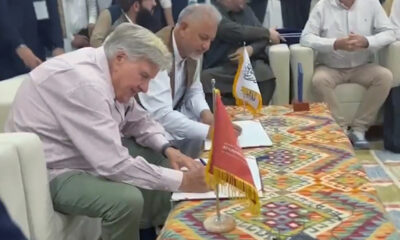
Afghan-Austrian partnership aims to boost carpet exports to European markets
-

 World3 days ago
One dead in new attack on Saudi airport, a day after Houthi strike kills 13
-

 Sport3 days ago
Afghanistan Champions League second half to kick off on October 16
-

 World4 days ago
14 killed in two separate mass shootings across the United States
-

 Business3 days ago
Afghanistan signs nearly $400 million in regional trade and investment deals