
Sport
All you need to know about FIFA Futsal World Cup Rules
A goalkeeper must release the ball within four seconds while in his own half. If he doesn’t, an indirect free-kick will be awarded to the opposition team

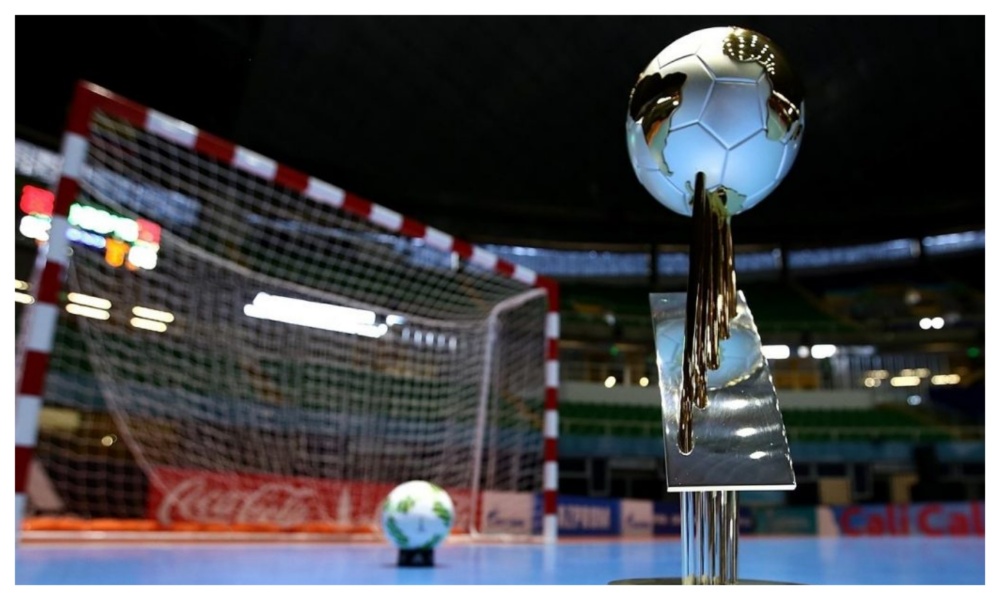
Futsal has continued to grow in global popularity over the past few decades with one source estimating 12 million players across the world play the game.
Due to its easy setup and enhanced accessibility futsal has become an essential resource for coaches aiming to develop players.
But futsal’s rules are intricate – especially those applicable to this year’s FIFA Futsal World Cup.
Here’s what you need to know.
A match lasts 40 minutes. That is, in fact, 40 minutes of the ball in play, because when the whistle blows – when, say, the ball goes out or a foul is called – the timekeeper stops the clock until play restarts.
The two 20-minute halves are split by a 15-minute half-time break. If a knockout-phase game is level after 40 minutes, two five-minute periods of extra-time will be played.
Teams
Uzbekistan 2024 squads consist of 14 players. Each team has five players – four out-court and one goalkeeper – on court simultaneously, unless a sending off has occurred.
Substitutions
Coaches can make unlimited substitutions. There is no limit to how many times a player can be substituted on and off.
Four-second rule
A goalkeeper must release the ball within four seconds while in his own half. If he doesn’t, an indirect free-kick will be awarded to the opposition team. Set-pieces – kick-ins, corners and free-kicks – must be taken within four seconds or the opposition team will be awarded an indirect free-kick.
Goalkeepers in possession
Once a goalkeeper has touched the ball in his own half, he is not permitted to touch it again inside his own half until the opposition have had possession.
Kick-ins
There are no throw-ins. When the ball goes out via the side-line, or for a corner, it must be kicked back in.
Accumulated fouls
When a team has made five fouls in one half, every subsequent foul will result in their opponents being awarded a free shot at goal, with no wall permitted in between, from the second penalty spot (10 metres out). If the foul occurred closer to goal, it can be taken from where it occurred. First-half fouls are wiped at half-time, but second-half fouls are carried into extra-time if it is required.
Red cards
Players are sent off for two yellow cards or a straight red. Their team must then play with only four players on the court until the opposition scores or for two minutes. If the opposition scores, or once two minutes is up if not, a replacement can be sent on. The sent-off player is not permitted to return to the game.
Flying goalkeepers
A flying goalkeeper is when an out-court player temporarily assumes the role of a goalkeeper. This is invariably done when a team is behind and trying to outnumber the opposition in attack. A flying goalkeeper must wear a goalkeeper’s jersey with his own number on the back.
Time-outs
Each head coach has one time-out, whereby play is stopped for 60 seconds for him to speak to his players, in each half. A head coach can only call a time-out when the ball goes out of play and his team will restart it. There are no time-outs in extra-time.
Penalty shootouts
If a knockout-phase game is level after extra-time, a penalty shootout will decide the outcome. Whichever team is leading after each has taken five penalties will go through. If it’s level after five penalties apiece, sudden death will ensue. Players who have withdrawn from the game injured or been sent off are not permitted to take penalties.
An outfield player is permitted to act as a goalkeeper during penalties. Teams are permitted to alternate their goalkeepers during the shootout.






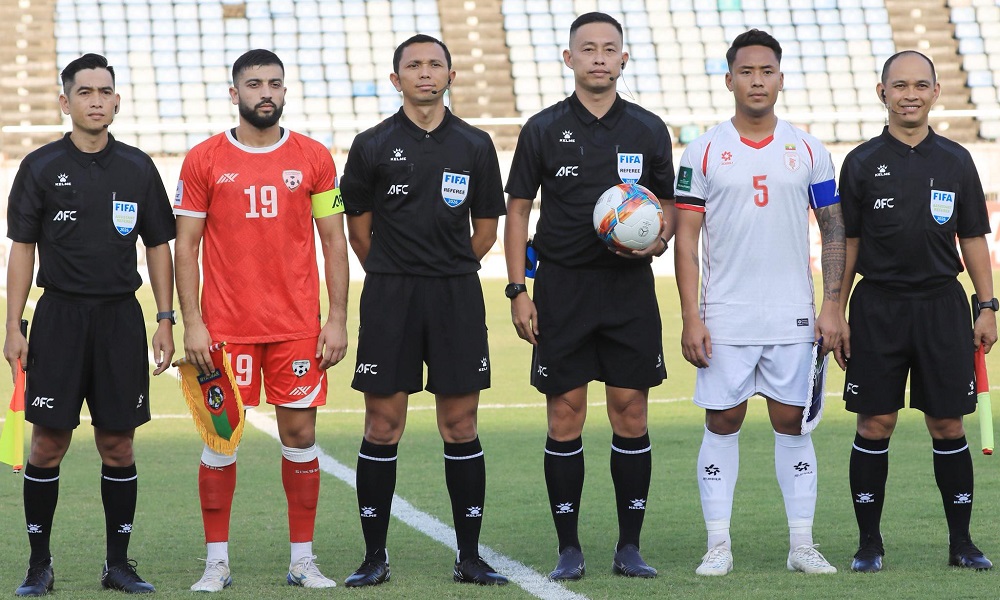
The Afghanistan national football team lost 2–1 to Myanmar in the Asian Cup qualifiers in Yangon on Thursday afternoon.
Afghanistan’s national team is scheduled to play its final match of the competition on March 31 against Syria in Saudi Arabia.
Sport
Afghanistan to face Myanmar in crucial AFC clash
Afghanistan enters the fixture with renewed focus, aiming to capitalize on recent improvements in squad cohesion and tactical discipline.
Afghanistan national football team take on Myanmar national football team today, Thursday March 26, in a key AFC competition match, with kickoff scheduled for 3pm local time.
The match, set to be broadcast exclusively on Ariana Television in Afghanistan, is seen as an important test for Afghanistan as they look to build momentum and strengthen their standing in regional competition.
Afghanistan enters the fixture with renewed focus, aiming to capitalize on recent improvements in squad cohesion and tactical discipline.
The team will be hoping to deliver a strong performance in front of fans watching across the country, with particular emphasis on defensive organization and quick transitions in attack.
Myanmar, meanwhile, arrive determined to challenge their opponents and secure valuable points. Known for their pace and structured play, they are expected to provide a competitive contest and test Afghanistan’s resilience throughout the match.
Today’s encounter is more than just a fixture—it represents an opportunity for both sides to assert themselves on the continental stage. For Afghanistan, a positive result would not only boost confidence but also reinforce their ambitions in AFC competition.
With anticipation building, all eyes will be on the pitch as the two sides battle for supremacy in what promises to be an engaging and closely fought contest.
Today’s match between Afghanistan national football team and Myanmar national football team is part of the qualification campaign for the AFC Asian Cup, one of Asia’s premier international football competitions.
Crucial opportunities
The fixture plays a key role in determining which teams advance to the next stage of the qualifiers and ultimately secure a place in the final tournament. For emerging football nations like Afghanistan and Myanmar, these matches are crucial opportunities to compete at a higher level and gain continental recognition.
Afghanistan are aiming to strengthen their position in the group standings, with every point vital in a tightly contested qualification race. A win today would significantly boost their chances of progressing, while also improving their FIFA ranking and regional standing.
For Myanmar, the match carries similar importance, as they look to stay competitive in the group and keep their qualification hopes alive.
With so much riding on the outcome, today’s encounter is not just another game—it is a pivotal step on the road to the AFC Asian Cup.
Fans can meanwhile tune in to Ariana Television from 2.30pm for the preview show. Kickoff is expected to take place at 3pm.
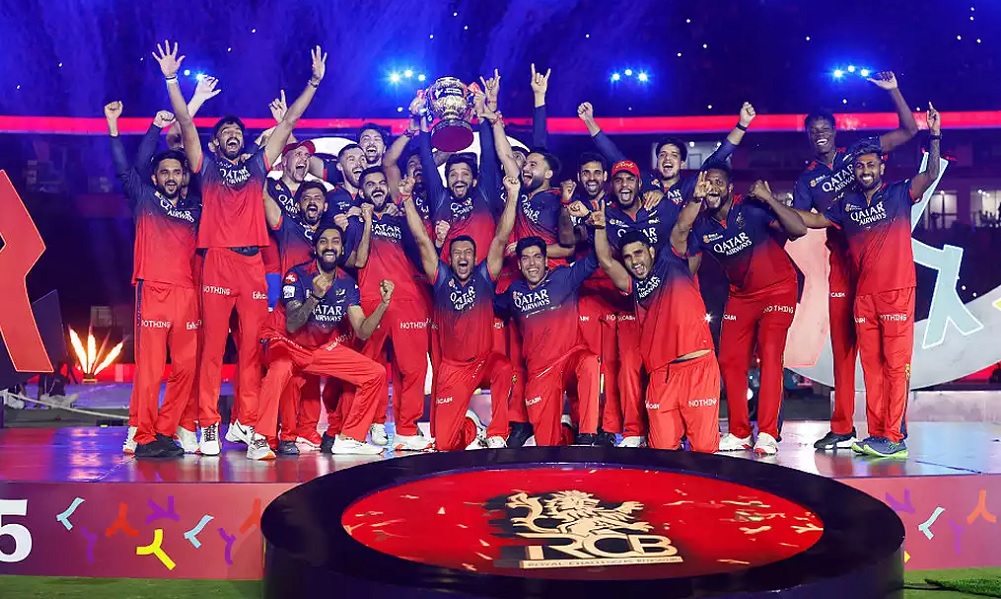
In one of the biggest franchise deals in cricket history, Royal Challengers Bengaluru (RCB) has been sold for approximately $1.78 billion (INR 16,660 crore) to a powerful consortium of Indian and global investors.
The all-cash deal was confirmed by United Spirits Limited (USL), the current owner of the franchise and a subsidiary of global beverage giant Diageo.
The sale follows a “strategic review” by Diageo, which had identified cricket as a non-core business and aimed to complete the transaction by the end of March 2026.
New ownership structure
The consortium acquiring RCB includes the Aditya Birla Group, Times of India Group, Bolt Ventures, and Blackstone’s private equity arm. Under the agreement, both the men’s and women’s teams—previously operated by Royal Challengers Sports Private Limited—will now be fully owned and managed by the new group.
Former cricketer Aryaman Birla is set to serve as chairman, with Satyan Gajwani appointed as vice-chairman.
Record-breaking valuation
The $1.78 billion price tag highlights the surging commercial value of franchise cricket. The figure surpasses the combined valuation of the Lucknow and Ahmedabad IPL franchises sold in 2021 and marks a dramatic rise from RCB’s original purchase price of $111.6 million in 2008.
The franchise’s growth has been fueled by consistent on-field success and a massive global fanbase. Led by star player Virat Kohli, RCB’s men’s team secured its first-ever IPL title in 2025, while the women’s side, captained by Smriti Mandhana, are also reigning champions in the Women’s Premier League.
Strategic vision and global backing
The new ownership brings together a diverse mix of business and sporting expertise. Bolt Ventures is linked to prominent investor David Blitzer, who holds stakes in multiple global sports teams across leagues such as the NBA, NFL, and Premier League. Meanwhile, Blackstone—one of the world’s largest asset managers—adds significant financial muscle to the consortium.
In a joint statement, the new owners described RCB as “one of the most iconic franchises in world sport,” citing its championship-winning culture, deep connection to Bengaluru, and passionate fanbase.
“We are committed to taking RCB to new heights, both on and off the field,” the consortium said.
What happens next
The deal is still subject to regulatory approvals from the Board of Control for Cricket in India (BCCI) and the Competition Commission of India before it is formally completed.
Industry analysts say the sale signals a new era for franchise cricket, with increasing global investment and cross-sport ownership models reshaping the business of the game. With fresh capital and international expertise, RCB is expected to expand its brand, talent pipeline, and commercial footprint in the coming years.


Tahawol: Discussion on day 27 of Iran–US war

Turkey invites IEA’s commerce minister to Antalya Diplomacy Forum

Saar: Islamic Emirate confident of Durand Line control

Afghan, Malaysian PMs discuss situation between Kabul and Islamabad

Myanmar trump Afghanistan 2-1 in Asian Cup Qualifier

Pakistani military jet downed in Afghanistan’s Jalalabad, pilot captured alive

Afghan Air Force conducts airstrikes in Islamabad, other cities

Prominent Muslim scholar issues fatwa calling for Afghanistan-Pakistan ceasefire

Afghan air force strikes key Pakistani military installations in retaliatory operation

IEA: Special circle in Pakistan has launched mission to destabilize region
Tahawol: Discussion on day 27 of Iran–US war
Saar: Islamic Emirate confident of Durand Line control

Tahawol: Efforts to release Mohammad Rahim from Guantanamo Bay Detention Camp

Saar: End of ceasefire between Afghanistan-Pakistan reviewed

Tahawol: Escalating threats between Iran-US discussed
-

 Latest News5 days ago
Deadly violence likely without dialogue between Afghanistan and Pakistan: ICG
-

 Latest News4 days ago
Pakistan seeks Russian mediation to resolve Afghanistan tensions
-

 International Sports5 days ago
FIFA World Cup 2026: Play-Off Tournament takes centre stage
-

 Sport5 days ago
Afghanistan secures third place at 2026 World Kokpar Championship
-
 Business4 days ago
Afghani strengthens nearly 10% against US dollar amid banking sector reforms
-
 Latest News4 days ago
World must re-engage to prevent all-out Afghanistan-Pakistan war: Financial Times
-
 Latest News3 days ago
Around 2.3 million tourists visited Afghanistan’s recreational areas during Eid: Ghufran
-

 Sport3 days ago
Afghanistan squad hit by withdrawals ahead of AFC Asian Cup Qualifiers