
Latest News
Bayat Foundation expands aid operations for Afghan returnees at key border crossings
Foundation officials say their activities now include the distribution of food packages, provision of essential medical services, and the organized transportation of families from temporary shelters to their home provinces.

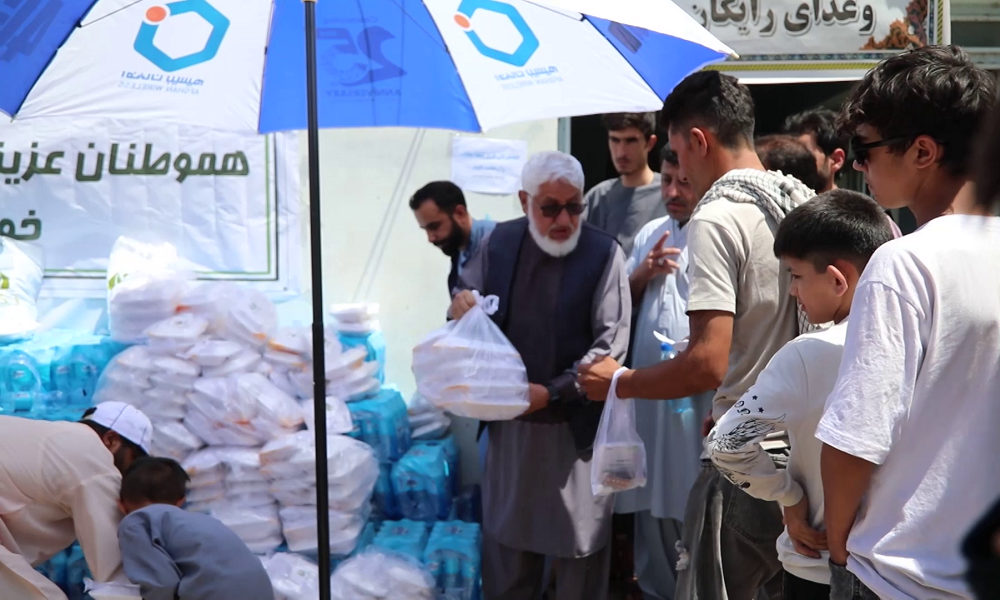
The Bayat Foundation has significantly expanded its humanitarian assistance for Afghan returnees arriving through major western border crossings, including Islam Qala in Herat province and the Silk Bridge in Nimroz.
The foundation’s efforts come amid a growing influx of deported and returning refugees from neighboring Iran.
Foundation officials say their activities now include the distribution of food packages, provision of essential medical services, and the organized transportation of families from temporary shelters to their home provinces.
“Currently, we are at the Mawlana camp in Herat, where we plan to transfer a number of migrants to Kabul on behalf of the Bayat Foundation,” said Haji Mohammad Ismail Shah Samand, deputy head of the Foundation.
The foundation is coordinating the daily transfer of hundreds of returnees from Herat city to various provinces, with a focus on easing overcrowding in temporary shelters and assisting families in reaching their final destinations.
Many returnees have expressed gratitude for the assistance provided, particularly at a time of acute humanitarian need.
“We are very happy with the Bayat Charity Foundation for helping us,” said Matin, a returnee. “They arranged vehicles, food—everything is abundant—and they are taking us to our destination.”
Another returnee, Salim Ahmadi, added: “I thank them for the assistance they have provided to us.”
Civil society groups and volunteers working at the Islam Qala crossing noted that the Bayat Foundation was playing a key role in responding to the humanitarian crisis. They noted that food and basic supplies are being distributed daily, but emphasized the need for greater support in transportation logistics.
Qadus Khatibi, a civil society activist, said: “In my opinion, when it comes to providing services for travelers and migrants, transportation is very important.”
Healthcare services have also been mobilized to meet the needs of the returnees. Fahim Yousufi, head of the Herat Medical and Pharmaceutical Services Union, said: “We have all kinds of medicine to serve patients, including gynecology and pediatric departments, which are available to serve migrants.”
The expansion of aid efforts comes amid a mass return of Afghan nationals, particularly from Iran, where government crackdowns on undocumented migrants have led to a surge in deportations.
According to officials in Kabul, more than 500,000 Afghan migrants have returned from Iran in the past month alone, many of them forcibly deported.
The figure, reported by Deputy Prime Minister Abdul Salam Hanafi earlier this month, highlights the intensifying pressure on Afghanistan’s fragile infrastructure and social services.
According to the International Organization for Migration (IOM), over 250,000 Afghans returned from Iran in June alone, many of them forcibly expelled with little notice or preparation.
In response, the Bayat Foundation launched its latest round of emergency support two weeks ago. Its current operations span Islam Qala border, Silk Bridge in Nimroz, and Herat city center, and have so far reached thousands of vulnerable families.
While civil society groups have praised the foundation’s efforts, they are also calling on the private sector and business community to step up and play a more active role in supporting returnees—especially in facilitating safe and dignified transportation to their home provinces.





Latest News
Pakistani shelling hits Kunar districts despite ‘pause in hostility’ over Eid
The incident comes amid a series of recent exchanges between Pakistan and Afghanistan, which have heightened security concerns in regions along the disputed Durand Line.
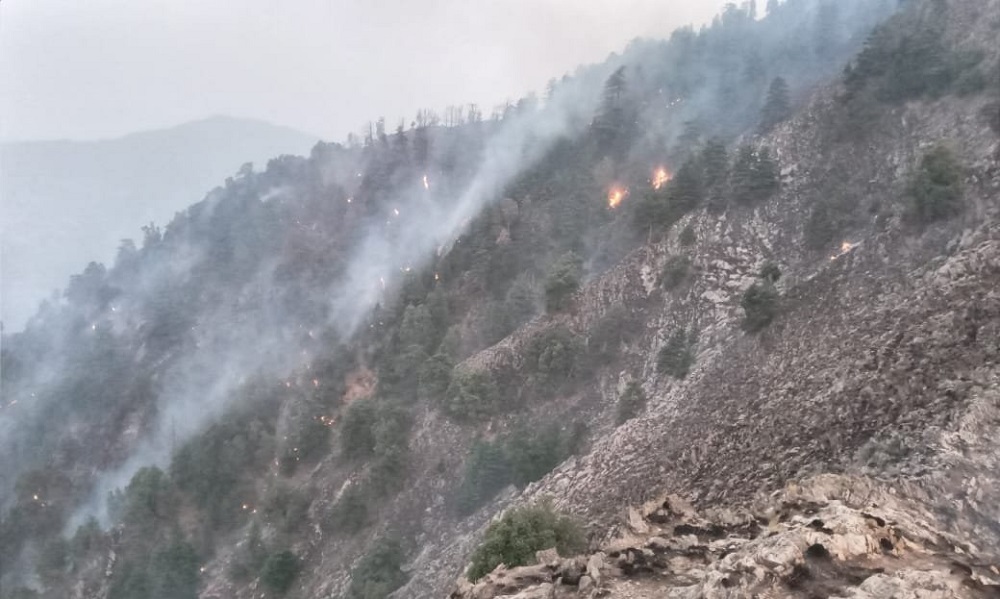
Pakistani military forces fired more than 70 artillery shells into eastern Afghanistan’s Kunar province, local officials said, in the latest incident underscoring rising cross Durand Line tensions.
Zia-ur-Rahman Spin Ghar, head of information at Kunar’s Department of Information and Culture, said 35 shells struck areas including Dokalam, Barikot and Tsongalai in Narai district. A further 37 shells were reported in parts of Manogai district.
No casualties have been reported so far, according to local authorities. However, Spin Ghar warned Thursday morning that shelling in Narai was ongoing, with some rounds reportedly landing near civilians returning to their homes.
Residents have been urged to remain alert and seek shelter in safer areas as officials continue to monitor the situation.
The incident comes amid a series of recent exchanges between Pakistan and Afghanistan, which have heightened security concerns in regions along the disputed Durand Line.
Afghan officials have repeatedly accused Pakistan of targeting civilian areas, while Islamabad has previously said its operations are aimed at militant groups operating near the border.
The shelling also coincided with Eid al-Fitr, one of the most significant holidays in the Islamic calendar. In Kandahar, the Islamic Emirate’s supreme leader, Sheikh Hibatullah Akhundzada, led Eid prayers attended by thousands.
In his sermon, Akhundzada stressed the importance of justice and accountability, calling on officials to act with integrity and warning against misconduct. He also reiterated themes of national sovereignty, expressing opposition to foreign influence and emphasizing Afghanistan’s independence.
The shelling coincided with Eid al-Fitr, during which both sides had announced a temporary pause in hostilities.
The Islamic Emirate of Afghanistan said on Wednesday it would halt its “Rad al-Zulm” defensive operations for the holiday at the request of mediating countries including Saudi Arabia, Qatar and Turkey.
In a statement, spokesperson Zabihullah Mujahid said the pause reflected goodwill toward mediation efforts, while stressing that Afghan forces would “respond bravely” to any aggression threatening national security, territorial integrity, or civilian lives.
Pakistan also confirmed a temporary suspension of its military operations for Eid, with Information Minister Ataullah Tarar stating the move was made at the request of the same regional mediators.
Qatar welcomed the truce, describing it as a constructive step toward de-escalation and expressing hope it could lead to a more lasting agreement to protect civilians and stabilize the region.
Latest News
Qatar welcomes temporary Eid truce between Afghanistan and Pakistan
The Ministry of Foreign Affairs of Qatar said the temporary truce is a constructive gesture that could help de-escalate the situation and promote calm along the border.
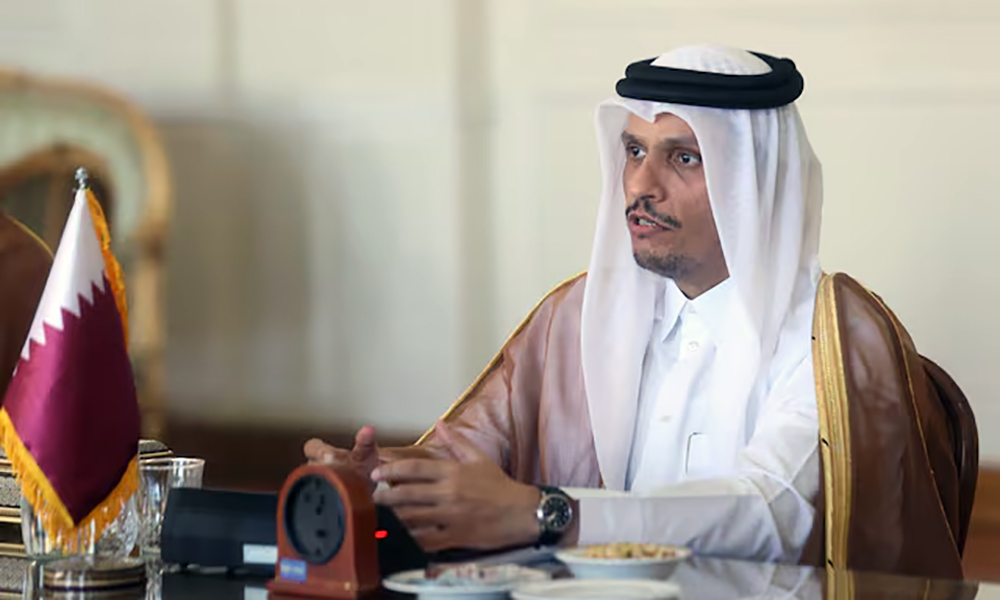
Qatar has welcomed the announcement of a temporary ceasefire between Afghanistan and Pakistan on the occasion of Eid al-Fitr, describing the move as a positive step toward easing tensions between the two neighbors.
In a statement issued on March 18 in Doha, the Ministry of Foreign Affairs of Qatar said the temporary truce is a constructive gesture that could help de-escalate the situation and promote calm along the border.
The ministry expressed hope that the short-term ceasefire would pave the way for a sustainable and lasting agreement that protects civilian lives and contributes to long-term security and stability in the region.
Qatar also commended both sides for responding to calls by Qatar, Saudi Arabia, and Turkey to implement the Eid truce, emphasizing that dialogue and peaceful solutions remain the best approach for resolving disputes.
The Qatari Foreign Ministry further reiterated Doha’s commitment to continuing diplomatic efforts, in coordination with regional and international partners, to support de-escalation and strengthen peace and stability in the region.
The spokesman for the Islamic Emirate of Afghanistan announced Wednesday that the security and defense forces of the Islamic Emirate are announcing a temporary halt to the “Rad-ul Zulm” defense operations on the occasion of Eid al-Fitr and at the request of Saudi Arabia, Turkey, and Qatar.
Zabihullah Mujahid wrote in X: “While appreciating the goodwill of friendly and mediating countries, the Islamic Emirate notes that maintaining the national security of Afghanistan, the privacy and safety of Afghans’ lives is its national and religious duty, and will respond courageously to any aggression if threatened.”
This is while Attaullah Tarar, Pakistan’s Minister of Information and Broadcasting, has also announced that the country has temporarily halted its attacks on Afghanistan on the occasion of Eid al-Fitr at the request of Saudi Arabia, Qatar, and Turkey.
Latest News
Peshawar High Court grants bail to 68 detained Afghan nationals, including minors
The presence of children in custody was also a key factor, with the court’s decision reflecting humanitarian considerations alongside legal arguments.
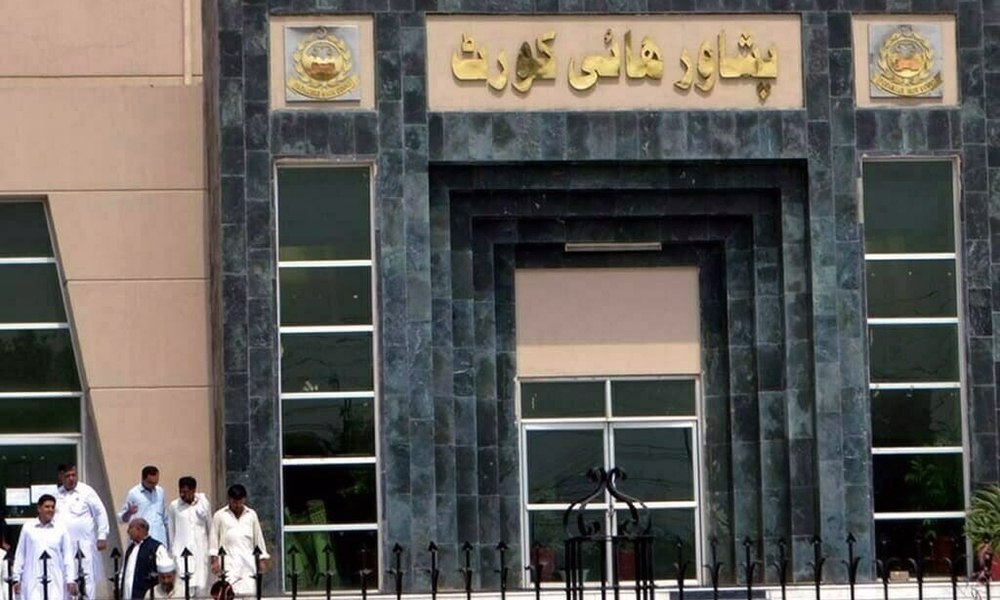
The Peshawar High Court has granted bail to 68 Afghan nationals, including children under 18 and holders of Pakistan Origin Cards (POCs), ordering their release from detention.
The group had petitioned the court for relief after being held by authorities. In its ruling, the court approved bail for all applicants, with the inclusion of minors and documented individuals drawing particular attention to the case.
Among those released were Afghan nationals holding Pakistan Origin Cards—documents issued to people of Pakistani origin living abroad or those with established ties to the country. Their detention raised questions about the treatment and legal status of individuals with recognised documentation.
The presence of children in custody was also a key factor, with the court’s decision reflecting humanitarian considerations alongside legal arguments.
Pakistan hosts a large population of Afghan nationals, many of whom have lived in the country for decades. Their legal status has remained a complex and often contested issue, particularly amid recent crackdowns and repatriation efforts.
The ruling is expected to influence similar cases, especially those involving documented Afghan nationals and minors, as courts continue to weigh legal and humanitarian concerns.


Pakistani shelling hits Kunar districts despite ‘pause in hostility’ over Eid

US weighs troop deployment as Iran war enters new phase

Qatar welcomes temporary Eid truce between Afghanistan and Pakistan

Peshawar High Court grants bail to 68 detained Afghan nationals, including minors

Tahawol: Global reactions to Pakistan’s recent attacks discussed

Pakistani military jet downed in Afghanistan’s Jalalabad, pilot captured alive

Afghan Air Force conducts airstrikes in Islamabad, other cities

IEA releases three Pakistani soldiers to mark Ramadan

Afghanistan’s Chief of Armed Forces underscores readiness and equipment for national defense

Afghanistan welcomes investment and technology partnerships with India
Tahawol: Global reactions to Pakistan’s recent attacks discussed

Saar: Consequences of Pakistani airstrikes on Afghans discussed

Tahawol: Pakistan’s new attacks on Kabul hospital discussed

Saar: Pakistani military’s airstrike on Kabul hospital discussed

Tahawol: China’s efforts for Afghanistan-Pakistan talks
-
 Latest News3 days ago
IEA Supreme Leader issues Eid-ul-Fitr message urging unity and support for Islamic system
-
 Latest News5 days ago
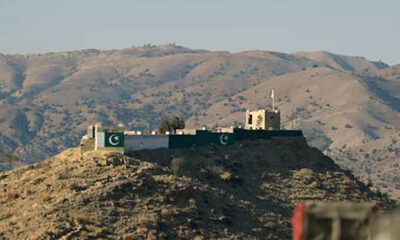
14 Pakistani soldiers killed after military post falls along Durand line: MoD
-
 Latest News4 days ago
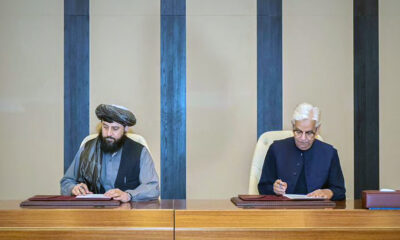
Regional criticism grows amid Pakistan strikes inside Afghanistan
-
 Latest News4 days ago
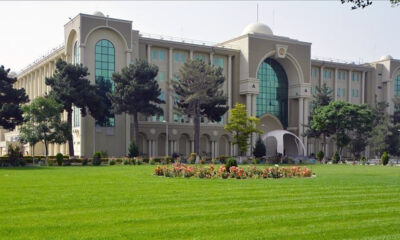
Afghan airstrike targets a military camp in South Waziristan
-

 Business3 days ago
Turkmenistan, Afghanistan discuss steps to speed up land acquisition for TAPI pipeline
-

 Sport4 days ago
IPL 2026 kicks off in under two weeks; Afghan players set to shine
-

 Business4 days ago
Afghanistan expands exports through Lapis Lazuli Corridor
-

 Latest News5 days ago
India condemns Pakistani airstrikes on Afghanistan