
Latest News
Beware Taliban promises, Afghanistan envoy to China warns

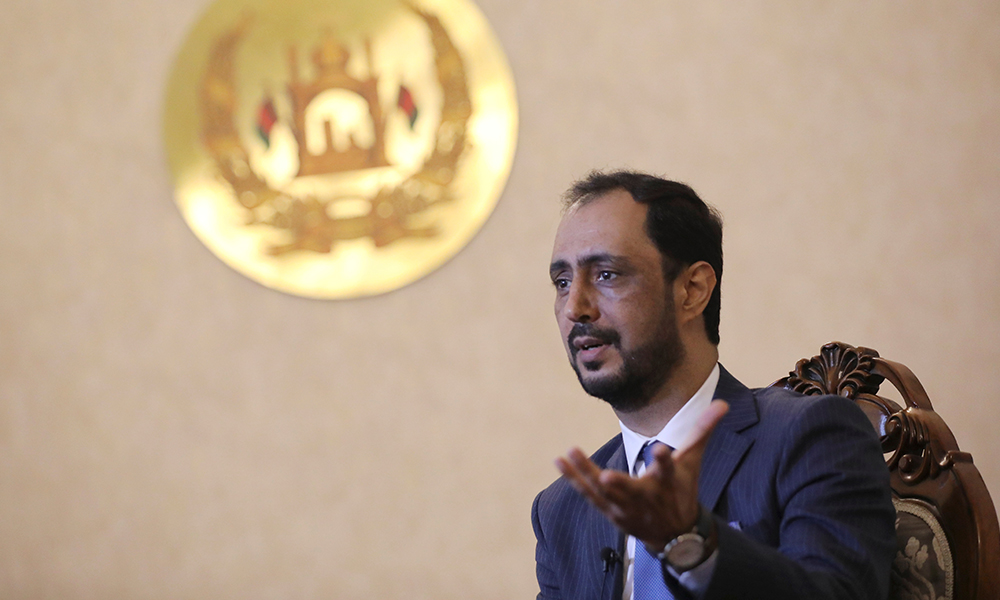
The Taliban cannot be trusted to keep their promise to China not to harbour Islamist militants seeking separatism in its Xinjiang region, Afghanistan‘s ambassador to China told Reuters, a week after China hosted Taliban officials.
The withdrawal of U.S. forces from Afghanistan, and a surge in fighting as Taliban insurgents gain territory, raise concerns for China, which worries that more instability in the region will disrupt its Belt and Road plan for infrastructure and energy links to the west and embolden separatists to destabilise its far western Xinjiang region.
Last week Foreign Minister Wang Yi hosted a Taliban delegation in the northern city of Tianjin, days after meeting U.S. Deputy Secretary of State Wendy Sherman in the same location.
The Taliban pledged not to interfere in China’s internal affairs or allow Afghan territory to be used by anti-China forces.
But Afghan ambassador to China, Javid Ahmad Qaem, was dismissive of Taliban promises.
“I don’t think even China believes in that,” Qaem told Reuters in an interview, adding that the Taliban were “only saying this to get regional support”.
Instead of backing one Afghan side against another, as the United States and the Soviet Union have done in the past, China has adopted an “Afghan-led, Afghan-owned” approach, in line with its principle of non-intervention.
“The Chinese position is they want to mediate,” Qaem said in the Thursday interview at his embassy, adding that the U.S.-backed Afghan government welcomed China’s involvement and he understood why it wanted to stick to the middle ground.
The United Nations said in a report last month that the East Turkestan Islamic Movement (ETIM), a militant group affiliated with al Qaeda that China says wants to set up a separate state in Xinjiang, is active in Afghanistan in areas including the northeastern province of Badakshan, where China and Afghanistan share a remote 76 km border.
Qaem, 41, who has been in his post since November 2019, scoffed at the suggestion the Taliban might turn against their fellow militants from Xinjiang.
“It’s the same ideology. How could you expect somebody with the same thinking to fight other people who are with the same thinking?” he said.
China has maintained friendly relations with the Afghan government but also has also hedged its bets, analysts say, with its ties with the Taliban. Last month’s visit by a Taliban delegation followed a similar one in 2019.
In receiving the Taliban officials in their traditional tunics and turbans, Wang called them a “significant military and political force” expected to play a key role in Afghanistan‘s reconstruction.
“As the Taliban gain inroads, China wants to maintain contact and ensure that it is not in the Talibans’ bad books, just in case they come to power,” said Yang Chaohui, a lecturer at the School of International Studies at Peking University.
“China would normally be wary of any grouping that operates on the basis of religious extremism, but it has no intention of fighting the Taliban, because it knows it has no chance of succeeding in what the United States and Soviet Union have both failed to do,” Yang said.
Qaem said he would prefer that China was fully behind the government but also said that Beijing was transparent about its engagement with the Taliban, informing the government before extending its invitation and briefing it afterwards.
“We have faith in the Chinese intentions,” he said.
Qaem said the Afghan government had not asked China to send troops to support it but it could help in other ways.
China could encourage Pakistan – which has long seen the Taliban as the best option for limiting the influence of old rival India in Afghanistan – to build trust with the Afghan government, Qaem said.
China could also serve as a conduit for messages from Kabul to the Taliban, as it was at last week’s meeting – relaying a government call for a ceasefire and an appeal for an inclusive political framework, he said.
China can also help in boosting trade and buying more Afghan products such as saffron, he said.
“So as long as that is provided, I don’t think China needs to send boots,” he said.





International Sports
Kohli shines as RCB open IPL title defence with dominant win
Playing his first match since January, Kohli anchored the chase with a composed 69 not out off 38 balls, guiding Bengaluru to 203-4 in just 15.4 overs in pursuit of a daunting 202-run target.
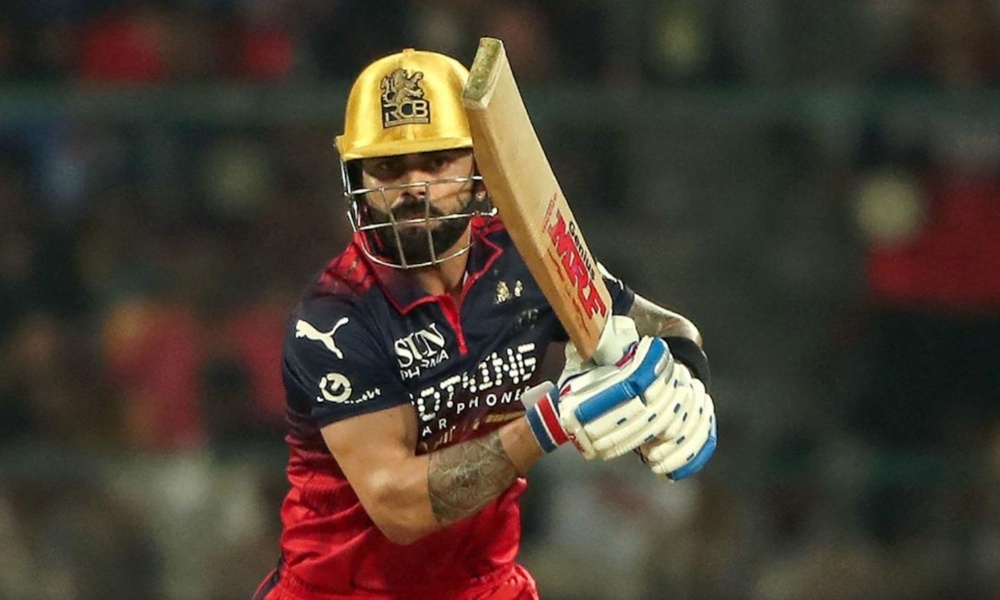
Virat Kohli struck an unbeaten half-century as Royal Challengers Bengaluru kicked off their Indian Premier League title defence with an emphatic six-wicket victory over Sunrisers Hyderabad on Saturday at the M. Chinnaswamy Stadium in Bengaluru.
Playing his first match since January, Kohli anchored the chase with a composed 69 not out off 38 balls, guiding Bengaluru to 203-4 in just 15.4 overs in pursuit of a daunting 202-run target.
He was well supported by Devdutt Padikkal, who blasted 61 from 26 deliveries, and captain Rajat Patidar, who added a quickfire 31 off 12 balls. England’s Phil Salt contributed just eight runs but made a significant impact in the field with a stunning one-handed diving catch.
Earlier, Sunrisers Hyderabad posted a competitive 201-9, powered by Ishan Kishan’s explosive 80 off 38 balls. However, his dismissal in the 16th over—courtesy of Salt’s brilliance on the boundary—halted their momentum on a batting-friendly surface.
New Zealand pacer Jacob Duffy impressed on debut for Bengaluru, returning figures of 3-22, while England left-armer David Payne claimed 2-35 in his first IPL outing for Hyderabad.
Bengaluru’s chase set a new benchmark as the fastest successful pursuit of a 200-plus total in IPL history. Kohli also extended his record for the most 50-plus scores in successful run chases in the tournament.
In other IPL developments, several England players are featuring in this year’s competition. Jos Buttler returns to Gujarat Titans alongside Tom Banton and Luke Wood, while Jofra Archer is back with Rajasthan Royals. Will Jacks joins Mumbai Indians, and Liam Livingstone and Brydon Carse are part of the Sunrisers squad.
The IPL continues today, Sunday March 29, with a blockbuster clash as Mumbai Indians take on Kolkata Knight Riders in what promises to be an early-season test for both sides.
Five-time champions Mumbai will look to assert dominance at home, with key players like Rohit Sharma and Jasprit Bumrah expected to lead the charge, while Kolkata will rely on their explosive lineup featuring Andre Russell to make a strong statement.
With both teams aiming to build early momentum in IPL 2026, fans can expect a high-intensity contest packed with big hitting and crucial breakthroughs.
Fans in Afghanistan can catch all the IPL 2026 action live, as Ariana Radio and Television Network holds exclusive broadcast rights across the country.
Viewers can tune in daily to Ariana Television for live coverage, and follow Ariana Television and Ariana News across social media platforms for the latest updates and highlights.
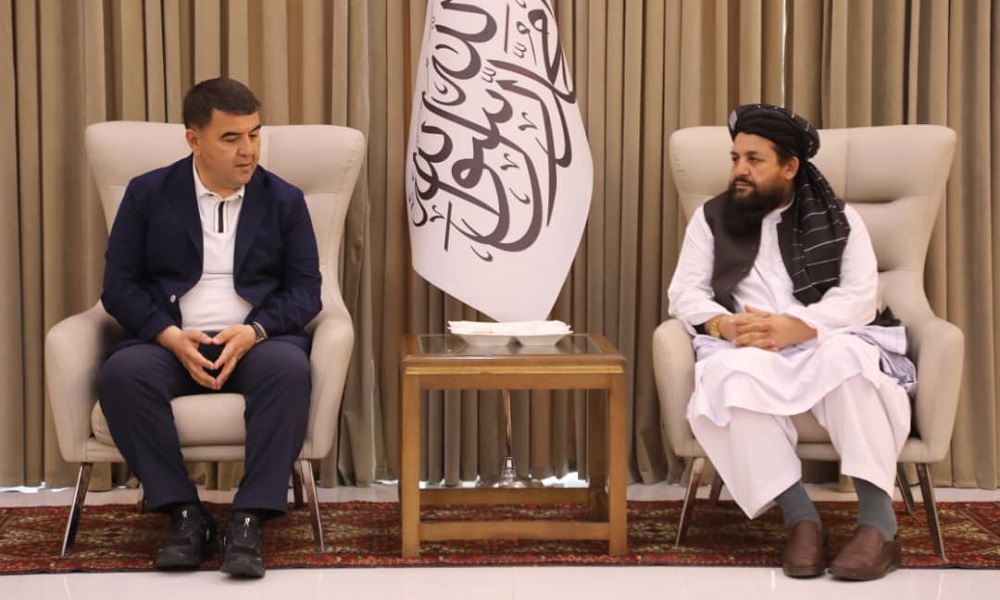
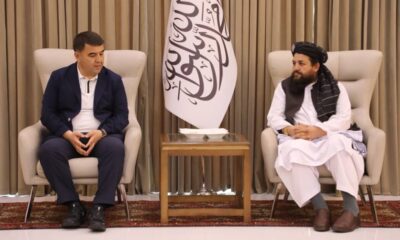
A high-level government–private sector delegation from Uzbekistan, led by Shukhrat Abdullazakov, Governor of Namangan province, arrived in Kabul to enhance trade between the two countries and promote investment in Afghanistan.
According to a press release from the Ministry of Industry, the delegation, which includes deputy governors and more than 30 of Uzbekistan’s top businesspeople and investors, will meet with officials of the Islamic Emirate of Afghanistan and participate in conferences and trade meetings.
The delegation will also travel to Balkh, meet with local officials, and hold business meetings with members of the private sector.
Additionally, the delegation will inaugurate an exhibition of Uzbek products and goods in Mazar-i-Sharif.
This visit follows the trip of Erkinjon Turdimov, Governor of Uzbekistan’s Syrdarya Province, and his accompanying delegation, and is based on meetings between Nuruddin Azizi, Minister of Industry and Trade of the Islamic Emirate, and senior Uzbek officials.
Other governors from Uzbekistan are also expected to visit Afghanistan to further expand bilateral trade and economic relations.
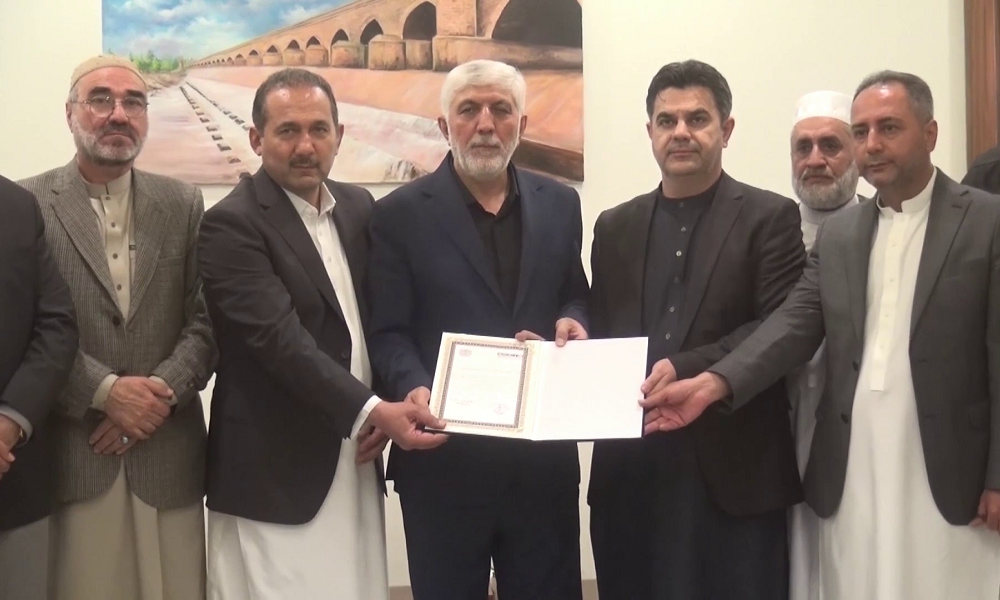
The Herat Chamber of Commerce and Investment announced on Saturday that national traders, jointly through the chamber, have provided approximately 15 million AFN in aid to the people of Iran.
The chamber stated that this aid package was delivered to the Iranian Consulate in Herat. It added that the assistance was intended to express solidarity with families affected by the war.
Mohammad Younes Qazizadeh, head of the Herat Chamber of Commerce and Investment, said: “Today we have presented 15 million AFN to the dear people of Iran through the Herat provincial authorities and the Iranian Consulate, and this aid will continue.”
Meanwhile, officials at the Iranian Consulate in Herat emphasized that Afghanistan and Iran always stand together and fully understand each other’s difficulties.
The Herat Chamber of Commerce and Investment also highlighted that the people of Iran have consistently supported the people of Afghanistan during various crises, and their cooperation in different sectors has reached families affected in the country.
Officials of the Herat Chamber of Commerce and Investment stressed that the process of private-sector humanitarian aid to the affected people of Iran will continue.
Following attacks by the United States and Israel on Iran, many people in the country have been affected and harmed.


Kohli shines as RCB open IPL title defence with dominant win

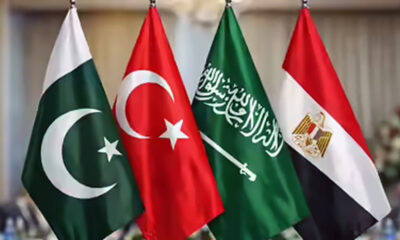
Pakistan to host talks with Saudi Arabia, Turkey, Egypt amid Iran war diplomacy

Tahawol: Concerns over spread of Middle East crisis discussed

Saar: Weakening relations between Kabul and Washington discussed

High-level Uzbek delegation arrives in Kabul to boost bilateral trade

Pakistani military jet downed in Afghanistan’s Jalalabad, pilot captured alive

Afghan Air Force conducts airstrikes in Islamabad, other cities

Prominent Muslim scholar issues fatwa calling for Afghanistan-Pakistan ceasefire

Afghan air force strikes key Pakistani military installations in retaliatory operation

IEA: Special circle in Pakistan has launched mission to destabilize region
Tahawol: Concerns over spread of Middle East crisis discussed
Saar: Weakening relations between Kabul and Washington discussed

Exclusive interview with Indrika Ratwatte, Deputy UN Special Representative for Afghanistan

Tawsia: Efforts to boost Afghanistan’s domestic production and economic diplomacy

Tahawol: Discussion on day 27 of Iran–US war
-
 Latest News3 days ago
Tajikistan shifts stance on Afghanistan amid rising border tensions
-
 Latest News5 days ago
Around 2.3 million tourists visited Afghanistan’s recreational areas during Eid: Ghufran
-

 Sport5 days ago
Afghanistan squad hit by withdrawals ahead of AFC Asian Cup Qualifiers
-
 Latest News5 days ago
Islamic Emirate releases American prisoner Dennis Coyle
-

 Latest News2 days ago
Russia deems US military presence in Afghanistan unacceptable
-
 Latest News4 days ago
Two civilians killed, eight injured in fresh shelling by Pakistan in Kunar
-
 Latest News2 days ago
IEA says Iranian drivers no longer need visas to enter Afghanistan
-
 Regional5 days ago
US allies in Middle East ‘edging closer’ to joining conflict