
Latest News
Death toll from Ida remnants rises to 65 in US

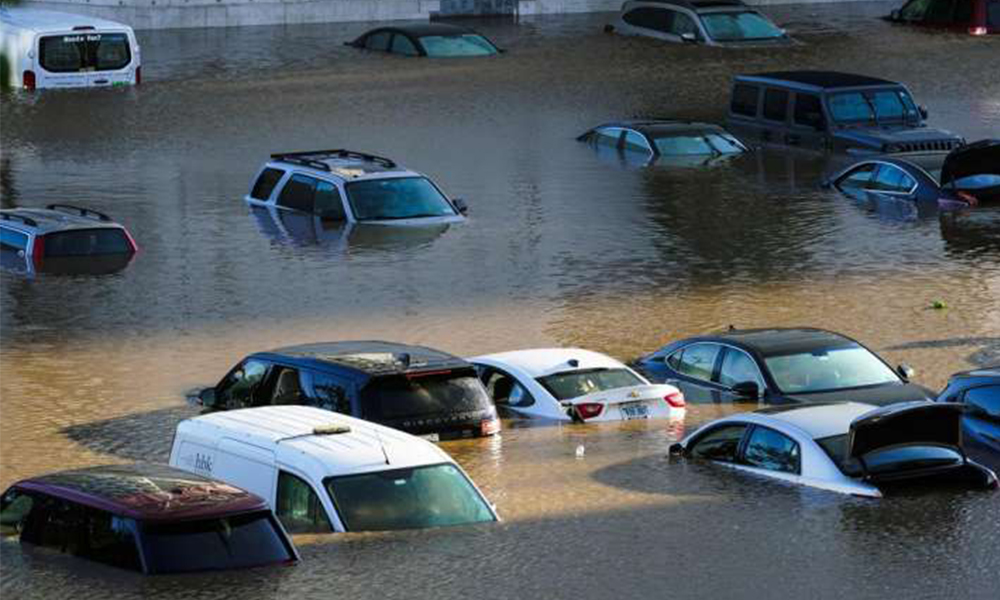
Torrential rains, floods, and tornadoes triggered by Storm Ida remnants claimed at least 65 lives across the United States as of Saturday, U.S. media reported.
Storm Ida also caused damage to residential buildings and infrastructures and led to water and power outages. Under its impact, some hard-hit areas of the United States have yet to return to normal life.
Ida remnants dumped rain at sometimes unprecedented rates on Wednesday night in the region, triggering floods that poured into subway stations and submerged homes and vehicles on highways.
Parts of New Jersey are still recovering from Ida’s impact. Earlier, New Jersey Governor Phil Murphy said the state was still not out of the woods, and his biggest concern lies in the further response to the still-high water levels and damages from Ida.
Infrastructures and residential buildings were destroyed in parts of New Jersey, with some residents saying their neighborhoods were almost completely destroyed by Ida.
New York state was also one of the hardest hit by Ida, with heavy rains submerging many parts of the city and flooding into low-lying areas.
U.S. media reported that at least 11 people, mostly immigrants and low-income groups, were killed when floodwaters submerged basement apartments in New York City.
The situation in Louisiana also remains grim. Local life is still not back to normal days after the storm. Statistics showed that over one million households in the state have suffered power outages, and the daily water supply to 600,000 people has been affected.
In addition, some nursing homes in Louisiana were reported to have failed to evacuate residents in time, and staff members even disappeared before the storm, leaving some elderly residents waiting for help without water or power.
At least six nursing home residents died after being evacuated, and their deaths are still under investigation, according to local media.
Many Americans expressed strong dissatisfaction and anger over the government’s poor response to the storm. Some accused the government of slow response and lack of an effective emergency plan. Others believed some lives could have been saved if the government had declared a state of emergency earlier.
Analysts believed that the massive loss of property and lives caused by Ida showed the dangerously old public infrastructures in New York and elsewhere are in urgent need of improvement.
Jonathan Bowles, executive director of the Center for an Urban Future, a public policy think tank, said in an interview that New York City’s infrastructures had not been able to keep up with population growth over the past few decades, let alone with increasingly violent storms and sea level rise from climate change.
Nicole Gelinas, an urban economics expert at the Manhattan Institute, said that New York City’s infrastructures can’t handle tens of centimeters of rainfall dumped in just a few hours. She added that short periods of heavy rainfall could clog sewer drains, and there is not enough green space to help absorb it.
“So some of these avenues, they become canals when there’s a big storm,” the expert said.
Officials in New York and New Jersey acknowledged Friday that state governments need to improve infrastructures and better prepare for extreme weather events.
New York Governor Kathy Hochul said the loss of lives from Ida highlighted weaknesses in the state’s disaster notification system, including a lack of notification in different languages.
New York City Mayor Bill de Blasio announced a series of initiatives to tackle extreme weather events, including more aggressive travel bans, and measures to guide residents off the streets ahead of a storm and evacuate people living in vulnerable spaces like basement apartments.
New Jersey Governor Phil Murphy also admitted the state had a lot of work to do to adapt to climate change.
Storm Ida landed on Aug 29, the 16th anniversary of Hurricane Katrina’s destructive strike, tying with 2020’s Hurricane Laura and the Last Island Hurricane of 1856 as the strongest ever to hit Louisiana. It was downgraded to a tropical depression on Monday afternoon and moved inland with torrential rain.












Kazakhstan’s Foreign Minister Mukhtar Tileuberdi has called for pragmatic and coordinated international engagement with Afghanistan, saying the country’s long-term stability is closely linked to the security and sustainable development of Central Asia.
Speaking during the general debate of the 81st session of the United Nations General Assembly in New York on Friday, Tileuberdi said humanitarian assistance to Afghanistan remains essential but alone cannot break the cycle of poverty, displacement and dependency.
He said Kazakhstan supports a “pragmatic, coordinated and step-by-step” approach to international engagement with Afghanistan, with the United Nations playing a central role.
Tileuberdi also said Kazakhstan is working with the UN to operationalize the United Nations Regional Centre for the Sustainable Development Goals for Central Asia and Afghanistan in Almaty.
He said the success of the centre should be measured by the results and assistance it delivers to the region.


Saar: Concerns over Pakistan’s political crisis discussed

Afghanistan Champions League: Omar Zawak Herat beat Toofan Herat 1-0

Blast in Pakistan’s Dera Ismail Khan kills 11, injures 30

Ariana Afghan Airlines increases Kabul-Delhi cargo flights

Khalilzad questions Pakistan’s commitment to Afghan welfare

Saudi energy group signs major Afghanistan deals covering gas exploration and pipeline plans

Trump floats idea of renaming Atlantic or Pacific Ocean

US hits Egyptian bank branches with Iran sanctions as war marks six months

Nepal flood rescue mission enters critical phase as thousands remain missing

Iranian clubs to face Gulf opponents at neutral venues in Asian Champions League Elite
Saar: Concerns over Pakistan’s political crisis discussed

Exclusive interview with Abdul Latif Mansoor, Minister of MRRD

Tawsia: Overview of Afghanistan’s iron mines

Tahawol: Discussion on fresh Pakistani airstrikes on Afghanistan

Saar: Calls for international support for Afghanistan discussed
-

 World5 days ago
CNN, MS NOW and Politico sue Trump, challenging White House ban
-

 Latest News3 days ago
Ariana Afghan Airlines ranks seventh among 45 Central Asian airlines
-

 Latest News4 days ago
UN reiterates call for respect for international law after Kunar airstrikes
-

 Latest News5 days ago
Khalilzad condemns Pakistan airstrikes, says current strategy is not working
-

 Regional3 days ago
US and Iran hold first talks since June after Trump’s ‘annihilation’ threat
-

 Latest News3 days ago
Silk Road highway in Wakhan corridor now reaches the China border
-

 Latest News4 days ago
Afghan Official: Pakistan’s airstrikes will not go unanswered
-

 Sport4 days ago
Afghan boxing referee heads to China for international festival