
World
Death toll from strike on Ukraine apartment block rises to 40

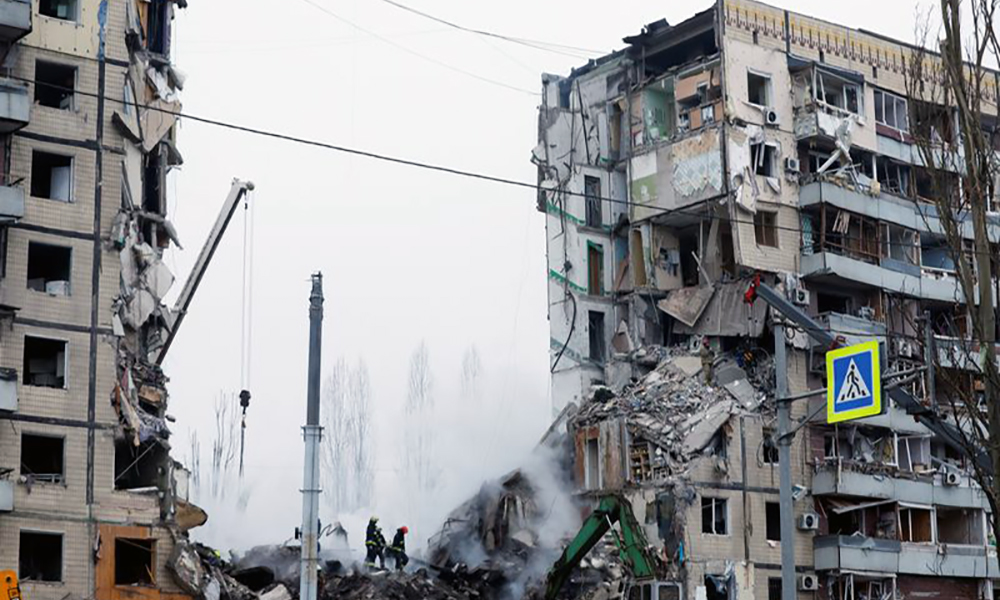
The death toll from a Russian missile strike in the Ukrainian city of Dnipro rose to 40 on Monday, with dozens more missing, making it the deadliest civilian incident of Moscow’s three-month campaign of firing missiles at cities far from the front, Reuters reported.
Ukraine says the mass civilian deaths, which it describes as terrorism, demonstrate why it needs more weapons to defeat Russian forces 11 months after they invaded. Russia denies intentionally targeting civilians.
German Defence Minister Christine Lambrecht resigned on Monday as her government came under rising pressure to let allies send Ukraine German heavy tanks, at the start of what looks like a pivotal week for Western plans to further arm Kyiv.
Officials acknowledged little hope of finding anyone else alive in the rubble of Saturday’s attack in the central city of Dnipro, but President Volodymyr Zelenskiy said the rescue operation would go on “as long as there is even the slightest chance to save lives”.
“Dozens of people were rescued from the rubble, including six children. We are fighting for every person!” Zelenskiy said in an overnight televised address.
Zelenskiy, speaking later in his nightly video address, said the Dnipro attack underscored the need to speed up decisions on arms supplies and “coordinate all the efforts of the coalition defending Ukraine and freedom.” He expects key decisions by Ukraine’s allies when they meet in Germany later this week, he added.
Dnipro was in mourning on Monday, read the report.
A serviceman in uniform laid flowers and sobbed, clutching his head in grief next to an impromptu shrine to the dead at a bus stop across the street from a gaping hole where the apartment block had stood.
The missile flattened all nine storeys in a section of the long concrete housing unit. Rescue workers shovelled through debris more than 48 hours after the attack, Reuters reported.
“We all live in buildings like this one and we all imagine what if it happened to us. It is awful,” said Polina, 28, a resident of the neighbourhood.
Russia, which since October has been conducting large scale strikes on Ukrainian cities mainly targeting power generation infrastructure, said it was not to blame for the destruction in Dnipro as it was caused by Ukrainian air defences. Kyiv says the apartment building was hit by a Russian ship-to-ship missile, a type that Ukraine does not have the capability to shoot down.
At least 40 people were killed in the attack with 30 still unaccounted for, city official Gennadiy Korban said. He said 75 people were wounded, including 14 children, Reuters reported.
U.N. Secretary-General Antonio Guterres strongly condemned the Dnipro strike., a U.N. spokesperson said. “Attacks against civilians and civilian infrastructure violate international humanitarian law. They must end immediately,” the spokesperson said.
Tens of thousands of people have been killed since Russian troops invaded Ukraine on Feb. 24, and about a quarter of the population have fled their homes.








World
Trump to hit Iran harder if Tehran does not accept defeat, White House says
Talks with Iran were still under way, Leavitt said. “Talks continue. They are productive, as the president said on Monday, and they continue to be,” she added.

President Donald Trump will hit Iran harder if Tehran fails to accept that the country has been “defeated militarily,” White House press secretary Karoline Leavitt said on Wednesday.
“President Trump does not bluff and he is prepared to unleash hell. Iran should not miscalculate again,” Leavitt told reporters in a press briefing.
“If Iran fails to accept the reality of the current moment, if they fail to understand that they have been defeated militarily, and will continue to be, President Trump will ensure they are hit harder than they have ever been hit before,” she said.
As the joint U.S.-Israeli war on Iran entered its fourth week, there have been efforts by multiple countries such as Pakistan, Turkey and Egypt to mediate.
Iran is still reviewing a U.S. proposal to end the war, despite an initial response that was negative, a senior Iranian official told Reuters on Wednesday, indicating that Tehran had so far stopped short of rejecting it outright.
Talks with Iran were still under way, Leavitt said. “Talks continue. They are productive, as the president said on Monday, and they continue to be,” she added.
Citing unnamed sources, media outlets on Tuesday reported that Washington sent Tehran a 15-point plan on ending the war. Leavitt said on Wednesday that elements of the reports were not fully accurate, but she did not provide specifics.
“The White House never confirmed that full plan. There are elements of truth to it, but some of the stories I read were not entirely factual, so I am not going to negotiate on behalf of the president here at the podium,” Leavitt said.
Global equity markets regained some ground while oil prices dipped on Wednesday after the reports about the plan, with investors hoping for an end to a war that has disrupted global energy supplies and raised inflation concerns.
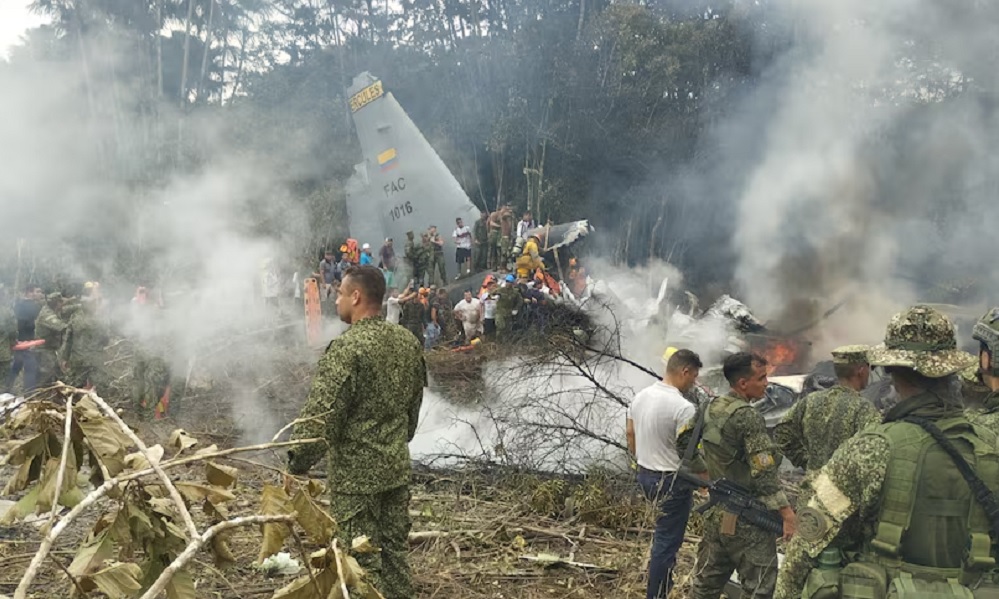
A Colombian military plane crashed in a takeoff disaster on Monday, killing 66 people as rescuers shuttled dozens of survivors to nearby hospitals and searched for four who were still missing, according to a top official.
The Lockheed Martin-built Hercules C-130 transport plane was carrying 128 people, including 11 Air Force members, 115 army personnel and two national police officers, according to Hugo Alejandro Lopez, head of the nation’s armed forces, Reuters reported.
The death toll was nearly double that of the previous figure given by authorities, who continued search and recovery efforts at the site of the deadly crash.
The accident occurred as the plane was taking off from Puerto Leguizamo, on the border with Peru, Defense Minister Pedro Sanchez said on X.
The plane was believed to have suffered an impact near the end of the runway as it was taking off, firefighter Eduardo San Juan Callejas told Caracol, with a wing of the plane later clipping a tree as it was plummeting.
The crash caused the plane to catch fire and detonate some sort of explosive devices on board, he added.
Residents of the remote area were the first to pull out survivors, with videos showing men speeding down a dirt road with wounded soldiers on the back of their motorcycles.
Military vehicles later arrived, though authorities said the crash site was difficult to reach, impeding rescue efforts.
Lopez said that 57 of the survivors had been hospitalized, with 30 of them in non-serious condition at a military clinic.
MODERNIZING THE MILITARY
President Gustavo Petro, in the twilight of his administration, on Monday criticized bureaucratic obstacles for delaying his plans to modernize the military.
“I will grant no further delays; it is the lives of our young people that are at stake,” he said in a post on X. “If civilian or military administrative officials are not up to this challenge, they must be removed.”
Several candidates in Colombia’s upcoming May 31 presidential election offered condolences and called for an investigation.
A spokesperson for Lockheed Martin said the company was committed to helping Colombia as it investigates the incident.
Hercules C-130 planes were first launched in the 1950s and Colombia acquired its first models in the late 1960s. It has more recently modernized some older C-130s with newer models sent from the U.S. under a provision that allows for the transfer of used or surplus military equipment.
Hercules C-130s are frequently used in Colombia to transport troops as part of the military’s operations amid a six-decade-long internal conflict that has claimed more than 450,000 lives.
The tail number of the plane that crashed on Monday matches that of the first of three planes delivered by the U.S. to Colombia in recent years.
At the end of February, another Hercules C-130 belonging to the Bolivian Air Force crashed in the populous city of El Alto, barely missing a residential block.
More than 20 people died in that incident and another 30 were injured, and banknotes from the plane’s cargo scattered around the crash site, prompting clashes between residents and security forces.
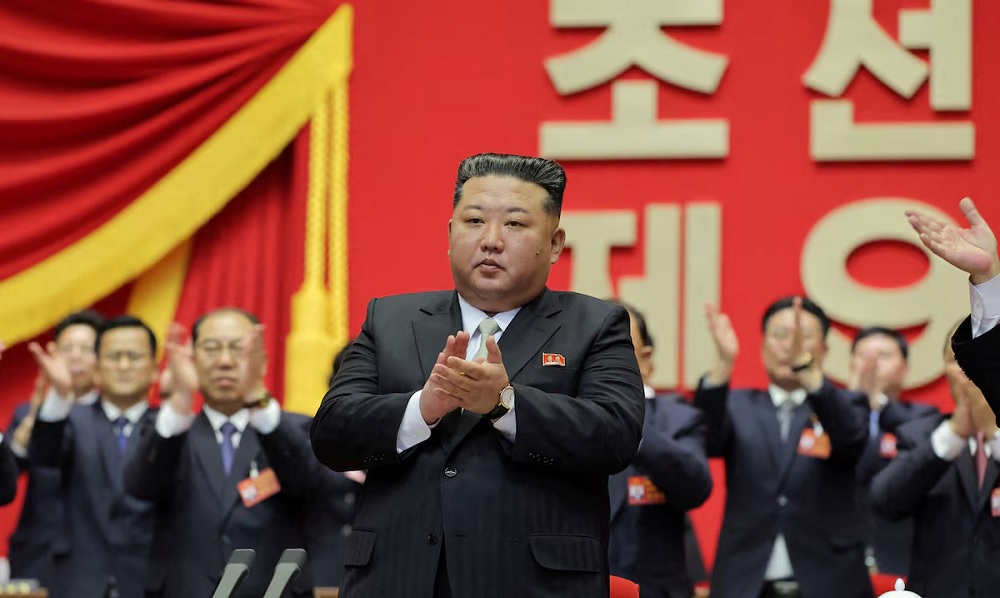
North Korean leader Kim Jong Un was reappointed as president of state affairs, state media KCNA reported on Monday, after the isolated nation convened the first session of its Supreme People’s Assembly a day earlier.
The meeting in Pyongyang will discuss amendments and supplements to the socialist constitution, as well as the election of the chairman of the State Affairs Commission and other state leadership bodies, Reuters reported.
The assembly, North Korea’s rubber-stamp legislature that formally approves state policy, typically meets following a ruling Workers’ Party Congress to turn party decisions into law.
The meeting will also review the country’s economic five-year plan announced at the ninth party congress held in February, KCNA said.
Attention has been focused on whether Pyongyang will revise its constitution to formalise leader Kim Jong Un’s “two hostile states” policy toward South Korea.
In recent years, Kim has abandoned Pyongyang’s long-standing goal of peaceful reunification and redefined the South as a hostile state.
Kim’s powerful sister, Kim Yo Jong, was notably absent from KCNA’s list of members of the State Affairs Commission, the country’s highest leadership body, on which she had served since 2021.
South Korea’s Unification Ministry said it was looking into why she was no longer listed, but analysts said the move did not necessarily signal a loss of influence.
“Her absence suggests not a decline in status but a strategic division of roles,” said Lim Eul-chul, a professor at Kyungnam University, adding that the younger Kim continues to wield real power as a department director in the ruling Workers’ Party, where she may play a higher-level, party-centred role coordinating policy.


Tahawol: Discussion on day 27 of Iran–US war

Turkey invites IEA’s commerce minister to Antalya Diplomacy Forum

Saar: Islamic Emirate confident of Durand Line control

Afghan, Malaysian PMs discuss situation between Kabul and Islamabad

Myanmar trump Afghanistan 2-1 in Asian Cup Qualifier

Pakistani military jet downed in Afghanistan’s Jalalabad, pilot captured alive

Afghan Air Force conducts airstrikes in Islamabad, other cities

Prominent Muslim scholar issues fatwa calling for Afghanistan-Pakistan ceasefire

Afghan air force strikes key Pakistani military installations in retaliatory operation

IEA: Special circle in Pakistan has launched mission to destabilize region
Tahawol: Discussion on day 27 of Iran–US war
Saar: Islamic Emirate confident of Durand Line control

Tahawol: Efforts to release Mohammad Rahim from Guantanamo Bay Detention Camp

Saar: End of ceasefire between Afghanistan-Pakistan reviewed

Tahawol: Escalating threats between Iran-US discussed
-
 Latest News5 days ago
Deadly violence likely without dialogue between Afghanistan and Pakistan: ICG
-
 Latest News4 days ago
Pakistan seeks Russian mediation to resolve Afghanistan tensions
-

 Sport5 days ago
Afghanistan secures third place at 2026 World Kokpar Championship
-

 International Sports5 days ago
FIFA World Cup 2026: Play-Off Tournament takes centre stage
-
 Business5 days ago
Afghani strengthens nearly 10% against US dollar amid banking sector reforms
-
 Latest News4 days ago
World must re-engage to prevent all-out Afghanistan-Pakistan war: Financial Times
-

 Sport3 days ago
Afghanistan squad hit by withdrawals ahead of AFC Asian Cup Qualifiers
-

 Latest News3 days ago
Around 2.3 million tourists visited Afghanistan’s recreational areas during Eid: Ghufran