
World
Economic shock of Middle East war to cast shadow over IMF, World Bank meetings
But economists are urging governments to use only targeted and temporary steps to ease the pain of higher prices for their citizens, since broader measures could fuel inflation.


Top finance officials from around the world will convene in Washington this week under the shadow of the war in the Middle East, which has delivered a third major shock to the global economy after the COVID pandemic and Russia’s full-scale invasion of Ukraine in 2022, Reuters reported.
Top International Monetary Fund and World Bank officials last week said they would downgrade their forecasts for global growth and raise their inflation predictions as a result of the war, warning that emerging markets and developing countries will be hit hardest by higher energy prices and supply disruptions.
Before the Iran war broke out on February 28, both institutions had expected to lift their growth forecasts given the resilience of the global economy – even in the wake of major tariffs imposed by U.S. President Donald Trump beginning last year. But the war has delivered a series of shocks that will slow progress on recovering growth and beating back inflation.
The World Bank’s baseline estimate now projects growth in emerging markets and developing economies of 3.65% in 2026, down from 4% in October, but sees that number dropping as low as 2.6% if the war lasts longer. Inflation in those countries was now forecast to hit 4.9% in 2026, up from the previous estimate of 3%, and could spike as high as 6.7% in the worst case.
The IMF warned last week that about 45 million additional people could also face acute food insecurity if the war persists and continues to disrupt fertilizer shipments needed now.
The IMF and World Bank are racing to respond to the latest crisis and support vulnerable countries at a time when public debt levels have reached record levels and budgets are tight.
The IMF said it expects demand for $20 billion to $50 billion in near-term emergency support to low-income and energy-importing countries. The World Bank has said it could mobilize some $25 billion through crisis response instruments in the near-term, and up to $70 billion in six months, as needed.
But economists are urging governments to use only targeted and temporary steps to ease the pain of higher prices for their citizens, since broader measures could fuel inflation.
“Leadership matters, and we’ve come through crises in the past,” World Bank President Ajay Banga told Reuters, lauding work on fiscal and monetary controls that had helped economies weather previous storms. “But this is a shock to the system.”
Countries now face a tough balancing act managing inflation while keeping an eye on growth and the longer-term challenge of creating enough jobs for the 1.2 billion people who will reach working age in developing countries by 2035, read the report.
IMF and World Bank also face a far different global landscape with tensions running high between the United States and China, the world’s largest economies, and the Group of 20 major economies hobbled in its ability to coordinate a response.
The United States currently holds the rotating presidency of the G20, which also includes Russia and China, but it has excluded another member – South Africa – from participation, complicating the group’s ability to coordinate on this crisis.
“You’re trying to operate on consensus when there’s no consensus in the world right now on anything,” said Josh Lipsky, chair of international economics at the Atlantic Council.
Lipsky said statements by the IMF, World Bank and other multilateral lenders about their readiness to support countries hit hard by the war were clearly aimed at reassuring markets.
“It’s a signal to private creditors. This is not a time to flee countries that are in problematic waters. They will have support from the multilateral development banks and the international financial institutions. This is not going to be COVID. This is something that we can handle.”
Mary Svenstrup, a former senior U.S. Treasury official now with the Center for Global Development, said many emerging market and developing economies entered the crisis worse off than just a few years ago, with lower buffers, higher debt vulnerabilities and lower reserves.
“We need to have this crisis be a catalyst for IMF stakeholders to really rethink how the Fund supports vulnerable countries with the recognition that we’re going to be seeing more global shocks,” she said. “We can’t ask them to sacrifice growth and development for the sake of rebuilding buffers.”
Svenstrup said countries should pursue more ambitious reforms if they received fresh funds. “There probably does need to be more financial support from the (international financial institutions) but it needs to be affordable, and it needs to be in the context of reform programs and potentially broader debt relief,” she said.
Martin Muehleisen, a former IMF strategy chief who is now with the Atlantic Council, agreed, saying the IMF should work with donor countries to accelerate debt restructuring for borrowers and “get them off the debt cycle.” New lending should be tied to a credible debt-reduction road map, he said.
Eric Pelofsky, vice president at the Rockefeller Foundation, said low-income and lower middle-income countries paid twice the amount to service their debts in 2025 than before COVID, limiting funds for education, health care and other critical social programs. Half were now in or near debt distress, up from a quarter, just a few years ago, Reuters reported.
“This new conflict threatens any recovery that occurred since the pandemic or the Ukraine war, and it takes countries that have basically been treading water, trying to stay away from default, and keeps them in a long term debt-growth-investment trap,” he said.





World
At least 30 dead in stampede at Haiti’s historic Laferriere Citadel
The stampede occurred at the Laferriere Citadel, an early-19th-century fortress built shortly after Haiti’s independence from France.
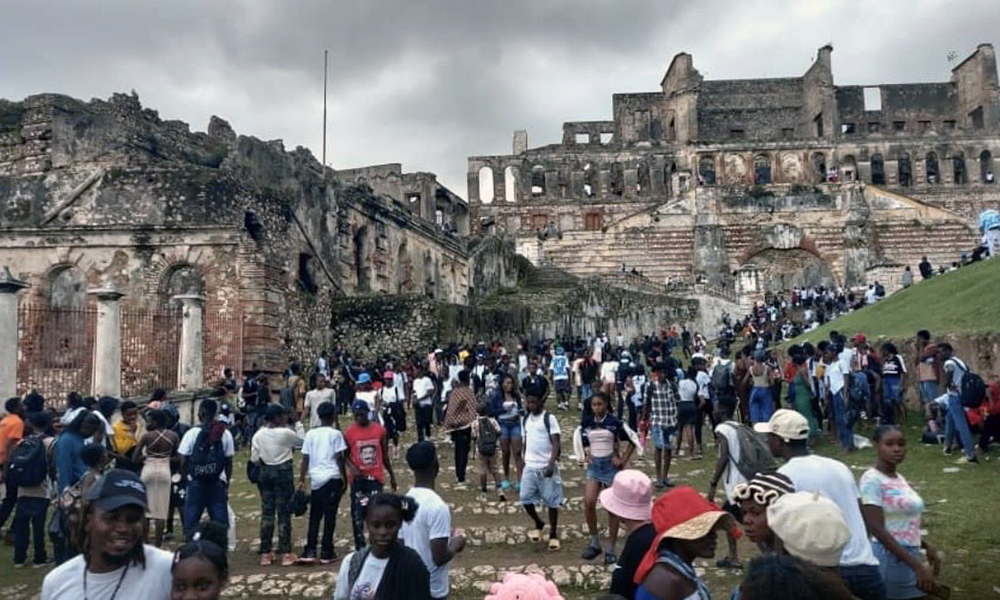
At least 30 people were killed on Saturday in a stampede in the northern countryside of Haiti, authorities said, warning that the death toll could rise, Reuters reported.
Jean Henri Petit, head of Civil Protection for Haiti’s Nord Department said the stampede occurred at the Laferriere Citadel, an early-19th-century fortress built shortly after Haiti’s independence from France.
One of Haiti’s most popular tourist attractions, the fortess was packed with students and visitors on Saturday who had come to participate in the annual celebration of the UNESCO World Heritage site, read the report.
World
US, Iran teams in Pakistan for peace talks amid doubts over Lebanon, sanctions
The Iranian delegation, led by parliamentary Speaker Mohammad Baqer Qalibaf and Foreign Minister Abbas Araqchi, arrived on Friday.
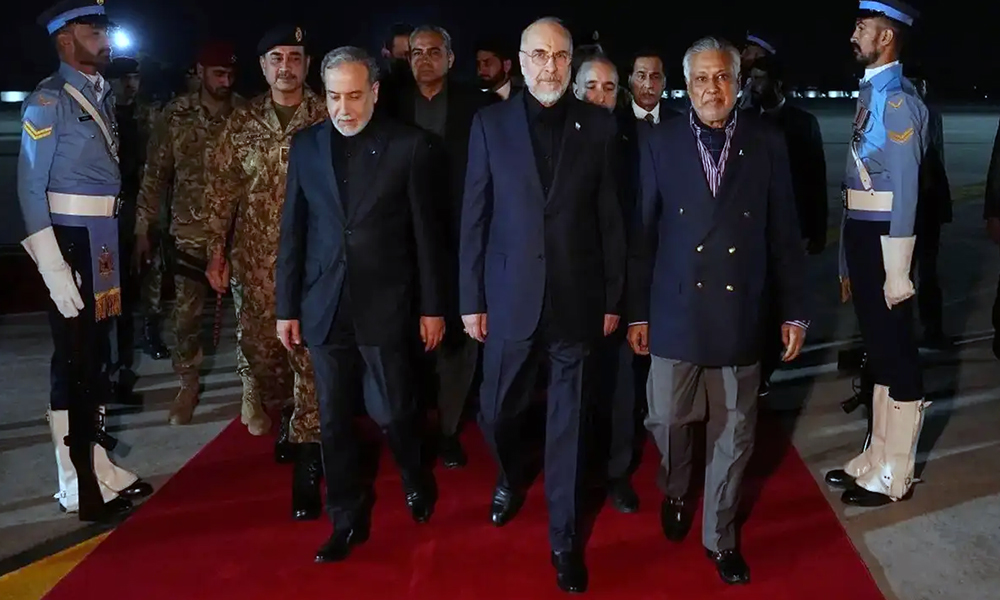
Senior U.S. and Iranian leaders were in the Pakistani capital Islamabad on Saturday for negotiations to end their six-week-old war, although Tehran threw the talks into doubt by saying they could not begin without commitments on Lebanon and sanctions, Reuters reported.
The U.S. delegation, led by Vice President JD Vance and including President Donald Trump’s special envoy Steve Witkoff and son-in-law Jared Kushner, landed in two U.S. Air Force planes at an air base in Islamabad on Saturday morning, where they were received by Pakistan’s army chief, Field Marshal Asim Munir, and Foreign Minister Ishaq Dar.
The Iranian delegation, led by parliamentary Speaker Mohammad Baqer Qalibaf and Foreign Minister Abbas Araqchi, arrived on Friday.
These will be the highest-level U.S.-Iran talks since the Islamic Revolution of 1979. If the two sides hold face-to-face negotiations as expected, they would be first direct talks since 2015, when they reached a deal on Iran’s nuclear programme.
Trump scrapped the nuclear deal in 2018 during his first term in office. That year, Iran’s then-Supreme Leader Ayatollah Ali Khamenei – who was killed at the start of the war six weeks ago – banned further direct talks between U.S. and Iranian officials.
Qalibaf said on X that Washington had previously agreed to unblock Iranian assets and to a ceasefire in Lebanon, where Israeli attacks on Iran-backed Hezbollah militants have killed nearly 2,000 people since the start of the fighting in March. He said talks would not start until those pledges were fulfilled.
Israel and the U.S. have said the Lebanon campaign is not part of the Iran-U.S. ceasefire.
Iran’s state broadcaster said the Iranian delegation would meet Pakistani Prime Minister Shehbaz Sharif around noon (0700 GMT) to determine the timing and manner of “possible negotiations”.
Qalibaf said Iran was ready to reach a deal if Washington offered what he described as a genuine agreement and granted Iran its rights, Iranian state media reported.
The White House did not immediately comment on the Iranian demands, but Trump posted on social media that the only reason the Iranians were alive was to negotiate a deal.
“The Iranians don’t seem to realize they have no cards, other than a short term extortion of the World by using International Waterways. The only reason they are alive today is to negotiate!” he said.
Vance, speaking as he headed to Pakistan, said he expected a positive outcome but added: “If they’re going to try to play us, then they’re going to find the negotiating team is not that receptive.”
Preliminary discussions have been separately held by Pakistani officials with advance teams from both sides, sources in Islamabad said.
Iran’s semi-official Tasnim news agency said these included 70 members from Tehran, including technical specialists in economic, security and political fields as well as media personnel and support staff. About 100 members of an advance U.S. team were in the city, a Pakistani government source said.
Pakistan’s Dar said he hoped the U.S. and Iran would engage in constructive talks to reach a “lasting and durable solution to the conflict”, according to a statement from Pakistan’s foreign ministry.
A Pakistani source said it was too early to say whether talks would end on Saturday, adding there was no time limit for negotiations.
Islamabad was under an unprecedented lockdown ahead of the talks with thousands of paramilitary personnel and army troops on the streets, read the report.
Trump announced a two-week ceasefire in the war on Tuesday, which has halted U.S. and Israeli airstrikes on Iran.
But it has not ended Iran’s blockade of the Strait of Hormuz, which has caused the biggest-ever disruption to global energy supplies, or calmed the parallel war between Israel and Hezbollah in Lebanon.
Israeli and Lebanese officials will hold talks in Washington on Tuesday, both sides said, amid conflicting accounts on what those talks would cover.
Lebanon’s presidency said officials from the two countries had spoken by phone on Friday and agreed to discuss announcing a ceasefire and setting a start date for bilateral talks under U.S. mediation. But Israel’s embassy in Washington said the talks would constitute the start of “formal peace negotiations” and that Israel had refused to discuss a ceasefire with Hezbollah.
Tehran’s agenda at the Islamabad talks also includes demands for major new concessions, including the end of sanctions that crippled its economy for years, and acknowledgment of its authority over the Strait of Hormuz, where it aims to collect transit fees and control access in what would amount to a huge shift in regional power.
Iran’s ships were sailing through the strait unimpeded on Friday, while those of other countries remained hemmed inside.
Disruption to energy supplies has fed inflation and slowed the global economy, with an impact expected to last for months even if negotiators succeed in reopening the strait.
The hard line taken by Iran’s leaders ahead of the negotiations followed a defiant message from its new supreme leader, Ayatollah Mojtaba Khamenei, on Thursday.
Khamenei, yet to be seen in public and said to be suffering from severe facial and leg injuries sustained in the attack that killed his father, said Iran would demand compensation for all wartime damage. “We will certainly not leave unpunished the criminal aggressors who attacked our country,” he said.
Although Trump has declared victory and degraded Iran’s military capabilities, the war has not achieved many of the aims he set out at the start: to deprive Iran of the ability to strike its neighbours, dismantle its nuclear programme and make it easier for its people to overthrow their government, Reuters reported.
Iran still possesses missiles and drones capable of hitting its neighbours and a stockpile of more than 400 kg (900 pounds) of uranium enriched near the level needed to make a bomb. Its clerical rulers, who faced a popular uprising just months ago, withstood the war with no sign of organised opposition.
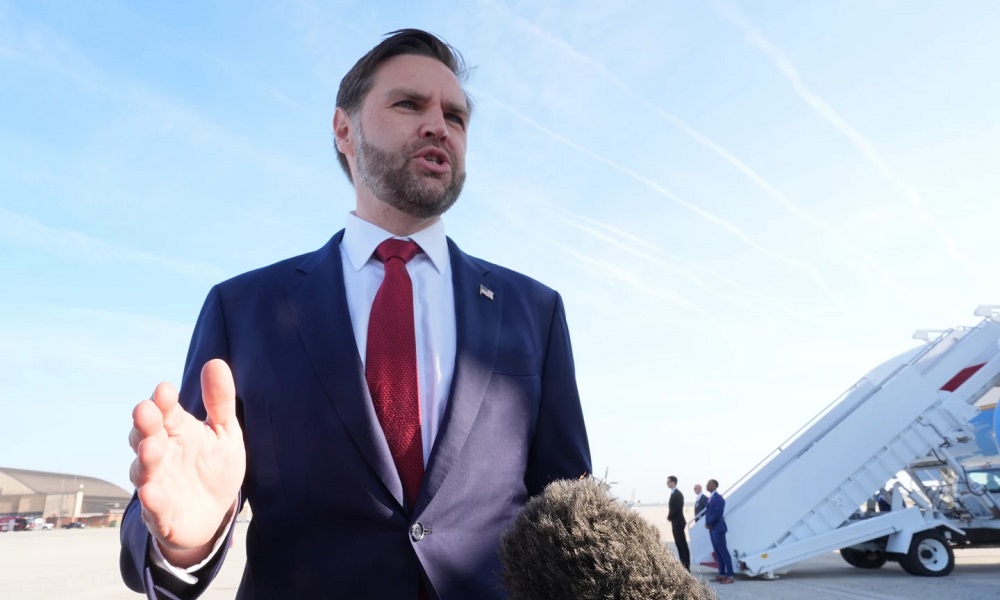
Vice President JD Vance said on Friday he was looking forward to having positive negotiations with Iran as he left for talks in Pakistan with a warning to Tehran not to “play us.”
“We’re looking forward to the negotiation. I think it’s going to be positive,” Vance told reporters before leaving Washington.
“As the president of the United States said, if the Iranians are willing to negotiate in good faith, we’re certainly willing to extend the open hand,” Vance said. “If they’re going to try to play us, then they’re going to find the negotiating team is not that receptive.”


China establishes new Xinjiang county near sensitive border region

US military says it will start blockade of all ships going to and from Iran on Monday

Economic shock of Middle East war to cast shadow over IMF, World Bank meetings

Tahawol: Failure of US–Iran talks in Islamabad discussed

Saar: Iran–US talks in Islamabad end inconclusive

IEA Supreme Leader issues Eid-ul-Fitr message urging unity and support for Islamic system

IEA supreme leader orders replacement of foreign terminology in official documents

14 Pakistani soldiers killed after military post falls along Durand line: MoD

Turkmenistan, Afghanistan discuss steps to speed up land acquisition for TAPI pipeline

IPL 2026 kicks off in under two weeks; Afghan players set to shine
Tahawol: Failure of US–Iran talks in Islamabad discussed
Saar: Iran–US talks in Islamabad end inconclusive

Tahawol: Historic US-Iran talks in Pakistan discussed

Saar: Talks between Iran and US in Pakistan discussed

Tawsia: New transit route with Tatarstan, MoU with Uzbekistan discussed
-

 Business3 days ago
Etihad Airways to expand Kabul–Abu Dhabi flights to daily service amid surging demand
-

 International Sports4 days ago
IPL 2026: Gujarat Titans edge Delhi Capitals in last-ball thriller
-
 Latest News5 days ago
Hundreds displaced as Afghanistan–Pakistan clashes deepen crisis
-
 Regional5 days ago
Pakistan PM holds 45-minute call with Iranian President
-

 International Sports4 days ago
FIFA appoints record number of match officials for 2026 World Cup
-
 Latest News4 days ago
US explores third-country resettlement for stranded Afghan allies in Qatar
-
 Regional4 days ago
Israel prepares for long conflict despite US–Iran ceasefire efforts
-
 Latest News5 days ago
Former Australian soldier to remain in custody over Afghan war crimes charges