
Latest News
End of US protected status for Afghans sparks fears of deportation
The situation has been compounded by reports that US State Department has disbanded key coordination offices involved in the resettlement and integration of Afghan refugees.

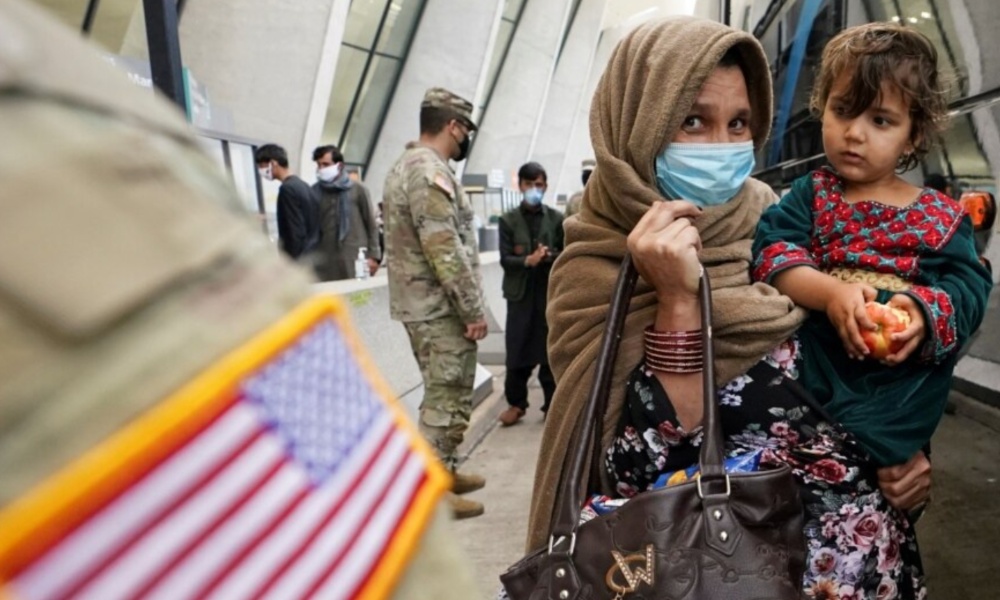
The expiration of Temporary Protected Status (TPS) for Afghan nationals in the United States on July 14 has triggered alarm among advocacy groups, legal experts, and Afghan community leaders, as thousands now face uncertainty over their legal status, employment rights, and potential deportation.
A recent decision by a U.S. federal court in Maryland rejected a petition to extend TPS protections for Afghans, a move that has left roughly 11,700 Afghan nationals—many of whom arrived following the fall of Kabul in 2021—at risk of losing the limited legal safeguards that allowed them to live and work in the country.
The situation has been compounded by reports that the U.S. Department of State has disbanded key coordination offices involved in the resettlement and integration of Afghan refugees. Sean VanDiver, founder of AfghanEvac, a volunteer network supporting Afghan evacuees, criticized the rollback of protections, warning of broader moral and legal implications.
“Immigration channels for Afghans are no longer functioning as they once did,” VanDiver said. “This is not merely a political decision—it’s a moral collapse.”
Human Rights Watch also condemned the expiration of TPS, cautioning that many Afghan families could face devastating consequences, including forced separation from U.S.-born children, homelessness, and serious psychological and security risks if deported. The group has urged the Biden administration to immediately reinstate and expand protected status for Afghan nationals.
Advocates argue that terminating TPS without viable alternative pathways, such as permanent residency or humanitarian parole extensions, undermines the United States’ responsibility to those who fled Taliban rule under U.S. protection. Many TPS holders are former interpreters, U.S. government allies, or individuals at risk of persecution in Afghanistan.
Legal experts warn that without swift executive or congressional intervention, thousands of Afghans who rebuilt their lives in the U.S. could now face removal proceedings and loss of livelihoods.
“This is a test of whether the U.S. honors its promises—not just in wartime, but in its aftermath,” said one immigration attorney involved in Afghan refugee cases.
As the deadline approaches, pressure is mounting on the White House and Congress to offer a long-term solution that reflects the scale of America’s engagement in Afghanistan and its lasting impact on Afghan civilians.






An Afghan man accused of murdering a Scottish charity worker and hiding her body in a suitcase has appeared before a court in Athens.
The body of Elisabeth-Jane Ross, 38, from Edinburgh, was discovered by a homeless man inside an abandoned building in the Kypseli district of the Greek capital on July 18.
The suspect, widely identified by Greek media as Sharif Ahmadzai, 26, an Afghan boxer, appeared before the court on Wednesday under heavy police escort. Greek authorities have not officially confirmed his identity.
The hearing was held behind closed doors, during which the suspect was assigned a court-appointed lawyer. He is expected to return to court on Thursday for a further hearing.
According to Greek police, the suspect was initially arrested on illegal weapons possession charges before prosecutors filed additional charges of murder and theft. Investigators allege he stole more than €10,000 from Ross’s bank accounts using her bank cards after her death.
Police said the suspect has admitted moving Ross’s body but denies killing her.
Investigators identified the suspect after reviewing surveillance footage recorded near the abandoned building where the suitcase containing Ross’s body was found.
Authorities also allege that after Ross’s death, the suspect used her mobile phone to send messages to her friends and family before switching it off.
Greek media reports further claim he later purchased another phone and sent messages to Ross’s friends in Athens, including his wife, while posing as an unnamed jihadist who falsely claimed responsibility for the killing because of Ross’s religion.
According to local reports, the suspect’s wife became suspicious after discovering he had not returned home and later tracked his phone to the apartment where Ross had been staying before her disappearance.
The investigation into the killing is continuing.
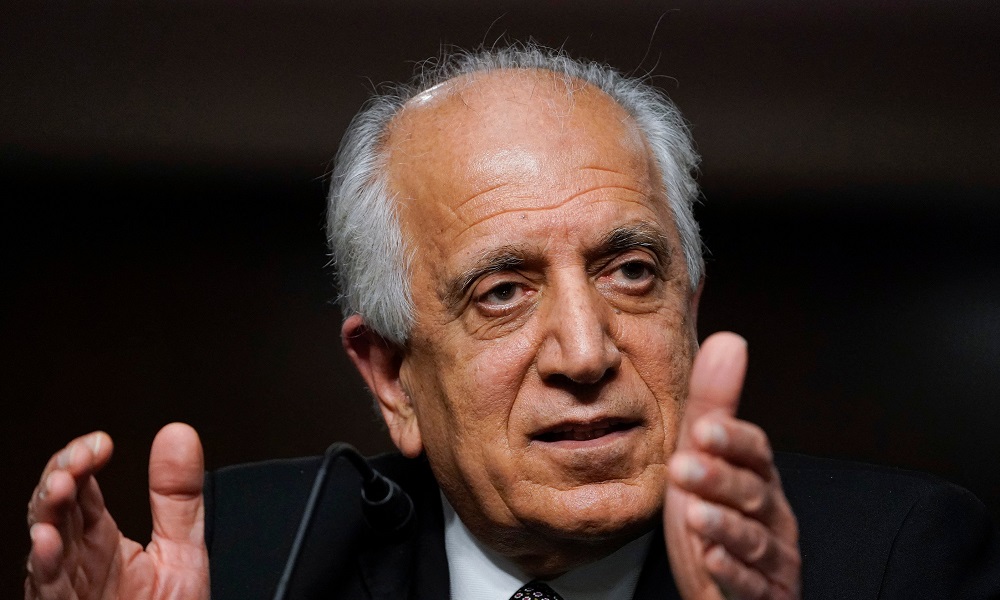
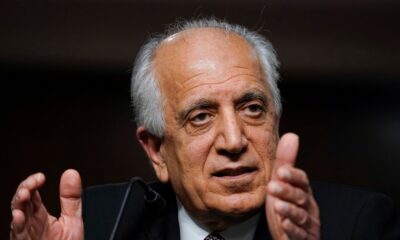
Former US special envoy for Afghanistan, Zalmay Khalilzad, has criticised Pakistan’s current situation three years after the imprisonment of former Prime Minister Imran Khan, saying the country has become worse off and needs a major political reset.
In a post on X marking the third anniversary of Khan’s imprisonment, Khalilzad questioned whether the move had benefited Pakistan, despite some foreign policy achievements.
“Are Pakistanis and the country better off than they were three years ago? The answer is clearly no,” Khalilzad wrote.
He said Pakistan’s economy was facing an “unsustainable” crisis, with the government struggling to secure financial assistance. He also pointed to worsening security conditions, saying Balochistan was experiencing a major insurgency, while Pakistan-administered Kashmir and Khyber Pakhtunkhwa were also facing violence.
Khalilzad further argued that Pakistan’s foreign relations had suffered setbacks, particularly with Afghanistan and India.
“Overall, the situation is dire and a reset is required,” he said, adding that such a reset should include “internal reconciliation.”
Imran Khan, Pakistan’s former prime minister and leader of the Pakistan Tehreek-e-Insaf (PTI) party, has been imprisoned since August 2023 after being convicted in several cases, which his supporters describe as politically motivated. Pakistani authorities have rejected those claims.
Latest News
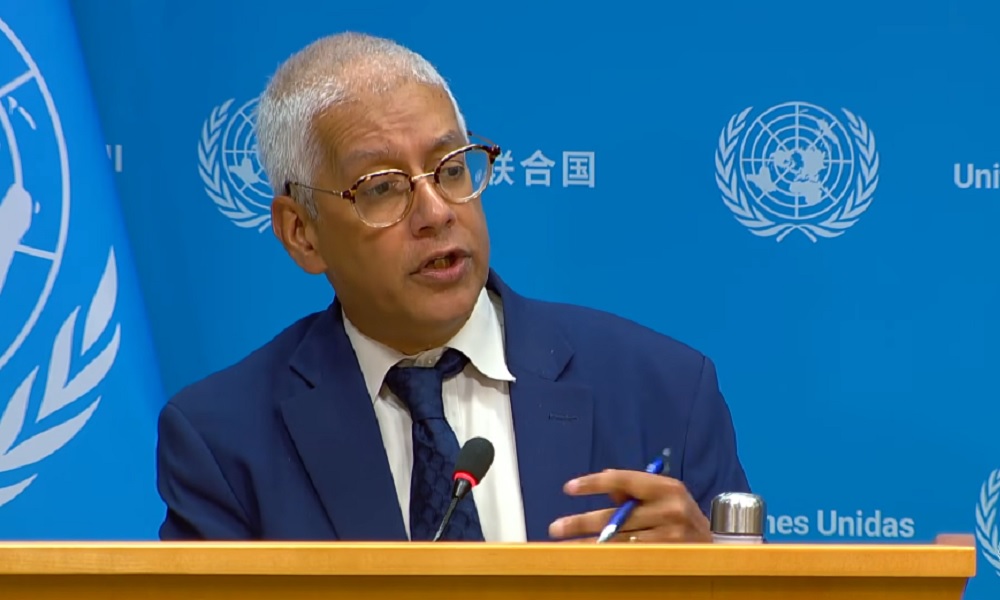
UN: No movement among member states to recognize IEA government
Meanwhile, the UN Office for the Coordination of Humanitarian Affairs (OCHA) warned that millions of Afghans continue to face severe humanitarian challenges despite improvements in the country’s overall security situation.


Strong El Niño could push 49 million more people into acute hunger, UN agency says

Afghan boxer appears in Greek court over death of Scottish woman

Khalilzad says Pakistan needs ‘reset’ amid economic crisis and rising instability

Afghanistan aim for winning start against Ireland

UN: No movement among member states to recognize IEA government

Pakistan’s governance system has ‘collapsed’: Mohsin Naqvi

India offers 1,000 online scholarships for Afghan students for 2026-27 academic year

Cricket world pays tribute to Afghanistan fast bowler Shapoor Zadran

Turkey spent over $120 million to prepare airport for Qatar-donated U.S. presidential aircraft

Thousands pay final respects as Afghan cricketer Shapoor Zadran buried in Kabul

Tahawol: China-Pakistan talks on Afghanistan security reviewed

Saar: Discussion on Iran’s warning to the US

Tahawol: Worsening security crisis in Khyber Pakhtunkhwa

Saar: Trump’s claim over Iran talks

Tahawol: US cancelling strikes on Iran
-

 Sport2 days ago
Only two days to go before Afghanistan and Ireland begin ODI series
-
 Latest News4 days ago
Uzbek president calls for Central Asia-Afghanistan development space
-

 World4 days ago
US to make visa bond program permanent for people from dozens of countries
-

 Sport3 days ago
AFC confirms clubs for 2026/27 competitions; draw set for August 18
-
 World5 days ago
Spain says migrant surge into Ceuta has eased as thousands return to Morocco
-

 Latest News5 days ago
Israel and US consider Iran land blockade
-
 Regional3 days ago
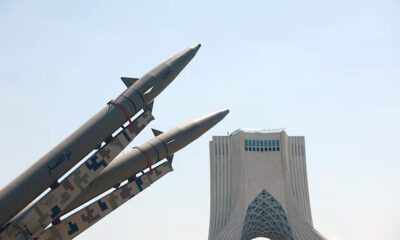
Trump says he will hold off on fresh Iran attack in hope of quick deal
-

 Climate Change3 days ago
Heavy monsoon rains claim lives across India as flooding and landslides continue