
Latest News
Explainer: Gaza war after six months – what are the issues now?

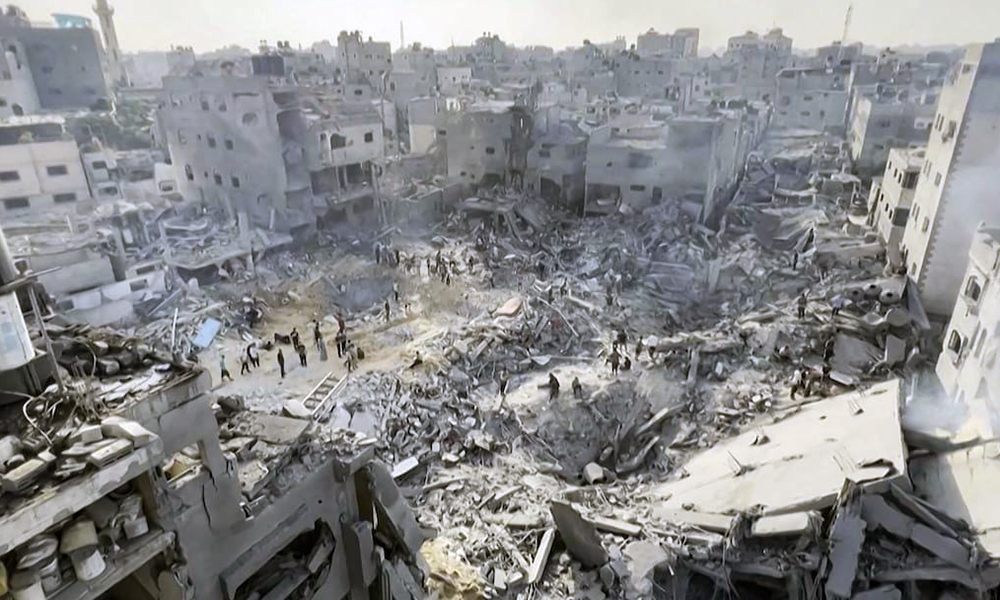
Six months since Hamas gunmen stormed into southern Israel on a killing spree, Israel’s ground campaign to annihilate the movement has turned much of the Gaza Strip into a wasteland with an unfolding humanitarian catastrophe.
Mediators have been trying to organize the first extended truce of the war to rush in aid to feed the Palestinian territory’s 2.3 million people and secure the release of some of the Israeli hostages still held by Hamas.
Here is a look at the issues raised by the war and the prospects for peace.
HOW DID THE WAR START?
On Oct. 7, hundreds of gunmen crossed a border fence that Israel had believed was impregnable, and stormed through communities, gunning down Israelis in homes, cars and at an all-night music festival. Israel says 1,200 people were killed in the deadliest day for Jews since the Holocaust. The attackers brought 253 hostages, including whole families with small children, back to Gaza. Although military bases were attacked, most of the dead were civilians.
Prime Minister Benjamin Netanyahu swore vengeance.
WHAT HAS HAPPENED IN GAZA?
Israel’s ground assault began in the northern half of the Gaza Strip and hundreds of thousands of residents were ordered to evacuate and flee south. After a week-long ceasefire at the end of November, Israeli forces turned their attention to the south, again ordering people to flee.
Since February, Israeli forces have patrolled nearly all of Gaza, apart from a small area in the center and the city of Rafah on the southern edge, where more than half of Gaza’s population is now sheltering.
Gaza’s health authorities say about 33,000 Palestinians have been confirmed killed, around 40 percent of them children, with thousands more bodies lost under rubble not recovered. More than 70,000 have been wounded, meaning around 5% of the population has been killed or injured, not counting deaths from hunger, unsanitary conditions and the collapse of health care.
Israel says it has killed more than 13,000 Hamas fighters, and blames militants for harm to civilians for operating among them, including from a network of underground bunkers and tunnels. Hamas denies its fighters operate among civilians.
CAN AID REACH GAZA?
At the outset of the war, Israel imposed a total blockade. Gradually it allowed in aid, first through a pedestrian checkpoint from Egypt, then also through a nearby road checkpoint from Israel itself.
Israel says it imposes no limits on food and humanitarian supplies, but aid agencies and donor countries say cumbersome Israeli inspections mean shipments can be held up for weeks, and only a fraction of the 500 trucks a day Gaza once relied on can get through. Supplies that cross are difficult to distribute or transport because of lawlessness with civil authorities dismantled.
Israel says it is now opening up additional land checkpoints and allowing air drops and sea deliveries. But Gaza has no proper seaport, and aid agencies say air drops are small-scale and dangerous. There is still no land route into northern Gaza where conditions are worst.
IS GAZA EXPERIENCING FAMINE?
Nearly. A famine has three stages – severe shortage of food, leading to pervasive malnutrition, and ultimately mass death from starvation and disease. The Integrated Food-security Phase Classification (IPC) global hunger monitor says Gaza has already surpassed the first two criteria – food shortage and malnutrition – and mass death will begin “imminently” without an immediate aid surge. It projects famine by May.
The IPC has said for months that Gaza is experiencing the most pervasive food insecurity it has ever seen.
In a report in March it said 100 percent of Gazans were experiencing severe food shortages, and for half of the population – far exceeding the 20% rate associated with famine – this had reached the highest level, category 5 or “catastrophe”.
In southern Gaza, where Reuters journalists operate, some residents have resorted to feeding their children boiled leaves. Reuters saw a number of children being treated for acute malnutrition in a hospital in Rafah, while conditions are reported to be far worse in the north.
Israel says the IPC report’s methodology is flawed and claims that there is no shortage of food in Gaza. It blames any hunger on aid agencies’ operations and on militants it says are hoarding food.
In addition to hunger, aid agencies worry about a lack of healthcare and sanitation. There are no fully functional hospitals left in the north, and only a handful in the south. Israel has repeatedly raided and besieged hospitals, saying Hamas fighters use them as bases, which medical staff deny.
Overcrowding fosters the spread of disease, and many people have little or no access to a sanitary toilet or place to wash.
WILL ISRAEL ATTACK RAFAH?
With half of Gazans now crammed into Rafah, residents say there is no place left to flee. Israel says the main Hamas armed units and commanders are sheltering there, and a ground assault is needed to defeat them. It has promised to coordinate with Egypt and to evacuate civilians further north inside Gaza, giving few details.
Washington has called the planned assault a mistake and says Israel can target militants with tactics that would cause less harm to civilians. The United Nations says an assault on Rafah would cause a humanitarian catastrophe. Many Palestinians say they fear Israel’s ultimate aim is to drive them from Gaza into Egypt, which Israel denies.
WHAT IS THE STATUS OF CEASEFIRE AND HOSTAGE TALKS?
Since the war’s only ceasefire so far at the end of November, when Hamas freed around half of its hostages, the sides have held talks mediated by Qatar and Egypt on a further truce.
Both sides have proposed a new ceasefire of around 40 days, including the release of around 40 hostages in return for hundreds of Palestinian detainees. Each has rejected the other’s proposals, but mediators say the talks remain productive.
Israel says it will discuss only a temporary pause in fighting and will not end the war until Hamas is annihilated. Hamas says it will not free its hostages without an agreement envisioning an end to war and Israeli withdrawal.
WHAT IS HAPPENING ON OTHER BATTLEFRONTS?
The war has been accompanied by surging violence in several other Middle East flashpoints, mainly involving armed groups that, like Hamas, are allied to Iran.
On Israel’s northern border it has exchanged regular fire with Hezbollah, a heavily-armed Iran-backed group, forcing the evacuation of tens of thousands of people from villages on both sides.
In the West Bank, where the internationally endorsed Palestinian Authority exercises limited self-rule under an Israeli military occupation, hundreds of people have been killed in the worst violence for decades.
In Syria, Israel has repeatedly targeted suspected bases of Iranian military advisers in air strikes. In Iraq, the United States retaliated against Iran-backed militia groups after strikes on U.S. bases, which have since subsided.
In Yemen, the Iran-aligned Houthi movement that controls the capital has attacked shipping in the Red Sea. Britain and the United States have retaliated with air strikes.
HOW HAS ISRAEL’S RELATIONSHIP WITH WASHINGTON EVOLVED?
As the war has ground on, it has brought increasing friction between Israel and the United States, with little precedent in the 75-year history of their close alliance.
U.S. President Joe Biden strongly endorsed Israel’s right to defend itself against Hamas following the Oct. 7 attacks, but in a speech in Tel Aviv also called on Israelis not to be overwhelmed by anger. Since then he and other administration officials have stepped up calls for Israel to do more to protect civilians and allow in aid.
Washington says its aim is a wider peace deal to normalize relations between Arab states and Israel, which requires prospects for an eventual Palestinian state, a central plank of U.S. policy for decades that Netanyahu has repudiated.
Israel’s plan to attack Rafah has provoked stronger criticism from Washington. In March, the Senate leader of Biden’s Democratic Party called for Israelis to vote Netanyahu out.
Washington later refrained from using its veto to block a U.N. Security Council resolution demanding a ceasefire. Netanyahu responded by canceling an Israeli delegation’s planned trip to Washington.
The United States has continued to supply Israel with arms and munitions. – Reuters


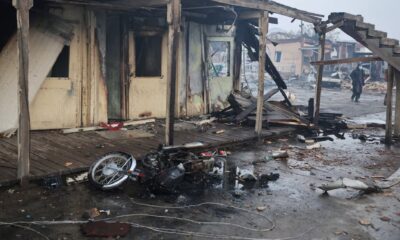
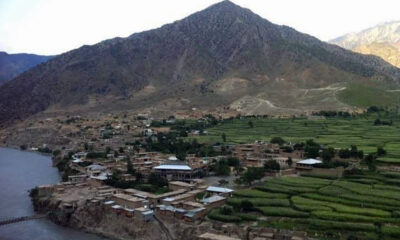



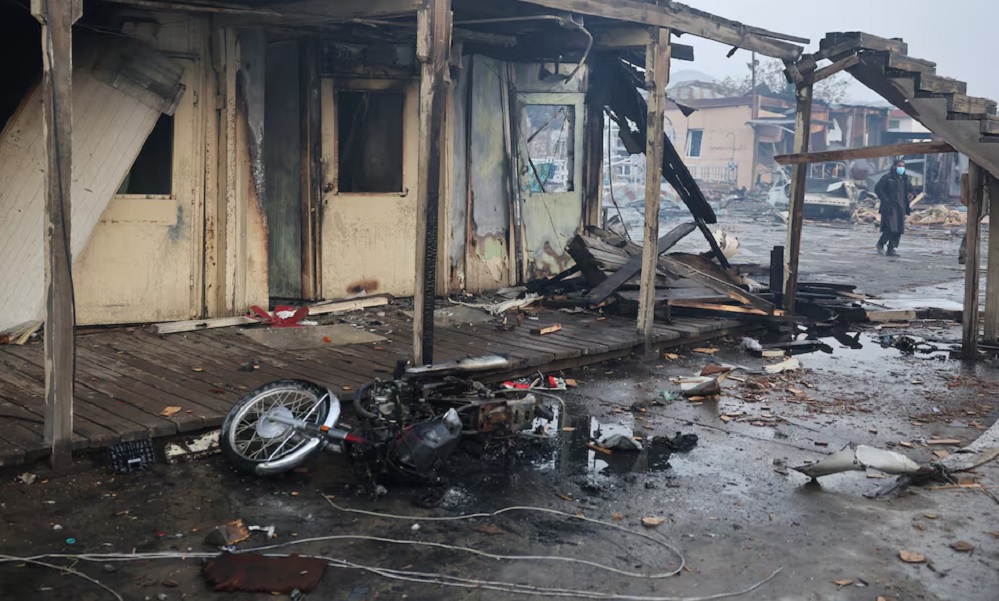
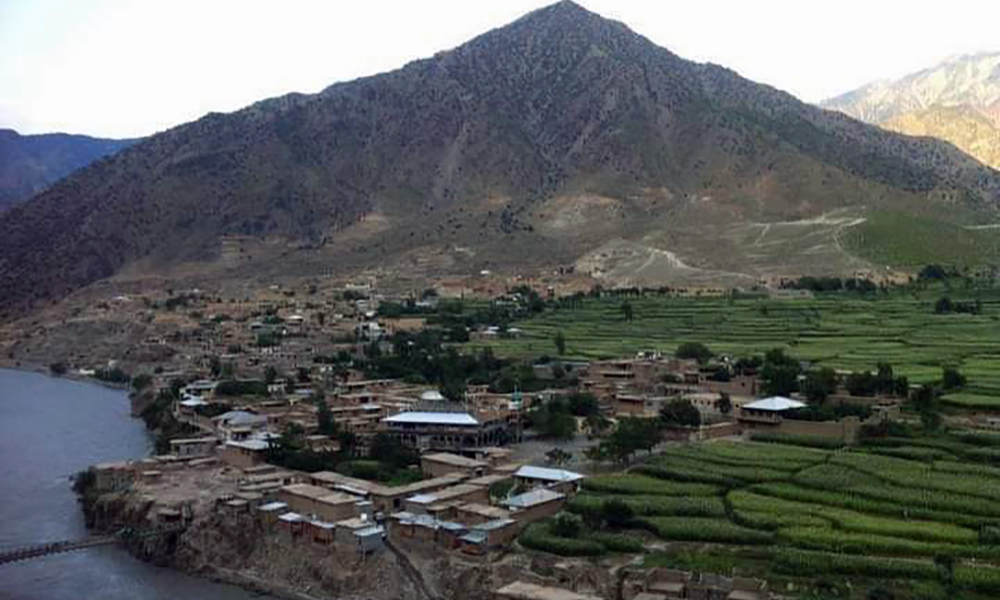
Hamdullah Fitrat, deputy spokesman of the Islamic Emirate, said that a mortar shell of the Pakistani military regime hit Shanpat area of Nari district of Kunar province at 9:30 am on Sunday, killing one civilian and wounding another.
The injured person is a woman, he said.
Pakistani forces also opened fire on a civilian vehicle in Shakin district of Paktika province, but no casualties were reported, Fitrat said.
The Pakistani government had earlier announced that it would halt its attacks on Afghanistan until Monday night on the occasion of Eid-ul-Fitr.

Germany was not informed of the appointment of a new Afghan diplomat in Berlin, according to a report by public broadcaster ARD, raising fresh questions about the Islamic Emirate’s expanding control over overseas missions.
The report states that an IEA-linked official has assumed the role of chargé d’affaires at Afghanistan’s embassy in Berlin without prior approval from the German government. Under the 1961 Vienna Convention on Diplomatic Relations, host countries must consent to such diplomatic appointments.
Germany does not formally recognize the IEA government, which returned to power in August 2021 following the withdrawal of US and NATO forces.
Undisclosed leadership role
According to ARD, the official—identified as Nebrasul H.—arrived in Berlin in July last year as a junior consular staff member, a position approved by German authorities. However, documents obtained by the broadcaster suggest he was also quietly appointed to lead the embassy.
He is reportedly acting as chargé d’affaires, effectively heading the mission and liaising directly with Afghanistan’s Foreign Ministry in Kabul.
The move highlights the IEA’s efforts to consolidate authority over Afghan diplomatic missions abroad, despite lacking broad international recognition.
Berlin ‘not notified’
Germany’s Foreign Ministry said it had received “no notification of any personnel changes” at Afghan diplomatic missions in the country.
Berlin has consistently maintained that Afghan embassies should remain under representatives appointed by the former government of Ashraf Ghani, which was ousted in 2021.
Previous envoy sidelined
The report also claims that the previous head of mission, Abdul P., has been stripped of his authority and reduced to a largely symbolic role. He was originally appointed under the Ghani administration.
Despite being sidelined, he remains in Berlin, reportedly continuing to live in the ambassador’s residence and retaining diplomatic privileges.
Wider diplomatic shift
In a related development, ARD reported that another Afghan official who arrived alongside Nebrasul H. has assumed a leadership role at the Afghan consulate in Bonn, also without formal recognition from German authorities.
The developments suggest a broader strategy by the IEA to assert control over Afghanistan’s diplomatic presence in Europe, even in countries that do not officially recognize its rule.


Iran says Hormuz open to all but ‘enemy-linked’ ships

Afghani strengthens nearly 10% against US dollar amid banking sector reforms

Deadly violence likely without dialogue between Afghanistan and Pakistan: ICG

Pakistani military violates Afghanistan ceasefire again

IEA allegedly appoints envoy to Berlin embassy ‘without Germany’s approval’

Pakistani military jet downed in Afghanistan’s Jalalabad, pilot captured alive

Afghan Air Force conducts airstrikes in Islamabad, other cities

Prominent Muslim scholar issues fatwa calling for Afghanistan-Pakistan ceasefire

Afghan air force strikes key Pakistani military installations in retaliatory operation

IEA: Special circle in Pakistan has launched mission to destabilize region

Tahawol: Pakistan’s efforts to destabilise Afghanistan

Saar: Decline in international assistance to Afghanistan

Tawsia: Assessment of Afghanistan’s economic activities in 1404

Tahawol: Temporary ceasefire draws broad support

Saar: Emphasis on resolving conflicts through diplomacy
-
 Latest News4 days ago
IEA announces temporary pause in defensive operations against Pakistan for Eid
-
 Latest News4 days ago
Pakistan opposes normal Afghanistan–India relations: Shaheen
-
 Latest News4 days ago
Karzai accuses Pakistan of seeking to destabilise Afghanistan after Kabul strike
-
 Latest News3 days ago
Pakistani shelling hits Kunar districts despite ‘pause in hostility’ over Eid
-
 Regional4 days ago
Iran strikes Tel Aviv with cluster warheads in retaliation for killing of security chief
-

 Sport2 days ago
Afghanistan national buzkashi falls short in Kokpar World Championship semifinals
-
 Latest News5 days ago
Afghanistan condemns deadly Kabul airstrike, warns of continued self-defence
-

 Latest News4 days ago
Muslim scholars condemn Kabul hospital attack, urge ceasefire