
Latest News
G7 nations call for inclusive governance and rights in Afghanistan

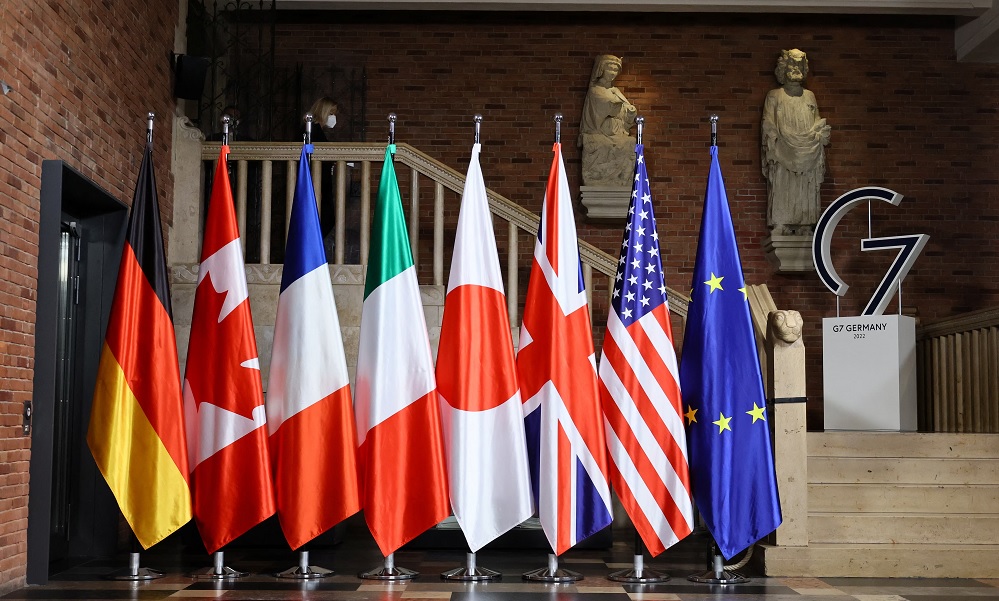
Special Representatives for Afghanistan and representatives from G7 nations, the European Union and six other countries convened in London on September 29–30 to assess the Afghanistan’s’s humanitarian, political, and security challenges.
The meeting brought together officials from Australia, Canada, Denmark, the European Union, France, Germany, Italy, Japan, the Republic of Korea, Norway, Switzerland, Türkiye, the United Kingdom, and the United States. Georgette Gagnon, Deputy Special Representative of the UN Secretary-General and acting head of the UN Assistance Mission in Afghanistan (UNAMA), also briefed participants.
In a statement issued by the UK, which currently chairs the group, members reaffirmed their commitment to supporting the Afghan people and emphasized that aid must reach the most vulnerable communities.
Participants expressed serious concern over the persistent terrorist threat and cross-border security risks emanating from Afghanistan. They underscored the importance of closer regional and international cooperation on counterterrorism.
The group condemned the IEA’s continued denial of fundamental freedoms, particularly for women and girls, citing restrictions on education, employment, healthcare, and public participation, as well as the recent ban on female Afghan staff entering UN compounds. They urged the IEA to respect their international obligations.
Delegates also raised alarm at the IEA’s shutdown of internet services, warning that the move will isolate Afghans from the outside world, disrupt humanitarian operations, and damage the economy.
On the humanitarian front, discussions covered the impact of September’s devastating earthquake, mass deportations of Afghans from neighboring countries, and the urgent need to pre-position resources before winter. Participants highlighted the critical role of international financial institutions, including the World Bank and Asian Development Bank, in sustaining essential services in Afghanistan.
The meeting also reviewed the UN’s “Comprehensive Approach” to Afghanistan. Participants stressed the need for stronger coordination within the UN system and expressed hope that the incoming Special Representative of the Secretary-General will advance a unified strategy.
Concluding the talks, the G7+ representatives underlined that Afghanistan’s long-term stability requires political pluralism and inclusive governance. They urged the IEA to engage constructively and in good faith with the international community.
The Islamic Emirate has previously said that it respects human rights in accordance with Sharia law, and the current government in Afghanistan is also inclusive.












Kazakhstan’s Foreign Minister Mukhtar Tileuberdi has called for pragmatic and coordinated international engagement with Afghanistan, saying the country’s long-term stability is closely linked to the security and sustainable development of Central Asia.
Speaking during the general debate of the 81st session of the United Nations General Assembly in New York on Friday, Tileuberdi said humanitarian assistance to Afghanistan remains essential but alone cannot break the cycle of poverty, displacement and dependency.
He said Kazakhstan supports a “pragmatic, coordinated and step-by-step” approach to international engagement with Afghanistan, with the United Nations playing a central role.
Tileuberdi also said Kazakhstan is working with the UN to operationalize the United Nations Regional Centre for the Sustainable Development Goals for Central Asia and Afghanistan in Almaty.
He said the success of the centre should be measured by the results and assistance it delivers to the region.


Abu Muslim Farah defeat Khurasan Faryab 2-0 in ACL season six

Saar: Concerns over Pakistan’s political crisis discussed

Afghanistan Champions League: Omar Zawak Herat beat Toofan Herat 1-0

Blast in Pakistan’s Dera Ismail Khan kills 11, injures 30

Ariana Afghan Airlines increases Kabul-Delhi cargo flights

Saudi energy group signs major Afghanistan deals covering gas exploration and pipeline plans

Trump floats idea of renaming Atlantic or Pacific Ocean

US hits Egyptian bank branches with Iran sanctions as war marks six months

Nepal flood rescue mission enters critical phase as thousands remain missing

Iranian clubs to face Gulf opponents at neutral venues in Asian Champions League Elite
Saar: Concerns over Pakistan’s political crisis discussed

Exclusive interview with Abdul Latif Mansoor, Minister of MRRD

Tawsia: Overview of Afghanistan’s iron mines

Tahawol: Discussion on fresh Pakistani airstrikes on Afghanistan

Saar: Calls for international support for Afghanistan discussed
-

 World5 days ago
CNN, MS NOW and Politico sue Trump, challenging White House ban
-

 Latest News3 days ago
Ariana Afghan Airlines ranks seventh among 45 Central Asian airlines
-

 Latest News5 days ago
UN reiterates call for respect for international law after Kunar airstrikes
-

 Regional4 days ago
US and Iran hold first talks since June after Trump’s ‘annihilation’ threat
-

 Latest News3 days ago
Silk Road highway in Wakhan corridor now reaches the China border
-

 Latest News5 days ago
Afghan Official: Pakistan’s airstrikes will not go unanswered
-

 Sport5 days ago
Afghan boxing referee heads to China for international festival
-

 Regional3 days ago
Iran airlines cancel flights as US sanctions hit