
Regional
Gaza ceasefire deal takes effect and fighting halts after delay

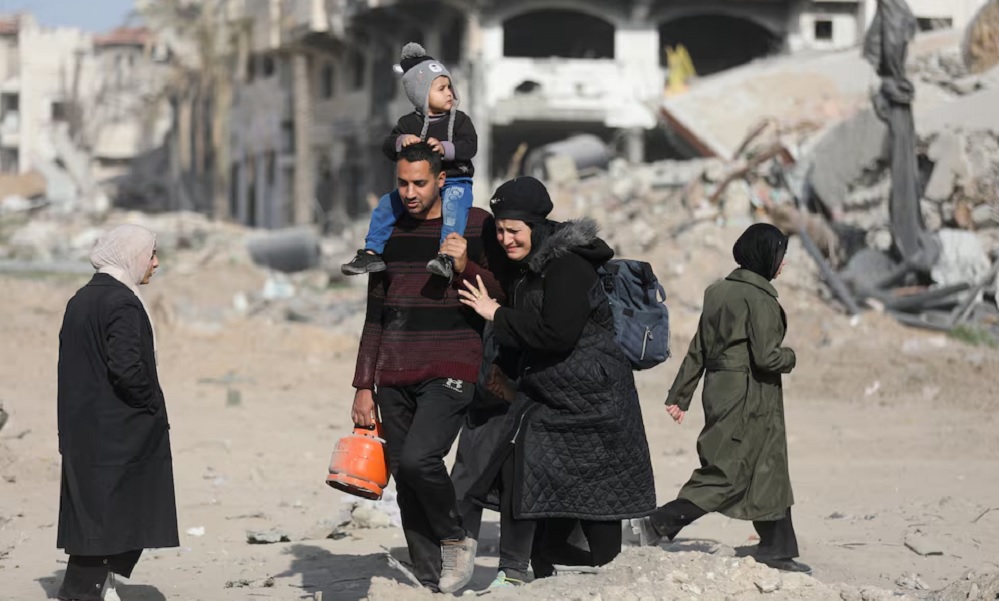
A ceasefire deal between Israel and Hamas in the Gaza Strip took effect on Sunday after a nearly three-hour delay, pausing a 15-month-old war that has brought devastation and seismic political change to the Middle East.
Residents and a medical worker in Gaza said that they had heard no new fighting or military strikes since about half an hour before it was finally implemented. Reuters reported.
Israeli airstrikes and artillery attacks killed 13 Palestinians between 0630 GMT, when the ceasefire was meant to begin, and 0915 GMT, when it actually took effect, Palestinian medics said.
Israel blamed Hamas for the delay after the Palestinian militant group failed to provide a list naming the first three hostages to be released under the deal.
Hamas attributed the delay to “technical” reasons, without specifying what those were.
A Palestinian official familiar with the matter, speaking on condition of anonymity, said the delay occurred because mediators had asked for 48 hours of “calm” before the ceasefire’s implementation, but continued Israeli strikes right up until the deadline had made it difficult to send the list.
Two hours after the deadline, Hamas said it had sent the list of names, and Israeli officials confirmed receipt. Hamas named the hostages it was to release on Sunday as Romi Gonen, Doron Steinbrecher and Emily Damari.
Israel did not immediately confirm the names.
The highly anticipated ceasefire deal could help usher in an end to the Gaza war, which began after Hamas, which controls the tiny coastal territory, attacked Israel on Oct. 7, 2023, killing some 1,200 people, according to Israeli authorities.
Israel’s response has reduced much of Gaza to rubble and killed nearly 47,000 Palestinians, according to Gaza-based health authorities.
The war also set off a confrontation throughout the Middle East between Israel and its arch-foe Iran, which backs Hamas and other anti-Israeli and anti-American paramilitary forces across the region.
HOSTAGE LIST, LAST-MINUTE ATTACKS
Ahead of the ceasefire’s agreed implementation at 0630 GMT, Israeli Prime Minister Benjamin Netanyahu said it could not take effect until Hamas gave the names of the hostages up for release on Sunday.
Israeli military spokespeople said in separate statements on Sunday that their aircraft and artillery had attacked “terror targets” in northern and central Gaza, and that the military would continue to attack the strip as long as Hamas did not meet its obligations under the ceasefire.
The Palestinian Civil Emergency Service said that at least 13 people were killed in the Israeli attacks and dozens wounded. Medics reported tanks firing at the Zeitoun area of Gaza City, and said that an airstrike and tank fire also hit the northern town of Beit Hanoun, sending residents who had returned there in anticipation of the ceasefire fleeing.
An air raid siren that sounded in the Sderot area of southern Irael had been a false alarm, the Israeli military said in a separate statement.
Israeli forces had started withdrawing from areas in Gaza’s Rafah to the Philadelphi corridor along the border between Egypt and Gaza, pro-Hamas media reported early on Sunday.
The three-stage ceasefire agreement followed months of on-off negotiations brokered by Egypt, Qatar and the United States, and came just ahead of the Jan. 20 inauguration of U.S. President-elect Donald Trump.
Its first stage will last six weeks, during which 33 of the remaining 98 hostages – women, children, men over 50, the ill and wounded – will be released in return for almost 2,000 Palestinian prisoners and detainees.
They include 737 male, female and teen-aged prisoners, some of whom are members of militant groups convicted of attacks that killed dozens of Israelis, as well as hundreds of Palestinians from Gaza in detention since the start of the war.
The first three are female hostages expected to be released through the Red Cross on Sunday. In return for each, 30 Palestinian prisoners held in Israeli jails are to be released.
Under the terms of the deal, Hamas will inform the International Committee of the Red Cross (ICRC) where the meeting point will be inside Gaza and the ICRC is expected to begin driving to that location to collect the hostages, an official involved in the process told Reuters.
ENDING THE WAR?
U.S. President Joe Biden’s team worked closely with Trump’s Middle East envoy Steve Witkoff to push the deal over the line.
As his inauguration approached, Trump had repeated his demand that a deal be done swiftly, warning repeatedly that there would be “hell to pay” if the hostages were not released.
But what will come next in Gaza remains unclear in the absence of a comprehensive agreement on the postwar future of the enclave, which will require billions of dollars and years of work to rebuild.
And although the stated aim of the ceasefire is to end the war entirely, it could easily unravel.
Hamas, which has controlled Gaza for almost two decades, has survived despite losing its top leadership and thousands of fighters.
Israel has vowed it will not allow Hamas to return to power and has cleared large stretches of ground inside Gaza, in a step widely seen as a move towards creating a buffer zone that will allow its troops to act freely against threats in the enclave.
In Israel, the return of the hostages may ease some of the public anger against Prime Minister Benjamin Netanyahu and his right-wing government over the Oct. 7 security failure that led to the deadliest single day in the country’s history.
MIDEAST SHOCKWAVES
The war sent shockwaves across the region, triggering a conflict with the Tehran-backed Lebanese Hezbollah movement and bringing Israel into direct conflict with its arch-foe Iran for the first time.
It has also transformed the Middle East. Iran, which spent billions building up a network of militant groups around Israel, has seen its “Axis of Resistance” wrecked and was unable to inflict more than minimal damage on Israel in two major missile attacks.
Hezbollah, whose huge missile arsenal was once seen as the biggest threat to Israel, has seen its its top leadership killed and most of its missiles and military infrastructure destroyed.
On the diplomatic front, Israel has faced outrage and isolation over the death and devastation in Gaza.
Netanyahu faces an International Criminal Court arrest warrant on war crimes allegations and separate accusations of genocide at the International Court of Justice.
Israel has reacted with fury to both cases, rejecting the charges as politically motivated and accusing South Africa, which brought the original ICJ case as well as the countries that have joined it, of antisemitism.







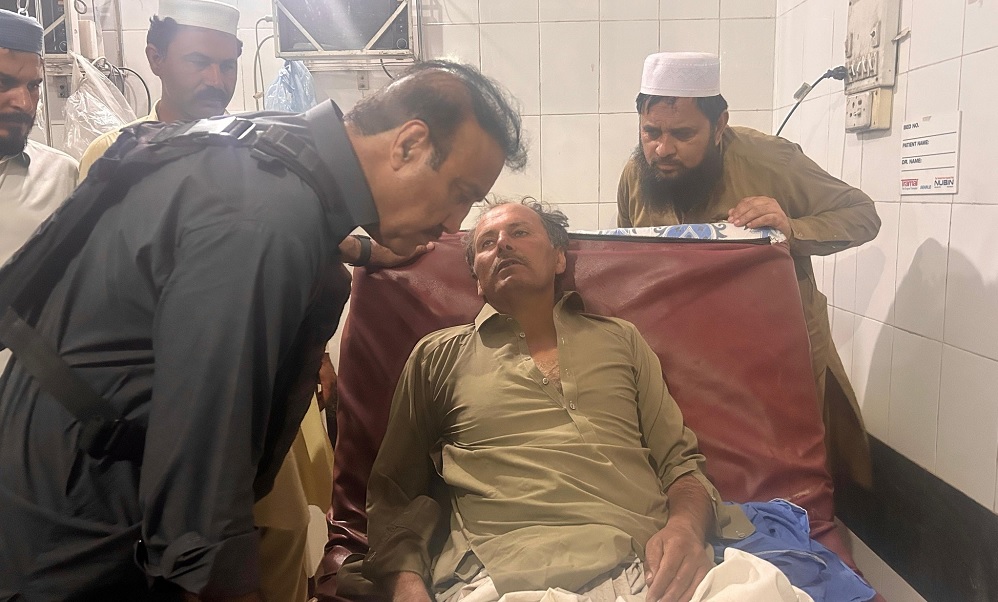
The death toll from a suicide attack on a security post in northwest Pakistan rose to 14 police officers, authorities said early Sunday.
A suicide bomber and several gunmen detonated an explosives-laden vehicle near the post in Bannu, a district in Khyber Pakhtunkhwa province, late Saturday, said senior police official Sajjad Khan. The attack triggered an intense shootout, and some officers were killed in the exchange, while others died later after the building collapsed, the Associated Press reported.
Rescuers conducted an hourslong search operation using heavy machinery to retrieve bodies from under the rubble, Khan said, adding that three police officers were wounded in the attack.
Security forces have also launched an operation to track down the perpetrators.
A newly formed militant group, Ittehad-ul-Mujahideen Pakistan, claimed responsibility for the attack.
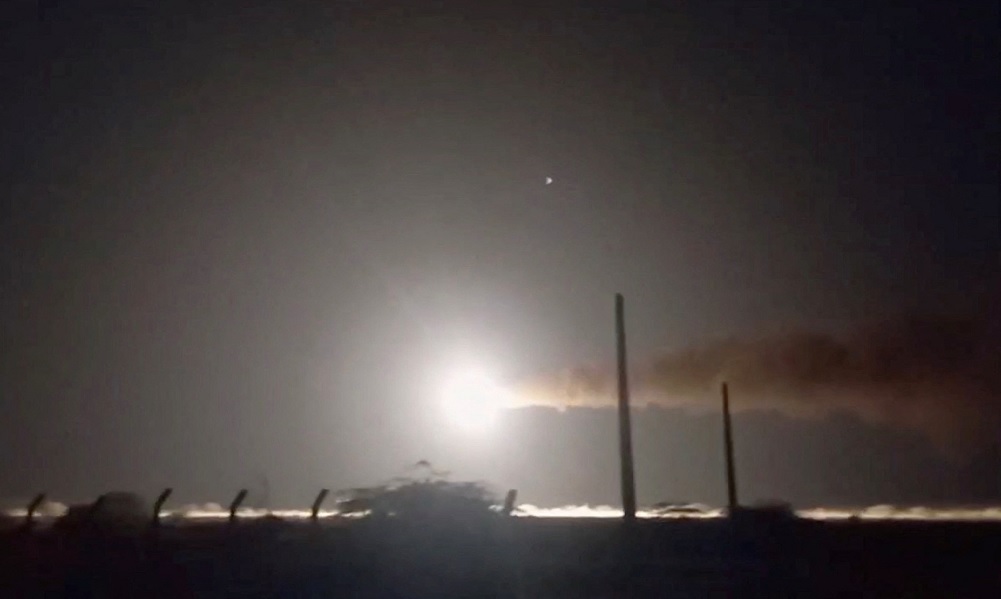
U.S. ally the United Arab Emirates said its air defences were engaging missile and drone threats from Iran early on Friday in a further test of the shaky, month-long ceasefire between the U.S. and Iran.
There were few details immediately available about the latest attack on the UAE, which came a day after the U.S. and Iran exchanged fire around the Strait of Hormuz, and as Washington awaited a response from Tehran to its proposal to end the conflict. Iran has often targeted the UAE and other Gulf countries that host U.S. bases since the war began on February 28, Reuters reported.
President Donald Trump said on Thursday three U.S. Navy destroyers were attacked as they moved through the strait, a conduit for around a fifth of the world’s oil and liquefied natural gas flows that Iran has all but closed since the conflict started.
“Three World Class American Destroyers just transited, very successfully, out of the Strait of Hormuz, under fire. There was no damage done to the three Destroyers, but great damage done to the Iranian attackers,” Trump wrote on Truth Social.
Trump later told reporters the ceasefire was still in effect and sought to play down the exchange.
“They trifled with us today. We blew them away,” Trump said in Washington.
Iran’s top joint military command accused the U.S. of violating the ceasefire by targeting an Iranian oil tanker and another ship, and of carrying out air attacks on civilian areas on Qeshm Island in the Strait of Hormuz and the nearby coastal areas of Bandar Khamir and Sirik on the mainland. The military said it responded by attacking U.S. military vessels east of the strait and south of the port of Chabahar.
A spokesperson for Iran’s Khatam al-Anbiya Central Headquarters said the Iranian strikes inflicted “significant damage,” but U.S. Central Command said none of its assets were hit.
Iran’s Press TV later reported that, following several hours of fire, “the situation on Iranian islands and coastal cities by the Strait of Hormuz is back to normal now.”
The two sides have occasionally exchanged gunfire since the ceasefire took effect on April 7, with Iran hitting targets in Gulf countries including the UAE.
Oil prices rose in early trade in Asia on Friday, with Brent crude jumping above $100 a barrel after the latest clashes between the U.S. and Iran.
TRUMP URGES NEGOTIATED END TO WAR
Trump suggested ongoing talks with Tehran remained on track despite Thursday’s hostilities, telling reporters, “We’re negotiating with the Iranians.”
Before the latest strikes, the U.S. had floated a proposal that would formally end the conflict but did not address key U.S. demands that Iran suspend its nuclear work and reopen the strait.
Tehran said it had not yet reached a decision on the emerging plan.
Even so, Trump said Tehran had acknowledged his demand that Iran could never get a nuclear weapon, a prohibition he said was spelled out in the U.S. proposal.
“There’s zero chance. And they know that, and they’ve agreed to that. Let’s see if they are willing to sign it,” Trump said.
Asked when any deal might be reached, Trump said, “It might not happen, but it could happen any day. I believe they want to deal more than I do.”
The war has tested Trump’s relationship with his U.S. base of supporters, after he had campaigned against involving the United States in foreign wars and promised to bring down fuel prices.
Average U.S. gasoline prices have climbed more than 40% since late February, rising by about $1.20 a gallon to more than $4, according to data from the American Automobile Association, as disruptions to oil shipments through the Strait of Hormuz pushed crude oil prices higher.
Regional
US and Iran closing in on one-page memo to end war, Axios reports
The U.S. State Department and White House did not immediately respond to a request for comment.

The White House believes it is getting close to an agreement with Iran on a one-page memorandum of understanding to end the war and set a framework for more detailed nuclear negotiations, Axios reported on Wednesday, citing two U.S. officials and two other sources briefed on the issue.
The U.S. expects Iranian responses on several key points in the next 48 hours, according to the report which cautioned that nothing has been agreed yet but said this was the closest the parties had been to an agreement since the war began, Reuters reported.
Among other provisions, the deal would involve Iran committing to a moratorium on nuclear enrichment, the U.S. agreeing to lift its sanctions and release billions in frozen Iranian funds, and both sides lifting restrictions around transit through the Strait of Hormuz, Axios said.
The one-page, 14-point memorandum of understanding is being negotiated between U.S. envoys Steve Witkoff and Jared Kushner and several Iranian officials, both directly and through mediators, the report said.
In its current form, the memorandum would declare an end to the war in the region and the start of a 30-day period of negotiations on a detailed agreement to open the strait, limit Iran’s nuclear programme and lift U.S. sanctions, Axios added.
Iran’s restrictions on shipping through the strait and the U.S. naval blockade would be gradually lifted during that 30-day period, Axios said, citing one U.S. official who added that if the negotiations collapse, U.S. forces would be able to restore the blockade or resume military action, read the report.
Iran said earlier on Wednesday it would accept a peace deal only if it was “fair”, after U.S. President Donald Trump paused a three-day-old naval mission tasked with reopening the Strait of Hormuz that had shaken the war’s month-old ceasefire.
Reuters could not immediately verify the report. The U.S. State Department and White House did not immediately respond to a request for comment.
U.S. stock index futures extended gains following the Axios report.


Afghanistan, Uzbekistan sign 13 trade MoUs worth over $100 million

Israel built and defended a secret base in Iraq for Iran war, WSJ reports

Japan, Saudi Arabia and Tajikistan qualify for FIFA U-17 World Cup Qatar 2026

IPL 2026: RR slip to fifth as Shane Bond calls for bowling changes

Meta turns off Instagram’s private messaging encryption worldwide

Bayat Power extends gas supply deal with Afghan Gas

Etihad Airways to expand Kabul–Abu Dhabi flights to daily service amid surging demand

Afghanistan’s new cricket head coach Richard Pybus arrives in Kabul

Afghanistan moves toward self-sufficiency in car battery production

Germany to launch online visa system for Afghan study and work applicants in Pakistan

Tahawol: Discussion on unknown fate of Middle East crisis

Saar: Problems and challenges of Afghan refugees in the world discussed

Tawsia: Discussion on Afghanistan’s economic path and position

Tahawol: Pressure on Afghan refugees from Tajikistan to Europe discussed

Saar: Ongoing criticism of Pakistan’s Afghanistan policy discussed
-

 Business2 days ago
New Afghanistan-China transport corridor launched via Turkmenistan
-
 Business4 days ago
Uzbekistan launches new cargo corridor linking China and Afghanistan
-
 Business4 days ago
Afghanistan presses Chinese contractor over delays in Mes Aynak copper project
-

 Sport1 day ago
Canada to host opening ceremony for FIFA World Cup 2026 in Toronto
-
 Regional3 days ago
US and Iran closing in on one-page memo to end war, Axios reports
-
 Regional4 days ago
Iran foreign minister meets Chinese counterpart for first time since Iran war started
-

 International Sports4 days ago
Ahmedabad to host IPL 2026 final; BCCI announces playoff schedule
-

 Science & Technology2 days ago
James Webb Telescope captures clearest-ever view of exoplanet’s surface