
Latest News
Ghani rejects Abdullah’s proposed five cabinet candidates

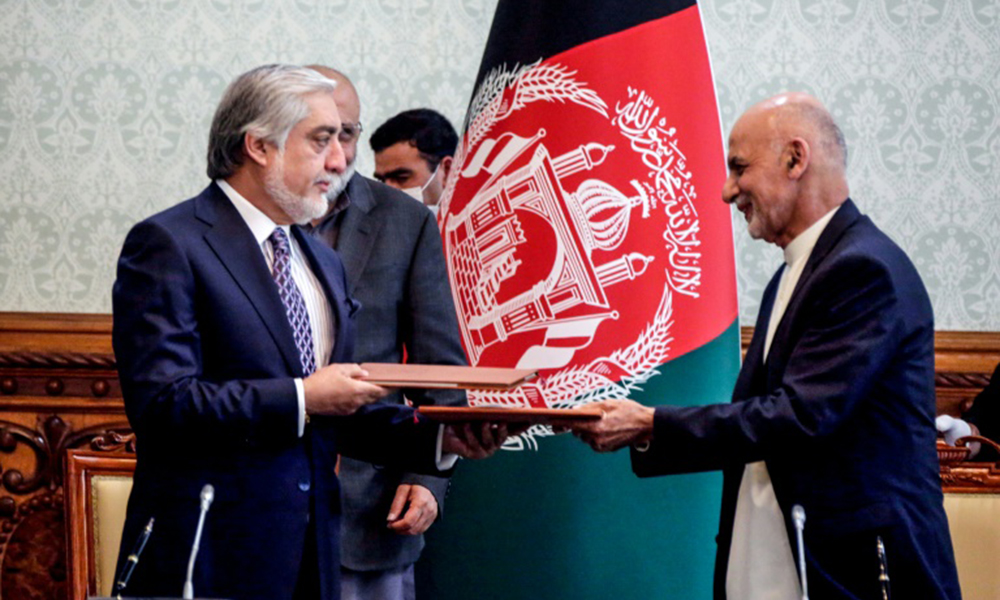
President Ashraf Ghani has rejected his power-sharing partner Abdullah Abdullah’s proposed five key cabinet candidates, sources told Ariana News.
The nominees were including Anwar al-Haq Ahadi nominated for the Ministry of Agriculture – Mustafa Mastour, Ministry of State for Peace – Noor Rahman Akhlaqi, Ministry of Immigration – Fazl Ahmad Manawi, Ministry of Justice and Mohebullah Samim nominated for the Ministry of Tribes are the figures on the red list of the president Ghani.
The Presidential palace, however, said that ministry candidates should have political weight and merit and represent people.
“The main goal of the Afghan government is to nominate people to the parliament who have political weight, who is a mirror of the stability of the government and people should trust the past of the candidates. This is important for completing the cabinet,” said Sediq Sediqqi, the president’s spokesman.
But Sapidar says the political agreement and the constitution set the standard.
“The criteria for the ministerial nominee are clear in the constitution, but unfortunately the presidential spokesman is unaware of the ongoing debates and the provisions of the constitution,” said Fraidoun Khawzun, spokesman for the chairman of the High National Reconciliation Council.
This clash and dispute are also criticized. Some politicians say a number of figures nominated by the president are also not qualified.
Sayed Ishaq Gilani, leader of the Afghan Solidarity Movement, said: “Someone said I am illiterate, but Mr. Ghani has introduced her as the minister of a structure that is the body of Afghanistan, while she knows nothing more than embroidery. These actions of the president will create tension and persecution against Afghanistan.”
However, Article 72 of the Constitution states the criteria for selecting a ministerial candidate as per the following:
1. Having Afghan citizenship
2. Having higher education, work experience, and a good reputation
3. Age over 35 years
4. Not being convicted of crimes and violations against humanity
“The conditions provided for a ministerial nominee are in Article 72 of the Afghan constitution and cannot be accepted at the behest of individuals,” said lawyer Wahid Farzaei.
There are concerns that domestic political challenges could also delay the peace process.




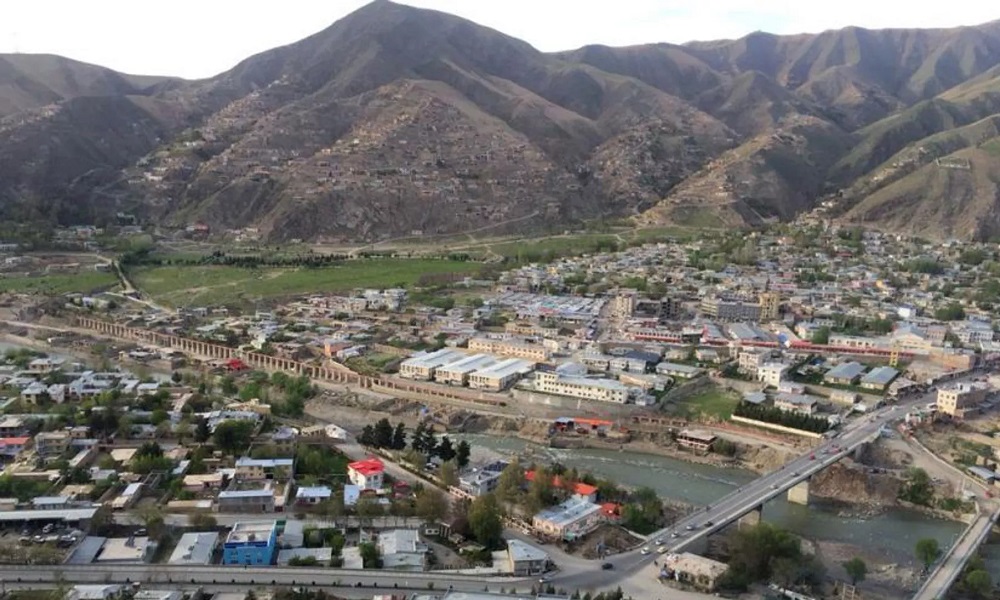
Two people have been killed amid protests against a poppy eradication campaign in northeastern Badakhshan province, local officials said.
Authorities said counter-narcotics forces were deployed on Friday to Atan Jalo area of Argo district to destroy poppy fields. Clashes erupted after a number of farmers and residents reportedly attempted to block the operation.
Officials said a child was killed during Friday’s unrest, while another person died on Saturday as protests and tensions continued in the area.
According to local authorities, demonstrators also temporarily blocked the Kishm–Faizabad highway, disrupting traffic for several hours before it was reopened following coordinated efforts by security officials, religious scholars, and community elders.
Officials blamed “drug traffickers and criminal groups” for inciting the unrest and said security forces have since regained control of the area.
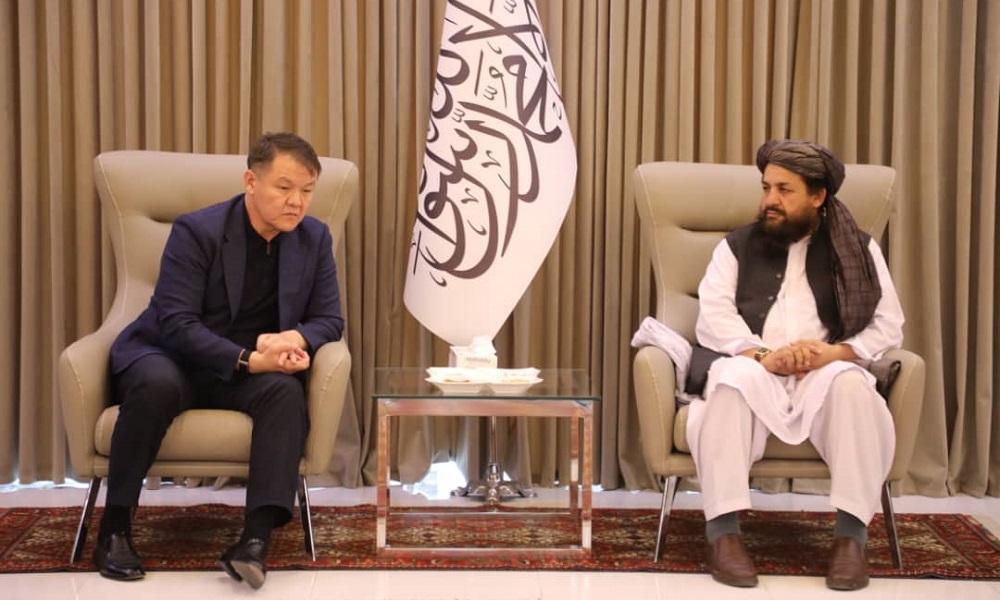
A high-ranking Uzbek delegation comprising government officials and private sector representatives from the Republic of Karakalpakstan arrived in Kabul on Saturday to discuss the expansion of trade and economic cooperation with Afghanistan.
The delegation is headed by Amanbay Orinbayev, Chairman of the Supreme Council of Karakalpakstan.
According to a statement from the Ministry of Industry and Commerce, the delegation is expected to hold talks with Nooruddin Azizi, the Minister of Industry and Commerce, focusing on strengthening bilateral trade and economic relations.
The ministry said the visiting delegation will also participate in trade connectivity meetings and business-to-business sessions aimed at enhancing commercial cooperation between the two sides.
As part of the visit, the Uzbek delegation is also scheduled to travel to Balkh province, where members will attend additional trade meetings and inaugurate an exhibition showcasing Uzbekistan’s domestic products.


Saar: Problems and challenges of Afghan refugees in the world discussed

Afghan cricket delegation travels to China for technical cooperation

Two killed in protests against poppy field destruction in Badakhshan

High-ranking Uzbek delegation arrives in Kabul to boost trade ties

Karzai: Pakistan seeking to legitimize Durand Line, authorities must clarify

Bayat Power extends gas supply deal with Afghan Gas

Etihad Airways to expand Kabul–Abu Dhabi flights to daily service amid surging demand

Afghanistan’s new cricket head coach Richard Pybus arrives in Kabul

Afghanistan moves toward self-sufficiency in car battery production

Germany to launch online visa system for Afghan study and work applicants in Pakistan
Saar: Problems and challenges of Afghan refugees in the world discussed

Tawsia: Discussion on Afghanistan’s economic path and position

Tahawol: Pressure on Afghan refugees from Tajikistan to Europe discussed

Saar: Ongoing criticism of Pakistan’s Afghanistan policy discussed

Tahawol: Diplomatic turn in Iran–US confrontation discussed
-
 Business1 day ago
New Afghanistan-China transport corridor launched via Turkmenistan
-
 Latest News4 days ago
Pakistan’s Achakzai pushes for Afghanistan dialogue amid economic strain
-
 Business3 days ago
Afghanistan presses Chinese contractor over delays in Mes Aynak copper project
-
 Business3 days ago
Uzbekistan launches new cargo corridor linking China and Afghanistan
-
 Latest News4 days ago
Food prices surge 20% in Afghanistan as Hormuz crisis disrupts supply routes
-
 Latest News5 days ago
Austrian interior minister heads to Uzbekistan to finalize Afghan deportation deal
-

 International Sports4 days ago
Mumbai Indians pull off record chase as IPL action continues
-
 Health4 days ago
Midwives Day: UN urges greater investment to protect mothers and newborns in Afghanistan