
Latest News
Habiba Sarabi the lone woman in a room full of men at Moscow meeting

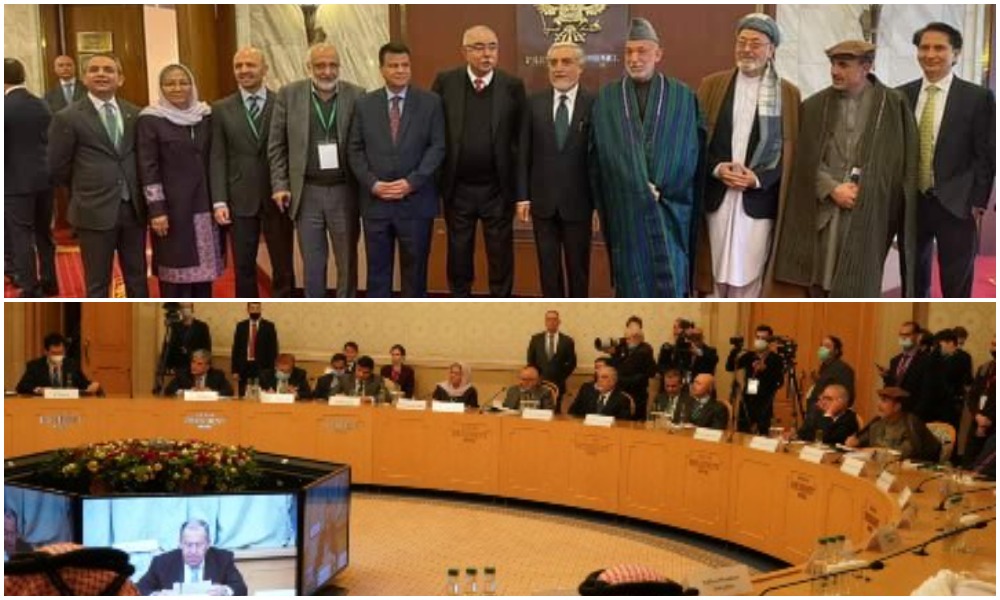
Despite repeated pledges by the Afghan government and the country’s politicians to include women in decision making processes, Thursday’s grand meeting in Moscow on the peace process indicated otherwise.
As delegates filed into the meeting room – it quickly became clear that among the dozens present, all were men – except for one.
Habiba Sarabi was the only female among the Afghan delegates – which included the Afghan government, the Taliban and individuals from Afghanistan who were sent invitations by Moscow.
Sarabi was the lone female voice in a room full of men.
In a tweet after the meeting, Sarabi made her feelings on the matter clear and said in reference to the Turkey meeting in April: “I hope I will not be the only woman at the next summit.”
Coming out in support of Sarabi was Nader Nadery, a fellow Afghan Republic peace talks team member, who said after the meeting that Sarabi “said in her remarks to the room full of men: why I should be the only woman in the room? We have not been part of the war, we can certainly contribute to peace. 51% of people should not be ignored. Hope hosts take note of it for the future.”
Nadery also stated that he hopes an “equal number of women on tables should become the norm. Proud of Sarabi Habiba.”
Shaharzad Akbar, chairperson of the Afghanistan Independent Human Rights Commission (AIHRC) also questioned this imbalance.
She said in a tweet: “Based on media reports, some of the invitations for Moscow event were delivered to specific individuals. Why didn’t Russia include a single Afghan woman on that list? There was also an invitation to Afghan government presumably, why wasn’t that invitation utilized to send four women negotiators?”
Even Ashraf Haidari, Afghanistan’s Ambassador to Sri Lanka, weighed in. He said in a tweet: “The presence of articulate women slowly diminished in peace meetings. Their substantive input and leadership in any peace engagement is naturally needed, as they speak for two thirds of any population, including children they nurture. Moscow wouldn’t care. Every Afghan must!”
This sentiment was shared by many including Human Rights Watch interim co-director, women’s rights division Heather Barr who quite bluntly said: “So easy for all the men – of varying, but not too varying, levels of misogyny – to snuggle up and make friends when they only let one woman in the room.”
Even Lyse Doucet, the BBC’s Chief International Correspondent commented. She said: “Strong voices of Afghan women. Is that why they don’t want more at the table?”
Soon after the start of the intra-Afghan talks in Doha, in September last year, Oxfam, Cordaid and InclusivePeace released a report stating that nearly 80 percent of Afghanistan’s peace tables, since 2005, have excluded women.
At the time, the report stated that without the meaningful participation of women, any sustainable peace efforts are at risk of failure.
The joint report Because She Matters, highlighted tangible ways to ensure women’s propositions and concerns are reflected in the negotiation process. It also showed that peace is more attainable when women have a place at the table, as peace agreements are 35 percent more likely to last beyond fifteen years when women effectively engage in them.
“Continued exclusion of women from Afghanistan peace efforts and decision-making will not only jeopordise the realisation of a true and sustainable peace, but blatantly disregard women’s rights to define their own future. We fear hard-won gains in women’s rights could be reversed”, said Ashish Damle, Oxfam’s Country Director in Afghanistan.
“Continued exclusion of women from Afghanistan peace efforts and decision-making will not only jeopordise the realisation of a true and sustainable peace, but blatantly disregard women’s rights to define their own future.”
During the meetings between the US government and the Taliban in Doha in February last year that set the stage for the start of the intra-Afghan peace process in September, not one woman was included in the conversation; and consequently women’s rights were not mentioned in the resulting deal struck a year ago.
“Despite seeing a small number of Afghan women represented in peace processes, Afghan women’s voices are largely marginilized. The intra-Afghan peace process, at all stages and levels, needs to do much better,” added Damle in September last year.












Kazakhstan’s Foreign Minister Mukhtar Tileuberdi has called for pragmatic and coordinated international engagement with Afghanistan, saying the country’s long-term stability is closely linked to the security and sustainable development of Central Asia.
Speaking during the general debate of the 81st session of the United Nations General Assembly in New York on Friday, Tileuberdi said humanitarian assistance to Afghanistan remains essential but alone cannot break the cycle of poverty, displacement and dependency.
He said Kazakhstan supports a “pragmatic, coordinated and step-by-step” approach to international engagement with Afghanistan, with the United Nations playing a central role.
Tileuberdi also said Kazakhstan is working with the UN to operationalize the United Nations Regional Centre for the Sustainable Development Goals for Central Asia and Afghanistan in Almaty.
He said the success of the centre should be measured by the results and assistance it delivers to the region.


Abu Muslim Farah defeat Khurasan Faryab 2-0 in ACL season six

Saar: Concerns over Pakistan’s political crisis discussed

Afghanistan Champions League: Omar Zawak Herat beat Toofan Herat 1-0

Blast in Pakistan’s Dera Ismail Khan kills 11, injures 30

Ariana Afghan Airlines increases Kabul-Delhi cargo flights

Saudi energy group signs major Afghanistan deals covering gas exploration and pipeline plans

Trump floats idea of renaming Atlantic or Pacific Ocean

US hits Egyptian bank branches with Iran sanctions as war marks six months

Nepal flood rescue mission enters critical phase as thousands remain missing

Iranian clubs to face Gulf opponents at neutral venues in Asian Champions League Elite
Saar: Concerns over Pakistan’s political crisis discussed

Exclusive interview with Abdul Latif Mansoor, Minister of MRRD

Tawsia: Overview of Afghanistan’s iron mines

Tahawol: Discussion on fresh Pakistani airstrikes on Afghanistan

Saar: Calls for international support for Afghanistan discussed
-

 World5 days ago
CNN, MS NOW and Politico sue Trump, challenging White House ban
-

 Latest News3 days ago
Ariana Afghan Airlines ranks seventh among 45 Central Asian airlines
-

 Latest News4 days ago
UN reiterates call for respect for international law after Kunar airstrikes
-

 Regional3 days ago
US and Iran hold first talks since June after Trump’s ‘annihilation’ threat
-

 Latest News3 days ago
Silk Road highway in Wakhan corridor now reaches the China border
-

 Latest News4 days ago
Afghan Official: Pakistan’s airstrikes will not go unanswered
-

 Sport4 days ago
Afghan boxing referee heads to China for international festival
-
 Regional5 days ago
G7 foreign ministers call on Iran to stop arming Houthis