
Business
Import, export volumes total $7.5 billion in 1st nine months of this solar year

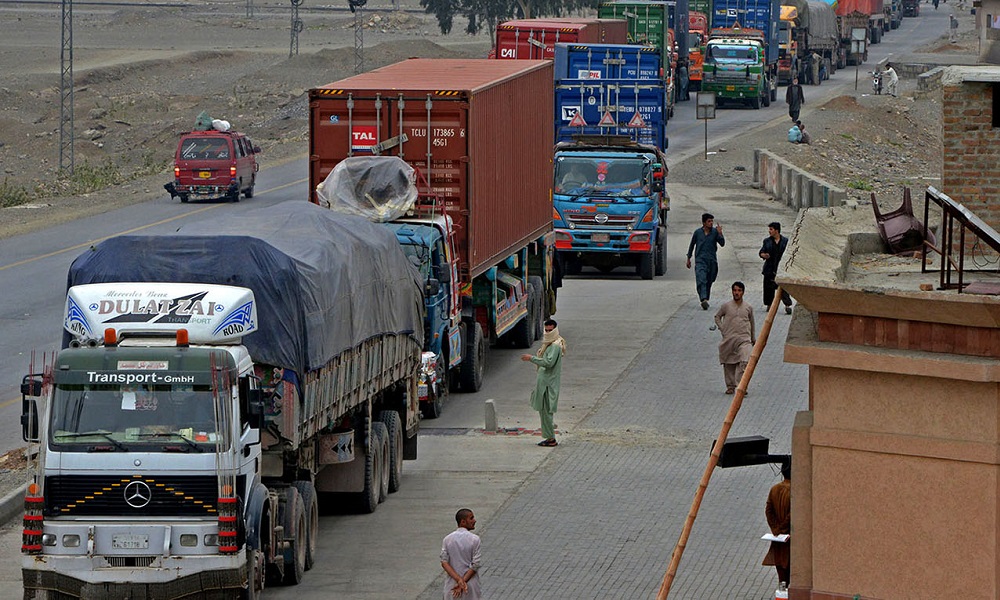
Afghanistan’s export and import volumes totaled $7.5 billion in the first nine months of this solar year – 1402, the National Statistics and Information Authority (NSIA) said on Monday.
NSIA said exports totaled $1.35 billion while imports amounted to $6.22 billion.
Last solar year, 1401, saw exports total $1.37 billion while imports totalled $5.12 billion.
NSIA said most exports went to Pakistan ($689.9 million), followed by India ($463 million) and the UAE ($32 million).
The most popular export item was dried fruit, which totaled $342.7 million. Medicinal plants, minerals and fresh fruit were second, third and fourth respectively.
The authority stated that the most imported items in the first nine months of this solar year came from Iran and totaled $1.31 billion.
Goods from Pakistan followed totaling $1.15 billion and then China with goods worth $1.14 billion.
Imports were dominated by fuel, petroleum and gas, at $1.1 billion, followed by machinery, vehicles and spare parts which totaled $691.9 million.
Other high volume goods included textiles, metals and metal products.





Business
Afghani strengthens nearly 10% against US dollar amid banking sector reforms
The bank said it has expanded oversight of financial institutions and private lenders, improving transparency and promoting more consistent standards across the sector.
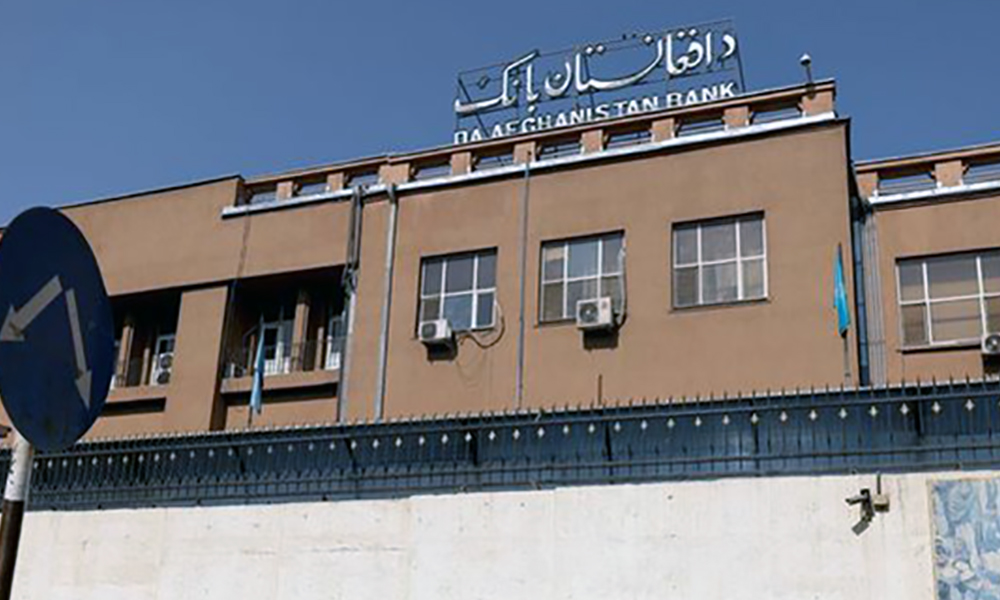
Afghanistan’s central bank, Da Afghanistan Bank, says the national currency has appreciated by 9.93% against the US dollar during the year 1404, citing steady progress in the country’s financial and banking systems.
Officials attributed the gains to cautious monetary policies that have helped stabilise the Afghani against major global currencies while also boosting its value against the dollar.
The bank said it has expanded oversight of financial institutions and private lenders, improving transparency and promoting more consistent standards across the sector.
As part of efforts to better manage liquidity, authorities also collected and destroyed worn-out banknotes in circulation. At the same time, officials reported growth in electronic banking, with digital payment usage rising in recent months.
Central bank spokesperson Haseebullah Noori said initiatives are underway to broaden access to banking services nationwide, including the wider rollout of Islamic banking options.
Analysts welcomed the stabilisation efforts but stressed the need to address ongoing challenges facing domestic banks, including the impact of international financial sanctions on Afghanistan.
They added that expanding Islamic banking could help draw more savings into the formal financial system, noting that a significant share of personal wealth remains outside banks. Bringing those funds into the sector, they said, could inject billions of Afghanis into the economy and further support financial stability.
Business
Uzbekistan delivers over 290 tons of aid to Afghanistan
The assistance, provided ahead of Eid al-Fitr, is intended to support vulnerable communities while reinforcing ties between the neighboring countries.
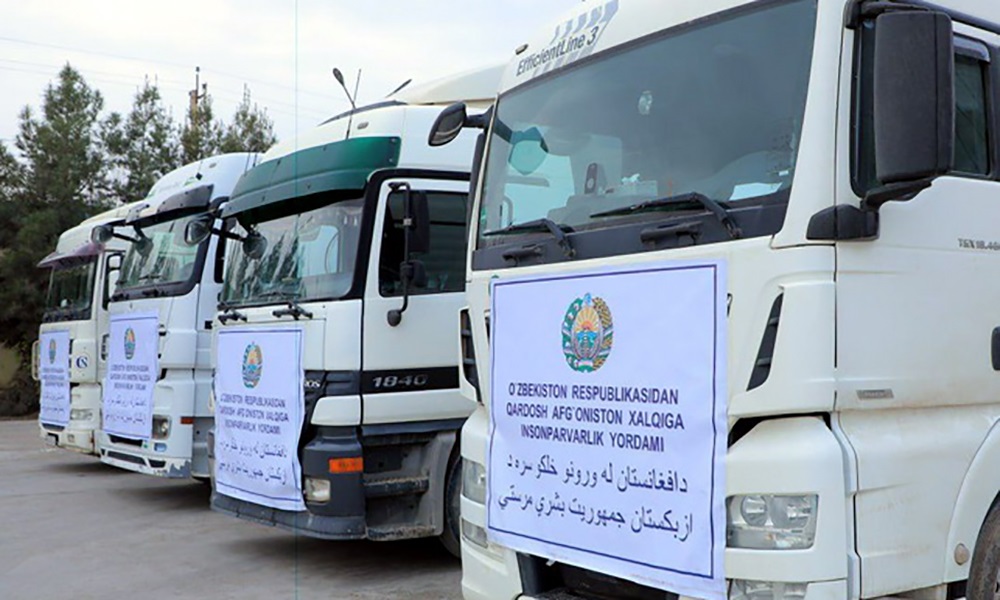
Uzbekistan has delivered more than 290 tons of humanitarian aid to Afghanistan, according to the country’s Ministry of Foreign Affairs.
The assistance, provided ahead of Eid al-Fitr, is intended to support vulnerable communities while reinforcing ties between the neighboring countries.
The shipment includes essential food supplies such as flour, rice, wheat, vegetable oil, instant meals, pasta, and confectionery. An official handover ceremony was held in the border town of Hairatan.
Local officials, including Balkh province representatives and authorities from Hairatan, expressed appreciation for the continued support, acknowledging Uzbekistan’s efforts to assist the Afghan people.
Among those present at the ceremony were Uzbekistan’s Ambassador to Afghanistan, Oybek Usmanov, and Surkhandarya regional governor Ulugbek Kosimov.
The aid delivery underscores Uzbekistan’s ongoing humanitarian engagement and its broader efforts to promote regional cooperation and stability.
Business
Turkmenistan, Afghanistan discuss steps to speed up land acquisition for TAPI pipeline
By the end of the year, the vessels are expected to deliver about 11,700 pipes as part of preparations for construction of the TAPI pipeline.
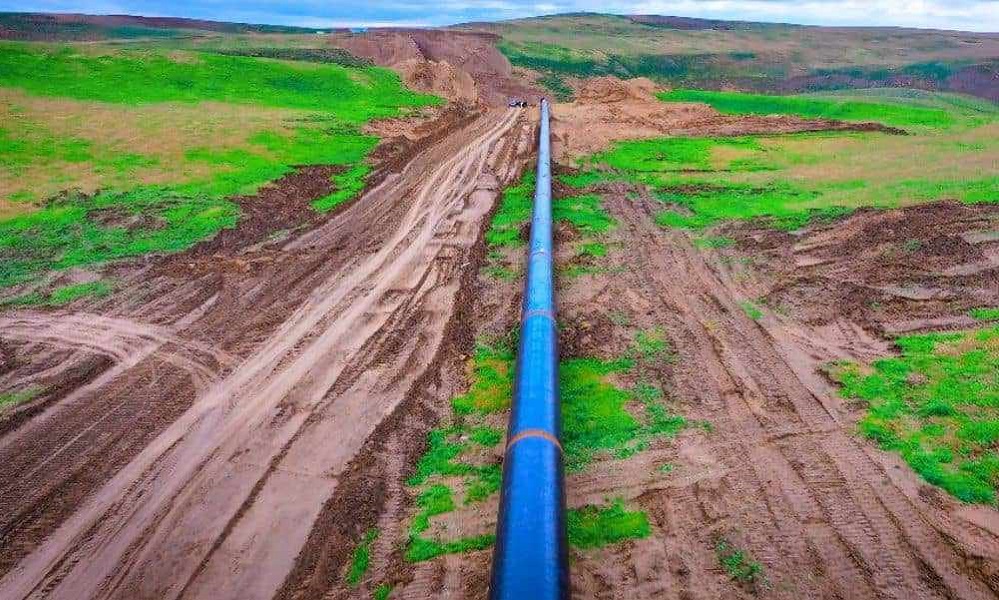
Officials from Turkmenistan and Afghanistan have held talks aimed at accelerating land acquisition for the long-planned Turkmenistan-Afghanistan-Pakistan-India (TAPI) pipeline, according to Afghanistan’s Ministry of Agriculture, Irrigation, and Livestock.
The issue was discussed during a meeting between TAPI project head Murad Amanov, Afghanistan’s acting Minister of Agriculture, Irrigation, and Livestock Mullah Attaullah Omari, and Turkmenistan’s ambassador to Afghanistan Hoja Ovezov.
Amanov briefed Afghan officials on recent progress and emphasized the need to accelerate procedures related to land acquisition and the determination of land prices in line with the framework agreement signed by the four participating countries.
Meanwhile, vessels operated by the Azerbaijan Caspian Shipping Company (ASCO), part of AZCON Holding, have begun transporting pipes for the project. The shipments are being carried from the Port of Baku to the Turkmenbashi International Seaport.
By the end of the year, the vessels are expected to deliver about 11,700 pipes as part of preparations for construction of the TAPI pipeline.


Airstrike on Kabul drug rehabilitation centre sparks legal concerns

Trump backs down on strikes on Iran’s power network, says US and Tehran holding talks

Iran says coastal attack will lead to full Gulf closure and mine-laying

Afghanistan expresses condolences after deadly helicopter crash in Qatar

IPL 2026: Ishan Kishan named Sunrisers’ interim captain ahead of opening clash

Pakistani military jet downed in Afghanistan’s Jalalabad, pilot captured alive

Afghan Air Force conducts airstrikes in Islamabad, other cities

Prominent Muslim scholar issues fatwa calling for Afghanistan-Pakistan ceasefire

Afghan air force strikes key Pakistani military installations in retaliatory operation

IEA: Special circle in Pakistan has launched mission to destabilize region

Tahawol: Possibility of US ground forces entering Iran war discussed

Saar: Using US prisoners as political pressure

Tahawol: Pakistan’s efforts to destabilise Afghanistan

Saar: Decline in international assistance to Afghanistan

Tawsia: Assessment of Afghanistan’s economic activities in 1404
-

 Latest News4 days ago
Pakistani shelling hits Kunar districts despite ‘pause in hostility’ over Eid
-

 Sport3 days ago
Afghanistan national buzkashi falls short in Kokpar World Championship semifinals
-

 Regional4 days ago
Pakistan among top nuclear threats to America, US intelligence chief tells senate
-

 Sport2 days ago
Ireland to host Afghanistan for ODI series in August
-
 Latest News5 days ago
Peshawar High Court grants bail to 68 detained Afghan nationals, including minors
-
 World4 days ago
US weighs troop deployment as Iran war enters new phase
-

 Latest News3 days ago
Mojtaba Khamenei calls for improved Afghanistan–Pakistan relations, offers help
-
 Latest News4 days ago
Security Sources: Pakistani military shelling in Kunar and Nuristan leaves female doctor dead