
Regional
India stampede: About 116 killed at religious event in Hathras district
The stampede occurred when a crowd of devotees started pushing towards the stage after the event to touch the preacher, who was coming down, said Yogi Adityanath, chief minister of Uttar Pradesh, India’s most populous state.

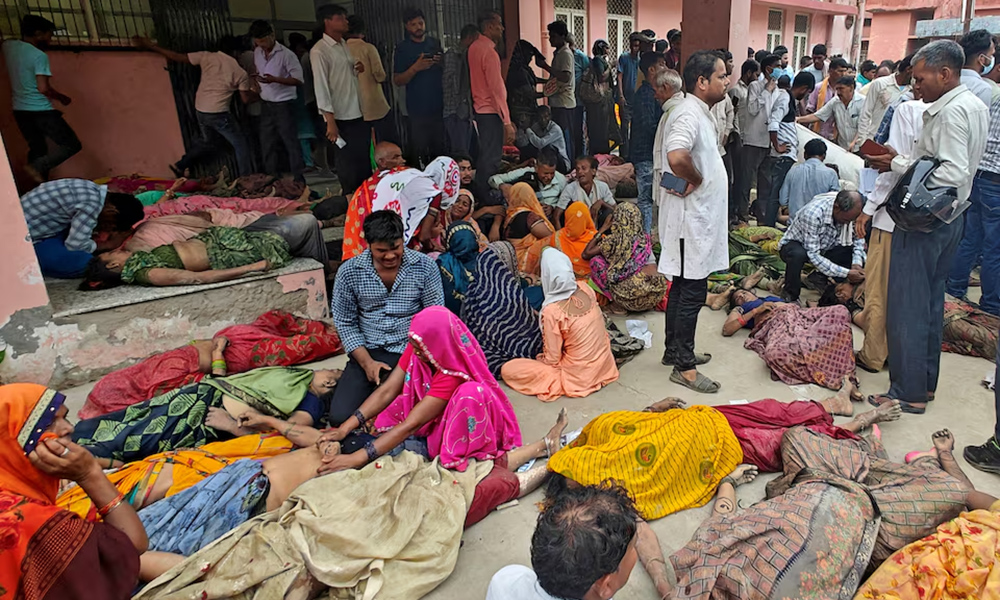
At least 116 people, many of them women and children, were killed in a stampede at a Hindu religious gathering in northern India on Tuesday, authorities said, in one of the country’s worst such tragedies in years, Reuters reported.
The stampede happened in a village in Hathras district in Utter Pradesh, about 200 km (125 miles) southeast of the national capital New Delhi, where authorities said thousands had gathered in sweltering late afternoon temperatures.
The stampede occurred when a crowd of devotees started pushing towards the stage after the event to touch the preacher, who was coming down, said Yogi Adityanath, chief minister of Uttar Pradesh, India’s most populous state.
While the cause was not immediately clear, Hathras district administrator Ashish Kumar suggested it may have been “due to overcrowding at the time when people were trying to leave the venue”.
Another senior state official, Chaitra V., told broadcaster India Today that people may have lost their footing as they sought water in the heat, read the report.
“There was wet mud at one place where people may have slipped. Also because of the heat, people may have made their way to the spot where water was kept and that could have caused the incident as well,” she said, adding that 18 were injured and in hospital.
Police said they had launched an investigation and promised action against anyone found to be responsible, adding that the gathering may have been larger than had been permitted.
“Lapses by authorities will also be investigated and action will be taken on the basis of the report which will be available within 24 hours,” state police chief Prashant Kumar said.
Video clips recorded by news agency ANI, in which Reuters has a minority stake, showed bodies piled into the back of trucks and laid out in vehicles.
Purses and bags covered in dust, were heaped up at the venue, with people sitting on their haunches sifting through them to identify their belongings.
Mobile phones were similarly piled together, waiting to be claimed by their owners, Reuters reported.
A video on social media showed a large crowd packed into a tented area, standing and listening to devotional tunes as they waved their hands in the direction of the religious leader who sat on a stage.
It also showed some women hanging on to the bamboo poles holding up the canopy to get a better view above the heads of the large crowd.
Reuters could not immediately verify the social media images.
“There must have been about 50,000 people…at the gate on the highway, some people were going left and some people were going right, the stampede was caused in that confusion,” Suresh Chandra, a witness who was at the gathering, told local media.
Seema, a woman who travelled from a town almost 60 km away to attend the event, said she was leaving the venue when the stampede occurred. She was accompanied by three relatives, two of whom were killed.
Stampedes and other accidents involving large crowds at religious gatherings and pilgrimage sites have happened in the past and are often blamed on poor crowd management.
A stampede in central India in 2013 killed 115 people, while nearly 250 died in 2008 and more than 340 were killed during an annual pilgrimage in the western state of Maharashtra in 2005, according to local media reports.
Prime Minister Narendra Modi said the federal government was assisting the state and announced a compensation of 200,000 rupees ($2,400) to the families of the dead and 50,000 rupees to those injured, Reuters reported.




Regional
New attacks on shipping as Iran war talks hit fresh impasse
Oil prices gained and global shares retreated amid renewed pessimism about a quick end to the conflict. Brent crude futures climbed 1.4% to settle at $88.91 per barrel and U.S. crude rose 1.3% to $83.20.
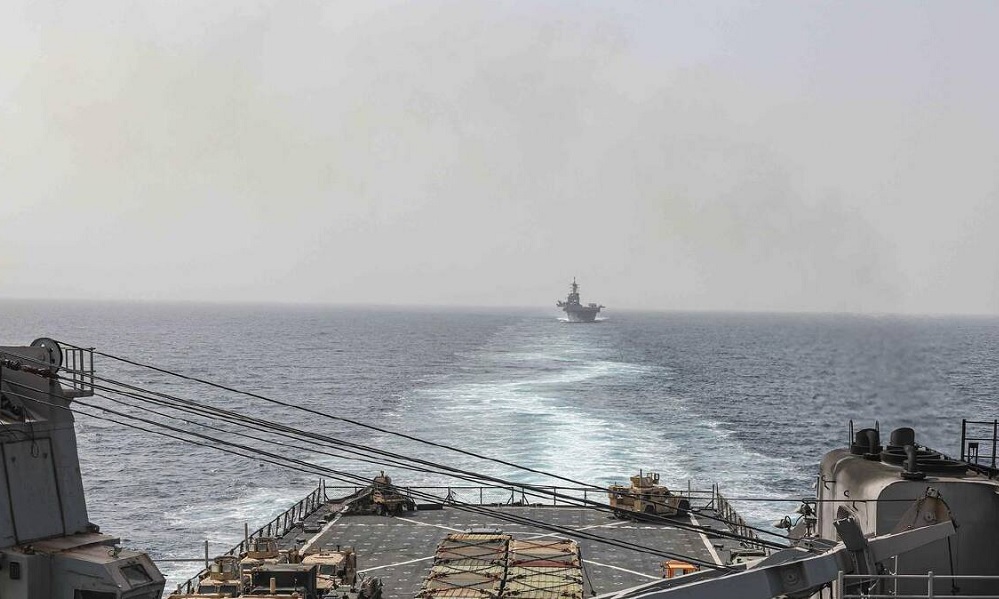
The U.S. and Yemen’s Iran-aligned Houthis reported separate attacks on shipping on Tuesday as prospects for ending the Iran war appeared to dim, with Tehran saying the Strait of Hormuz would remain closed unless Washington accepts its conditions.
The attacks, in the Gulf of Oman leading to the strait and at the entrance to the Red Sea — both vital chokepoints for global oil supplies — come as the war shows no signs of ending despite repeated assertions from U.S. President Donald Trump of a deal being imminent, Reuters reported.
Oil prices gained and global shares retreated amid renewed pessimism about a quick end to the conflict. Brent crude futures climbed 1.4% to settle at $88.91 per barrel and U.S. crude rose 1.3% to $83.20.
At the southern end of the Red Sea, four crew members were killed in a suspected Houthi attack on a small cargo vessel in the Bab el-Mandeb Strait on Tuesday, Yemen’s Transport Ministry said. Two Yemeni rescuers from an anti-Houthi military group were also killed, Yemen’s Coast Guard said.
The fatalities aboard the Egyptian-owned Tihamah would be the first deaths on shipping by Yemen’s Iran-aligned Houthis since the Iran war began.
The Houthi-run news agency Saba reported that the group, which said last month it would impose a naval blockade on Saudi Arabia in the Red Sea, attacked a Saudi ship carrying military equipment in the Bab el-Mandeb Strait. It did not name the ship, and there was no immediate Saudi response to the report.
The U.S. military, meanwhile, said a U.S. Navy MH-60 helicopter fired two Hellfire missiles to disable the steering gear of a Panama-flagged cargo ship.
The ship ignored repeated warnings to stop violating a naval blockade on Iranian ports, the U.S. Central Command said. Maritime sources told Reuters the ship was hit off Pakistan while sailing into the Gulf of Oman.
STEPPED UP RHETORIC
Both Iran and the United States have stepped up rhetoric in the past two days.
Iran’s top security official, Mohsen Rezaei, said on Tuesday that the vital Strait of Hormuz shipping route will remain closed unless the U.S. accepts Iran’s conditions to end the war – the release of Iran’s frozen assets and an end to conflicts throughout the region, including in Lebanon and Gaza.
That followed a new demand from Trump on Monday that Iran should pay compensation for people killed in 50 years of wars, attacks and protests.
Throughout the conflict, Trump has alternated between threats of escalation and claims that a peace deal is imminent.
In an interview released late on Monday, he suggested the uncertainty could last for a while, saying he might just “bop along” and let Tehran fail economically, or hit them “really, really hard.”
“I’m sort of negotiating,” Trump told Real America’s Voice. “They’re very devious negotiators.”
Speaking to reporters after a visit to Ohio on Tuesday, Trump said “Iran is going fine, going just absolutely fine.”
“We totally control the Strait of Hormuz … Nobody else, only us,” he said.
“At some point, maybe they’ll do something and then they get blown away,” he said of Iran. “But right now, we’re in a very good position. We have a country that has been the bully of the Middle East for 50 years, really 51 if you think about it … and they’re no longer the bully of the Middle East.”
Asked about an incident in which he switched planes in Turkey last month because of worries over reports of a potential Iranian assassination threat, Trump suggested the alternative aircraft may have faced greater risk.
“That would be the plane I think that they would be more likely to go for,” he told reporters after The Washington Post broke the story about him secretly taking a military flight instead of Air Force One in an operation involving him being moved between aircraft in a catering truck.
“Any consequential president has a lot of threats,” Trump added. “I don’t worry about anything.”
The comments from Rezaei, appointed on Sunday as second-in-command of the body that coordinates Iran’s security and foreign policy, were the strongest indication the Strait of Hormuz would not reopen to shipping anytime soon. The waterway handled a fifth of global oil and liquefied natural gas flow before the war.
“As long as America does not change its behaviour and does not accept Iran’s conditions, the Strait of Hormuz will not be opened,” Rezaei said, according to the semi-official Tasnim news agency.
There was no immediate comment from Washington on Iran’s latest comments.
Thousands of people have been killed in the conflict since the U.S. and Israel launched attacks on Iran on February 28.
Iran has struck U.S. assets and infrastructure in countries including Oman, Jordan, Kuwait, Israel, the United Arab Emirates and Saudi Arabia.
Raising the prospect of further escalation, Mohammad Reza Naqdi, an adviser to the commander of Iran’s Revolutionary Guards, said on Iranian state TV on Tuesday that the corps was developing the ability to carry out operations “on enemy soil.”
“We need to be able to move the operations to the enemy’s soil, whenever this is needed and ordered,” he said. “This is the characteristic of the offensive doctrine that has to be attained.”
Regional
Syria sentences absent Bashar al-Assad to death over killings, torture
Assad fled the capital Damascus as rebel fighters approached nearly two years ago, and is currently in Moscow.
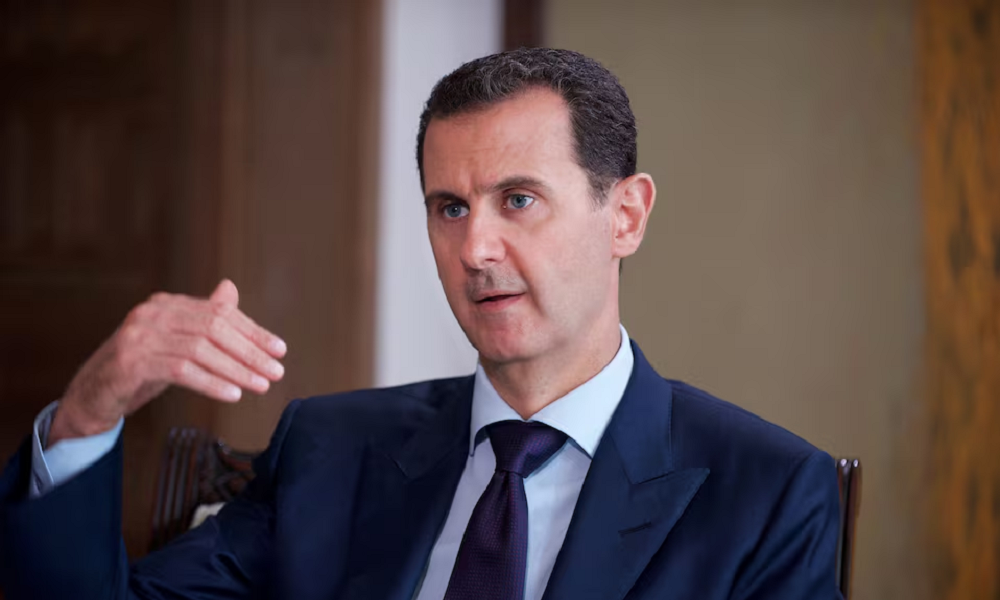
A Syrian court sentenced ousted leader Bashar al-Assad to death on Tuesday after a trial in absentia, convicting him of crimes including killings, torture, and arbitrary arrest during the country’s nearly 14-year war.
It was the first conviction against Assad, who was ousted in a rebel offensive in December 2024 that ended decades of his family’s iron-fisted rule over Syria, and the brutal war that killed hundreds of thousands of Syrians, Reuters reported.
Assad fled the capital Damascus as rebel fighters approached nearly two years ago, and is currently in Moscow.
In a trial of former government officials on Tuesday, a judge handed down a death sentence to Assad over the crimes of “premeditated and intentional murder of more than one person and of children, torture, arbitrary arrest and crimes against humanity”.
Atef Najib, a security official under Assad, was also sentenced to death.
Assad, who was born in 1965, became president in 2000 after his father Hafez died. He maintained the family’s rule and the dominance of their Alawite sect in the Sunni Muslim-majority country and Syria’s status as an Iranian ally hostile to Israel and the U.S.
Shaped in its early years by the Iraq war and crisis in Lebanon, Assad’s rule was defined by civil war, which spiralled out of the 2011 Arab Spring, when Syrians demanding democracy took to the streets, to be met with deadly force.
Regional
Iran ties Hormuz reopening to US concessions on several demands
Araqchi said reopening the strait would depend in part on the U.S. paying compensation for damage it caused in widespread attacks on Iran.
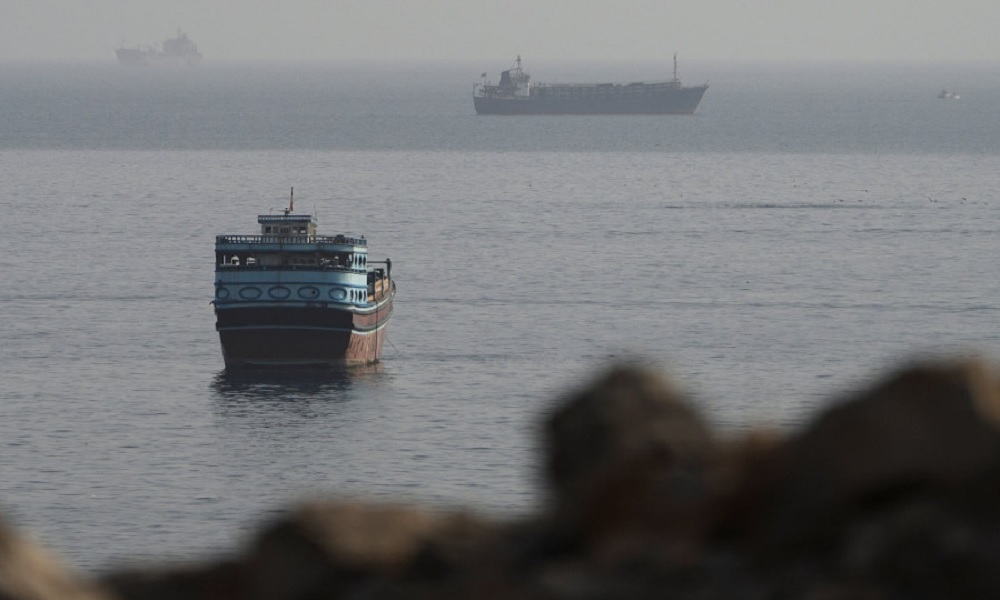
Iran said it was nearing a final pact with Oman defining new shipping lanes between them through the Strait of Hormuz but repeated that the U.S. must meet other conditions, including compensation and an end to sanctions and military threats, before the strategic waterway is reopened.
A U.S. official told Reuters on Friday that Iran and Oman were close to a deal that could pave the way for restoring safe passage through the strait, a major conduit for oil and gas shipping before Iran blocked Hormuz in response to U.S. and Israeli attacks on Tehran that began in late February, Reuters reported.
Iranian Foreign Minister Abbas Araqchi said on Sunday an agreement with Oman on the strait was in its “final stages” but reiterated comments made on Saturday that Tehran would not reopen the channel unless the U.S. met certain demands made by Tehran.
The deal with Iran would set out the new shipping lanes to be used once the U.S. fulfils those conditions and the strait is reopened, Iran’s Mehr news agency quoted him as saying.
Iran and the U.S. are not engaged in direct talks, and Tehran will not start them as long as Washington breaches an interim deal signed in June, Araqchi said, adding that messages were being exchanged through intermediaries.
U.S. President Donald Trump said in an interview with Axios that the U.S. was “low-keying” it with Iran. “We are only semi-negotiating with them. We are just watching Iran with its huge inflation and the fact they have no money.”
CONDITIONS INCLUDE COMPENSATION
Araqchi said reopening the strait would depend in part on the U.S. paying compensation for damage it caused in widespread attacks on Iran.
The secretary of Iran’s top national security body, Mohammad Baqer Zolqadr, also listed ending further U.S. threats against Iran; halting aggression toward Iran and its Lebanese, Palestinian, Yemeni and Iraqi allies; removing a U.S. naval blockade in the Gulf; lifting sanctions on Iran; and releasing frozen Iranian assets.
The United States and Israel launched air strikes on Iran more than five months ago. Trump has said the attacks were aimed at keeping the Islamic Republic from developing nuclear weapons and degrading its ability to threaten the region.
Washington and Tehran agreed to a ceasefire in June, but the U.S. reimposed a blockade on Iranian shipping in the Gulf in July, a move that Tehran said violated the truce, which by then had already broken down.
“Once the deal is announced to restore commercial shipping without impediments, the United States will lift the blockade of Iranian ports,” the U.S. official told Reuters on condition of anonymity.
U.S. actions would be tied to Iran’s implementation of its commitments, the official said.
The U.S. comments indicated delicate sequencing toward a deal that sources had told Reuters appeared to be set to give Tehran control over vessel traffic entering the Gulf through the strait, which shippers have said was not easily workable.
The United Arab Emirates said on Saturday that Iran had attacked a ship affiliated with its state oil company. There was no immediate comment from Iran, whose Revolutionary Guard Corps previously has attacked ships that it said tried to cross the strait without Iranian permission.
HOUTHI ATTACKS
Iranian strikes on Strait of Hormuz shipping have been coupled with increased attacks by its Yemen-based allies, the Houthi rebels, who have targeted ships at another oil chokepoint on the other side of the Arabian Peninsula between the Red Sea and Gulf of Aden.
The Houthis also declared a naval blockade against Saudi Arabia in the Red Sea last month in response to what they said was a Saudi siege on them in Yemen, an allegation denied by Riyadh, which backs Yemen’s internationally recognised government.
The Yemeni rebel group said they had attacked Saudi Aramco’s Jazan refinery on Sunday, two days after the kingdom signed a defence pact with Sunni Muslim allies Turkey and Pakistan in response to growing regional instability from the U.S.-Israeli war on Shi’ite Iran.
The Saudi energy ministry said a fire had broken out at the refinery but was later extinguished with no injuries, without giving a cause.
Turkish Foreign Minister Hakan Fidan said the new alliance was not directed against Iran or any other country, but rather served as a general pledge to support security.
Fighting has escalated between the Houthis and government forces in Yemen, with the Yemeni military on Monday saying seven people including military personnel and civilians were killed in a Houthi attack on the Red Sea port city of Mocha.
Air defences intercepted and shot down 11 Houthi drones that participated in the attack, the military said.


FAO warns water shortages and heat put Afghanistan’s agriculture under pressure

US military operations killed 153 civilians in 2025, Pentagon assessment shows

Hana raises concerns over Afghan women and children amid Iran’s expulsion policy

Afghanistan face Ireland with series win in sight

Afghanistan to host India for three-match T20I series in Delhi

Pakistan’s governance system has ‘collapsed’: Mohsin Naqvi

Spain sweep FIFA World Cup player awards after historic triumph

Iran, Afghanistan and Tajikistan discuss expanding regional transit cooperation

Afghan health minister, Gavi discuss expanding routine immunization

Afghanistan temporarily eases fuel import standards to help curb rising prices

Tahawol: Hamid Karzai’s call for Afghan reconciliation discussed

Saar: Preparations for IEA’s fifth anniversary discussed

Tahawol: Iran’s acknowledgment of Afghanistan’s cooperation discussed

Saar: Five years of Islamic Emirate rule in Afghanistan reviewed

Tahawol: Afghanistan: An Alternative to the Strait of Hormuz?
-

 Sport3 days ago
Afghanistan secure direct qualification for 2027 Men’s ODI World Cup
-
 Regional4 days ago
Goods transporters to go on strike from Saturday after talks with Pakistan govt fail
-

 Sport4 days ago
Rashid Khan takes six as Afghanistan thrash Ireland by 92 runs
-
 Latest News3 days ago
Pakistan-backed armed groups in Balochistan using former Afghan government forces: report
-
 World4 days ago
US Senate passes Russia sanctions championed by Graham; US House next
-
 Sport2 days ago
Abasin Defenders stun Kabul Zalmi in Kabul Premier League
-

 Health5 days ago
WHO warns aid cuts disrupting healthcare services across Afghanistan
-

 Latest News4 days ago
Moldova president criticizes visa approval for IEA delegation