
Regional
Iran and Israel say they have halted strikes on each other for now

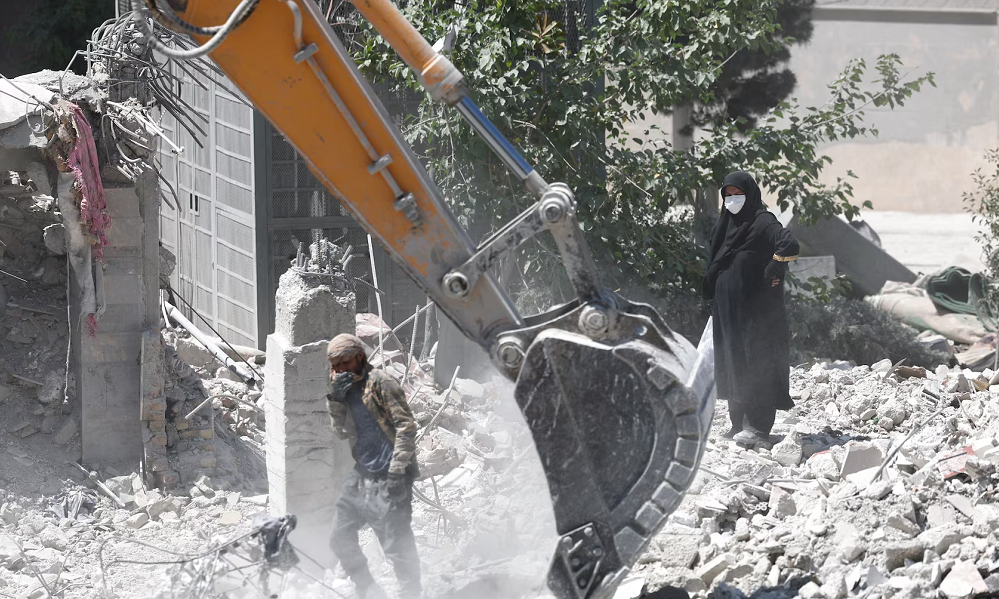
Iran and Israel said on Monday they had halted attacks on each other after an appeal from U.S. President Donald Trump, though Tehran warned it would resume hostilities if Israel continued to hit Hezbollah in Lebanon.
The most direct confrontation between the two countries since April threatened to wreck Washington’s efforts to reach an agreement with Tehran to end their more than three-month-old war, Reuters reported.
Oil prices rose as much as 5% after the flurry of attacks, then fell when Iran’s military said its first wave of strikes on Israel was over. The dollar retreated from its highest level in nearly two months.
A source briefed on the matter said Israel had also decided to halt its attacks on Iran.
Tehran had fired missiles towards Israeli territory late on Sunday, calling them retaliation for attacks on the Iranian-backed Hezbollah militia on the outskirts of Beirut.
Israel then hit Iranian air defense systems and a petrochemical plant that it said was used to produce ballistic missiles. Iran’s Islamic Revolutionary Guard Corps said it retaliated with a strike aimed at a similar Israeli plant in the city of Haifa.
No deaths were reported by authorities on either side.
The latest exchanges complicated Trump’s push to end a war that the U.S. and Israel launched on February 28. A ceasefire announced on April 8 paused all-out warfare. But flare-ups in the Gulf have continued.
Trump said Israel and Iran both wanted an immediate ceasefire.
“Final negotiations on ‘Peace’ are proceeding, subject to ignorance or stupidity getting in its way,” he wrote on social media.
U.S. and Israeli officials said Trump and Israeli Prime Minister Benjamin Netanyahu spoke on Monday.
In an interview with Axios published on Monday, Trump said he warned Netanyahu that if the Israeli leader went back to war with Iran, he might find himself fighting alone. “I said, ‘Bibi, you better be careful, or you will be on your own very soon,'” Trump said.
Israel’s Ambassador to the U.S. Yechiel Leiter pushed back on reports that Trump pressured Netanyahu, telling Fox News’ “Special Report” that conversations between the two leaders were cooperative and accusing journalists of playing up a misleading narrative.
“They have a deep friendship that goes back some 40 years, and sometimes lovers have a spat, and sometimes the tension in the room and on the conversation can get a little heated,” Leiter said.
An Israeli military official said Israel was prepared to continue operations for “as long as it takes”, while Iranian officials struck a similarly defiant tone. A military source quoted by the semi-official Tasnim news agency said Tehran was ready for a prolonged conflict and could renew strikes against U.S. interests in the region.
‘EXTREME SUSPICION’
U.N. Secretary-General Antonio Guterres urged all parties to exercise maximum restraint and refrain from any action that could further inflame an already volatile situation, according to spokesperson Farhan Haq.
Iranian Foreign Ministry spokesperson Esmaeil Baghaei said Tehran was exchanging messages with Washington in an atmosphere of “extreme suspicion.”
Ebrahim Azizi, head of the Iranian parliament’s national security committee, warned that any action against Iranian national security or Iran’s allies in the region, including Yemen’s Houthis, would be met with a decisive and costly response, Iranian media reported.
Yemen’s Iran-aligned Houthis pledged in a statement to stop Israeli navigation in the Red Sea, and said they had also fired missiles at Israel.
The Israeli military later said it intercepted a suspicious aerial target from Yemen after hostile aircraft sirens sounded in the Eilat area.
The Houthis have so far largely stayed out of the regional war. They control territory at the mouth of the Red Sea, increasingly important as an alternative route for millions of barrels per day of Middle East oil otherwise blocked by Iran’s grip on the Strait of Hormuz.
In Tehran, Iranian media reported explosions, with air defenses shooting down a drone over the capital. There were no immediate reports of casualties or major damage.
There were also signs of conditions returning to normal. Flights resumed at Tehran’s Imam Khomeini Airport on Tuesday, nearly 24 hours after being suspended following Iran’s missile attack on Israel, Iranian media reported.
LEBANESE-ISRAELI TALKS TO RESUME
Israel has never halted its Lebanon campaign, which has killed thousands of people, saying it should be treated separately from any U.S.-Iranian ceasefire. Hezbollah has also continued its attacks.
Tehran has long said any peace deal with the U.S. depends in part on an end to fighting in Lebanon, which Israel invaded in March in pursuit of Hezbollah fighters who had fired across the border.
The U.S. ambassador to Lebanon, Michel Issa, said on Monday that Lebanese-Israeli negotiations had been scheduled to resume in Washington.
Tehran has continued to block most shipping through the Strait of Hormuz, which before the war carried a fifth of the world’s crude oil and liquefied natural gas. Washington has imposed its own blockade of Iranian ports.
Trump has said any peace deal must ensure Iran cannot develop a nuclear weapon. Iran’s demands include the lifting of international sanctions, the release of billions of dollars in frozen assets and recognition of its control of the strait.






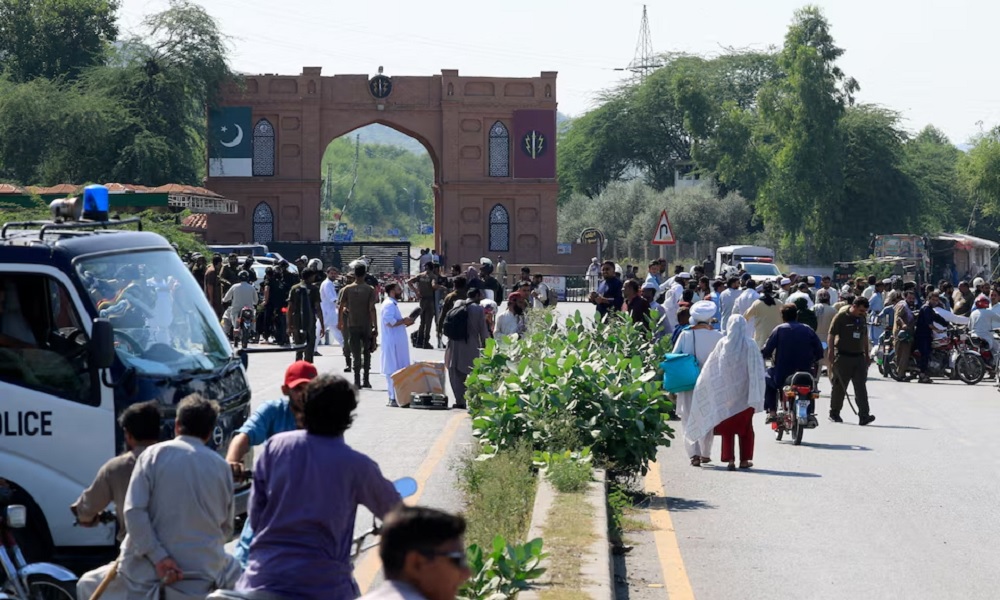
Jailed former prime minister Imran Khan’s Pakistan Tehreek-e-Insaf party has postponed a planned long march from Peshawar to Islamabad until October 4, the chief minister of the PTI-ruled Khyber Pakhtunkhwa province, Sohail Afridi, told reporters on Friday.
PTI had planned to begin the march on September 27 to press for the release of Khan, who has been in jail since 2023. The PTI’s last large-scale protest two years ago ended in deadly clashes with security forces, Reuters reported.
Earlier this week, Pakistan curbed access to its capital, Islamabad, by blocking major highways with shipping containers and deploying tens of thousands of security forces, ahead of the march planned by Khan’s supporters.
Party spokesperson Zulfi Bukhari, however, told Reuters that although they had moved the planned date to October 4, they could launch the march earlier.
“We can now do it whenever we deem fit. The question is to the government, as to how long they’re willing to keep the country closed off?”, Bukhari said.
Authorities have detained three of Khan’s sisters and hundreds of party activists in recent days, citing a need to maintain public order.
Khan, 73, a former cricket star ousted by parliament in a 2022 no-confidence vote, has claimed to be a political prisoner.
Regional
Saudi Grand Mufti tells troops to be ready to sacrifice their lives fighting Houthis
State TV has in recent weeks aired footage of an alleged Houthi strike on a mosque in the kingdom’s south, and authorities have also accused the Houthis of launching an attack on Mecca, Islam’s holiest site.
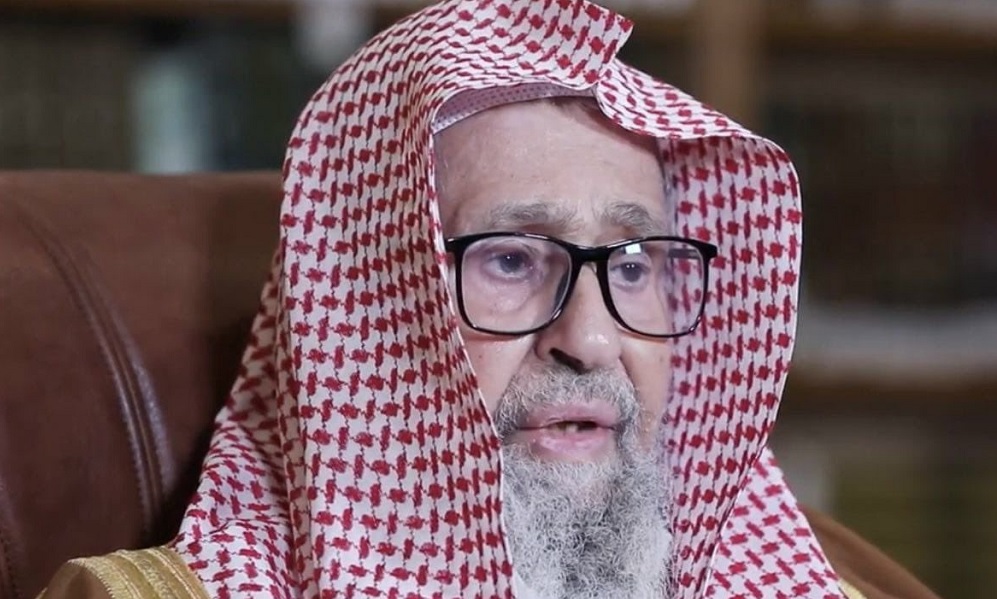
Saudi Arabia’s top religious authority called on soldiers in the kingdom to be ready to lay down their lives to fight the Iran-backed Houthis until the group is ousted from power, a statement posted on the Saudi state news agency said.
The rare and strongly worded message by Saudi Grand Mufti Sheikh Saleh bin Fawzan Al-Fawzan was addressed to soldiers stationed at the country’s borders and drew heavily on Quranic verses and recorded sayings of the Prophet Mohammad related to sacrifice and struggle in defence of God, Reuters reported.
It comes after weeks of escalating violence between Saudi Arabia and the Houthis which has seen the Iran-backed group attack the kingdom with salvos of missiles and drones and Saudi Arabia respond with airstrikes.
Observers have been questioning whether Saudi Arabia will launch a broader military operation along with Yemeni government forces it backs.
“Protecting this great nation… and punishing anyone who seeks to lay a hand on even an inch of its territory are among the greatest duties and most virtuous acts of devotion, for which lives and souls may be sacrificed in seeking God’s pleasure,” said the statement, issued late Thursday.
Asserting the authority of the Saudi-backed internationally recognized Yemeni government over the entire country was “among the most pressing obligations,” it added.
Those government forces lost control of the vital Bab el-Mandeb waterway to the Houthis two weeks back, a blow to the kingdom, which has been mired in the conflict since 2015 after it launched an unsuccessful operation to oust the Houthis from the Yemeni capital Sanaa.
The recent fighting is the latest episode in 12 years of civil war in Yemen which had largely been frozen since a 2022 but has escalated again and has become linked to the wider Iran war.
“We ask God Almighty to grant you all his support, and to protect our countries and beloved Yemen from all harm. We also ask him to bring about the complete defeat of the Houthi group and those who assist and support them,” the statement said.
The Mufti’s letter adds to a growing religiously centered narrative by authorities in the conservative Sunni Muslim kingdom aimed at discrediting the Houthis, who follow a different sect of Islam.
State TV has in recent weeks aired footage of an alleged Houthi strike on a mosque in the kingdom’s south, and authorities have also accused the Houthis of launching an attack on Mecca, Islam’s holiest site.
“It is incumbent upon you, brothers serving on the front lines, to remain constantly prepared to perform your duty, to obey the rulers and your field commanders, and to carry out orders with the utmost precision, as God Almighty commanded the companions of his Prophet to do,” the statement said.
“You are following in the footsteps of the Prophet’s companions, defending the sacred sites of Muslims.”
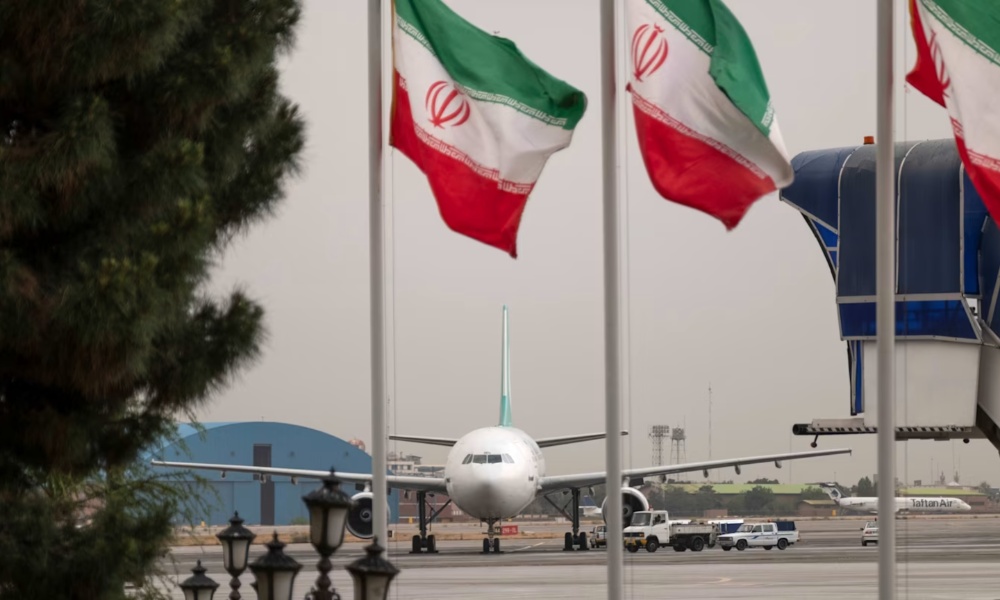
Iranian airlines cancelled some international flights on Wednesday after the United States imposed new sanctions targeting Iran’s aviation sector.
Georgia and Azerbaijan confirmed the suspension of flights to Iran, while a travel agent in Tehran told AFP that flights to Baghdad, Muscat and Qatar had also been halted. Flights to several other destinations, including China, continued.
The new US measures were announced by Treasury Secretary Scott Bessent on Monday as Washington seeks to increase economic pressure on Tehran amid the ongoing conflict.
“We are squeezing the Iranians like they’ve never seen,” Bessent told Fox News on Wednesday, claiming that more than 80% to 90% of Iran’s international flights had been affected.
Iranian President Masoud Pezeshkian, who is attending the United Nations General Assembly in New York, rejected the pressure.
“The resistance of the Iranian people will only intensify in the face of sanctions, mounting pressure and growing intimidation” from the United States, Pezeshkian said.
Iran’s aviation industry has faced US sanctions for years, but the latest measures could further restrict international connections.
Despite the new sanctions, flight-tracking data showed a Mahan Air flight from Tehran arriving in Guangzhou, China, on Wednesday. A flight to Shanghai was also scheduled to depart from Tehran’s international airport.
China has opposed the new US sanctions, describing them as illegal.
Some flights to Istanbul also continued, although others were cancelled, according to the Tehran-based travel agent, who said the situation remained uncertain.
“The situation is unstable and we are no longer selling tickets for the time being for fear of cancellations,” the agent told AFP.
Flights connecting Iran with Turkey and Armenia were also still possible on some smaller Iranian airlines, while flights to Najaf in Iraq and Dubai in the United Arab Emirates were listed as scheduled.
Mohsen Rezaei, head of Iran’s Supreme National Security Council, warned neighbouring countries against complying with the US measures.
“If a country cooperates with or embarks on adventures with the United States, its airports will no longer be able to operate flights” to Iran, he told Iranian state television.
The possible suspension of flights between Iran and Iraq has raised particular concerns because of the large number of Iranian religious pilgrims who travel to Iraq.
Iranian media reported that authorities were considering rerouting flights from Baghdad to Najaf. AFP also reported that several sources in Iraq said Baghdad would comply with the US sanctions, although the Iraqi government had not publicly announced a flight ban.
Travel agents in Najaf said passengers were seeking information about possible cancellations and considering travelling by land instead.


Ariana Afghan Airlines increases Kabul-Delhi cargo flights

Khalilzad questions Pakistan’s commitment to Afghan welfare

India, UN envoy discuss Afghanistan’s humanitarian needs

Kazakhstan calls for coordinated international engagement with Afghanistan

Pakistan PM, UN chief discuss Afghanistan amid rising Kabul-Islamabad tensions

Saudi energy group signs major Afghanistan deals covering gas exploration and pipeline plans

Trump floats idea of renaming Atlantic or Pacific Ocean

US hits Egyptian bank branches with Iran sanctions as war marks six months

Nepal flood rescue mission enters critical phase as thousands remain missing

Iranian clubs to face Gulf opponents at neutral venues in Asian Champions League Elite

Exclusive interview with Abdul Latif Mansoor, Minister of MRRD

Tawsia: Overview of Afghanistan’s iron mines

Tahawol: Discussion on fresh Pakistani airstrikes on Afghanistan

Saar: Calls for international support for Afghanistan discussed

Tahawol: Opening of the 81st UN General Assembly Session
-

 Sport5 days ago
Afghanistan to face Japan and Nepal in Asian Games cricket group stage
-

 World4 days ago
CNN, MS NOW and Politico sue Trump, challenging White House ban
-

 Latest News3 days ago
Ariana Afghan Airlines ranks seventh among 45 Central Asian airlines
-

 Latest News4 days ago
UN reiterates call for respect for international law after Kunar airstrikes
-
 Latest News5 days ago
Khalilzad condemns Pakistan airstrikes, says current strategy is not working
-

 Regional3 days ago
US and Iran hold first talks since June after Trump’s ‘annihilation’ threat
-

 Latest News3 days ago
Silk Road highway in Wakhan corridor now reaches the China border
-

 Latest News4 days ago
Afghan Official: Pakistan’s airstrikes will not go unanswered