
Regional
Iran targets US bases in Jordan and the Gulf after Trump orders strikes near Hormuz


Iran’s Revolutionary Guards said they had carried out attacks against a U.S. base in Jordan and 21 other targets in the Gulf on Wednesday in retaliation for American strikes around the Strait of Hormuz, Iranian media reported.
The clashes mark one of the biggest exchanges in hostilities since the two countries agreed to a ceasefire in April, Reuters reported.
The Iranian strikes, which included attacks in Kuwait and Bahrain, came after the U.S. military said on X it had targeted Iranian air defence, ground control stations and surveillance radar sites near the strait in response to what U.S. President Donald Trump said was the downing of a U.S. Apache helicopter on Tuesday.
“I believe the response should be very strong, very powerful, and that’s what this one is,” Trump told ABC News on Tuesday.
The escalation in violence deepens doubts about the prospects for a deal to end the war that started on February 28 with joint U.S.-Israeli strikes against Iran. Tehran responded by firing on Gulf neighbours that host U.S. bases and all but choked off the Strait of Hormuz, a vital conduit for oil and gas.
The latest U.S. strikes lasted around four hours before the U.S. Central Command posted just before 9 p.m. ET (0100 GMT Wednesday) that they had ended. A U.S. official said almost 20 Iranian targets had been struck.
Iran’s state media reported that Qeshm island and the port city of Sirik in the Strait of Hormuz were attacked.
Sounds of explosions were heard in nearby Bandar Abbas, and later in the vicinity of Jask, near the entrance to the strait, Iranian media reported, citing local sources and residents.
Iran’s Revolutionary Guards said in response they had targeted four sites at the U.S. al-Azraq base in Jordan using long-range missiles, Iranian media reported.
The Guards said the targets included F-35 fighter jet hangars and a command-and-control centre, and warned they were ready to deliver a “crushing and decisive” response to any further U.S. attack.
Jordanian armed forces said on Wednesday they had intercepted and shot down five missiles launched from Iran toward al-Azraq. The military added that debris from the interception operation fell on Jordanian territory but caused no injuries or material damage.
The Kuwaiti army said its air defence systems were engaging hostile aerial targets and urged the public to follow official safety instructions, after Iran’s Revolutionary Guards said they had targeted the Ali Al Salem base in Kuwait with drones.
Iran’s Revolutionary Guards said earlier they attacked the U.S. Fifth Fleet in Bahrain with drones and threatened “more severe responses” if hostilities continued, according to media.
Bahrain’s Interior Ministry said a warning siren had been sounded and urged the public to head to safety. Air defences had repelled Iranian attacks, a media adviser to Bahrain’s king said soon after in a post on X.
A U.S. official, speaking on condition of anonymity, said initial assessments showed nearly all missiles and drones launched by Iran were intercepted and they were not immediately aware of any reports of harm to U.S. personnel or damage to U.S. locations.
The Pentagon did not immediately respond to a request for comment. Reuters could not immediately verify the battlefield reports.
Oil prices climbed about 1% in early Asian trade on Wednesday following the escalation in hostilities.
NOT A BIG DEAL?
On Tuesday, a U.S. Apache helicopter was brought down by a one-way Iranian attack drone, according to a U.S. official who spoke on condition of anonymity. Two U.S. pilots involved in the helicopter incident were uninjured, Trump said.
Iran’s state media cited a military source as saying that no offensive air military operations had been conducted in the Strait of Hormuz in the previous 24 hours.
A U.S. Navy surface drone found and rescued the two crew, the U.S. military said, after the U.S. Army attack helicopter went down in waters near Oman’s coast while on patrol at around 3 a.m. on Tuesday (2300 GMT on Monday).
The U.S. military’s Central Command gave no reason for the crash. It said the two crew were rescued after two hours and said they were in stable condition – a more cautious assessment than Trump’s description.
Iran’s Foreign Minister Abbas Araqchi did not directly address the helicopter incident, but said in a post on X that foreign forces in the region risked being involved in accidents or crossfire.
“To reduce risk, best solution is for them to leave,” he wrote.
Trump told The Wall Street Journal during a phone call on Tuesday that the helicopter incident “wasn’t a big deal” and stressed that “the pilot is fine.”
However, the episode could well add further strain to efforts to broker a peace deal to end the wider Middle East war and reopen Hormuz.
Trump has repeatedly said Iran and the United States are close to an agreement, though there have been few signs of progress since a tenuous ceasefire took effect in early April.
Fighting between Israel and Iran-backed Hezbollah militants in Lebanon has continued, and Tehran has maintained its restrictions on most shipping through the Strait of Hormuz, which before the war carried a fifth of the world’s crude oil and liquefied natural gas. Washington has imposed its own blockade of Iranian ports.
U.S. Energy Secretary Chris Wright said on Tuesday that ship traffic through Hormuz is rising “very meaningfully,” but added it would take many months to get back to normal flows of energy once the war is over.
Trump has said any peace deal must ensure Iran cannot develop a nuclear weapon. Iran denies any such ambitions.
Iran’s demands include the lifting of international sanctions, the release of billions of dollars in frozen assets and recognition of its control of the strait.






Iran and Israel said on Monday they had halted attacks on each other after an appeal from U.S. President Donald Trump, though Tehran warned it would resume hostilities if Israel continued to hit Hezbollah in Lebanon.
The most direct confrontation between the two countries since April threatened to wreck Washington’s efforts to reach an agreement with Tehran to end their more than three-month-old war, Reuters reported.
Oil prices rose as much as 5% after the flurry of attacks, then fell when Iran’s military said its first wave of strikes on Israel was over. The dollar retreated from its highest level in nearly two months.
A source briefed on the matter said Israel had also decided to halt its attacks on Iran.
Tehran had fired missiles towards Israeli territory late on Sunday, calling them retaliation for attacks on the Iranian-backed Hezbollah militia on the outskirts of Beirut.
Israel then hit Iranian air defense systems and a petrochemical plant that it said was used to produce ballistic missiles. Iran’s Islamic Revolutionary Guard Corps said it retaliated with a strike aimed at a similar Israeli plant in the city of Haifa.
No deaths were reported by authorities on either side.
The latest exchanges complicated Trump’s push to end a war that the U.S. and Israel launched on February 28. A ceasefire announced on April 8 paused all-out warfare. But flare-ups in the Gulf have continued.
Trump said Israel and Iran both wanted an immediate ceasefire.
“Final negotiations on ‘Peace’ are proceeding, subject to ignorance or stupidity getting in its way,” he wrote on social media.
U.S. and Israeli officials said Trump and Israeli Prime Minister Benjamin Netanyahu spoke on Monday.
In an interview with Axios published on Monday, Trump said he warned Netanyahu that if the Israeli leader went back to war with Iran, he might find himself fighting alone. “I said, ‘Bibi, you better be careful, or you will be on your own very soon,'” Trump said.
Israel’s Ambassador to the U.S. Yechiel Leiter pushed back on reports that Trump pressured Netanyahu, telling Fox News’ “Special Report” that conversations between the two leaders were cooperative and accusing journalists of playing up a misleading narrative.
“They have a deep friendship that goes back some 40 years, and sometimes lovers have a spat, and sometimes the tension in the room and on the conversation can get a little heated,” Leiter said.
An Israeli military official said Israel was prepared to continue operations for “as long as it takes”, while Iranian officials struck a similarly defiant tone. A military source quoted by the semi-official Tasnim news agency said Tehran was ready for a prolonged conflict and could renew strikes against U.S. interests in the region.
‘EXTREME SUSPICION’
U.N. Secretary-General Antonio Guterres urged all parties to exercise maximum restraint and refrain from any action that could further inflame an already volatile situation, according to spokesperson Farhan Haq.
Iranian Foreign Ministry spokesperson Esmaeil Baghaei said Tehran was exchanging messages with Washington in an atmosphere of “extreme suspicion.”
Ebrahim Azizi, head of the Iranian parliament’s national security committee, warned that any action against Iranian national security or Iran’s allies in the region, including Yemen’s Houthis, would be met with a decisive and costly response, Iranian media reported.
Yemen’s Iran-aligned Houthis pledged in a statement to stop Israeli navigation in the Red Sea, and said they had also fired missiles at Israel.
The Israeli military later said it intercepted a suspicious aerial target from Yemen after hostile aircraft sirens sounded in the Eilat area.
The Houthis have so far largely stayed out of the regional war. They control territory at the mouth of the Red Sea, increasingly important as an alternative route for millions of barrels per day of Middle East oil otherwise blocked by Iran’s grip on the Strait of Hormuz.
In Tehran, Iranian media reported explosions, with air defenses shooting down a drone over the capital. There were no immediate reports of casualties or major damage.
There were also signs of conditions returning to normal. Flights resumed at Tehran’s Imam Khomeini Airport on Tuesday, nearly 24 hours after being suspended following Iran’s missile attack on Israel, Iranian media reported.
LEBANESE-ISRAELI TALKS TO RESUME
Israel has never halted its Lebanon campaign, which has killed thousands of people, saying it should be treated separately from any U.S.-Iranian ceasefire. Hezbollah has also continued its attacks.
Tehran has long said any peace deal with the U.S. depends in part on an end to fighting in Lebanon, which Israel invaded in March in pursuit of Hezbollah fighters who had fired across the border.
The U.S. ambassador to Lebanon, Michel Issa, said on Monday that Lebanese-Israeli negotiations had been scheduled to resume in Washington.
Tehran has continued to block most shipping through the Strait of Hormuz, which before the war carried a fifth of the world’s crude oil and liquefied natural gas. Washington has imposed its own blockade of Iranian ports.
Trump has said any peace deal must ensure Iran cannot develop a nuclear weapon. Iran’s demands include the lifting of international sanctions, the release of billions of dollars in frozen assets and recognition of its control of the strait.
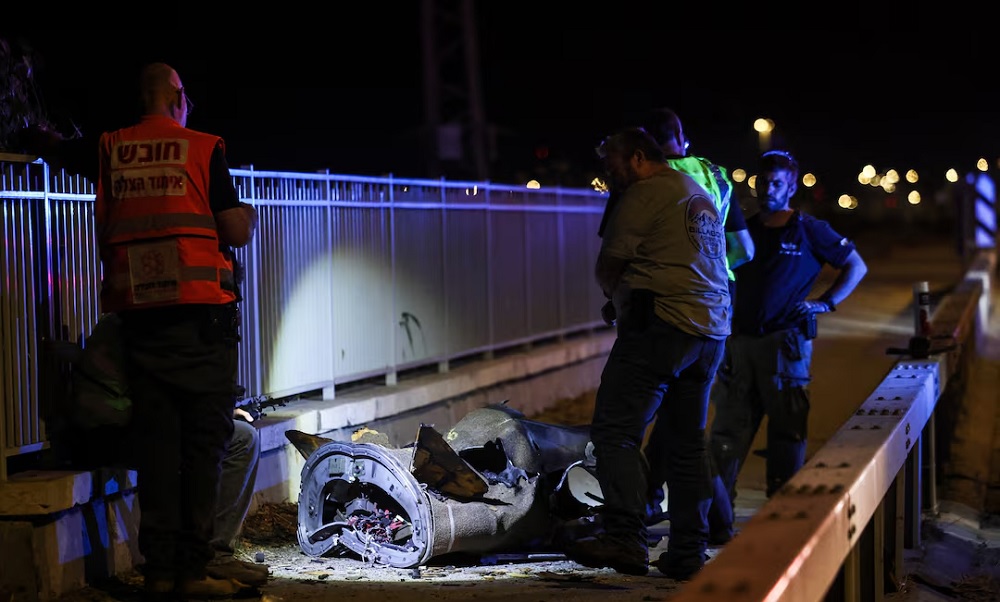
Israel said it struck military targets in western and central Iran on Monday, even after U.S. President Donald Trump reportedly told Israeli Prime Minister Benjamin Netanyahu to refrain from further attacks.
Hours earlier, Trump said new strikes by Israel and Iran would not affect his administration’s peace talks with Tehran, adding that Israeli Prime Minister Benjamin Netanyahu “doesn’t call the shots.”
Trump has leaned on Israel to stop its attacks in Lebanon to allow room for a deal to end the wider war with Iran, including rebuking Netanyahu with obscenities in a phone call last week. However, Israel earlier on Sunday launched strikes in the Beirut area for the first time since the U.S. announced a truce plan for Lebanon last week, Reuters reported.
Iran fired a salvo of missiles at Israeli targets in retaliation, putting U.S.-Iran peace talks at risk. But Trump insisted that an agreement to end the wider war remains well within reach.
“It’s not going to have any impact on the deal,” Trump told the Financial Times. “I call the shots. I call all the shots. He (Netanyahu) doesn’t call the shots.”
A few hours later, Israel’s defence forces said they had struck Iranian military targets. Iran’s Revolutionary Guards said Israel had carried out attacks on targets inside Iran using air-launched ballistic missiles.
The latest hostilities drove oil prices up more than 3% in early trading on Monday, with benchmark Brent futures back above $96 a barrel.
Iran’s Revolutionary Guards said they had targeted Ramat David air base, near Nazareth. The Israeli military said it identified missiles launched from Iran and that its defense systems had intercepted them.
TRUMP URGED NETANYAHU TO HOLD OFF FURTHER STRIKES
Trump, who was spending the weekend at his golf club in Bedminster, New Jersey, and Netanyahu spoke by phone for a little less than half an hour on Sunday, an Israeli official said, without giving further details. The White House and the Israeli prime minister’s office did not immediately respond to requests for comment.
Trump told Netanyahu during the call to refrain from further strikes because “we are close to doing something good in terms of a deal,” according to a U.S. official quoted by Axios.
Since the start of U.S.-Iran talks aimed at halting the war, Israel has continued attacks in Lebanon in a conflict with Hezbollah that Israeli officials insist should be treated separately from any ceasefire with Iran.
Tehran has long said any peace deal with the U.S. would depend on a ceasefire also holding in Lebanon, which Israel invaded in March in pursuit of Iran-backed Hezbollah fighters who fired rockets and drones across the border in solidarity with Tehran.
Iran’s chief peace negotiator, parliamentary speaker Mohammed Baqer Qalibaf, said U.S. bases and Israeli assets are legitimate targets because of hostile acts, including the “violation of agreements over Lebanon.”
Before Sunday, Iran had not attacked Israel since a ceasefire in the wider war started in April, although Hezbollah has done so.
Trump has repeatedly insisted that Washington and Tehran were close to an agreement on ending the war.
“We’re very close to a deal, or I’m going to blow the hell out of them,” Trump told NBC News’ “Meet the Press” in a prerecorded interview that aired on Sunday to mark 100 days of the conflict.
TRUMP WANTS NO ATTACKS IN LEBANON
Israel has never halted its Lebanon campaign, which has killed thousands of people and driven hundreds of thousands from their homes. Hezbollah, which did not take part in the truce talks, has also continued its attacks and says it will not give up its weapons unless Israel halts its attacks and withdraws from Lebanon.
Netanyahu said the Israeli strikes on Sunday on Beirut’s southern outskirts, a district known as Dahiyeh that has long been a Hezbollah stronghold, were ordered in response to Hezbollah firing toward Israel.
The wider war has been stalemated since the U.S. and Israel paused their attacks on Iran in early April, with Tehran blocking most shipping through the Strait of Hormuz, the main transit route for one-fifth of the world’s oil. Washington has imposed its own blockade of Iranian ports.
Though Washington and Tehran have said they are close to a preliminary agreement that would reopen the strait, they have repeatedly traded strikes, with escalations in recent days that have included attacks on nearby Arab states hosting U.S. bases.
Trump has said any agreement to end the war must prevent Iran from developing a nuclear weapon, and he is under pressure to deliver terms tougher than those agreed in 2015 under then-President Barack Obama in a deal Trump later repudiated.
Tehran’s demands include the lifting of U.S. and international sanctions, recognition of its sway over the strait and the release of billions of dollars in frozen assets.
A source familiar with U.S. plans told Reuters on Saturday that Washington could make Iranian assets available to Gulf neighbors to repair damage inflicted by Iran.
Iran’s Deputy Foreign Minister Kazem Gharibabadi said on Sunday any such diversion of Iranian assets would be illegal, and Tehran would take measures in response.
Netanyahu was criticized last week by political rivals over a new ceasefire in Lebanon ahead of this year’s national election.
The U.S. government will attempt to redirect Iranian assets to Gulf states for rebuilding and repairs of damage caused by Iran, a source familiar with the matter said, as Tehran followed up a wave of strikes against Kuwait and Bahrain with further drone launches.
U.S. Treasury Secretary Scott Bessent has directed a team to assess costs for damages already inflicted on Gulf allies by Iran, the source said, adding that the U.S. will consider using Iranian assets for repairs of any future destruction as well, Reuters reported.
The disclosure came a day after Mohsen Rezaei, an adviser to Iran’s supreme leader, told CNN that a peace deal to end the three-month war hinged on the release of $24 billion in Iranian assets frozen by the United States.
The source on Saturday did not specify what kind of assets the Treasury was examining. The language used to describe the new measures did not appear limited to frozen assets.
The threatened redirection of Iranian assets could create a new irritant to a fragile ceasefire between the United States and Iran, which was tested again this weekend with strikes by the U.S. and Iran.
Peace negotiations appear to have stalled, although a minister from mediator Pakistan traveled to Tehran on Saturday with a letter for Iran’s Supreme Leader Ayatollah Mojtaba Khamenei, Iran’s semi-official ISNA news agency reported.
U.S. forces struck Iranian coastal radar sites in Goruk and Qeshm Island, both in the Strait of Hormuz, early Saturday after shooting down drones launched by Iran that U.S. Central Command says posed a threat to maritime traffic. A further two Iranian attack drones that were threatening shipping in the strait were also shot down, the U.S. military said late on Saturday.
Iran’s Revolutionary Guard said it retaliated against U.S. bases in Kuwait and Bahrain, and Kuwait’s army said on Saturday it engaged seven ballistic missiles that passed over residential areas, resulting in material damage but no casualties.
In Bahrain, sirens sounded and residents were urged to seek shelter. Kuwait and Bahrain condemned the strikes.
PAKISTANI MINISTER LANDS IN TEHRAN
Iran later said it had hit U.S. bases in both countries with ballistic missiles, but the U.S. military said six missiles were intercepted and a seventh did not reach its target.
The U.S. and Iran have been engaged in largely indirect negotiations for an interim deal to halt the three-month-old war that would leave issues including Iran’s nuclear programme to further negotiations.
But a deal has remained elusive while the two sides have periodically skirmished.
Tehran wants access to billions of dollars in oil revenue, waivers on sanctions on crude exports, the lifting of a U.S. blockade on its ports and leverage over the Strait of Hormuz.
Iran has effectively blocked the waterway, where about a fifth of global oil traffic transited before the war.
Iranian state media reported that Pakistani Interior Minister Mohsin Naqvi arrived in Tehran on Saturday for talks with Iranian officials, including Foreign Minister Abbas Araqchi.
Naqvi said he was carrying a “special letter” from his country’s army chief and prime minister to Khamenei, ISNA reported.
Trump is facing mounting domestic political pressure due to rising gas prices to bring the unpopular war to an end. He told NBC that while most of Iran’s drone and missile manufacturing facilities had been destroyed, the Iranians still had access to about a fifth of their missiles.
“They have some missiles, they have some drones. I would say percentage wise, maybe 21% to 22% of their missiles. It’s a lot of missiles, but it’s not what it was when we first attacked,” Trump told NBC News’ “Meet the Press” program, according to excerpts released by the network on Friday.
The conflict has driven up oil prices and disrupted supply chains for other goods, including humanitarian aid.
FIGHTING FLARES ACROSS REGION DESPITE CEASEFIRES
In a parallel conflict in Lebanon, two Lebanese army officers and a soldier were killed in an Israeli strike on a military vehicle in south Lebanon, the Lebanese army said. The Israeli military said it was investigating the incident.
Iran has made a ceasefire in Lebanon between Israel and Iran-aligned Hezbollah a condition for any peace deal with Washington.
Lebanon’s army said on Saturday its commander, General Rudolf Haykal, left for Pakistan at the invitation of his Pakistani counterpart, without giving further details.
The surprise visit was notable given the insistence by Washington — and by Lebanese leaders, including the president — that ceasefire talks for Lebanon remain separate from U.S.-Iran negotiations mediated by Pakistan.
Hezbollah leader Naim Qassem this week rejected a U.S.-brokered pact between Israel and the Lebanese government to halt the fighting in Lebanon. The deal did not provide for an Israeli withdrawal and Hezbollah had not been party to the negotiations.
Israel has said its forces would not withdraw or halt operations in the country amid increasing friction with the U.S.


Iran targets US bases in Jordan and the Gulf after Trump orders strikes near Hormuz

ACCI chairman holds talks with U.S. and Russian representatives to boost trade and investment

Pakistani airstrikes on civilian areas in three Afghan provinces kill 13

Tahawol: Calls for Afghanistan’s integration discussed

Karzai, UK envoy react after protest dispersed in Herat

Afghanistan signs $46 million deal to develop standard laboratory complexes

Large blast near Beit Shemesh part of pre-planned test: Israeli defense firm

Trump returns from China with stability but little progress

Afghanistan announce squad for India series

Afghanistan, Russia sign military cooperation agreement
Tahawol: Calls for Afghanistan’s integration discussed

Saar: Alleviating impact of pressure on Afghanistan discussed

Tahawol: The Shadow of War Returns to the Middle East

Saar: New report on US troop withdrawal from Afghanistan

SAAR: UN Security Council Holds Quarterly Meeting on Afghanistan
-

 Sport5 days ago
Gaikwad set to replace injured Kohli for Afghanistan ODI Series
-

 International Sports23 hours ago
Norway’s Viking-inspired World Cup team photo goes viral
-

 International Sports5 days ago
Eight Goalkeepers Set to Shine at the 2026 FIFA World Cup
-
 Latest News4 days ago
Uzbekistan advances feasibility study for Trans-Afghan Railway Project
-

 International Sports4 days ago
From AI to Robot Dogs: What’s new at FIFA World Cup 2026
-

 Latest News3 days ago
UNAMA voices concern over reported detention of women in Herat
-

 Latest News4 days ago
Karzai welcomes graduation of 74 Afghan girls from US universities
-
 Regional4 days ago
Iran declares support for Hezbollah with wider peace deal in doubt