
Regional
Iran says its right to uranium enrichment is non-negotiable
Last weekend’s U.S.-Iran talks in Oman were described by both sides as positive and constructive.

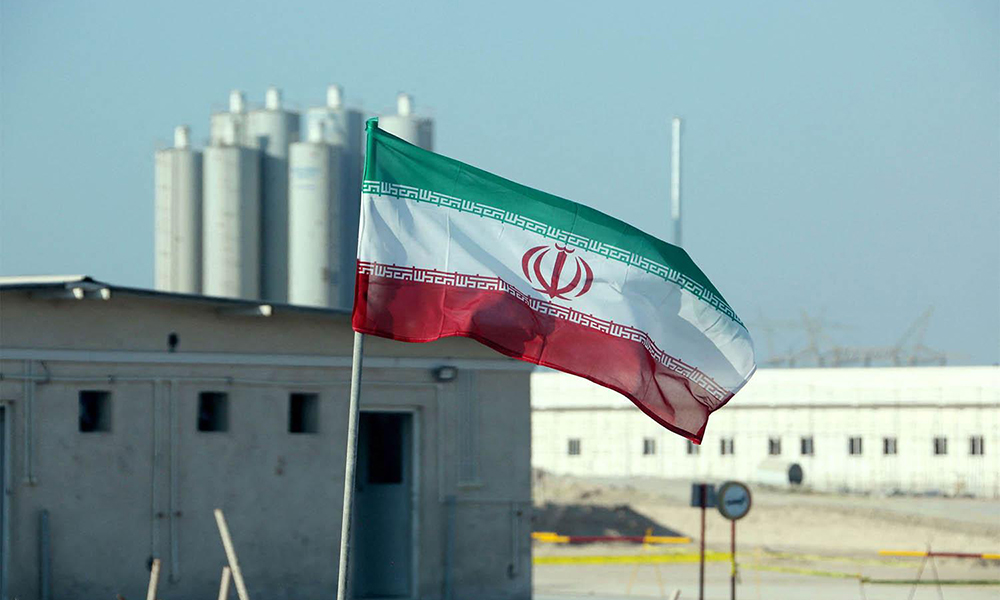
Iran’s right to enrich uranium is not negotiable, Foreign Minister Abbas Araqchi said on Wednesday ahead of a second round of talks set to take place in Rome this weekend with the United States about Tehran’s disputed nuclear programme.
The talks, which began in Oman on Saturday with the Gulf state acting as mediator, are the first between the two adversaries under U.S. President Donald Trump, who has threatened military action if there is no deal.
Araqchi was responding to a comment made on Tuesday by top U.S. negotiator Steve Witkoff, who said the Islamic Republic must “stop and eliminate its nuclear enrichment” to reach a deal with Washington.
“We have heard contradictory statements from Witkoff, but real positions will be made clear at the negotiating table,” Araqchi was quoted by Iranian state media as saying in Tehran.
“We are ready to build trust regarding possible concerns over Iran’s enrichment, but the principle of enrichment is not negotiable.”
Last weekend’s U.S.-Iran talks in Oman were described by both sides as positive and constructive.
Western powers say Iran is refining uranium to a high degree of fissile purity beyond what is justifiable for a civilian energy programme and close to the level suitable for atomic bomb fuel. Iran has long denied seeking nuclear weapons.
Iranian media said on Wednesday, without citing sources, that the second round of talks would be held in the Italian capital Rome on Saturday. It was earlier announced that the talks would resume in Oman.
Sources briefed on the matter confirmed the change of venue to Reuters.
Iran’s foreign ministry spokesperson Esmaeil Baghaei compared the venue of the Iran-US nuclear talks to a goalpost in a post on X on Wednesday, saying moving it might “jeopardize any beginning” and that changing it was a “professional error”.
A diplomatic source said Rafael Grossi, director general of the International Atomic Energy Agency, the U.N. nuclear watchdog whose inspectors monitor Iranian nuclear sites, had also been invited to Rome for the occasion of the talks.
Italian Foreign Minister Antonio Tajani confirmed the talks would be in held in Rome but said Italy would not be involved.
“Italy simply wants to be a bridge for peace; we have no ambitions of any kind. Such a delicate negotiation is up to the parties involved and their willingness to achieve a concrete result,” Tajani said in a statement.
On Thursday Araqchi will deliver a message from Iranian Supreme Leader Ali Khamenei to Russian President Vladimir Putin during a trip to Russia, state media reported.
“Amidst important global developments, close, continuous and trusting communication between Iranian and Russian authorities will serve regional as well as international peace and stability,” Iranian Ambassador Kazem Jalali wrote on X.
The Kremlin on Tuesday declined to comment when asked if Russia was ready to take control of Iran’s stocks of enriched uranium as part of a possible future nuclear deal between Iran and the United States.
Britain’s Guardian newspaper reported that Tehran was expected to reject a U.S. proposal to transfer its stockpile of enriched uranium to a third country such as Russia as part of an deal Washington is seeking to curb Iran’s nuclear activity.



Regional
Trump backs down on strikes on Iran’s power network, says US and Tehran holding talks
Iranian attacks have effectively closed the Strait, which carries a fifth of global oil and liquefied natural gas.
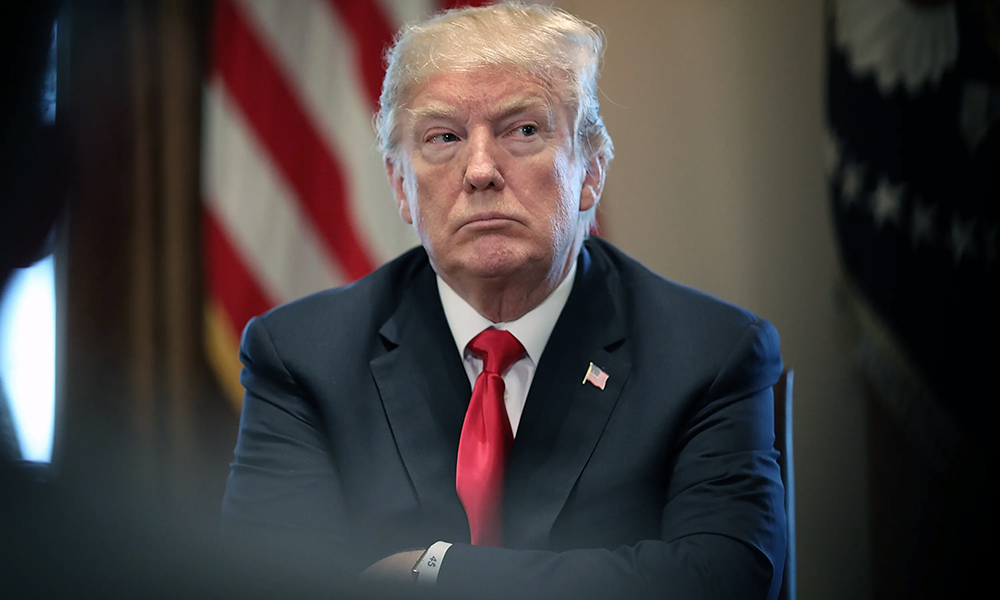
President Donald Trump backed down on targeting Iran’s power network on Monday, saying the U.S. and Iran have held constructive talks and that he would postpone any strikes on power plants and energy infrastructure, Reuters reported.
Trump’s statement came after Iran threatened to attack Israel’s power plants and those supplying U.S. bases across the Gulf region if the U.S. targets Iran’s power network.
The dollar plunged and stocks surged following Trump’s post.
The United States and Iran “have had, over the last two days, very good and productive conversations regarding a complete and total resolution of our hostilities in the Middle East,” Trump wrote in a post on Truth Social.
“I have instructed the Department of War to postpone any and all military strikes against Iranian power plants and energy infrastructure for a five-day period, subject to the success of the ongoing meetings and discussions.”
On Saturday, Trump warned that Iranian power plants would be destroyed if Tehran failed to “fully open” the Strait of Hormuz to all shipping within 48 hours. Trump set a deadline of around 7:44 p.m. EDT (2344 GMT) on Monday.
Iranian attacks have effectively closed the Strait, which carries a fifth of global oil and liquefied natural gas, read the report.
More than 2,000 people have been killed in the war the U.S. and Israel launched on February 28, which has upended markets, driven up fuel costs, fuelled global inflation fears and convulsed the postwar Western alliance.
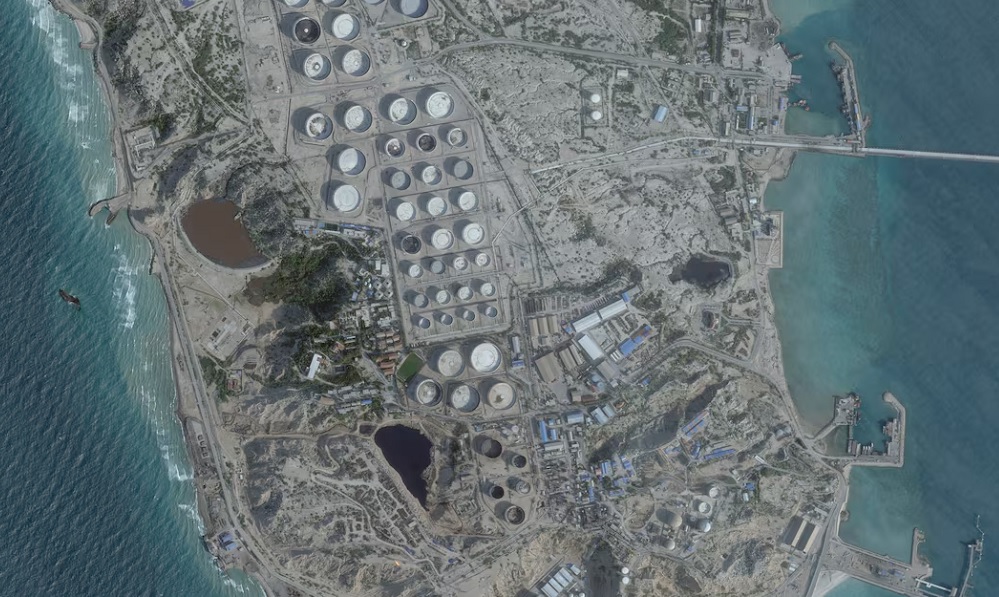
An attack on Iran’s southern coast and islands will lead to Gulf routes being cut with the laying of sea mines, the country’s Defence Council said on Monday according to state media, Reuters reported.
The U.S. is considering plans to occupy, opens new tab or blockade Iran’s Kharg Island, the country’s main oil export hub, to pressure Tehran to reopen the Strait of Hormuz to all shipping, according to Axios.
“Any attempt to attack Iran’s coasts or islands will cause all access routes in the Gulf (…) to be mined with various types of sea mines, including floating mines that can be released from the coast,” the statement read.
“In this case, the entire Gulf will practically be in a situation similar to the Strait of Hormuz for a long time (…) One should not forget the failure of more than 100 minesweepers in the 1980s in removing a few sea mines.”
The Defence Council recalled that non-belligerent states can only pass through the Strait of Hormuz by coordinating passage with Iran.
Regional
Iran says Hormuz open to all but ‘enemy-linked’ ships
The threat of Iranian attacks during the U.S.-Israeli war on Iran has kept most ships from getting through the narrow strait, the conduit for around a fifth of global oil and liquefied natural gas supplies, threatening a global energy shock.
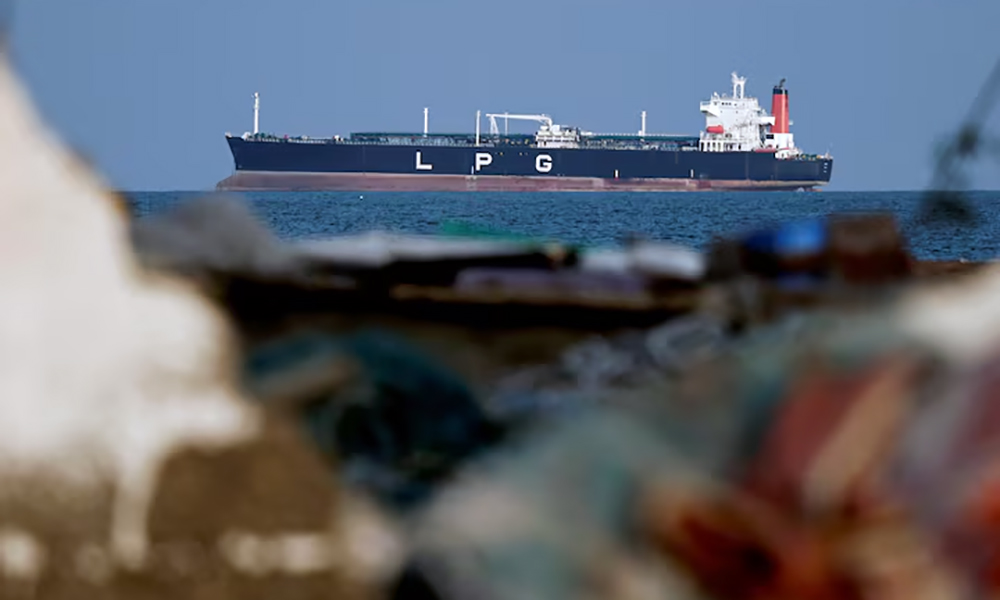
The Strait of Hormuz remains open to all shipping except vessels linked to “Iran’s enemies”, Iranian media reports published on Sunday quoted Iran’s representative to the U.N. maritime agency as saying.
Ali Mousavi’s comments came from an interview published on Friday by Chinese news agency Xinhua, before U.S. President Donald Trump’s threat to target Iranian power plants if the strait was not “fully open” within 48 hours.
The threat of Iranian attacks during the U.S.-Israeli war on Iran has kept most ships from getting through the narrow strait, the conduit for around a fifth of global oil and liquefied natural gas supplies, threatening a global energy shock.
Mousavi, who is also Iran’s ambassador to the UK, was also quoted as saying that Tehran would continue to cooperate with the International Maritime Organisation (IMO) to improve maritime safety and protect seafarers in the Gulf, adding that ships not belonging to “Iran’s enemies” could pass the strait by coordinating security and safety arrangements with Tehran.
“Diplomacy remains Iran’s priority. However, a complete cessation of aggression as well as mutual trust and confidence are more important,” Mousavi said, adding that Israeli and U.S. attacks against Iran were at the “root of the current situation in the Strait of Hormuz”.


Airstrike on Kabul drug rehabilitation centre sparks legal concerns

Trump backs down on strikes on Iran’s power network, says US and Tehran holding talks

Iran says coastal attack will lead to full Gulf closure and mine-laying

Afghanistan expresses condolences after deadly helicopter crash in Qatar

IPL 2026: Ishan Kishan named Sunrisers’ interim captain ahead of opening clash

Pakistani military jet downed in Afghanistan’s Jalalabad, pilot captured alive

Afghan Air Force conducts airstrikes in Islamabad, other cities

Prominent Muslim scholar issues fatwa calling for Afghanistan-Pakistan ceasefire

Afghan air force strikes key Pakistani military installations in retaliatory operation

IEA: Special circle in Pakistan has launched mission to destabilize region

Tahawol: Possibility of US ground forces entering Iran war discussed

Saar: Using US prisoners as political pressure

Tahawol: Pakistan’s efforts to destabilise Afghanistan

Saar: Decline in international assistance to Afghanistan

Tawsia: Assessment of Afghanistan’s economic activities in 1404
-
 Latest News4 days ago
Pakistani shelling hits Kunar districts despite ‘pause in hostility’ over Eid
-

 Sport3 days ago
Afghanistan national buzkashi falls short in Kokpar World Championship semifinals
-

 Regional4 days ago
Pakistan among top nuclear threats to America, US intelligence chief tells senate
-

 Sport3 days ago
Ireland to host Afghanistan for ODI series in August
-
 Latest News5 days ago
Peshawar High Court grants bail to 68 detained Afghan nationals, including minors
-
 World5 days ago
US weighs troop deployment as Iran war enters new phase
-
 Latest News3 days ago
Mojtaba Khamenei calls for improved Afghanistan–Pakistan relations, offers help
-
 Latest News4 days ago
Security Sources: Pakistani military shelling in Kunar and Nuristan leaves female doctor dead