
World
Israeli fire kills 67 people seeking aid in Gaza, medics say, as hunger worsens
Much of Gaza has been reduced to a wasteland during more than 21 months of war and there are fears of accelerating starvation.

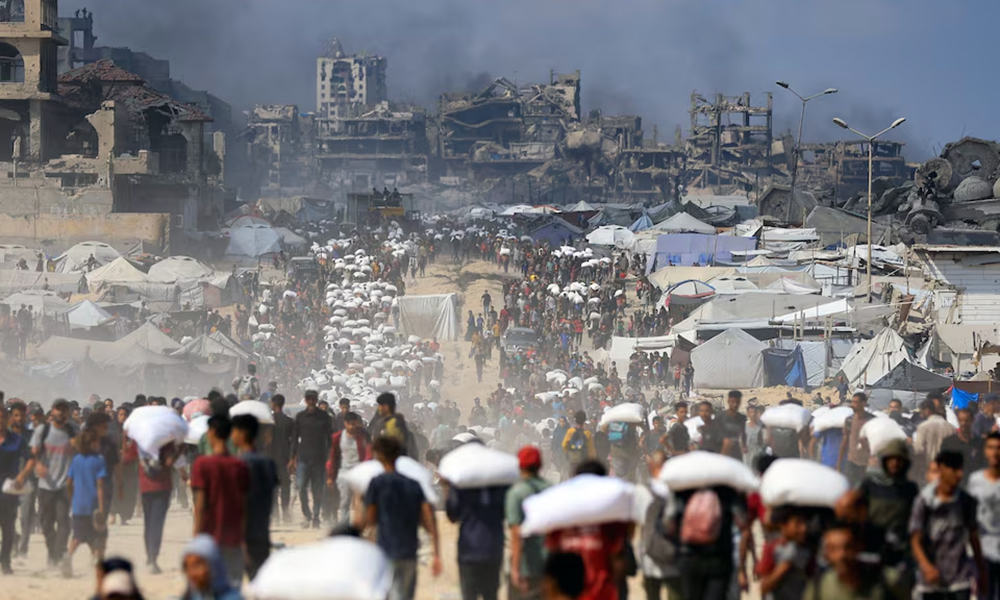
At least 67 Palestinians were killed by Israeli fire as they waited for U.N. aid trucks in northern Gaza on Sunday, the Gaza health ministry said, as Israel issued new evacuation orders for areas packed with displaced people, Reuters reported.
The ministry said dozens of people were also wounded in the incident in northern Gaza. It was one of the highest reported death tolls among repeated recent cases in which aid seekers have been killed, including 36 on Saturday. Another six people were killed near another aid site in the south, it said.
Israel’s military said its troops had fired warning shots towards a crowd of thousands of people in northern Gaza on Sunday to remove what it said was “an immediate threat”.
It said initial findings suggested reported casualty figures were inflated, and it “certainly does not intentionally target humanitarian aid trucks”.
It did not immediately comment on the incident in the south.
The U.N. World Food Programme (WFP) said that shortly after entering Gaza, a WFP convoy of 25 trucks carrying food aid encountered “massive crowds of hungry civilians” who then came under gunfire.
“WFP reiterates that any violence involving civilians seeking humanitarian aid is completely unacceptable,” it said in a statement.
A Hamas official told Reuters that the militant group was angered over the mounting deaths and the hunger crisis in the enclave, and that this could badly affect ceasefire talks underway in Qatar.
In total, health authorities said 90 people had been killed by Israeli gunfire and airstrikes across the enclave on Sunday.
After Israel’s military dropped leaflets urging people to evacuate from neighbourhoods in central Gaza’s Deir al-Balah, residents said Israeli planes struck three houses in the area.
Dozens of families began leaving their homes, carrying some of their belongings. Hundreds of thousands of displaced Gazans have been sheltering in the Deir al-Balah area.
Israel’s military said it had not entered the districts subject to the evacuation order during the current conflict and that it was continuing “to operate with great force to destroy the enemy’s capabilities and terrorist infrastructure in the area”.
Israeli sources have said the reason the army has so far stayed out is because they suspect Hamas might be holding hostages there. At least 20 of the remaining 50 hostages in captivity in Gaza are believed to still be alive, Reuters reported.
Hostage families demanded an explanation from the army.
“Can anyone (promise) to us that this decision will not come at the cost of losing our loved ones?” the families said in a statement.
Much of Gaza has been reduced to a wasteland during more than 21 months of war and there are fears of accelerating starvation.
Palestinian health officials said hundreds of people could soon die as hospitals were inundated with patients suffering from dizziness and exhaustion due to the scarcity of food and a collapse in aid deliveries.
“We warn that hundreds of people whose bodies have wasted away are at risk of imminent death due to hunger,” said the health ministry, which is controlled by Hamas.
The United Nations also said on Sunday that civilians were starving and needed an urgent influx of aid.
Pope Leo called for an end to the “barbarity of war” as he spoke of his profound pain over an Israeli strike on the sole Catholic church in Gaza that killed three people on Thursday.
Gaza residents said it was becoming impossible to find essential food such as flour. The health ministry said at least 71 children had died of malnutrition during the war, and 60,000 others were suffering from symptoms of malnutrition.
Later on Sunday, it said 18 people have died of hunger in the past 24 hours.
Food prices have increased well beyond what most of the population of more than two million can afford.
Several people who spoke to Reuters via chat apps said they either had one meal or no meal in the past 24 hours.
“As a father, I wake up in the early morning to look for food, for even a loaf of bread for my five children, but all in vain,” said Ziad, a nurse.
“People who didn’t die of bombs will die of hunger. We want an end to this war now, a truce, even for two months,” he told Reuters.
Others said they felt dizzy walking in the streets and that many fainted as they walked. Fathers leave tents to avoid questions by their children about what to eat.
UNRWA, the U.N. refugee agency dedicated to Palestinians, demanded Israel allow more aid trucks into Gaza, saying it had enough food for the entire population for over three months which was not allowed in.
Israel’s military said that it “views the transfer of humanitarian aid into the Gaza Strip as a matter of utmost importance, and works to enable and facilitate its entry in coordination with the international community”.
Some Palestinians suggested the move on Deir al-Balah might be an attempt to put pressure on Hamas to make more concessions in long-running ceasefire negotiations.
Israel and Hamas are engaged in indirect talks in Doha aimed at reaching a 60-day truce and hostage deal, although there has been no sign of breakthrough.
The war began when Hamas-led militants stormed into Israel on October 7, 2023, killing 1,200 people and taking 251 hostages back to Gaza.
The Israeli military campaign against Hamas in Gaza has since killed more than 58,000 Palestinians, according to health officials, displaced almost the entire population and plunged the enclave into a humanitarian crisis, read the report.








World
UK’s Starmer says he will resign
Less than two years after he won a landslide election victory that promised to end chaos in British politics, Starmer said it was clear that his party wanted him to go.
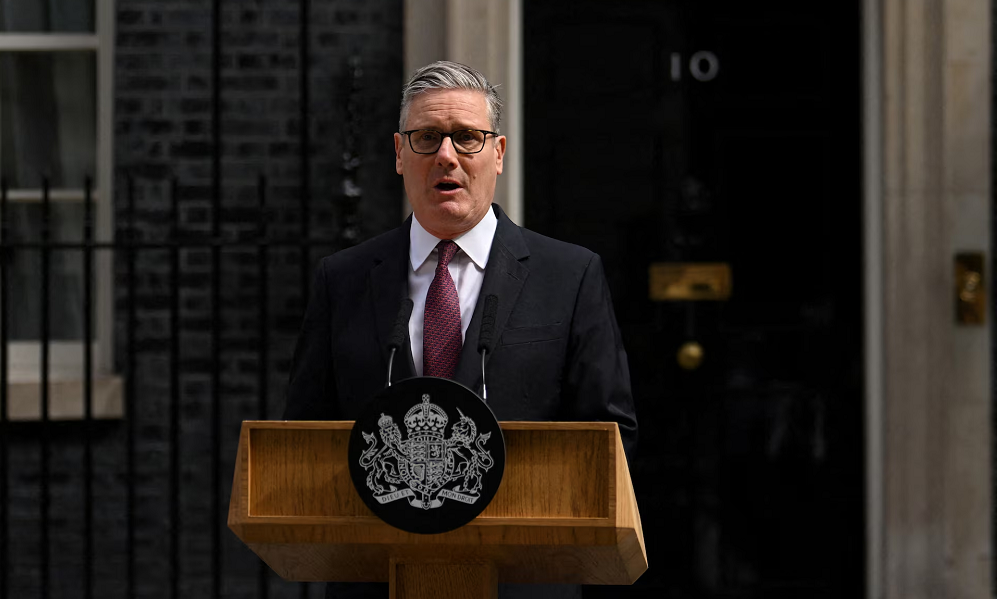
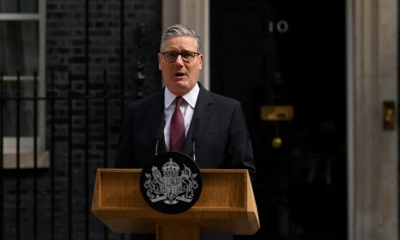
Prime Minister Keir Starmer said on Monday he would resign, with a new leader to be in place by the time parliament returns in September, paving the way for Britain to have its seventh leader in 10 years.
Less than two years after he won a landslide election victory that promised to end chaos in British politics, Starmer said it was clear that his party wanted him to go, Reuters reported.
“The question my party is asking now is whether I am best placed to lead us into the next general election, I have heard the answer of my parliamentary party to that question, and I accept that answer with good grace,” he said.
PRESSURE HAD BEEN BUILDING FOR MONTHS
The threat to Starmer, which had been building for months, increased sharply on Friday when Burnham, the Greater Manchester mayor, decisively won a parliamentary election to return to Westminster, beating a candidate from Nigel Farage’s Reform UK party, which has led national opinion polls for more than a year.
That victory gave hope to Labour lawmakers that Burnham, a career politician known for his communication skills, could transform the fortunes of a party that has lost support under Starmer, whose popularity ratings have sunk to the lowest for any British leader.
Starmer thanked his colleagues for their support, his voice cracking with emotion as he also paid tribute to his wife and children.
The pound and British government bonds were steady in the immediate aftermath of Starmer’s announcement, which investors had widely expected.
Despite the attempt at a smooth handover, the change is not without risk.
Beyond saying that the country needs fundamental change and to bring down the cost of living, Burnham has yet to make clear his approach to foreign affairs, the economy and defence.
Like Starmer, he could find he has little room to manoeuvre, hemmed in by bond market investors opposed to any additional borrowing, and confronted by an angry electorate which believes the country is not working properly.
Britain already has the highest borrowing costs in the Group of Seven wealthy nations due to its high debt and interest payments, years of anaemic economic growth, its struggles to cut spending and the need to invest in areas like defence.
Investors spoken to by Reuters were divided over whether Burnham, who said last September that Britain had to get “beyond this thing of being in hock to the bond markets” would respect the need to reassure markets.
He has since said he was misrepresented.
“In our view, a Burnham premiership would inherit a precarious fiscal situation with few tools to deliver meaningful change,” economists at Citibank said on Friday.
STARMER HAD PLEDGED TO FIGHT ANY CHALLENGE
Starmer had said on Friday he would stand in any formal Labour leadership contest that sought to replace him. But that appeared to change over the weekend.
Whoever replaces Starmer will become Britain’s seventh prime minister since the Brexit vote to leave the European Union which took place 10 years ago this week.
That level of turnover – the highest in Britain in nearly two centuries – underlines the struggle of maintaining the support of voters angry at successive failures to improve living standards, public services and tackle illegal immigration.
The political advisory group Eurasia had said the best outcome could be for Starmer to say he will step down in September, enabling him to attend a UK-European Union reset summit in July and give Burnham time to prepare for government.
World
Trump envoy, Iranian minister head to Switzerland for talks
The development may signal that both sides intend to begin technical negotiations aimed at securing a permanent truce.
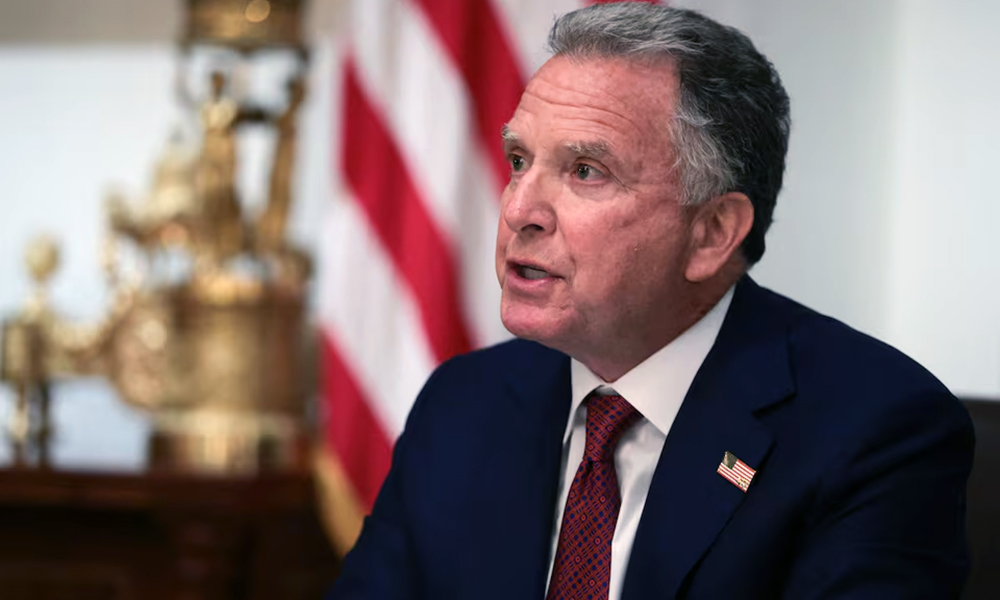
US envoy Steve Witkoff and Iranian Foreign Minister Abbas Araqchi were both headed to Switzerland for talks, Axios said on Friday, as a ceasefire in Lebanon appeared to revive efforts to turn an interim Iran war pact into a lasting regional deal, Reuters reported.
Israel and Hezbollah agreed to a ceasefire in Lebanon on Friday after escalating fighting cast doubt over U.S.-Iran talks critical to reopening the Strait of Hormuz and stabilising oil supplies.
That followed a 14-point memorandum the two sides signed this week to halt fighting and open a 60-day window to resolve disputes over Iran’s nuclear program, as well as other thorny issues needed to forge a more durable deal.
U.S. Vice President JD Vance canceled plans on Thursday to travel to Switzerland for the talks, however, amid rising tension in Lebanon between Israel and Hezbollah, a militant group backed by Iran.
With the ceasefire in place, Witkoff is heading to Switzerland to join Jared Kushner, President Donald Trump’s son-in-law, who is already there, Axios said. Araqchi plans to travel there on Saturday, it added.
The development may signal that both sides intend to begin technical negotiations aimed at securing a permanent truce.
The White House did not respond to questions about Witkoff’s travel.
A senior U.S. official said the ceasefire took effect around 4 p.m. (1300 GMT) in Lebanon following an exchange of fire, adding that negotiators for the United States and Qatar had worked out the agreement with help from Iran, read the report.
Two sources from Hezbollah and a senior Israeli official confirmed the ceasefire to Reuters.
“If Hezbollah does not attack us, then for us it is not a time of war,” the Israeli official said, adding that Israel would keep its forces in southern Lebanon, where it has occupied an area along its northern border.
Two Lebanese security sources said Israel had carried out a dozen airstrikes in the first hour of the ceasefire but none were recorded after 5 p.m.
Lebanon’s health ministry said Israeli strikes after midnight into Friday had killed 47 people and wounded 97, while the Israeli military said four soldiers had been killed in an incident in Lebanon, without giving further details.
The conflict in Lebanon could weigh on negotiations because ending fighting there is a condition for the broader U.S.-Iran accord.
Following Wednesday’s signing of the memorandum of understanding, preparations for technical talks at the Swiss mountaintop resort of Buergenstock were well advanced when the White House said on Thursday that Vance would not attend.
The Swiss foreign ministry said the talks had been postponed but Switzerland stood ready to facilitate them and preparatory work was continuing.
The broad interim deal requires the United States, Iran and their allies to declare an immediate and permanent termination of military operations on all fronts, including in Lebanon.
Israel, left out of the talks, says it is not party to the deal.
Araqchi, in a telephone call with his Pakistani counterpart on Friday, said the United States would be responsible for any violation of its commitments under the deal, including ending the fighting in Lebanon, his ministry said.
Lebanon was sucked into the regional war when Hezbollah opened fire at Israel on March 2, prompting it to launch an offensive against the group and invade the south of the country.
Lebanese President Joseph Aoun condemned the latest Israeli attacks but said the escalation would not hinder efforts to reach a comprehensive ceasefire.
The U.S. State Department said Secretary of State Marco Rubio spoke to Aoun and reiterated the need to disarm Hezbollah, while reaffirming U.S. support for a “fully sovereign” Lebanese state.
It said they also discussed holding a next round of Israel-Lebanon negotiations in Washington from June 23 to June 25. The Lebanese presidency said a comprehensive ceasefire was a fundamental pillar for these talks.
The Iran war, which began on February 28 with U.S. and Israeli air attacks on Iran, has killed at least 7,000 people, mostly in Iran and Lebanon. It also pushed up energy prices, stoking inflation worldwide.
Brent crude ticked higher on Friday, but was set for a weekly fall of about 8% after the Lebanon ceasefire, and oil shipments through the Strait of Hormuz picked up after the signing of this week’s deal.
The strait carried nearly a fifth of global crude oil and liquefied natural gas supplies before it was blockaded by Iran during the war.
The body set up by Iran to manage the strait said on Friday it would waive planned fees during the interim deal’s negotiation period.
The MoU foresees relief for Iran from economic sanctions, the unfreezing of assets worth tens of billions of dollars and immediate U.S. waivers for its exports of oil. It also provides for a $300-billion reconstruction fund for Iran and other financial incentives.
Trump again defended the deal after criticism in Washington, including some from Republican allies in Congress who question whether he conceded too much to end a war unpopular with most Americans ahead of midterm elections in November.
“The War has diminished Iran!” he wrote on social media on Friday, adding, “We didn’t meet out of desperation, Iran did. They are FINISHED! We’ll play out the 60 days. They get no money, not 10 cents!”
World
US-Iran peace talks called off, clouding prospects for lasting truce
Trump has become openly critical of Israel’s operations in Lebanon, opening one of the biggest rifts between the two countries in decades.
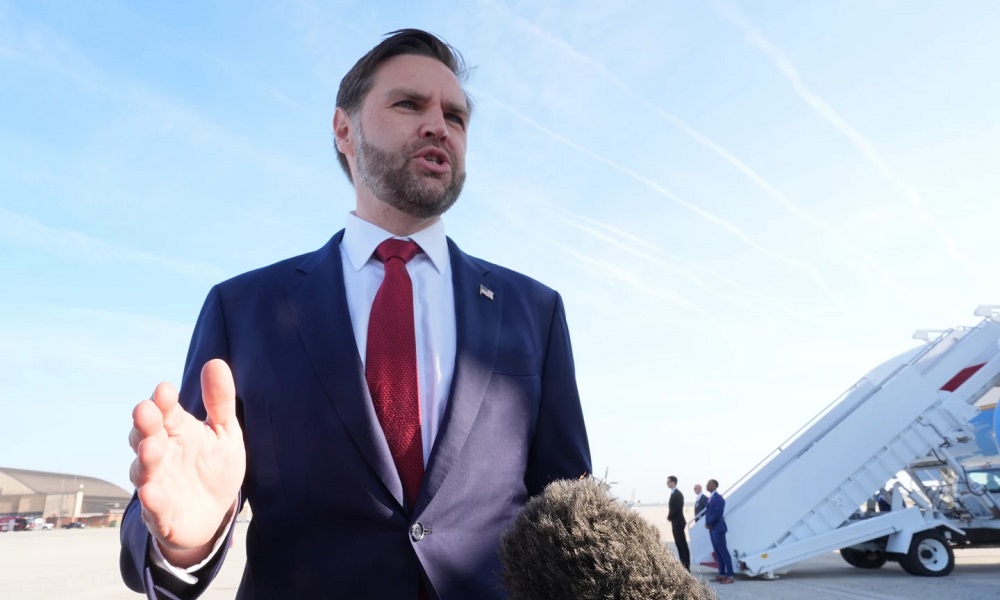
Switzerland said U.S. talks with Iranian negotiators on a pact to end the Middle East conflict, would not take place on Friday, as Vice President JD Vance dropped plans to travel to Geneva, adding to uncertainty whether a lasting truce can be found, Reuters reported.
“The logistics of these negotiations have never been simple or predictable,” the White House spokesperson said in a statement on Thursday night. Vance and the U.S. delegation had been ready to depart as soon as plans were finalised.
The talks, set for the mountaintop resort of Burgenstock, would not take place, Switzerland’s foreign ministry confirmed, but gave no details.
There was no immediate response from Iran, which had earlier said it was ready to begin technical talks after Wednesday’s 14-point accord extended a tenuous ceasefire by at least 60 days.
Iran’s negotiators first needed to see signs of the U.S. implementing the interim deal, and there was no confirmation its delegation would travel to Geneva, the semi-official Tasnim news agency said before Vance’s Thursday announcement.
U.S. officials had also said they would hold a formal signing ceremony for the U.S.-Iran agreement in Switzerland, but Iran’s foreign ministry had cast doubt on the plan, calling it unnecessary after both countries’ presidents signed the pact.
The war, which began on February 28 with U.S. and Israel air attacks on Iran, has killed at least 7,000 people, sent energy prices soaring and shaken global markets.
Israel, left out of the peace talks, has distanced itself from the U.S.-Iran accord and kept up fighting against the Iranian-allied Hezbollah militant group in Lebanon, also raising questions about whether the agreement would hold.
In Washington, some of U.S. President Donald Trump’s Republican allies in Congress questioned whether he had conceded too much in order to end the conflict, unpopular with most Americans in the run-up to mid-term elections in November, read the report.
Trump had sworn to end the war only with Iran’s “UNCONDITIONAL SURRENDER.”
But the memorandum signed with Iran instead provides relief from economic sanctions, unfreezes assets worth tens of billions of dollars and immediate U.S. waivers for its exports of oil.
Iran’s Supreme Leader Ayatollah Mojtaba Khamenei said Trump had signed the deal “out of desperation” and signalled that approaching talks over Iran’s nuclear program, among Trump’s stated reasons for starting the war, would not be easy.
“If the American side wants to be too demanding, we will not accept it,” he said in a message.
The deal gives negotiators 60 days to agree on the status of Iran’s nuclear program, unless an extension is agreed, and set up a $300 billion reconstruction fund for Iran and other financial incentives.
Vance said Washington would also seek to limit Iran’s long-range missiles.
The growing cost of the war also drew the spotlight, as the U.S. defence department told lawmakers it needed $80 billion to cover the costs and some unrelated bills, the Wall Street Journal said.
When the U.S. and Israel launched the war nearly four months ago, Trump said he aimed to destroy Iran’s nuclear capabilities to ensure it could never develop such weapons.
He also sought to end Tehran’s ability to strike its neighbours, prevent it from backing allied anti-Israel militants in the region and make it possible for Iranians to topple their theocratic government.
None of those objectives had been met when Trump signed the agreement, in which Iran restated its decades-long assertion not get or develop nuclear weapons, a position doubted by a succession of U.S. presidents, Reuters reported.
It also agreed to the onsite “down blending” of its highly enriched uranium stockpile and inspections by the International Atomic Energy Agency as a Non-Proliferation Treaty member, rejecting Trump’s wish to remove the material from the country.
U.S. officials say the negotiations could still yield a strong agreement on Iran’s nuclear program, aiming to better one dating from 2015 between Iran, the U.S. and other countries that Trump tore up in his first term.
But critics say Iran is in a stronger position now, having withstood a superpower attack, demonstrated its control of the Strait of Hormuz and gained valuable waivers to financial sanctions.
Iran has said it will still exert control over Hormuz in partnership with Oman, its neighbour across the critical waterway, and intends to charge ships service fees that did not exist before the war, although not during the 60-day talks.
Oil prices dipped on Friday as prospects brightened for more supply after tankers began moving through the reopening Strait, which had carried nearly a fifth of global crude oil and liquefied natural gas supplies before the war.
In Lebanon, where more than a million people have been displaced by the fighting, fresh Israeli strikes on Friday killed at least 15, the state news agency NNA said, in attacks Israel said were directed at Hezbollah targets.
That raised doubt about how far Trump will go to force his wartime ally to halt an offensive he has now pledged to end.
The deal calls for “permanent termination” of the war in Lebanon, but Israel has said it has no intention of withdrawing, instead depicting an expanded occupation zone in a new map.
Trump has become openly critical of Israel’s operations in Lebanon, opening one of the biggest rifts between the two countries in decades.


Tahawol: Iran-US talks make encouraging progress

Saar: Astana’s New Era of Engagement with Kabul

Iran goalkeeper shines in heroic draw against Belgium at FIFA World Cup 2026

Afghanistan officials call for investment during Indian expo visit

Iran-US talks make encouraging progress as framework for final agreement emerges

Norway’s Viking-inspired World Cup team photo goes viral

Afghanistan announce squad for India series

Afghanistan, Russia sign military cooperation agreement

Major pharma firms eye investment in Afghanistan

Afghanistan expands oil production as investment in Amu Darya fields grows
Tahawol: Iran-US talks make encouraging progress
Saar: Astana’s New Era of Engagement with Kabul

Saar: Iran vs US Talks Begin – Will Tensions Ease?

Tahawol: Discussion on reopening of Strait of Hormuz

Saar: Afghanistan-Pakistan tense relations disucssed
-
 Business4 days ago
Afghanistan signs $67 million contract for cement production in Samangan
-

 Saar4 days ago
Saar: Trump’s remarks on US military equipment in Afghanistan discussed
-

 Health5 days ago
Polio cases in Afghanistan rise to six in 2026 as two new cases confirmed
-
 Latest News5 days ago
Trump says US may seek return of military equipment left in Afghanistan
-
 Latest News3 days ago
Khalilzad calls for Afghanistan-Pakistan dialogue after airstrikes
-

 International Sports5 days ago
Messi hat-trick powers Argentina to 3-0 victory over Algeria in World Cup opener
-

 International Sports5 days ago
FIFA, TikTok and Atlanta unite to tackle hate speech ahead of World Cup clash
-
 World5 days ago
The 14-point US-Iran pact as read by US official