
Regional
Israeli military urges Gaza City residents to leave

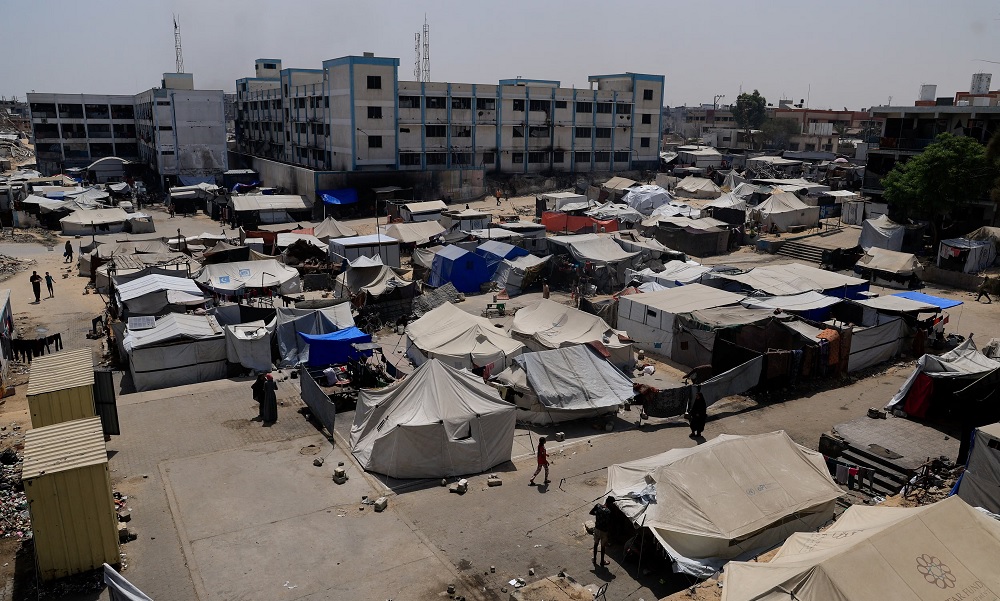
The Israeli military on Saturday said Palestinians in Gaza City should leave for the south, as its forces advance deeper into the enclave’s largest urban area.
Israeli forces have been carrying out an offensive on the suburbs of the northern city for weeks after Israeli Prime Minister Benjamin Netanyahu ordered the military to capture it, Reuters reported.
Netanyahu says Gaza City is a Hamas stronghold and capturing it is necessary to defeat the Palestinian Islamist militants, whose October 2023 attack on Israel sparked the war.
The assault threatens to displace hundreds of thousands of Palestinians sheltering there from nearly two years of fighting. Before the war, around a million people, nearly half of Gaza’s population, lived in the city.
Israeli military spokesperson Avichay Adraee wrote on X that residents should leave the city for a designated coastal area of Khan Younis in southern Gaza, assuring those fleeing that they would be able to receive food, medical care and shelter there.
The designated area was a “humanitarian zone”, Adraee said.
On Thursday, the military said it had control over almost half of the city. It says it controls about 75% of all of Gaza.
Many of those in Gaza City were displaced earlier in the war only to later return. Some residents have said that they refuse to be displaced again.
The military has been carrying out heavy strikes on the city for weeks, advancing through outer suburbs, and this week forces were within a few kilometres of the city centre.
Netanyahu, backed by right-wing coalition allies, ordered the capture of Gaza City against the advice of Israel’s military leadership, according to Israeli officials. Despite its hesitation, the military has called up tens of thousands of reservists to support the operation.
The war in Gaza has increasingly left Israel diplomatically isolated, with some of its closest allies condemning the campaign that has devastated the small territory.
ALL-OR-NOTHING DEAL
Palestinian militants took 251 hostages into the enclave after its cross-border attack on southern Israeli communities on October 7, 2023 that killed about 1,200 people.
More than 64,000 Palestinians have since been killed in Gaza, local health authorities say, with much of the enclave reduced to ruins and its residents facing a humanitarian crisis.
There are also growing calls within Israel, led by families of hostages and their supporters, to end the war in a diplomatic deal that would secure the release of the remaining 48 captives.
Israeli officials believe 20 of the hostages are alive.
Netanyahu is pushing for an all-or-nothing deal that would see all of the hostages released at once and Hamas surrendering.
Israeli military officials say they have killed many of Hamas’ key leaders and thousands of its fighters, reducing the Palestinian militant group to a guerrilla force.
Hamas has offered to release some hostages for a temporary ceasefire, similar to terms that were discussed in July before negotiations mediated by the U.S. and Arab states collapsed.
U.S. President Donald Trump said on Friday that Washington was in “very deep” negotiations with the Palestinian militants.
Hamas, which has ruled Gaza for nearly two decades but today controls only parts of the enclave, has long said it would release all hostages if Israel agreed to end the war and to withdraw all its forces from Gaza.
Most of the hostages who have been freed were released through diplomatic negotiations mediated by the United States and Arab states. Israel and Hamas have accused each other of negotiating in bad faith since the breakdown of the last talks in July.
Defence Minister Israel Katz on Friday said the military operations in Gaza would intensify until Hamas accepted Israel’s conditions for ending the war: releasing the hostages and disarming. Otherwise, the group would be destroyed, he said.










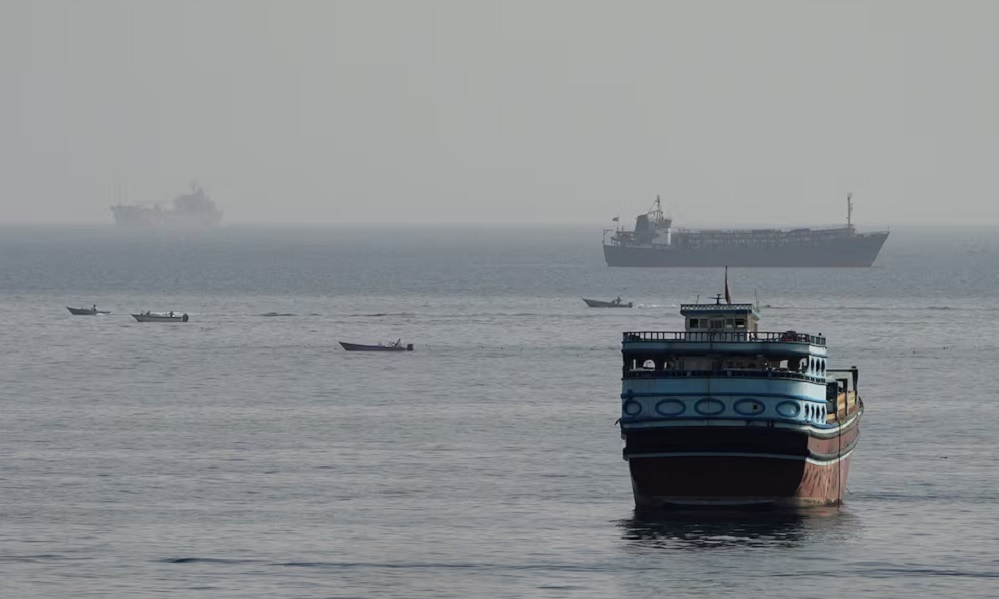
Conflicting signals from the United States and Iran over the status of talks to end their five-month-old war boosted uncertainty on Tuesday, with the latest attack on shipping in the Strait of Hormuz highlighting risks to global energy flows.
U.S. President Donald Trump said the talks were under way on Monday, warning of a “last chance” for Tehran to sign a good deal, but Iran denied that negotiations were being held or planned, Reuters reported.
“They are going on right now,” Trump told reporters at an Oval Office event when asked about the state of negotiations, saying the sides were talking at the request of Iran, Saudi Arabia, the United Arab Emirates and Qatar, among others.
“This is a last chance for them (Iran) to sign a good document.”
The comments followed Trump’s weekend decision to call off “massive attacks” he said he had authorized on Iran, as talks were to be held, repeating a pattern in which he has vowed major strikes only to cancel them.
Earlier on Monday, Iranian Foreign Ministry spokesman Esmail Baghaei said no negotiations with the United States were taking place and no meetings were scheduled.
Iran had no plans to host foreign delegations or send negotiators abroad in the coming days, he said.
Baghaei added that all Iranian negotiators were in the country, except for Foreign Minister Abbas Araqchi, who was on a religious pilgrimage in Iraq. The only talks underway, he said, were discussions with Oman over management of the Strait of Hormuz.
Shipping activity in the Gulf only reinforced the ongoing stand-off since Iran all but shut off transits through the vital route for a fifth of global shipments of crude oil and natural gas before it was blockaded in the war.
One cargo vessel broadcast it had been hit by an unknown projectile near the strait off Oman’s coast, the United Kingdom Maritime Trade Operations (UKMTO) agency said.
Traffic through Hormuz remained largely slow, with three tankers and three bulk carriers among the six vessels transiting the strait on Monday, down from seven the previous day, Kpler data showed.
STOCKS RISE, OIL DOWN ON HOPES FOR RESOLUTION
Still, hopes that U.S.-Iran tensions were easing again pushed down oil prices, while major stock indexes gained on Monday.
Brent crude futures fell about 7% to around $83.77 a barrel while the Dow closed at a record high. Asian stocks and oil prices both edged higher on Tuesday.
Gulf officials and analysts say Iran is betting it can outlast Washington by turning the Middle East’s trade routes, shipping lanes and energy infrastructure into pressure points that steadily raise the cost of confrontation.
It hopes such a strategy will convince the United States and its allies that containing the crisis is more costly than accommodating Iran’s demands over the Strait of Hormuz.
“Their big advantage is that they can hurt the regional states and the global economy,” said Michael Knights of the Washington Institute.
In a post on Truth Social later on Monday, Trump called Iran’s leadership “unbelievably duplicitous,” saying they had asked for a meeting and more talks were set for the “immediate future.”
He also repeated his assertion that the U.S. Navy had total control over the Strait of Hormuz.
“‘The United States Wall of Steel!’ Nothing gets through to Iran, unless we want it to, and nothing will get through, unless a Deal, or Total Surrender, is accomplished,” he wrote.
REPEATED PATTERN
Monday’s events appeared to fit a pattern since Trump launched “Operation Epic Fury” alongside Israel more than five months ago. Trump has threatened military action several times, only to later cite diplomatic contacts as a reason to step back.
Iran, however, has publicly rejected negotiations with Washington since the collapse in early July of a memorandum of understanding both signed the previous month, aimed at ending the conflict.
Trump has yet to achieve the objectives he set out at the outset of the war: dismantling Iran’s nuclear program, curbing its ability to attack regional rivals and creating conditions for Iranians to overthrow their clerical rulers.
Repeated U.S. actions have been met by escalating Iranian responses against U.S. forces in the region, Washington’s Gulf Arab allies and shipping, each time ending with Trump stepping back.
The Hormuz dispute remains a central point of contention, with Washington saying the June memorandum required Iran to open the strategic waterway, while Tehran says the text explicitly preserved its authority over shipping traffic.
Regional
Trump says Iran talks to take place on Monday, sets no deadline for deal
Asked if there was a deadline for Iran to come to an agreement, Trump declined to answer.
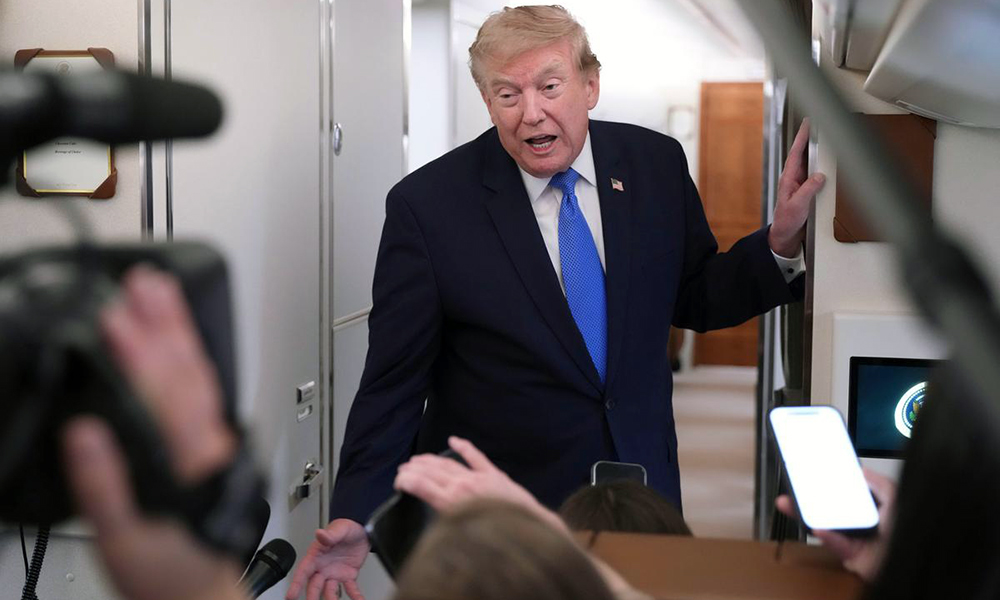
U.S. President Donald Trump said talks with Iran will happen on Monday but declined to set a deadline for an agreement after earlier saying he had called off an imminent attack in hopes of quickly reaching a deal to reopen the Strait of Hormuz and resolve the impasse over Tehran’s nuclear capabilities, Reuters reported.
Trump had said late on Saturday on his Truth Social platform that Iran and other Middle Eastern countries had asked for time to complete a deal that would lead to “the Immediate, Complete and Total” reopening of the strait and “an end to Iran’s nuclear threat” but that Tehran must “rapidly make a DEAL.”
As he returned to Washington from a weekend in New Jersey, Trump told reporters on Sunday that a negotiation would begin on Monday afternoon but did not provide details of where it would take place or who would be involved.
Asked if there was a deadline for Iran to come to an agreement, Trump declined to answer. “Would I rather make a deal? I’m not looking to kill people because people die, a lot of people die, and we don’t want that,” Trump said in response.
Trump has repeatedly issued threats that he would escalate the war on Iran he launched along with Israel in late February, only to allow more time for talks, which have so far not led to a comprehensive deal.
Trump’s apparent de-escalation after days of threats of new attacks from each side was the latest twist in the war. Attacks have spread across the Gulf to the Red Sea and even a Mediterranean facility in Egypt.
Iran has largely closed the Strait of Hormuz, a conduit for 20% of the world’s oil and liquefied natural gas before the start of the war, causing energy prices to rise and stoking broader inflation.
The U.S. president has argued that his stated goal of keeping Iran from gaining nuclear weapons justifies higher fuel costs in the near term, but the economic pain has put political pressure on him to find a way to end the conflict, read the report.
Oil prices were down more than 4% in early trading on Monday.
Iran’s Foreign Minister Abbas Araqchi held phone calls with his Saudi counterpart Prince Faisal bin Farhan and Pakistan’s army chief Asim Munir to discuss diplomatic efforts, Iran’s state media reported on Sunday.
The official Iranian news agency IRNA reported earlier that negotiations between Tehran and Oman over the Strait of Hormuz were in their final stages, citing Iran’s Foreign Minister Abbas Araqchi.
Iranian Foreign Ministry spokesperson Esmaeil Baghaei said negotiations were focused on agreeing a new route through the strait, adding that it had “no link to the Strait of Hormuz being opened or closed. That is a separate discussion.”
Last month Iran publicly rejected an Omani proposal, backed by Gulf states, to manage the strait they share. People familiar with the matter had told Reuters the plan included the collection of voluntary fees for using the strait.
Eli Cohen, Israel’s energy minister and a member of Prime Minister Benjamin Netanyahu’s security cabinet, said there was close security and intelligence coordination between Israel and the U.S. on everything happening in the region.
But he added: “With or without an agreement, and regardless of any external commitments, if Iran attempts to renew its nuclear program or advance its ballistic missile industries, we will be there. We will take action, and we will strike.”
Trump and Netanyahu met on Tuesday in Washington, with an Israeli official saying they had explored all possible paths to curb Iran’s nuclear program, including diplomacy, economic pressure and force. Tehran denies it is seeking a nuclear weapon.
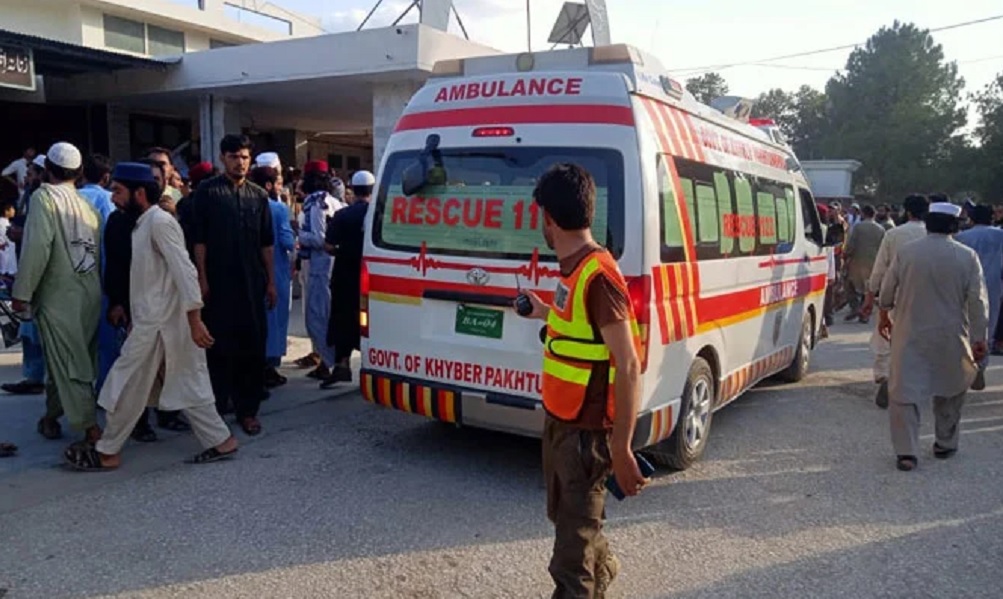
At least 14 people were killed in a suspected suicide bombing outside a police station in northwestern Pakistan on Sunday, a rescue group and a regional police official said, as the country battles widening insurgencies.
The explosion took place in the Kabal area of Swat, a district in Pakistan’s Khyber Pakhtunkhwa province, Reuters reported.
A pro-police rally of local residents was taking place in the same area on Sunday, but it was not immediately clear whether the rally was the intended target.
Fida Hussain, a regional police official, said the victims included five police officers and eight civilians. The 14th person was believed to be the suicide bomber, he told Reuters.
At least 18 people were wounded, according to a police statement. It said an operation had been launched to arrest anyone who may have assisted the attack.
Prime Minister Muhammad Shehbaz Sharif in a statement expressed “deep grief and sorrow over the suicide blast”.


Tahawol: China-Pakistan talks on Afghanistan security reviewed

Afghanistan aim to strengthen ODI ranking in Ireland series

Saar: Discussion on Iran’s warning to the US

Iran wants oversight of Hormuz traffic under proposed Oman plan

No unauthorized group allowed to operate in Afghanistan: IEA spokesman

Pakistan’s governance system has ‘collapsed’: Mohsin Naqvi

India offers 1,000 online scholarships for Afghan students for 2026-27 academic year

Cricket world pays tribute to Afghanistan fast bowler Shapoor Zadran

Turkey spent over $120 million to prepare airport for Qatar-donated U.S. presidential aircraft

Thousands pay final respects as Afghan cricketer Shapoor Zadran buried in Kabul
Tahawol: China-Pakistan talks on Afghanistan security reviewed
Saar: Discussion on Iran’s warning to the US

Tahawol: Worsening security crisis in Khyber Pakhtunkhwa

Saar: Trump’s claim over Iran talks

Tahawol: US cancelling strikes on Iran
-
 Latest News5 days ago
Pakistan’s governance system has ‘collapsed’: Mohsin Naqvi
-

 Latest News5 days ago
World Bank: Afghanistan’s economic growth too weak to improve living standards
-
 Latest News4 days ago
Uzbek president calls for Central Asia-Afghanistan development space
-

 World4 days ago
US to make visa bond program permanent for people from dozens of countries
-

 Sport2 days ago
Only two days to go before Afghanistan and Ireland begin ODI series
-

 Sport3 days ago
AFC confirms clubs for 2026/27 competitions; draw set for August 18
-
 World4 days ago
Spain says migrant surge into Ceuta has eased as thousands return to Morocco
-
 Latest News4 days ago
Israel and US consider Iran land blockade