
World
Israel’s endgame? No sign of post-war plan for Gaza

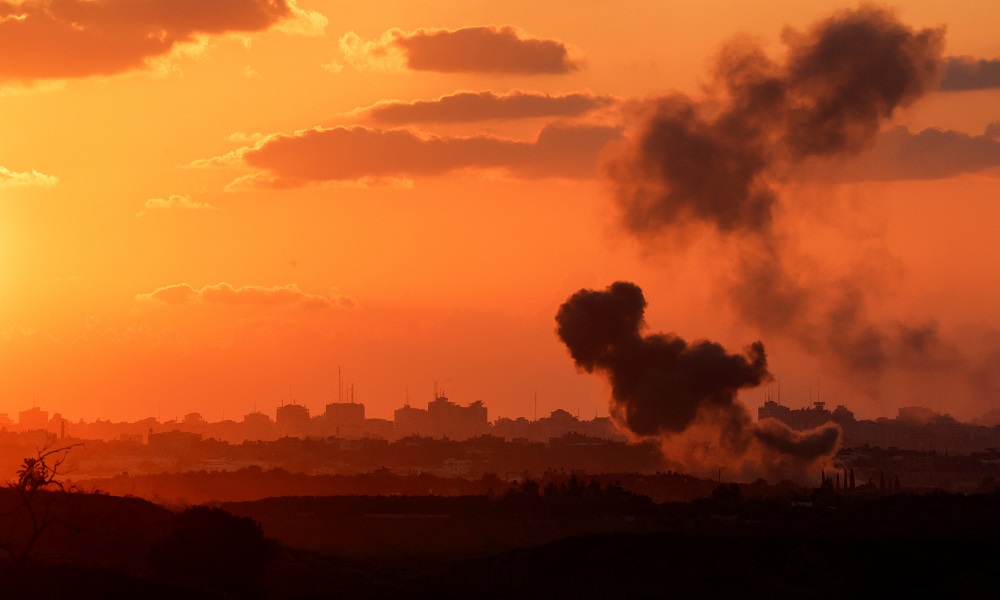
Israel is vowing to wipe out Hamas in a relentless onslaught on the Gaza Strip but has no obvious endgame in sight, with no clear plan for how to govern the ravaged Palestinian enclave even if it triumphs on the battlefield.
Codenamed “Operation Swords of Iron”, the military campaign will be unmatched in its ferocity and unlike anything Israel has carried out in Gaza in the past, according to eight regional and Western officials with knowledge of the conflict who declined to be named due to the sensitivity of the matter, Reuters reported.
Israel has called up a record 360,000 reservists and has been bombarding the tiny enclave non-stop following Hamas’s assault on southern Israel on Oct. 7, which killed about 1,400 people, mostly civilians.
The immediate Israeli strategy, said three regional officials familiar with discussions between the U.S. and Middle Eastern leaders, is to destroy Gaza’s infrastructure, even at the cost of high civilian casualties, push the enclave’s people towards the Egyptian border and go after Hamas by blowing up the labyrinth of underground tunnels the group has built to conduct its operations.
Israeli officials have said that they don’t have a clear idea for what a post-war future might look like, though.
Some of U.S. President Joe Biden’s aides are concerned that while Israel may craft an effective plan to inflict lasting damage to Hamas, it has yet to formulate an exit strategy, a source in Washington familiar with the matter said.
Trips to Israel by Secretary of State Antony Blinken and Defense Secretary Lloyd Austin this past week had stressed the need to focus on the post-war plan for Gaza, the source added.
Arab officials are also alarmed that Israel hasn’t set out a clear plan for the future of the enclave, ruled by Hamas since 2006 and home to 2.3 million people.
“Israel doesn’t have an endgame for Gaza. Their strategy is to drop thousands of bombs, destroy everything and go in, but then what? They have no exit strategy for the day after,” said one regional security source.
An Israeli invasion has yet to start, but Gaza authorities say 3,500 Palestinians have already been killed by the aerial bombardment, around a third of them children – a larger death toll than in any previous conflict between Hamas and Israel.
Biden, on a visit to Israel on Wednesday, told Israelis that justice needed to be served to Hamas, though he cautioned that after the 9/11 attacks on New York, the U.S. had made mistakes.
The “vast majority of Palestinians are not Hamas”, he said. “Hamas does not represent the Palestinian people.”
Aaron David Miller, a Middle East expert at the Carnegie Endowment for International Peace, said Biden’s visit would have given him a chance to press Israeli leader Benjamin Netanyahu to think through issues such as the proportional use of force and the longer-term plans for Gaza before any invasion.
City of tunnels
Israeli officials, including Netanyahu, have said they will wipe out Hamas in retribution for the Oct. 7 killings, the deadliest militant attack in Israel’s 75-year-old history.
What will follow is less defined.
“We are of course thinking and dealing with this, and this involves assessments and includes the National Security Council, the military and others about the end situation,” Israeli National Security Council director Tzachi Hanegbi told reporters on Tuesday. “We don’t know what this will be with certainty.”
“But what we do know is what there will not be,” he said, referring to Israel’s stated aim to eradicate Hamas.
This might be easier said than done.
“It’s an underground city of tunnels that make the Vietcong tunnels look like child’s play,” said the first regional source, referring to the Communist guerrilla force that defied U.S. troops in Vietnam. “They’re not going to end Hamas with tanks and firepower.”
Two regional military experts told Reuters that Hamas’s armed wing, the Ezzedine al-Qassam Brigades, has mobilized for an invasion, setting up anti-tank mines and booby-trapped explosive devices to ambush troops.
Israel’s coming offensive is set to be much bigger than past Gaza operations that Israeli officials had previously referred to as “mowing the grass”, degrading Hamas’s military capabilities but not eliminating it.
Israel has fought three previous conflicts with Hamas, in 2008-9, 2012 and 2014, and launched limited land invasions during two of those campaigns, but unlike today, Israel’s leaders never vowed to destroy Hamas once and for all.
In those three confrontations, just under 4,000 Palestinians and fewer than 100 Israelis died.
There is less optimism in Washington, though, that Israel will be able to completely destroy Hamas and U.S. officials see little chance that Israel will want to hold on to any Gaza territory or re-occupy it, the U.S. source said.
A more likely scenario, the person said, would be for Israeli forces to kill or capture as many Hamas members as they can, blow up tunnels and rocket workshops, then after Israeli casualties mount, look for a way to declare victory and exit, Reuters reported.
Fear grows in region
The fear across the region is that the war will blow up beyond the confines of Gaza, with Lebanon’s Hezbollah and its backer Iran opening major new fronts in support of Hamas.
Iranian Foreign Minister Hossein Amir-Abdollahian warned of a possible “preemptive” action against Israel if it carried out its invasion of Gaza. He said last weekend that Iran would not watch from the sidelines if the U.S. failed to restrain Israel.
Arab leaders have told Blinken, who has been criss-crossing the region this past week, that while they condemn Hamas’s attack on Israel, they oppose collective punishment against ordinary Palestinians, which they fear will trigger regional unrest.
Popular anger will ratchet up across the region when the body count rises, they said.
Washington has sent an aircraft carrier strike group to the eastern Mediterranean and is concerned that Hezbollah might join the battle from Israel’s northern border. There has been no sign, however, that the U.S. military would then move from a deterrent posture to direct involvement.
The regional sources said Washington was proposing to re-energise the Palestinian Authority (PA), which lost control of Gaza to Hamas in 2007, although there is huge doubt whether the PA or any other authority would be able to govern the coastal enclave should Hamas be driven out.
In the meantime, calls for the creation of humanitarian corridors within Gaza and escape routes for Palestinian civilians have drawn a strong reaction from Arab neighbors.
They fear an Israeli invasion will spark a new permanent mass wave of displacement, a replay of the 1948 Israeli war of independence and 1967 Arab-Israeli war. Millions of Palestinians who were forced to flee then have remained stranded as refugees in the countries that hosted them.







World
G7 foreign ministers demand an end to attacks on civilians in Iran war
The ministers also reiterated the need to restore safe and toll-free freedom of navigation in the Strait of Hormuz.
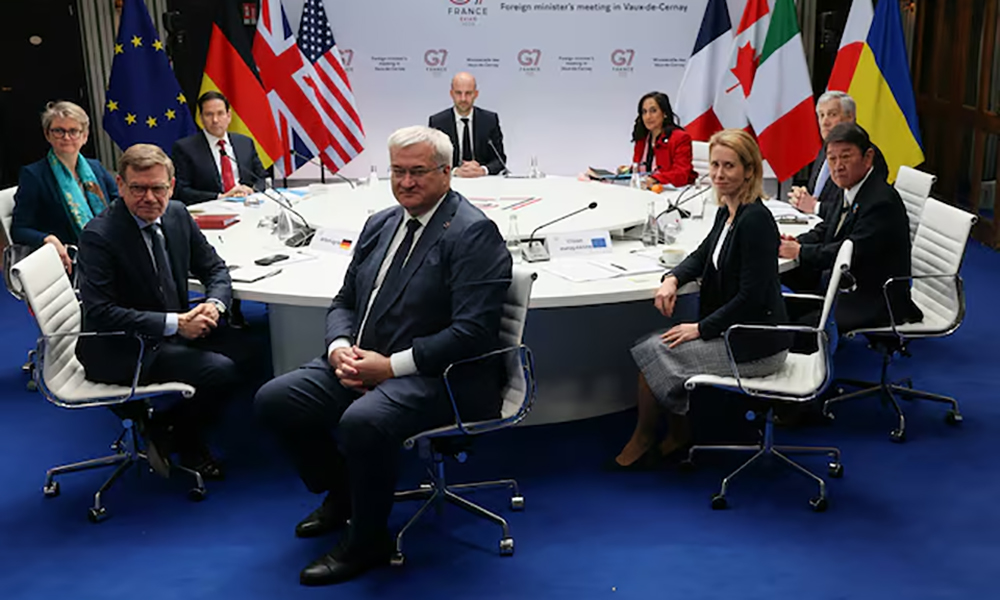
The foreign ministers of the G7 group of nations called on Friday for an immediate stop to attacks against civilians and civilian infrastructure in the Iran war.
In a joint statement agreed on the second day of a G7 meeting in France – this year’s host country – the ministers said they had underscored the importance of minimising the impact of the conflict on regional partners, civilian populations and critical infrastructure.
“We focused on the value of diverse partnerships, coordination, and supporting initiatives, including to mitigate global economic shocks such as disruptions to economic, energy, fertilizer and commercial supply chains, which have direct impacts on our citizens,” they said in the statement seen by Reuters.
The ministers also reiterated the need to restore safe and toll-free freedom of navigation in the Strait of Hormuz.
The G7 members are the United States, Britain, Canada, France, Germany, Italy and Japan, along with the European Union.
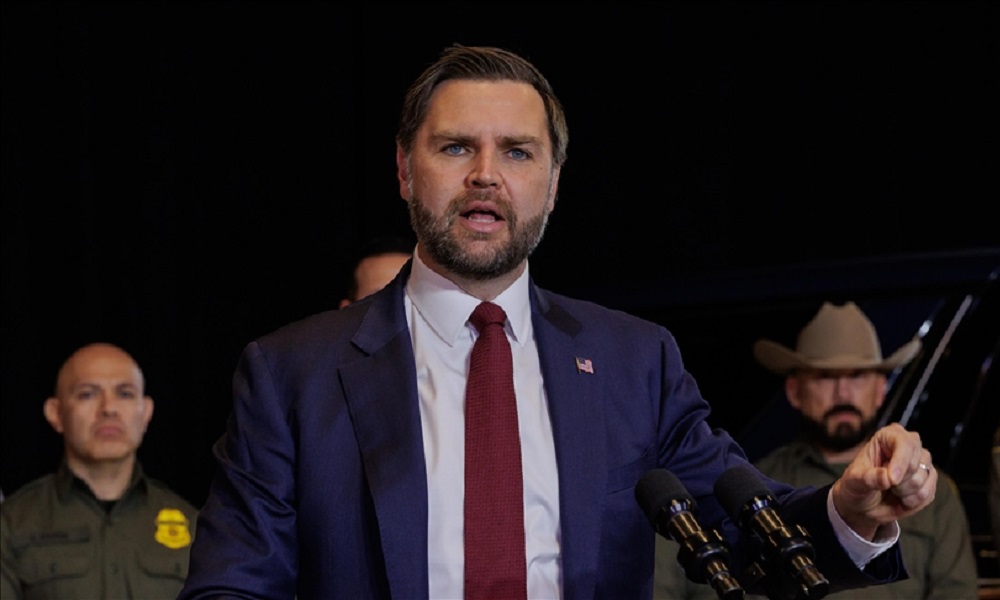
US Vice President JD Vance has taken a leading role in Washington’s efforts to broker peace with Iran, nearly a month into the ongoing conflict, according to US media reports on Friday.
An Axios report says Vance has been actively engaged in behind-the-scenes diplomacy, holding multiple discussions with Israeli Prime Minister Benjamin Netanyahu and coordinating with Gulf allies, while maintaining indirect communication channels with Iranian officials.
The White House reportedly views Vance as a central negotiator due to his senior position and his skepticism toward prolonged military engagements, making him a suitable envoy for sensitive negotiations.
Vance’s efforts include coordination with countries such as the United Arab Emirates and Qatar, focusing on de-escalation, potential peace talks, and regional security.
US President Donald Trump formally confirmed Vance’s role on Thursday, noting that he is working alongside Middle East Envoy Steve Witkoff and Jared Kushner on ongoing negotiations and will brief officials on developments regarding Iran.
White House officials told Axios that Vance’s seniority and opposition to extended foreign conflicts make him a more appealing interlocutor for Iran than other envoys, with Witkoff recommending him as the lead negotiator. “If the Iranians can’t strike a deal with Vance, they don’t get a deal. He’s the best they’re gonna get,” a senior administration official said.
While Vance assumes a larger diplomatic role, Witkoff and Kushner continue handling negotiations. Reports of a confrontation between Vance and Netanyahu were dismissed by US and Israeli sources as inaccurate.
According to the report, Vance initially expressed skepticism about the war’s duration, objectives, and resource impact but supported a strategy of overwhelming force once Trump decided to proceed. Vance remains aligned with Israel while carefully navigating differences between US and Israeli objectives, advisers said.
“He has his own views, but he is going to work according to Trump’s instructions and try to achieve an outcome that the president likes,” a source close to Vance added.
World
Trump signature to appear on US currency, ending 165-year tradition
The Treasury is still producing notes bearing the signatures of former President Joe Biden’s Treasury secretary, Janet Yellen, and former Treasurer Lynn Malerba.
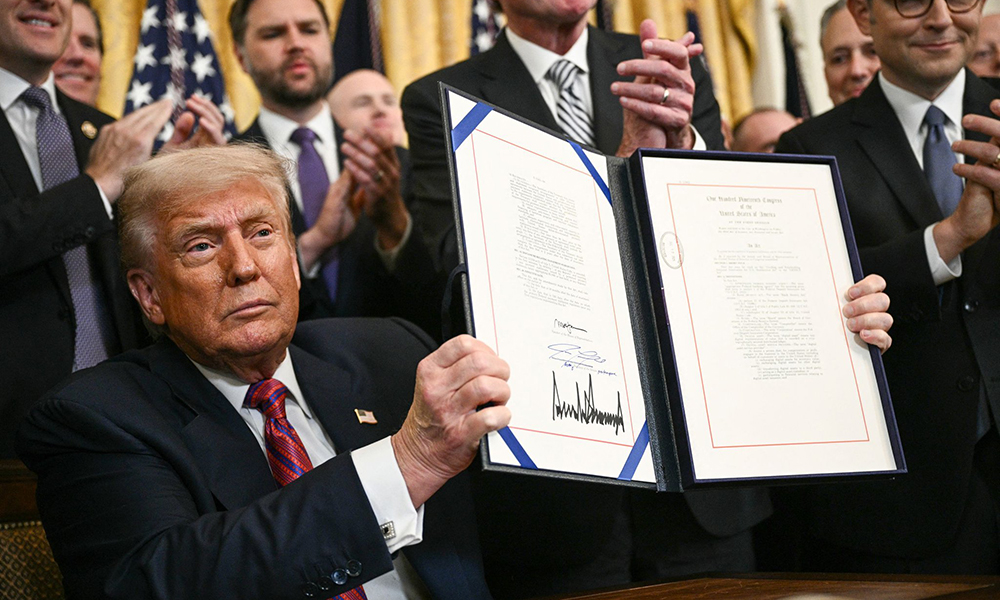
U.S. paper currency will bear President Donald Trump’s signature starting this summer, the first time a sitting president has signed American money, the Treasury Department said on Thursday.
The redesigned notes, planned to mark the 250th anniversary of American independence, will also for the first time in 165 years drop the signature of the U.S. treasurer, who reports to the Treasury Secretary and oversees the Bureau of Engraving and Printing, the U.S. Mint and other Treasury functions, Reuters reported.
The first $100 bills with Trump’s signature and that of U.S. Treasury Secretary Scott Bessent will be printed in June, followed by other bills in subsequent months. The new bills may take several weeks to circulate through banks.
The Treasury is still producing notes bearing the signatures of former President Joe Biden’s Treasury secretary, Janet Yellen, and former Treasurer Lynn Malerba.
Malerba will be the last of an unbroken line of treasurers whose signatures have appeared on U.S. federal currency since 1861, when the U.S. government first issued it.
The signature change is the latest effort by the Trump administration and its allies to put the president’s name on buildings, institutions, government programs, warships and coins. A federal arts panel, whose members Trump appointed, approved last week the design for a commemorative gold coin with Trump’s image.
Bessent said in a statement that the move was appropriate for the U.S. 250th anniversary, given strong U.S. economic growth and financial stability during Trump’s second term, read the report.
“There is no more powerful way to recognize the historic achievements of our great country and President Donald J. Trump than U.S. dollar bills bearing his name, and it is only appropriate that this historic currency be issued at the Semiquincentennial,” Bessent said.
An effort for a circulating $1 Trump coin was set back by laws prohibiting the depiction of living individuals on U.S. coins.
A statute governing the printing of Federal Reserve notes gives the Treasury broad discretion to change designs to guard against counterfeiting. The law requires keeping certain elements, including the words “In God We Trust,” and only allows portraits of deceased individuals.
The overall designs of bills will not change, except for Trump’s signature replacing the Treasurer’s, Treasury officials said. A mock-up of the $100 bill with Trump’s signature was not immediately available.
Malerba, the former treasurer, declined comment on the Trump administration’s move.
Her predecessor, Jovita Carranza, who served as treasurer in Trump’s first term, called the change “a powerful symbol of American resilience, the enduring strength of free enterprise and the promise of continued greatness.”
The current treasurer, Brandon Beach, whose name has not appeared on the currency, also issued a supportive statement, saying Trump was the architect of a “golden age economic revival.”


Severe floods in Badghis leave five dead

13 mountaineers in Balkh summit Alborz at 1,650 meters

Fazlur Rehman urges policy review on Afghanistan, warns of Pakistan’s regional isolation

US regime change efforts in Afghanistan ended in failure, says Merz

Afghan defense forces stand ready to protect national sovereignty: MoD

Pakistani military jet downed in Afghanistan’s Jalalabad, pilot captured alive

Afghan Air Force conducts airstrikes in Islamabad, other cities

Prominent Muslim scholar issues fatwa calling for Afghanistan-Pakistan ceasefire

Afghan air force strikes key Pakistani military installations in retaliatory operation

IEA: Special circle in Pakistan has launched mission to destabilize region

Exclusive interview with Indrika Ratwatte, Deputy UN Special Representative for Afghanistan

Tawsia: Efforts to boost Afghanistan’s domestic production and economic diplomacy

Tahawol: Discussion on day 27 of Iran–US war

Saar: Islamic Emirate confident of Durand Line control

Tahawol: Efforts to release Mohammad Rahim from Guantanamo Bay Detention Camp
-

 Latest News2 days ago
Tajikistan shifts stance on Afghanistan amid rising border tensions
-

 Latest News4 days ago
Around 2.3 million tourists visited Afghanistan’s recreational areas during Eid: Ghufran
-

 Sport4 days ago
Afghanistan squad hit by withdrawals ahead of AFC Asian Cup Qualifiers
-

 Latest News4 days ago
Islamic Emirate releases American prisoner Dennis Coyle
-
 Latest News3 days ago
Two civilians killed, eight injured in fresh shelling by Pakistan in Kunar
-
 Regional4 days ago
US allies in Middle East ‘edging closer’ to joining conflict
-
 Latest News5 days ago
Airstrike on Kabul drug rehabilitation centre sparks legal concerns
-
 Regional4 days ago
Tehran rejects Trump’s claims of talks, accuses US of spreading ‘fake news’