
Latest News
Israel’s new government begins, Netanyahu era ends

The first Israeli government in 12 years not led by Benjamin Netanyahu got down to business on Monday, with the former prime minister shying away from a handover ceremony with successor Naftali Bennett.
The right-wing leader’s record run in office ended on Sunday with parliament approving, by a razor-thin majority of 60-59, a new administration led by Bennett, a nationalist whose views mirror Netanyahu’s on many issues.
In Tel Aviv, thousands turned out to welcome the result, after four inconclusive elections in two years.
“I am here celebrating the end of an era in Israel,” said Erez Biezuner in Rabin Square.
“We want them to succeed and to unite us again,” he added, as flag-waving supporters of the new government sang and danced around him.

A combative Netanyahu, 71, said he would be back sooner than expected.
“If we are destined to go into the opposition, we will do so with our heads held high until we can topple it,” he told parliament before Bennett was sworn in.
The traditional handover ceremony was not scheduled at the prime minister’s office, where Netanyahu was expected to meet Bennett later on Monday to brief him on state matters.
The last time Netanyahu was unseated as Israel‘s leader, in 1999, he ended his first term in office with a glass of wine in his hand and affable words of welcome to then-Labour party leader Ehud Barak, who defeated him at the polls.
“Sour, grumpy, not stately – Trump-like until the final moment,” Yossi Verter, a political affairs commentator, wrote in the left-leaning Haaretz newspaper.
Asked why there would be no such scene now, Topaz Luk, a senior aide to Netanyahu, told Army Radio: “That’s just what happens.”
Netanyahu, he said, was “filled with motivation to topple this dangerous government as quickly as possible”. Luk declined to disclose Netanyahu’s comeback strategy, pointing only to the new administration’s slim margin of support in parliament.

Luk said the incoming government was receiving briefings from Netanyahu’s diplomatic and security advisers to ensure an orderly handover.
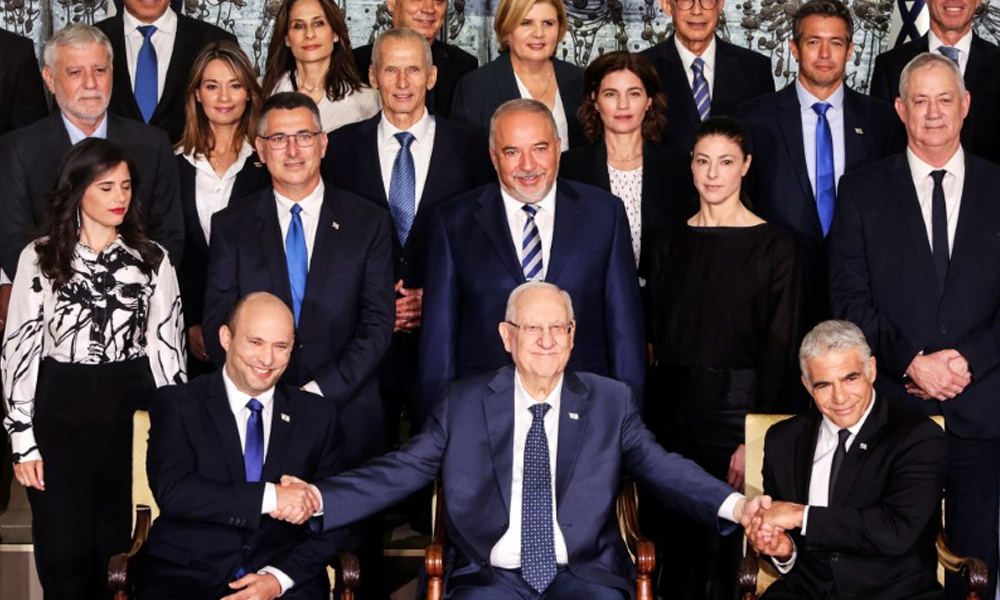
After holding its first meeting late on Sunday, Bennett’s new cabinet was invited for a traditional group photograph, showcasing incoming governments, at the official residence of President Reuven Rivlin.
With little in common other than a desire to unseat Netanyahu, the patchwork coalition of right-wing, centrist, left-wing and Arab parties largely plans to avoid sweeping moves on hot-button issues such as policy towards the Palestinians, and to focus instead on domestic reforms.
Palestinians were unmoved by the change of administration, predicting that Bennett, a former defence chief who advocates annexing parts of the occupied West Bank, would pursue the same right-wing agenda as Netanyahu.
Under the coalition deal, Bennett, a 49-year-old Orthodox Jew and high-tech millionaire, will be replaced as prime minister in 2023 by centrist Yair Lapid, 57, a popular former television host.
U.S. President Joe Biden congratulated Bennett and Lapid, saying he looked forward to strengthening the “close and enduring” relationship between the two countries.
Addressing parliament on Sunday, Bennett put Biden on notice that he would follow in Netanyahu’s footsteps in opposing any U.S. return to the 2015 Iran nuclear deal abrogated by former President Donald Trump.
Netanyahu was Israel‘s longest-serving leader, and had served consecutive terms as prime minister since 2009.
He used his global stature to resist calls for Palestinian statehood, describing it as a danger to Israel‘s security. He sought to bypass the Palestinian issue by forging diplomatic deals with regional Arab states, on the back of shared fears of Iran and its nuclear programme.
But he was a divisive figure at home and abroad, weakened by repeated failure to clinch a decisive election victory, and by a corruption trial in which he has denied any wrongdoing.






Afghanistan’s Ministry of Foreign Affairs summoned Pakistan’s chargé d’affaires to Kabul and lodged a strong protest against the violation of Afghan airspace and Pakistani military airstrikes on several Afghan provinces.
The ministry handed the Pakistani diplomat a formal protest note following the attacks on Kandahar, Paktia and Khost provinces on Wednesday night, which reportedly caused civilian casualties.
The Islamic Emirate strongly condemned the strikes, calling them a violation of Afghanistan’s sovereignty and territorial integrity and contrary to Islamic, international, humanitarian and good-neighborly principles.
The ministry also rejected what it called baseless claims that Afghan territory was being used as a source of Pakistan’s recent security incidents.
It said using such claims to justify military action was an attempt to distort facts, mislead public opinion and conceal Pakistan’s internal failures.
The Islamic Emirate further accused Pakistan’s military leadership of avoiding commitments made to regional countries and warned that such actions could further escalate tensions in the region.
Latest News
Museum dedicated to preserving ‘Jihadi’ artefacts opens in Kandahar
The museum’s collection includes more than 100 items gathered from different locations.
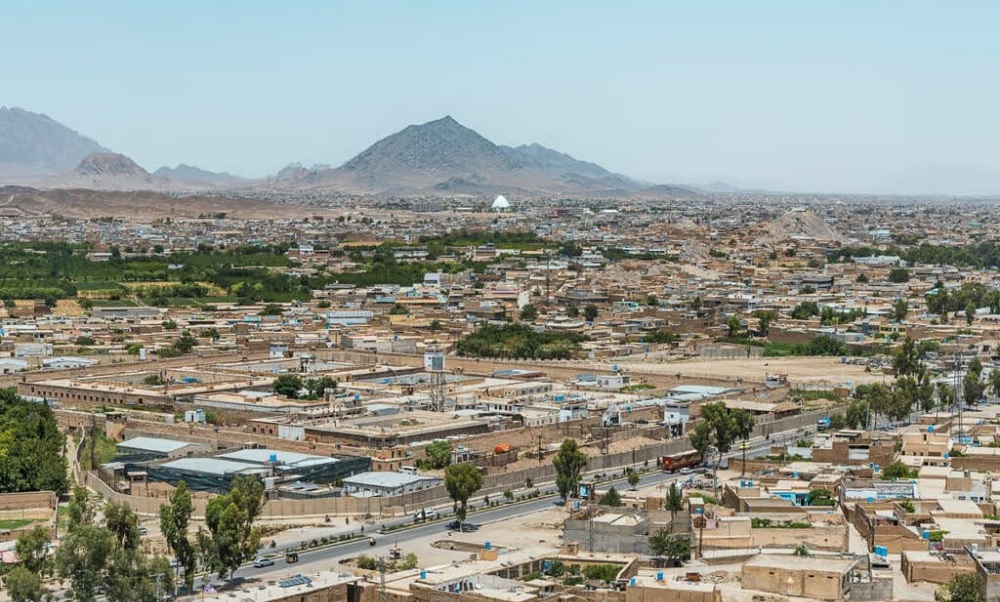
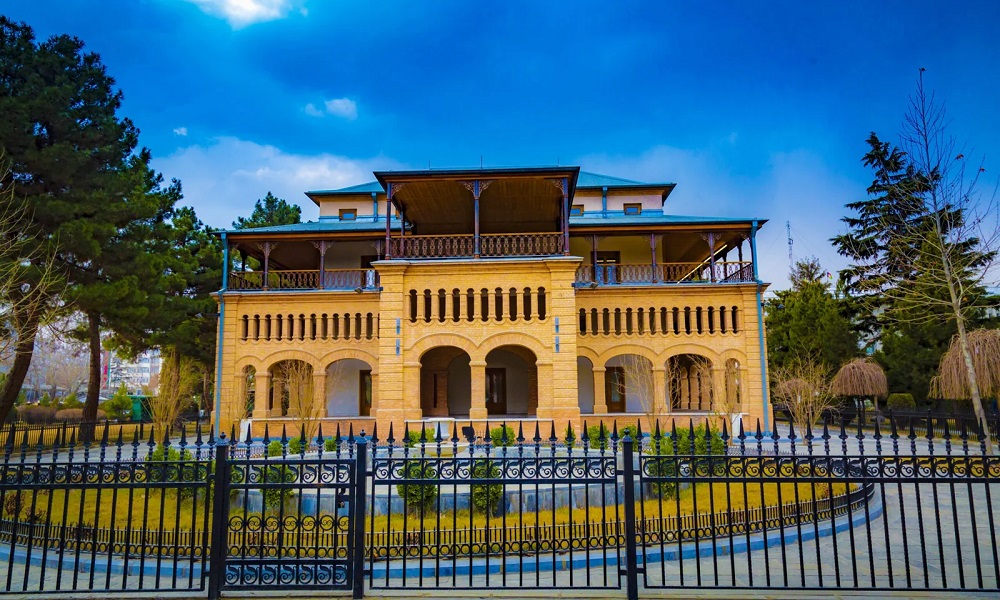
A museum dedicated to preserving what Afghan authorities describe as “Jihadi artefacts” has officially opened in Kandahar, with officials saying more than 100 items have so far been collected for display.
Mufti Mohammad Tahir Ahmad, Director General for the Preservation of Jihadi Artefacts at the Ministry of Information and Culture, attended the inauguration ceremony alongside Qari Ahmadullah Saeed Khosti, Director of Registration for Jihadi Artefacts and Documents.
Mufti Inamullah Samangani, head of the Kandahar Information and Culture Department, and officials from several government departments also attended the ceremony.
According to the official responsible for preserving the artefacts in Kandahar, the museum’s collection includes more than 100 items gathered from different locations.
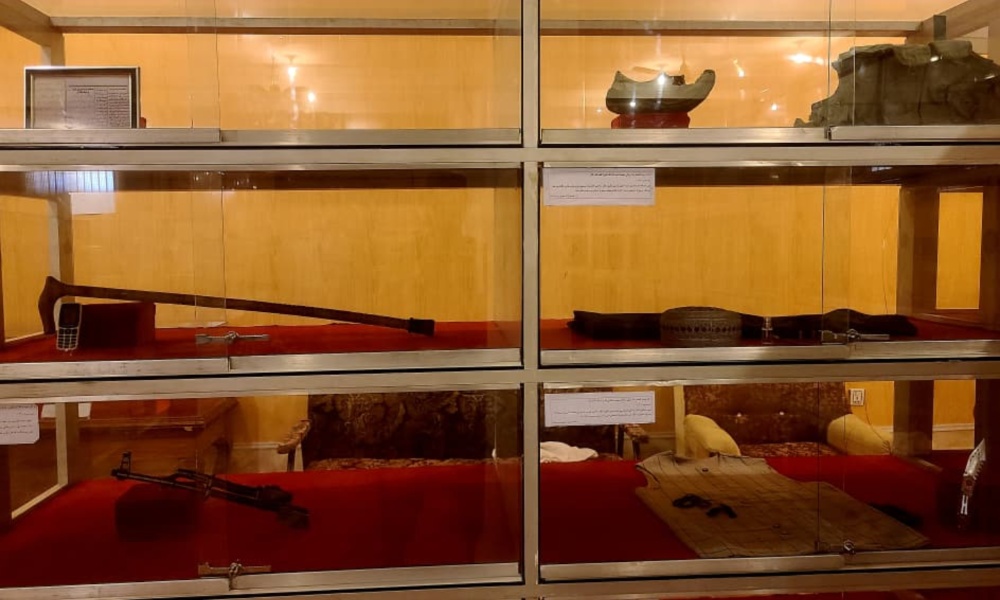
The collection includes weapons that officials say were captured from British, Soviet and US forces, as well as personal belongings and other items associated with people killed during Afghanistan’s conflicts over the past two decades.
Officials said efforts to collect additional artefacts would continue in order to expand the museum’s collection.
The museum is now open to visitors, according to the officials.

Ariana Afghan Airlines has ranked seventh among 45 airlines in Central Asia in Skytrax’s 2026 rankings.
Company officials say Ariana Afghan ranked eighth on the list in 2025, but moved up one place this year following improvements in service quality and the expansion of its operations.
According to the officials, in 2026 the airline met criteria including service quality, flight safety, professional cabin crew, and experience in the aviation sector, placing it among the top 10 airlines in Central Asia.
Skytrax is an international organization that evaluates and ranks the quality of services in the aviation industry and airlines, assessing and ranking carriers annually based on specific criteria.


Afghanistan summons Pakistani chargé d’affaires over latest airstrikes

Australia says OpenAI model breached government health website

Museum dedicated to preserving ‘Jihadi’ artefacts opens in Kandahar

Afghanistan open Asian Games cricket campaign with win over Japan

Trump welcomes Chinese President Xi as US-China summit gets underway

Saudi energy group signs major Afghanistan deals covering gas exploration and pipeline plans

ATN secures exclusive rights to broadcast T20I series in India across Afghanistan

Trump floats idea of renaming Atlantic or Pacific Ocean

US hits Egyptian bank branches with Iran sanctions as war marks six months

Nepal flood rescue mission enters critical phase as thousands remain missing

Tahawol: Opening of the 81st UN General Assembly Session

Saar: OIC Assessment of Afghanistan’s humanitarian and development situation discussed

Tahawol: Reactions to Pakistan’s attacks on Afghanistan discussed

Saar: Uncertain fate of Afghanistan’s seat at UN discussed

Tahawol: Uncertain future of Afghanistan’s permanent UN seat
-

 Sport3 days ago
Afghanistan to face Japan and Nepal in Asian Games cricket group stage
-
 Latest News4 days ago
Pakistan says Kohat attackers had roots in Afghanistan
-
 Latest News4 days ago
OIC to hold Afghanistan Contact Group meeting on sidelines of UN General Assembly
-
 Regional4 days ago
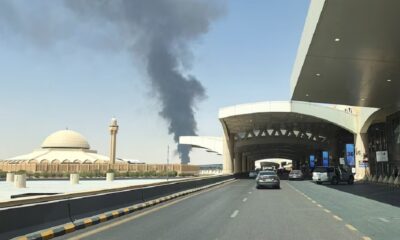
Flames, smoke seen near Riyadh airport; Houthis claim attacks on Saudi capital
-
 Regional3 days ago
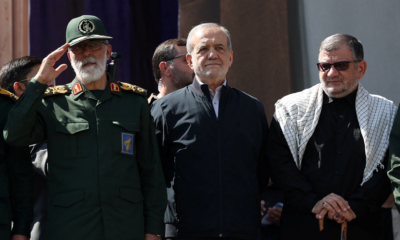
Iran and US trade threats after Houthi attacks escalate regional conflict
-

 Sport5 days ago
Abu Muslim Farah and Ariana Khost play out goalless draw in ACL
-
 Business4 days ago
Dogharoun handles 60% of Iran’s exports to Afghanistan
-
 World4 days ago
World leaders return to UN amid wars in Middle East and Ukraine