
Despite talks to see if a nuclear deal can be struck, Washington is amassing military forces in the region.
Iranian officials have warned that Tehran would retaliate by targeting U.S. military bases in the region.

![AJANDAY MELEE - 25-05-2015-DARI-SOT.avi_snapshot_00.52_[2015.05.25_19.02.44]](https://ariananews.af/wp-content/uploads/2015/05/AJANDAY-MELEE-25-05-2015-DARI-SOT.avi_snapshot_00.52_2015.05.25_19.02.44.jpg)
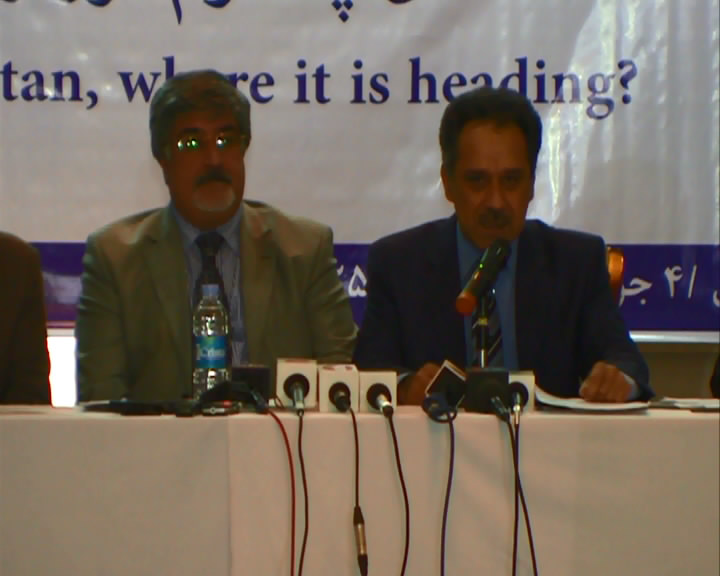
The head of Afghanistan National Agenda has said that an emergency Loya Jirga is the only solution of the existence crisis in the country.
Ahmad Wali Masood, head of the National Agenda said that the National Unity Government (NUG) has still not formed, and there is no trust between the leaders of the government.
“Two years is much for holding Loya Jirga, The situations and conditions are not good enough and an emergency Loya Jirga must be held as soon as possible. We cannot wait for the worsening of the situation,” Masood said.
Members of the Agenda are said to consider the situation of Afghanistan alarming and said nine months have been passed since its formation but the government is still unbalance.
“There is nothing of a national unity government. The smallest basics of a government have not been observed in this nine months. Afghan people are not entitled to that the agreements sign behind the closed doors,” Masood added.
Keeping the history of the traditional Loya Jirga in view, it comes to know that a ruling leadership in Afghanistan has always convened and held such a jirga.
The loya jirga is an institution deeply embedded in Afghan culture and has played a part in some of the country’s most crucial deliberations of the past century.
The first modern gathering took place in 1747, when tribal leaders chose Ahmad Shah Durrani to lead the modern state of Afghanistan.
A loya jirga is a special type of jirga that is mainly organized for choosing a new head of state in case of sudden death, adopting a new constitution, or to settle national or regional issue such as war
Afghanistan has borne the brunt of decades of foreign intervention and conflict, and as a result is now one of the poorest countries in the world.
For ordinary Afghans, the situation resulting from the war is terrible.
Thousands of civilians have been killed and injured since 2001, human rights are deteriorating and millions of Afghans rely on food aid to avoid starvation.
War on Want is campaigning to demand the UK government withdraws British troops from Afghanistan immediately and to support a political solution under UN auspices based on the Afghan people’s self-determination, security and human rights.
Reported by Farahnaz Forutan

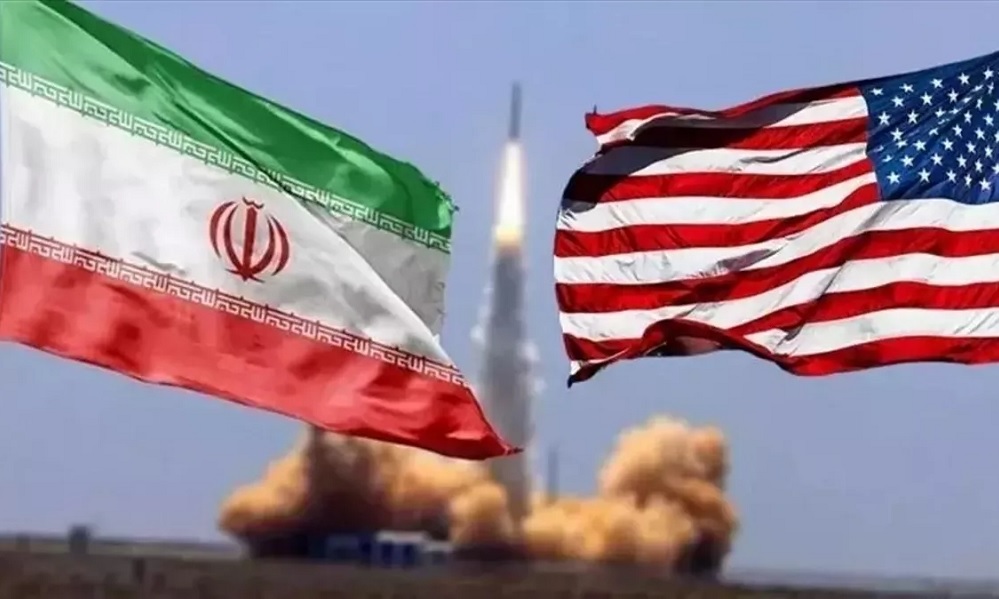
Zabihullah Mujahid, spokesperson for the Islamic Emirate of Afghanistan (IEA), said that in the event of a possible conflict between Iran and the United States, Iran would have the capacity to emerge victorious.
Speaking in an interview with Iran Radio, he emphasized that the Islamic Emirate does not support war, but believes that “the Islamic Republic of Iran was ultimately successful the last time it faced an attack, and this time as well due to its capabilities and its legitimate right to self-defense” it would have the upper hand.
Mujahid added that, if formally requested, Afghans are prepared “to the extent of their ability” to cooperate with the Iranian people in addressing the potential consequences of such a conflict.
Despite talks to see if a nuclear deal can be struck, Washington is amassing military forces in the region.
Iranian officials have warned that Tehran would retaliate by targeting U.S. military bases in the region.
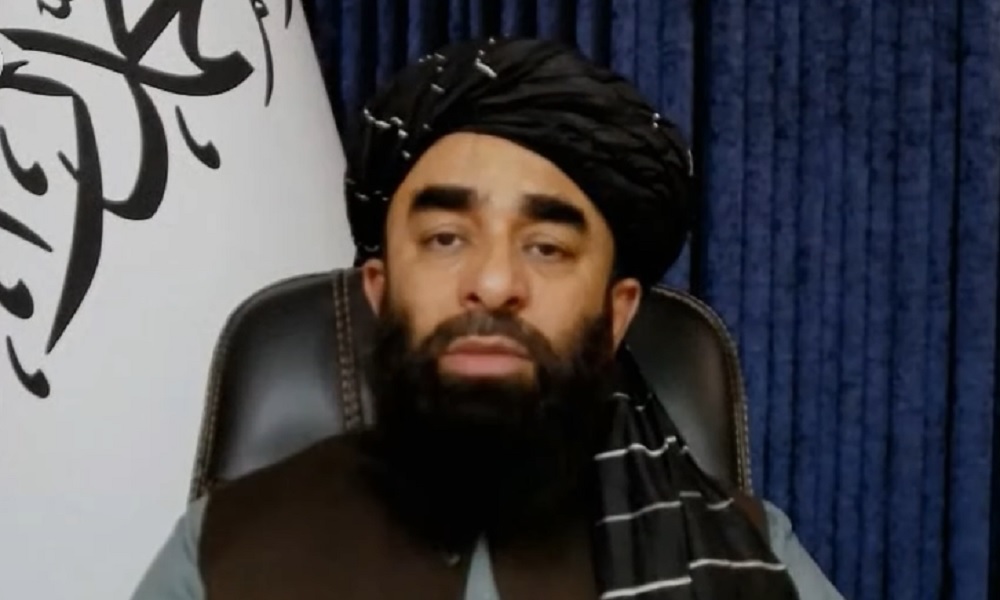
Zabihullah Mujahid, spokesperson for the Islamic Emirate, says the recent attack on a mosque in Islamabad was the consequence of Pakistan’s longstanding policy of “nurturing Daesh.”
The attack, carried out over a week ago, killed 31 people and injured 170 others.
In an interview with Iran Radio, Mujahid stated: “Daesh is an enemy like a snake; if you raise it in your sleeve, it will eventually bite you.”
He argued that Pakistan’s instrumental use of Daesh for “covert and intelligence-driven objectives” harms not only the people of Pakistan but also has negative repercussions for the people of Afghanistan.
Mujahid once again rejected allegations that the Islamic Emirate supports Tehrik-e Taliban Pakistan (TTP). He emphasized that no unauthorized armed individual is allowed to operate inside Afghanistan. According to him, the Islamic Emirate had expressed readiness to facilitate the return of “Waziristani migrants,” but Pakistan declined the offer. Instead, at Pakistan’s request, these families were relocated from areas near the Durand Line to other parts of Afghanistan.
Mujahid added that crossing closures have harmed traders in both countries, though he claimed Pakistan has suffered more. He said the crossings will not be reopened unless Pakistan provides a “guarantee” that it will not repeatedly close them due to political considerations.
The minister also called on Afghan business leaders to support the poor and displaced during the upcoming month of Ramazan, urging them to allocate their Zakat to vulnerable citizens.
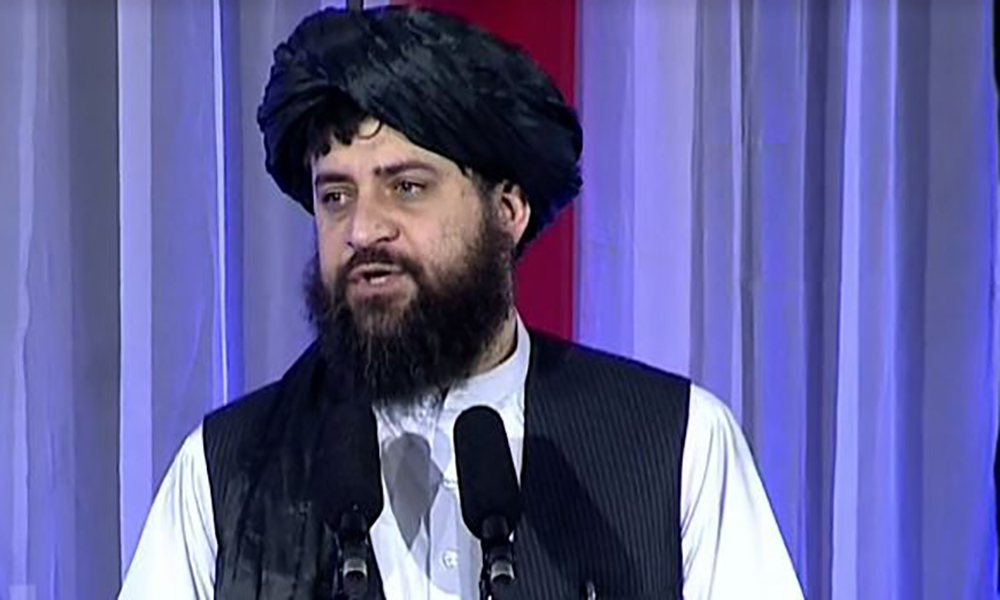
Afghanistan’s Defense Minister, Mohammad Yaqub Mujahid, emphasized the importance of leaving past conflicts behind and setting aside divisions in order to prevent future internal strife.
Speaking on Sunday at a ceremony commemorating the 37th anniversary of the defeat and withdrawal of Soviet forces from Afghanistan, Mujahid warned that a desire for revenge could threaten the stability of the current system.
He stated, “Those who seek power today are no longer even remembered in graves. If you think of the future, think for the people and the nation, and leave a legacy that future generations can be proud of, like our past heroes.”
He underscored that true merit is not determined by language, ethnicity, or position, but by piety and integrity.
The minister also called on Afghan business leaders to support the poor and displaced during the upcoming month of Ramazan, urging them to allocate their Zakat to vulnerable citizens.
“My special message to businessmen is: do not forget your people, and always help them,” Mujahid said.
Highlighting the importance of public cooperation in security, Mujahid added, “Afghanistan today enjoys exceptional security. Citizens must work with security forces to maintain stability. Some countries do not want Afghanistan to be secure; they see their own security in our instability and wish to prosper at the expense of our nation.”
Addressing neighboring countries and the international community, Mujahid affirmed, “Afghanistan is an independent country. We assure all countries that Afghanistan has no threat or bad intentions for you and we will not allow our soil to be used against neighboring countries and we have been able to contain threats against other countries and in this regard, we have full ability and do not need anyone’s help and cooperation.
“We have one request from countries not to create problems for us and not to make excuses, we are ready for any kind of dialogue, but based on mutual respect and national interests, we are ready to negotiate and we will not accept anyone’s orders in this regard, and if someone makes excuses, our message is clear: this approach benefits neither you nor the Afghan people.”
He further stated that even countries that previously invaded or occupied Afghanistan are invited to build relations, but always based on mutual interest and respect. He called for the establishment of a “fresh page” for positive and constructive relations.
Meanwhile, Abdul Salam Hanafi, Administrative Deputy of the Prime Minister’s Office, said that the Afghan nation has never accepted foreign occupation. He said this day in Afghanistan’s history was unforgettable and a source of national pride.
He added that under the Islamic Emirate, drug trafficking and cultivation have been banned, families of martyrs receive designated support, and all orphans are cared for without discrimination, with approximately 13–14 billion Afghanis allocated for their welfare.
Hanafi also emphasized that drug addiction among youth was fueled by foreign powers, while its treatment is now managed by the Islamic Emirate.
Hanafi concluded by urging civil servants to treat the Afghan people with compassion, remain humble in office, and utilize all available resources to preserve the Islamic system.
Separately, Noor Muhammad Saqib, Minister of Hajj and Religious Affairs, highlighted the need for constant preparedness against threats, stating that Afghans should not rely solely on past victories over powerful nations but remain vigilant against any potential dangers in the future.



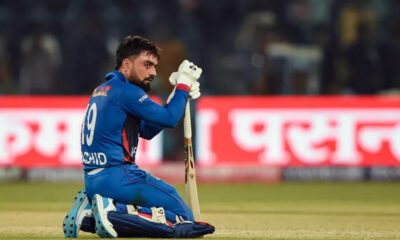

Afghanistan’s semi-final hopes hang in the balance after two T20 World Cup defeats
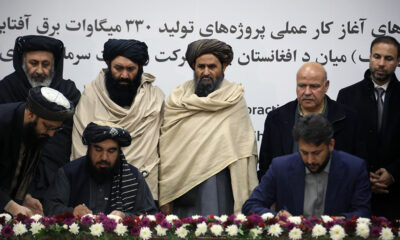

Afghanistan signs 845MW Power deal with Azizi energy; Baradar meets company Chief to advance investment plans


AFC Champions League Elite delivers key results as race for knockout stage intensifies
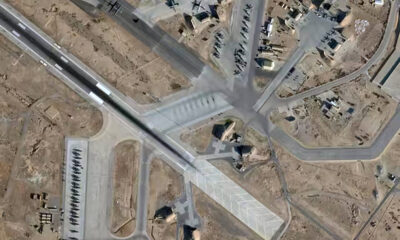

US used mobile launchers for missiles at Qatar base as Iran tensions rose, satellite pictures show


AFC U17 Men’s Asian Cup Saudi Arabia 2026 Draw sets stage for continental showdown
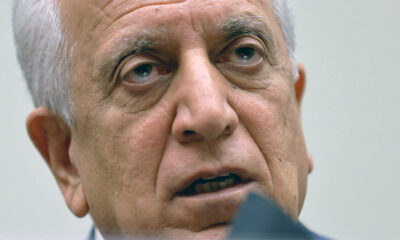

Khalilzad questions whether Pakistan played a ‘double game’ in Afghanistan war
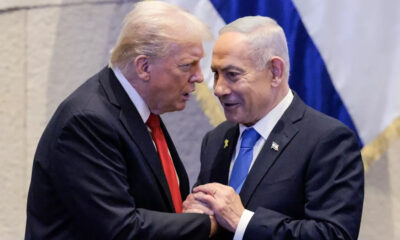

Israel’s Netanyahu expected to press Trump over Iran diplomacy


Pressure rises on Dubai port giant DP World over chief’s alleged Epstein ties