
Regional
Son of Iran’s last shah urges US military intervention in Iran
The exiled son of Iran’s toppled shah has said there were signs that the Iranian government was on the brink of collapse and that an attack could weaken it or accelerate its fall.

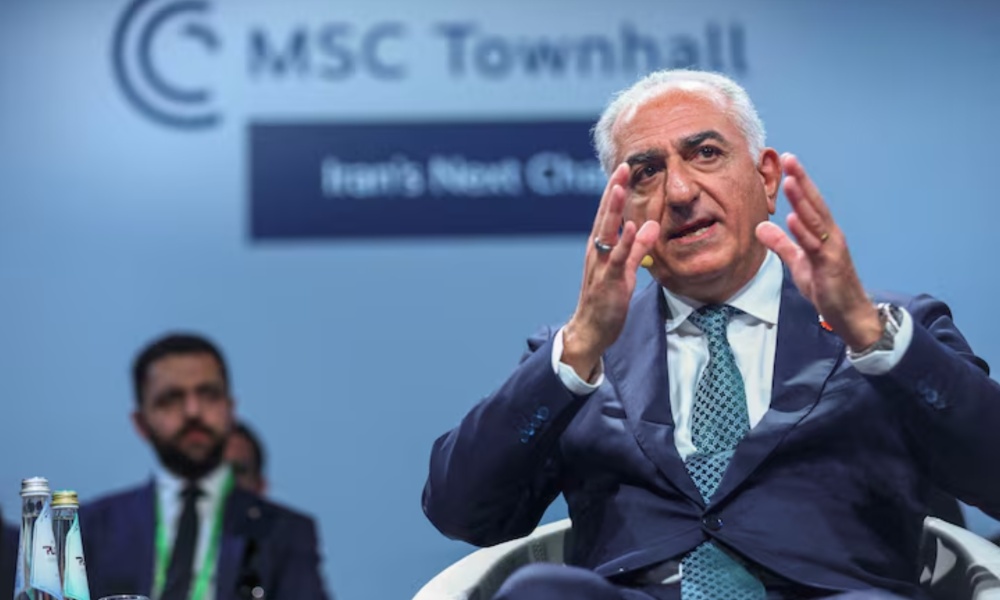
Iranian opposition figure Reza Pahlavi on Saturday said U.S. military intervention in Iran could save lives and urged President Donald Trump’s administration not to spend too long negotiating with Tehran’s clerical rulers on a nuclear deal.
The exiled son of Iran’s toppled shah told Reuters in an interview that there were signs that the Iranian government was on the brink of collapse and that an attack could weaken it or accelerate its fall.
Pahlavi was speaking on the sidelines of the Munich Security Conference, where officials from the Iranian government are banned.
“It’s a matter of time. We are hoping that this attack will expedite the process and the people can be finally back in the streets and take it all the way to the ultimate regime’s downfall,” said Pahlavi, who is based in the United States and has lived outside Iran since before his father was toppled in the 1979 Islamic Revolution.
A campaign of mass arrests and intimidation has led to the arrests of thousands as Iranian authorities seek to deter further protests after last month’s crackdown on the bloodiest unrest since 1979.
The protests began on December 28 as a modest demonstration in Tehran’s Grand Bazaar over economic hardship and quickly spread nationwide.
Iran’s opposition is fragmented among rival groups and ideological factions – including the monarchists who back Pahlavi – and appears to have little organized presence inside the Islamic Republic.
In an interview with Reuters last month, Trump sounded skeptical about the level of Pahlavi’s support inside Iran.
The Trump administration has engaged with Iran to see if a nuclear deal can be struck as Washington amassed military forces in the region. U.S. and Iranian diplomats held talks in Oman last week and further talks in the coming week are expected.
“People are hoping that at some point the decision will be made that there’s no use, there’s no point, we’re not going to get anywhere with negotiations. Therefore, that’s time for the United States to intervene and do what President Trump promised he will do, to have the people’s back,” Pahlavi said.
“Intervention is a way to save lives,” he added.
On Friday, in a speech to U.S. troops in North Carolina, Trump said Iran has been difficult in nuclear negotiations and suggested that instilling fear in Tehran may be necessary to resolve the standoff peacefully.
Two U.S. officials speaking on the condition of anonymity told Reuters on Friday that the U.S. military was preparing for the possibility of a sustained, weeks-long operation against Iran if Trump ordered an attack.







Regional
Iran and UAE back joint BRICS statement urging restraint in war
Summit organisers and diplomats have been focused on bridging the Iran-UAE divide, even as the United States and Iran resume tit-for-tat strikes in the six-month-old war.

Iran and the United Arab Emirates signed up to a joint statement from the BRICS group of nations that called for restraint in the Middle East war on Saturday, in what was seen as a sign of diplomatic progress between the countries divided by the war, Reuters reported.
Iranian President Masoud Pezeshkian also met the Crown Prince of Abu Dhabi on the sidelines of the first day of the New Delhi summit, in the countries’ highest-level meeting since the start of the conflict.
The two leaders discussed regional and international issues, de-escalation, stability, and efforts to advance regional peace and development, the Abu Dhabi media office said on X, without referring to any resolution to the discussions.
The BRICS summit is a test of the diplomatic clout of a bloc set up in 2009 to challenge a world order dominated by the United States and its Western allies. It originally comprised Brazil, Russia, India, China and South Africa and expanded to include Egypt, Ethiopia and Indonesia as well as Iran and the UAE.
Summit organisers and diplomats have been focused on bridging the Iran-UAE divide, even as the United States and Iran resume tit-for-tat strikes in the six-month-old war.
Iran has launched repeated attacks on the UAE during the conflict, most recently in late August when it targeted the Al Minhad Air Base that housed U.S. forces and helicopters.
“We express deep concern over the continued escalation of tensions in Middle East/West Asia … call for exercising maximum restraint, as well as avoiding actions that could further aggravate the situation,” the joint BRICS declaration read.
It called for the protection of civilians, urged respect for the sovereignty and territorial integrity of states, and stressed the need to protect global trade, supply chains, energy flows and maritime security.
Foreign policy experts had said the key test for the bloc would be finding language on the Middle East crisis that both Abu Dhabi and Tehran could accept, clearing the way for the joint declaration.
Such a joint statement was unlikely to influence the current geopolitical landscape, but would demonstrate unity by a grouping of emerging nations, they said.
The Iranian embassy in India posted a photo of the meeting between its president and Abu Dhabi Crown Prince Sheikh Khaled bin Mohamed bin Zayed Al Nahyan, the eldest son of the president of the country and the next in line to succeed him, read the report.
But it did not say anything about what they discussed.
“The key to ending the war lies with the U.S. and Israel,” Sunjay Sudhir, a former Indian ambassador to the UAE, told Reuters.
“What India has done is keep the difficult conversations going, by showing that countries of the region can sit at the same table, engage diplomatically, and build on where their interests converge.”
Host India’s Prime Minister Narendra Modi said that the bloc had come of age and it was time to translate its unity and consensus into concrete results on the global stage, as he opened the meeting.
The BRICS bloc is seeking to raise its profile by influencing international rules and demanding the reform of institutions such as the World Bank, International Monetary Fund and World Trade Organization, which some members view as being dominated by Western powers.
Leaders attending the summit include Russia’s Vladimir Putin, China’s Xi Jinping and South Africa’s Cyril Ramaphosa.
Chinese President Xi said BRICS countries should firmly stand on the right side of history by steering the international order toward greater equity and justice.
Xi also said China was ready to play its “due role” in achieving peace and stability in the Middle East.
“Relevant parties must remain committed to a political settlement and work towards achieving a permanent and comprehensive ceasefire,” he said, according to state broadcaster CCTV.
New Delhi, which has strong ties with the United States, Russia, Israel, Iran and the Gulf Arab states, is engaged in a diplomatic balancing act, with Modi pushing BRICS members to boost trade cooperation, reduce barriers and expand business opportunities.
Regional
Saudis shut down oil pipeline as Houthis tighten grip on Red Sea shipping
The 1,200-kilometre (745-mile) pipeline running across the Arabian Peninsula had helped Saudi Arabia to bypass a shipping logjam in the Strait of Hormuz, where tanker traffic has slowed to a trickle due to the war between the U.S. and Iran.

Saudi Arabia has shut down its East-West pipeline after the vital oil conduit came under aerial attack in the widening Middle East war.
The world’s largest crude oil exporter temporarily closed the pipeline after a drone attack that both Baghdad and Riyadh said had originated in Iraq, where Iranian-backed militias operate. Iraq dismissed a military commander on Saturday in response to the attack, Reuters reported.
The 1,200-kilometre (745-mile) pipeline running across the Arabian Peninsula had helped Saudi Arabia to bypass a shipping logjam in the Strait of Hormuz, where tanker traffic has slowed to a trickle due to the war between the U.S. and Iran.
The Saudi energy ministry said it had shut the pipeline as a precaution. The line has been moving 4 million to 5 million barrels per day in recent months, amounting to 4% to 5% of global supply, according to ship tracking companies and analysts.
The attack comes as Iran-aligned Houthi rebels in Yemen tightened their grip in the Red Sea, which combined with the Strait of Hormuz disruptions has put an energy squeeze on both sides of the Arabian Peninsula and sent global oil prices back above $100 per barrel.
Four Yemeni government sources told Reuters that Houthis had seized the strategic island of Perim on Friday at the mouth of the Red Sea, in the Bab el-Mandeb Strait.
The dual attacks reported on Friday – on the pipeline and Perim island – could represent a dangerous escalation while diplomatic efforts to end the war have stalled.
Saudi Arabia has asked Washington for military help with the Houthis, sources said, at a time when higher fuel prices during the war have already exacted a political toll on U.S. President Donald Trump and his Republican Party ahead of November congressional elections.
The East-West pipeline was hit on Thursday morning in Saudi Arabia’s Riyadh and Medina regions, the Saudi energy ministry said.
It was not immediately clear who was responsible for the strikes. Satellite images showed black smoke rising from an area of the pipeline south of Medina. The attack resulted in some injuries and damage that was being assessed, the Saudi foreign ministry said without detailing the impact on exports.
The cashiered Iraqi military commander had led operations in Maysan province, according to Saturday’s statement by the Iraqi prime minister’s office. Maysan province, which borders Iran in southeastern Iraq, has long been regarded as an area where Iran-backed Shi’ite militias operate and maintain influence.
Saudi Arabia has opted against retaliation so far following a request from the Iraqi prime minister, the Saudi foreign ministry said in a statement, while adding the kingdom reserves the right to “take all measures necessary” to protect its interests. Iraq’s government condemned attacks.
Saudi crude supply fell to the lowest levels in more than three decades, the International Energy Agency said on Friday, partly due to attacks on ships transiting Bab el-Mandeb by Houthi-linked groups.
Iraq responded by ordering the closure of the Shalamcheh border crossing between Iraq and Iran as a precautionary measure, two security sources told Reuters. The crossing serves as one of the main routes for imports to Iraq of vegetables and other food supplies from Iran.
The two sources said a widescale operation was under way to find those responsible for the pipeline attack.
COUNTERATTACK PLANNED
If the Houthis gain control of the Bab el-Mandeb Strait, their backer Iran could gain a critical advantage in its war with the U.S.
Yemeni government forces indicated they would try to retake areas captured by the Houthis — mountain fighters who withstood years of devastating Saudi airstrikes during Yemen’s civil war — in their lightning offensive this week along the Red Sea coastline.
Reuters reported on Thursday that the dramatic Houthi advance down Yemen’s Red Sea coast came with direct guidance from Iran’s Revolutionary Guards.
Iran told the Houthis last week to escalate their attacks on Saudi Arabia and promised more funding, weapons and senior officers to help them do so, two Iranian sources said.
Iran describes the Houthis as an ally but publicly denies giving them military direction, saying they are “not a proxy”.
The Houthi military spokesperson, Yahya Saree, said maritime navigation remained safe for all shipping except Saudi vessels subject to a previously announced ban.
SAUDIS SEEK HELP
Saudi Crown Prince Mohammed bin Salman called Trump at least twice on Thursday to request U.S. military help in fighting the Houthis, two sources familiar with the matter told Reuters on Friday, confirming an earlier report by Axios.
Washington told Riyadh it was not willing to take direct military action for now but would help with intelligence sharing and targeting, the two sources said.
The White House did not address a Reuters question on any phone calls between the two leaders, but a senior administration official speaking on the condition of anonymity said Washington was in continuous dialogue with Saudi Arabia and the Yemeni government.
Regional
Pakistan warns Iran to rein in Houthis as Riyadh strikes back
Pakistan’s warning to Iran carries significant weight because of its defence pact with Saudi Arabia and Turkey.
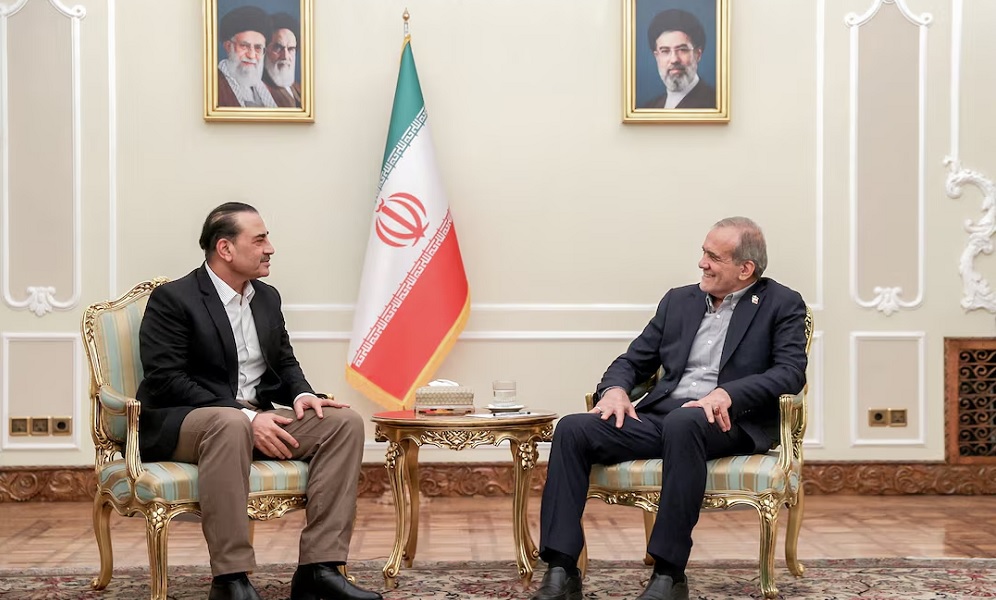
Pakistan has delivered a Saudi warning to Iran to rein in its Yemeni Houthi allies after they stepped up attacks on the kingdom, in a coordinated effort to prevent the crisis from spiralling, Reuters reported, citing Saudi, Pakistani and Iranian sources.
The Houthis struck an airbase in Khamis Mushait and oil infrastructure in nearby cities on Tuesday, wounding 73 people, in one of the biggest attacks on Saudi Arabia since the start of the U.S.-Israeli war on Iran in February.
Houthi military spokesman Yahya Saree said on Wednesday that Saudi warplanes carried out 54 airstrikes across various Yemeni provinces over the past 12 hours, adding that they would “not go unanswered and unpunished”.
The escalating conflict, which represents a second theatre of war to threaten global energy supplies, comes as Iran and the United States wage their biggest declared wave of tit-for-tat attacks on shipping in the Gulf region since their war began.
Pakistan’s warning to Iran carries significant weight because of its defence pact with Saudi Arabia and Turkey.
While officials in Islamabad stressed any military role would be confined to defending Saudi territory, Pakistani Defence Minister Khawaja Asif said attacks spilling into the kingdom could trigger a joint security arrangement involving Riyadh, Ankara and Islamabad.
“An aggression on one country will be considered an aggression on all three countries,” Asif said on Pakistani TV.
“There is no ambiguity or doubt… Unprovoked aggression or spillover… into Saudi Arabia will definitely make this agreement operational.”
The Pakistani defence ministry, foreign ministry and the military did not respond to a Reuters request for comment.
FEARS OF PROXY WAR TURNING INTO WIDER REGIONAL CRISIS
Pakistan’s intervention, after years of balancing ties with Saudi Arabia and Iran, has underscored the seriousness of the Houthi attacks. The message to Tehran is clear: rein in the Houthis or risk turning a proxy conflict into a broader regional security crisis, the sources said.
A senior regional diplomat said Pakistan had conveyed the message to Iran over the past 24 hours, urging Tehran to use its influence to halt Houthi attacks on Saudi Arabia.
A senior Iranian official confirmed that Pakistan conveyed the message to Tehran on Tuesday and Tehran’s response was that “Iran does not control the Houthis”.
However, two Iranian sources said Tehran had told the Houthis last week to carry out attacks on Saudi Arabia. Tehran promised additional funding and weapons, they said, while several Islamic Revolutionary Guard Corps commanders had travelled to Yemen to help coordinate the attacks.
The regional diplomat said Islamabad was seeking to restrain the Houthis before the escalation reached a point where Riyadh could press Pakistan to play a more active role in defending it.
“Pakistan has an agreement with Saudi Arabia, but I am hopeful the situation will not reach the point where Pakistan has to practically step in,” the diplomat told Reuters. “It will pursue a diplomatic solution for now.”
PAKISTANI SUPPORT FOR SAUDIS
The Pakistani source said Saudi officials had met senior Pakistani and Turkish military representatives in Riyadh to coordinate their response. The three countries agreed that their troops would not enter Yemen and that any response would be launched from Saudi territory, the source added.
A second Pakistani source said no decision had been made to join retaliatory strikes, stressing that its military pact with Riyadh was defensive and limited to protecting Saudi territory. Pakistani forces could provide military, technical, ground or air support within Saudi Arabia, but would not take part in combat operations on foreign soil, the source said.
The pressure campaign waged by Iran and the Houthis could have the opposite effect to that intended by Tehran, the regional diplomat said.
By targeting Gulf security in a bid to pressure Washington over its blockade of Iranian ports, Tehran risks driving Saudi Arabia, Pakistan, Turkey and other U.S.-aligned states into closer security coordination rather than fracturing their ties.
TRUMP’S BLOCKADE OF IRAN SET TO CONTINUE
Regional officials also see little sign that Washington is prepared to relent.
President Donald Trump appears committed to maintaining the U.S. blockade until Iran reaches an agreement with Washington, the diplomat said, while Qatar is quietly exploring new proposals aimed at bringing both sides back to negotiations.
Another regional source said Saudi Arabia’s military response would remain focused on the Houthis rather than Iran itself. Nor do Saudi officials believe Houthi attacks will achieve Tehran’s broader objective of ending the U.S. blockade.
Riyadh is not expected to press Washington to lift the blockade, that source said, stressing that Trump believes sustained economic coercion is the most effective pathway to negotiations.
“The question is how much pain Iran can absorb, and for how long,” the source said. “Trump does not want a military solution. He wants to squeeze them through the blockade.”


Trump dismisses report China entities helped Iran before attack that killed US troops

India beat Afghanistan by seven wickets in first T20I

Tahawol: Calls for U.S. engagement with Afghanistan

Saar: End of Chinese ambassador’s mission in Kabul

IEA rejects claims of al-Qaeda presence in Afghanistan

Four mediators struggle to secure lasting Pakistan-Afghanistan ceasefire

Juma Khan Fateh surrenders to IEA forces in Badakhshan

Afghanistan’s trade diversification challenges Pakistan

Syria and Saudi Arabia condemn Kabul bombing, express solidarity with Afghanistan

Afghanistan crowned champions of five-match ODI series against Ireland
Tahawol: Calls for U.S. engagement with Afghanistan
Saar: End of Chinese ambassador’s mission in Kabul

Tahawol: Norwegian delegation’s call for engagement with Afghanistan discussed

Saar: Pakistan’s dual policy towards Afghanistan reviewed

Exclusive interview with ACB CEO Naseeb Khan
-
 Latest News5 days ago
Muttaqi and Bangladeshi delegation discuss expansion of bilateral ties
-

 Regional5 days ago
Iran attacks US base in Jordan, ships near Hormuz after tankers sunk
-

 Sport4 days ago
Afghanistan Champions League Season 6 kicks off today: Abu Muslim Farah face Sarsabz Yashlar
-
 World5 days ago
US Treasury ratchets up pressure on Iran with sweeping new aviation sanctions
-

 Business5 days ago
UAE firm eyes investment in Salang’s second tunnel and pharmaceutical factories
-

 Sport5 days ago
Afghanistan to host Bangladesh and Zimbabwe in the UAE in three-format home season
-
 Latest News5 days ago
Afghanistan, Bangladesh discuss expanding economic ties
-
 Latest News5 days ago
Mujahid calls Pakistan’s order to expel Afghan medical students ‘inhumane’